Yoga Anatomy and the Hexagrams
Yoga anatomy explains the unifying effect of working with the Book of Change. It isn’t necessary to know about its details in depth to receive the benefits of using the I Ching. However, the basics are highly suggestive as to how the hexagrams work and why their healing effect often seems magical. The following image shows the energy centers which correlate with lines of the hexagram. The seventh center, being beyond physical time and space, is not represented.

Both Chinese and Hindu versions of yoga describe subtle energy centers located along the physical spine. They are associated with the flow of electrical energy currents through the nervous system, but at a deeper level, along subtle pathways called nadis or meridians.
Both traditions draw on this knowledge in the practice of their healing arts. Both prescribe meditative practices that balance these centers for the ultimate purpose of achieving spiritual enlightenment.

Traditional Chinese Medicine (TCM) and related martial arts work with three centers called “tan tiens,” or cauldrons. These correspond roughly with the head, heart and solar plexus. In this tradition, the bottom two lines of the hexagram correlate with the lower dan tien. The middle two lines correspond with the middle dan tien. The upper two lines correspond with the upper dan tien. Tai Chi, practiced as moving meditation, unifies the three centers with holistic effect.
The yoga practiced in India posits six energy centers described as spinning vortexes or wheels, called “chakras.” These subtle centers correlate roughly with the physical anatomy of the brain, throat, heart, solar plexus, genital and anal regions.
The six lines of the hexagram each correspond with one of the chakras. The top line corresponds with the ajna center near the pituitary gland, called the third eye. The bottom line corresponds with the base chakra. Increasingly higher centers correlate with progressive stages of human development.
The chakra system of energy transformers which traverse the spine is another knowledge matrix that affects how we process and transmit information. Each chakra filters perception. Each influences the way we interpret experience. . . . One proof of this process is the wide array of Western psychologies, each relevant to a specific chakra issue.
Skinner’s is a first chakra psychology based on behavior. Freud focused on sex, a second chakra issue. Adler thought in terms of power, the third chakra. Fromm wrote about love, the fourth chakra focus. Jung was interested in literary symbols and self-actualization, which are fifth and sixth center interests.
Asian sciences, however, have recognized the interactive relationships amongst these concerns. They provide practical methods for integrating the chakras to pave an optimally functioning highway of continuous energy and information.
Similarly, psychologist Abraham Maslow’s Hierarchy of Needs sums them up. His five stage model starts with basic physiological and safety needs. Once these are satisfied, the individual pursues issues of love and esteem. Only when these needs are met is one ready to focus on personal growth needs – ultimately “self-actualization.
Most of us function primarily at one or a combination of the chakra levels. Blind spots prevent fluid, integrated thinking, making it difficult to relate to other people’s perspectives. Working with the I Ching helps to open, coordinate and align the specific mental, emotional, and social issues associated with each of the six energy centers. This greatly improves the quality of personal relationships and professional effectiveness.
Further, yoga anatomy has implications for human survival. In this world view, each individual is a miniature of all creation. Every unit, from atom to individual, mirrors the structure of the solar system and universe entire. So restoring order and balance to one’s own life does in effect save a world complete, one life at a time.
Yoga Anatomy and the Caduceus
The Greek caduceus, the familiar symbol of the Western medical profession, is a vestigial reminder of the origins (albeit forgotten) common to the Western and Asian healing arts, perhaps dating still further back to ancient Egypt’s Hermetic tradition. In Greek mythology, the caduceus is the healing staff of Mercury, messenger of the gods. It links heaven and earth.
Far earlier than the Greeks, however, the caduceus is the model of yoga energy anatomy. It comes from a time-tested tradition thousands of years old. The axis represents the human spine. The pair of snakes winding around the axis represent alternating, cyclical patterns of negative and positive (yin and yang) energy currents.
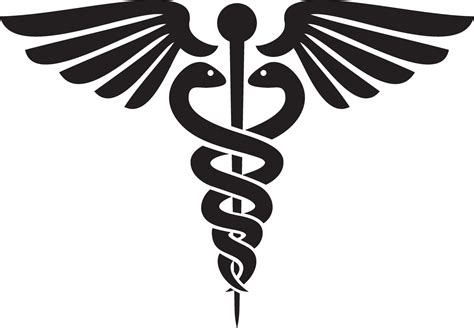
The six chakras are the intersecting points where the curving snake-like energy forces meet and cross at the axis. These are the major centers of transformation and evolution. The wings at the top of the axis represent the integrating seventh crown chakra.
The Caduceus and DNA
Just as the I Ching hexagram structure correlates with the chakras of yoga anatomy, the chakras in turn are associated with DNA.
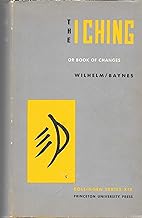
Further, the hexagrams have been directly correlated with DNA. In fact, the Chinese ideogram for the word I Ching looks remarkably like not only the caduceus but also the spiraling structure of the DNA double helix. This cannot be coincidental.
The I Ching Pictograph

The Double Helix of DNA
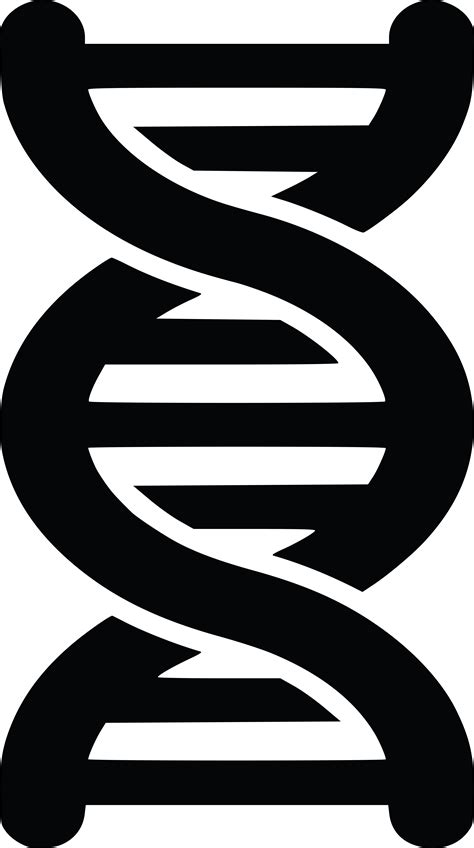
A shorthand rendition of the pictograph is featured on the Wilhelm/Baynes translation of the German version into English with its famous introduction by psychologist Carl Jung.
Many striking resemblances between the structure of DNA and I Ching hexagrams suggest at least one fascinating explanation for how/why this information source resonates with quantum inner knowing. It can’t be accidental that both the DNA helix and the I Ching matrix are based upon a binary-quaternary code that generates a system of 64 possibilities.
The I Ching matrix with its 64 possible combinations of yin and yang lines along with their endless permutations lend themselves to medical diagnosis. For example, according to the Medical I Ching by Dr. Miki Shima:
The practice of traditional Chinese medicine is based on the recognition of patterns of change within one’s patients. When these patterns of change are harmonious and foster life and well being, we say the patient is healthy or recuperating. . . Without going back to [the I Ching] . . . one cannot fully understand and appreciate the height and depth of the immense body of Chinese medical wisdom.
Interestingly, Da Liu correlates a 64 form practice of tai chi with the 64 hexagrams of the I Ching, 32 of which are yin, inward and 32 outward.
Conclusion
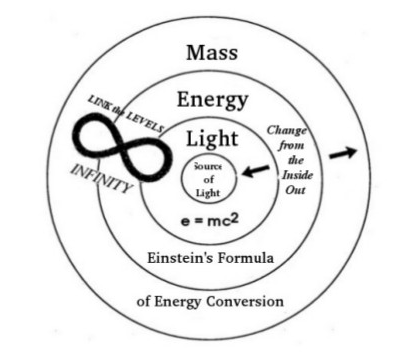
These energetic correlations suggest the potential for a quantum approach to health and healing on all levels – mental, emotional and physical. It’s an approach from the inside out, a quantum solution to the medical madness currently plaguing our civilization.
 Rethinking Survival