I want to draw your attention to the timeless Laws of the Universe.
The subject may seem abstract to you, perhaps unrelatable.
But I promise, they have not only a profound affect on your mental health, physical well-being and personal relationships, but also – as I’m focusing on here — they have practical applications to the current election process.
So follow along with me, if you will, to arrive at the destination towards which this metaphysical premise leads.
Let’s start with the Principles of the Order of the Universe. Michio Kushi lists twelve, of which the first six are:
- Everything is a differentiation of ONE infinity.
- Everything changes.
- All antagonisms are complimentary.
- There is nothing identical.
- What has a front has a back.
- The bigger the front, the bigger the back.
Put simply, every coin has two sides.

In I Ching terms, it is a given that extreme yin changes to extreme yang. Extreme yang (strength, virtue) changes to extreme yin (weakness, vice). Thus, for example, a belligerent display of control and dominance often masks the opposite extreme of fragile insecurity. Extreme righteousness has within it the potential for perversion. Conversely, beneath a crusty, harsh exterior may rest an opposite and equally generous heart of gold.
The necessary remedy to misunderstandings, backfires and tragedy is to avoid extremes by respecting, balancing, and harmonizing the energetic valances of yin and yang:

History and literature abound with examples of extreme imbalance. General George S. Patton, for example, comes to mind as a brilliant leader whose personality flaws were the catalyst of his undoing.
Greek tragedies demonstrate the essence of the law in action: hubris. The hero’s greatest strength, ironically, becomes the instrument of his downfall.
Oscar Wilde’s The Picture of Dorian Gray, whose seductively impeccable exterior masked the deeds of a fiendish villain, captures the clash of extremes.
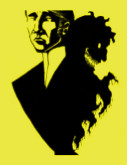
The origins and practical results of this dynamic are described in How Bad People Become Leaders. Long story short, the dilemma is that:
. . . in the prevailing, exclusively materialistic empirical science paradigm, the center is ruled out. Intuition is denied. Emotions and energy aren’t accounted for. All that matters are concrete tangibles and physical image. A leader’s motives and intentions are known only when it’s too late – after the selection has been made and the (sometimes regrettable) results come in.
Literal, empirical standards, judging at face value, fail to account for the universal principle that whatever has a front has a back. Moreover, the larger the front, the larger the back.
A “scientific” leadership selection process takes into account only that which is measurable and/or observable, for example academic IQ or skin color.
Intangibles like the presence or absence of cultivated emotional intelligence (street smarts) fly under the radar, as do ethical intelligence, creativity and a capacity for visionary insight.
When selectors judge only by appearances, it’s easy to deceive them. As Abraham Lincoln said, “You can fool all of the people some of some of the time, and some of the people all of the time.” For an ambitious con artist, those are pretty good odds.

An immediate and important practical example is the flawed selection process (in this case, of a U.S. president) which elected a leader who was, in the extreme, not what he seemed to be, to the detriment . . . even potential undoing . . . of a nation.
In Why Thomas Sowell Doesn’t Think Obama Is A Socialist, we’re told how Obama used executive orders to make end-runs around Congress, landing the nation in a world of hurt. According to Sowell, beneath the front of socialist humanism was the shadow side of outright fascism.
In Dismantling America , Sowell describes how, operating behind the front of a uniter, Obama was, in the extreme, divisive. Pres. Obama Didn’t Believe in the Principles and Values of America – Chief Divider. The result: The Devastating Legacy of Obama’s Presidency – A Point of No Return.

Fast forward to 2024. The U.S. finds itself struggling in the throws of a catastrophic presidency under an incapacitated leader functioning, for all practical purposes, as an Obama surrogate, using the same strategy of issuing executive orders to bypass the powers of Congress to further dismantle the nation.
Right now, it is imperative to recognize the dynamics at play in order to, at all costs, prevent yet another Obama surrogate from being snuck in under the wire at the last moment to replace Biden.
Granted, there are no innocents. To one degree or another, none of the presidential candidates is free from the shadows that lurk behind out-of-balance personas. How could it be otherwise? Our high energy leaders haven’t been trained in the universal principles of the I Ching, or in the ancient energy sciences. They’ve not been taught what their energy truly is, much less how to discipline it, avoid its pitfalls – particularly in terms of sexual behavior, or how to harness energies (one’s own as well as of others) to reach intentional goals. (Vivek Ramaswami, given his background, might be an exception.)
Insightfully, Ramaswami puts his finger on the pulse of current campaign dynamics:
The president really is a symbol: a puppet for a machine underneath it that’s really driving most of the policy decisions. That’s not conspiratorial or accusational. It’s just a descriptive reality of how Washington DC works today. The people we elect to run the government are not the ones actually running the government. Nowhere is that more true than in the case of Joe Biden, who is only in some in nominal sense the president of the United States. I don’t think in any real actual true sense he really is the president.
Which is part of why I’ve long advised . . . that the way that we need to win this election isn’t just by criticizing Biden. Frankly, Biden isn’t going to be the nominee, as I’ve said for the last year and a half.
The way we’re going to actually win not only this election, but revive this country, is by defining who we are and what we stand for. What values are we’re actually advancing?
Amen to that!
In fact, that’s why independent candidate RFK Jr.’s campaign, which intentionally focuses upon American values, is increasingly gaining traction with Americans across a broad political spectrum.
Bottom line: In choosing which candidate to vote for, don’t be distracted by superficial personalities — whether they’re likeable or not. Choose to overlook their inevitable human flaws with compassion. Instead, focus on their declared values, and whether their words are backed by consistent action. Do they intend to revive this country? Are they committed to furthering the well-being of American citizens with positive action?
To avoid tragically putting more bad leaders in place, let’s make demonstrated, sincerely held traditional American values — along with universal human truths — the standard of our selection process.

 Rethinking Survival