Category Archives: Manly P. Hall

Rethinking Nature in an Unnatural World 

It has long been a mystery to me that the venerable I Ching, the Chinese Book of Change, remains so undervalued and misunderstood. For me, releasing its essence from the weight of culture baggage and prejudice revealed a priceless treasure, akin to the biblical pearl without price. 

As psychologist Carl Jung recognized, this compendium of Natural Law is a premier tool used in the quest to make the unconscious conscious. Whereas European philosophers and American thinkers (including the venerable Zach Bush) romanticize nature, assign it a gender and a role (“mother nature”), and speculate all sorts of (excuse me) nonsense from the heart, the ancients understood the dynamics of nature with the accuracy of a detached, scientific eye. 

This science has been refined over thousands of years by those who observe the patterns of cyclical change in weather, in nature’s seasons, the seasons of human life, the dynamics of human relationships, and in the rise and fall of civilizations.  

Sadly, at one point I gave up. City dwellers who’ve never seen a night sky free of neon interference, who’ve never lived around livestock, or walked down country trails in the blaze of autumn colors simply can’t relate. In the process of being cut off from nature, they’ve been cut off from their inner lives as well. They seem not to suspect the existence of what they’re missing. 

So I let it go. That is, until a few days ago, when I came across a remastered Manly P. Hall lecture called The Healing Power of Nature. 

The springboard of his talk was Thoreau’s Walden, a book which describes the experiment he called “back to nature.”  In Hall’s analysis, I found a very different answer to my earlier question: “How can those who’ve never experienced life in a natural setting relate to Natural Law?”  

His conclusion: Even for those raised in an unnatural urban environment, “There are small ways, yet powerful, to ground yourself in Nature’s Way.” 

Quite to the contrary of my earlier conclusion, it’s not a lost cause. Far from being irrelevant to those who live in an unnatural world, the Book of Change is actually more vitally important than ever before.  

For no environment, however unnatural, can cancel out our essential inner nature. It continues to abide, whether or not we’re consciously aware of its influence.

Working with this book helps reconnect us with that sleeping part of ourselves that’s urgently crying out for attention.  

It holds a key to restoring inner awareness, first of the emotional energies that rule us (often tragically) from the unconscious, and then, deeper still, the unchanging source of those dynamics.  

Hall says: 

The theme of a return to nature is strong in many. In a healthy degree, is present in most. Therefore the story [Walden] continues to intrigue us, although it becomes more and more a utopian vision.  

To Thoreau, the story of back to nature is identical with the concept of back to self. 

But somewhere, some way, each individual must experience his existence in a true world, a world not fashioned by his own imagery, a world that is not the result of the interlocking of concepts, but a world which has a closeness to the earth, a world of values that are direct, natural, simple and inevitable. 

And here’s the conclusion that grabbed my attention: 

 If we cannot therefore go to this world from our own abodes, then we must bring this world to ourselves.  

We must discover it by a code of conduct or a series of internal revelations, so that if nature around us is denied us, nature can still live within us and become the basis of a normalcy and a vitality which can carry us over the doubts and problems of the years. 

Yes!!! 

The code Hall calls for is embodied in the I Ching. Working with it triggers internal revelations just waiting to surface, begging for our attention. 

Let me give you just a hint of what’s in store for those who take Hall’s advice. 

Here’s an example. In my introduction to The Common Sense Book of Change, I followed Jung’s example. In his introduction to the classic Wilhelm/Baynes translation of the I Ching from German to English, he asked the book to introduce itself. He asked what it wanted readers to know, and then elaborated on its response. 

So I queried, “What does the Common Sense Book of Change have to offer its readers?” The answer looks like this: 

I rest my case. 

— — —

Patricia West is author of The Common Sense Book of Change and Two Sides of a Coin: Lao Tze’s Common Sense Way of Change. She’s currently working on The Phoenix Response: Dying To Be Reborn – In the Same Lifetime. 
Patient Heal Thyself 

We’re within orb of the most powerful and life-changing triple conjunction of our lifetime. The last time it occurred was 2,300 years ago, marked by trade and knowledge advances – the by-products of Alexander the Great’s reign.  

This rare, empowering time invites us to think big. How would we like the future to look? Let’s wish greatly for practical ways to bring about positive change. 

Directing my thinking along this line, with the synchronicities my good angels use to get my attention, a marvelous site of remastered Manly P. Hall lectures popped magically into my YouTube feed.  

Over forty years ago, OA used Hall’s book on magic to instruct his small group on the way of the white magician: dedicating life to mastering the Laws of Nature in order to serve humanity.  

Now it has long been foreseen that the coming century will usher in a necessary rethinking of all the professions – healthcare, education, law, economics — you name it – across the board. 

Amongst those, heathcare is an immediate personal priority. So I looked to see what this newly discovered treasure has to offer on the subject. I wasn’t disappointed.

In The Healing Power of Universal Law, Hall compares the ancient vision of healing with modern medicine, hinting at changes to come. 

Ancient healers lived fully aligned with the quantum Life Wheel. They were profoundly connected with Source. They regarded themselves as priests. They related to patients with integrity and compassion; their attitude was one of humility and of service. By their very presence, these radiant beings quickened latent wholeness (health) within those who sought their help. 

Buddhist healers explained it this way. There are three distinct realms of existence. On the surface is the physical level of appearances (mass). Beneath it resides a subtle, unseen energetic level of radiance (Natural Law). Deeper still abides the level of light and universal law (Divine Law).  

According to Hall, the ancients made little distinction between Natural and Divine Law. They believed that physical illnesses are the consequence of living out of harmony with Nature and violating Divine Law. Patients were restored to physical health by realigning the inner levels of their lives. The healer’s job was to facilitate this process. 

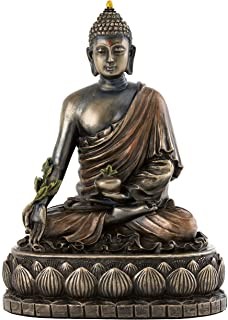
To this end, the artists among them created images of healing. They found, for example, that meditating on the figure of a calm, serene deity offering blessings with one hand, holding a jar of universal healing elixir in the other, had beneficial results.  

Many healing sects, says Hall, both Buddhist and early Christian, “prescribed spiritual solutions to health problems, including the practices of meditation, contemplation and relaxation.” 

The healer’s end goal was not to perpetuate a dependent (and lucrative) relationship between physician and patient, but rather to instill in their patients the awareness that they have within themselves the inherent capacity to self-heal. Once awareness of innate, divine potentials was instilled, going forward, they became responsible to heal not only themselves, but others as well. 

This sacred ability is captured in the classic tarot deck. The Magician pictures the power of self-healing. The symbols of nature’s elements (earth, air, fire and water) are all available, spread out on the table. One hand reaches to heaven, the other points to earth. The infinity symbol over head represents the conscious ability to link, balance, and harmonize extremes.  

In contrast, today’s medical doctors have been trained in the narrow assumptions of empirical science. Too often, they’re motivated by status and financial reward. As Hall puts it, they’re “working merely from surfaces,” the same as any “real estate agent or second-hand car dealer.” 

They medicate. They dissect. But questions about emotional imbalance, spiritual disconnect, and their causative relationship to physical disease are outside the medical paradigm. At best, they’re relegated to psychotherapy or pastoral counseling.  

In the short-term, those seeking genuine healing are out of luck. If we prefer not to be medicated or surgically altered, seeing invasive approaches as adding more problems to the first one, where can we look for alternative, integrative approaches — ones which support a self-responsible approach to not just managing symptoms, but addressing root causes? 

Enter Dr. Zach Bush, a fascinating and influential pioneer in the field of medicine. As he evolves, he continues to lead the way towards a much-needed paradigm shift, returning to practices similar to ancient healing.  

To the point, I’ll quote sippets from a recent interview with Danicka Patrick.

Zach: I just closed my clinic, which was a really emotional process for me. Because I had it – my primary identity as a doctor – for almost thirty years. 

Danicka: Congratulations. 

Zach: Thank you. I did it because calling yourself a doctor . . . says, You know what? You all are sick. And I’m here to fix you. I realized I was part of the problem for my patients. My patients can’t actually completely heal because they believed I had their answer. I have to step out of that role to engage with my fellow humans in a bigger way so that they can heal and I can be witness to their healing.  

Danicka: Wow! A total paradigm shift! 

Zach:  We’re finally tapping into something that’s deeper than biology. We have a program we call Journey to Intrinsic Health. It lays out eight fundamental steps towards finding a lifestyle that supports the fundamental biology of human life. It’s very simple stuff. 

[These include relaxation, introspection, and meditation, similar to ancient healing methods.]  

But once presented in the system that allows you to understand your own capacity for biologic thrive-state, it frees you from the list of diagnosis and diseases that you had previously been defining yourself as. 

. . .  when people are drawn to you, it’s not actually for your physical form. Your physical form is the direct result of the tone that’s sung below you.   

. . .  I believe this is our next step of humanity. If we’re going to change our course, we are going to have to see past the 0.001% shell. 

In sum, I’m reminded of the Serenity Prayer: 

God grant me the serenity to accept the things I cannot change; 

 Courage to change the things I can; And wisdom to know the difference. 

The ancients admonished, “Physician heal thyself.” How could anyone quicken others to health who isn’t first whole within himself? It’s unrealistic to expect doctors not trained in the quantum paradigm to confer wholeness (health) on others.   

Yes, it’s unfortunate. But I choose to accept it and move on to what can be changed: ME. 

I choose not to be limited by the limitations others, in their ignorance, would impose upon me. I choose to take responsibility for my own self-healing, and eventually for the well-being of others – even, eventually, through the butterfly effect – for the healing of the planet itself. 

Granted, today’s healthcare industry is entrenched and inflexible. In the short term, there’s not much we can do to change that. But each of us, one at a time, can change ourselves, from the inside out. For my part, I choose to adapt the old motto: 

PATIENT, HEAL THYSELF. 

———–

Patricia West is author of The Common Sense Book of Change and Two Sides of a Coin: Lao Tze’s Common Sense Way of Change. She’s currently working on The Phoenix Response: Dying To Be Reborn – in the Same Lifetime.