Tag Archives: philosophy

Dysfunctional Paradigms

Here’s an important section from the Quantum Paradigm Handbook.

Common wisdom has it that “You can’t leave a place you’ve never been.” Positive change requires an awareness of where you are now, where you’d like to be, and how to get from here to there.

It starts by being aware of your current beliefs and recognizing that they’ve created the place you’d like to leave. It takes the courage to admit that a currently held paradigm, no matter how familiar and fiercely held, is part of the problem. Creating a happy, fulfilling life begins with shifting to a complete and correct Quantum Paradigm.

Distortions of the quantum Life Wheel generate attitudes that are similarly bent out of shape. These eventually manifest as violence, both internal or external. Like cancers at a cellular level, the results of life turned against itself take many forms. Conflict and stress-related illnesses takes their toll on every scale of magnitude from smallest, the individual, to largest — the entire planet.

Illustrations included here picture the major paradigm malfunctions that continue to cause great misery and horrific violence in the world.

Illusions of Separateness, Exclusiveness and Isolation

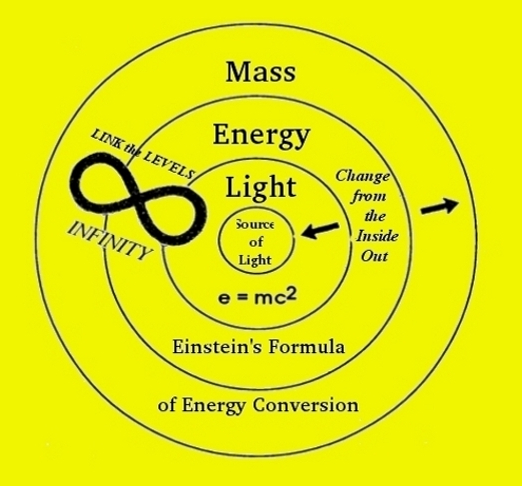
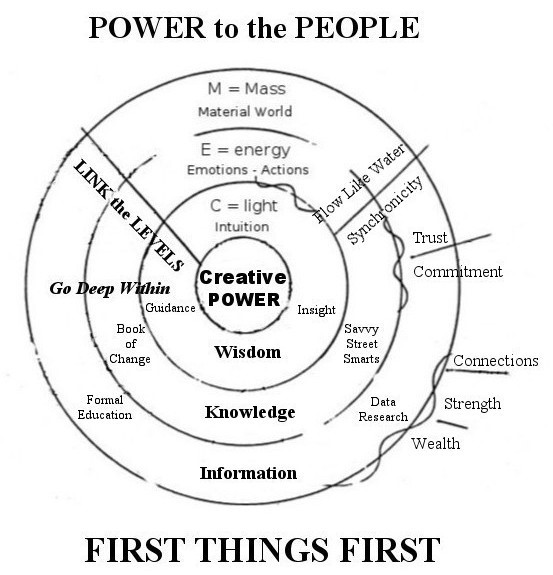
In the unified worldview pictured by the quantum Life Wheel, all the levels of experience are interwoven and interconnected. Time is an illusion. All of history is in fact going on at once. (See the Prado Painting section of The Quantum Solution for more detail.)

In this paradigm, everyone everywhere is connected by the invisible strands of energy and time. Living fully aware of the center while remaining present on the surface, linking the levels of the Wheel in a two-way, infinitely continuous loop is the height of attainment. In this reality, separateness isn’t possible. Isolation is only an illusion. Exclusiveness is a mirage.

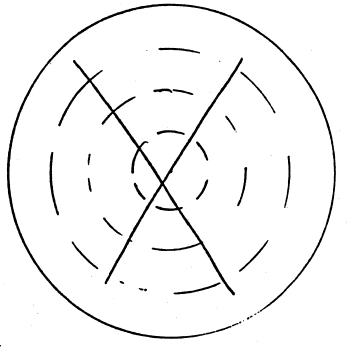
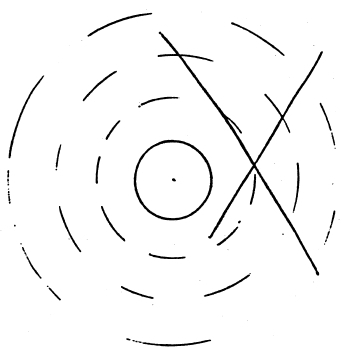
A common ego-distortion of the Wheel is to carve out a pie-slice in time and place from the whole and identify with it to the exclusion of everything and everyone else.

PARADOX: The Illusion of Separateness

Illusion of separateness

Exclusiveness and Isolation

This ego mistake has many variations. One is to identify with a particular level of the Wheel to the exclusion and detriment of the others. For example, many identify exclusively with the surface. This results in the picture of the exclusively materialistic empirical science world view.

MaterialistAthest

It is also common for those who share a particular distortion to disrespect those who are focused exclusively on other levels or different sectors of the Life Wheel. Compounding this, they begin to think their particular viewpoint is exclusively right, and all others exclusively wrong. The next step is to attach the label “good” to what they like, and “bad” to whatever is unfamiliar.

Another distortion is to identify primarily with the middle level of energy and emotions. Nature worshipers and pagans distort or invert the levels, sometimes placing nature above its Source, even replacing it. Hedonists (adventure and pleasure seekers) also live here.

Still others identify primarily with the inner levels of the Wheel. In the extreme, philosophers and religionists focus here. Making a value of necessity, they sometimes reject the world as an evil influence and suppress natural urges. This backfires, leading to hidden sexual abuse and other malfunctions.

Religionist

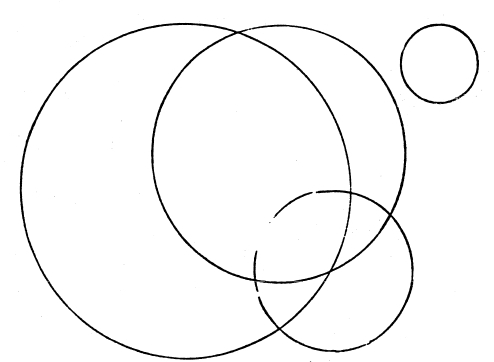
Yet another distortion is to fragment the levels of the Wheel. Different levels are experienced at alternative times, each part disassociated from the others. The result is the chaotic picture of a schizophrenic personality and/or lifestyle. In the extreme, the center floats alone, outside the rest. This explains how fractured individuals who seem like model citizens and pictures of propriety on the surface can live hidden lives of depravity and commit crimes of unspeakable cruelty.

Stress

Each distortion has negative consequences for mental health. This in turn affects relationships within and between families, and then relationships within and between every larger form of social, political, religious, educational and business organization.

Egoists — narcissists in the extreme — subscribe to the illusion that they’re separate and that they must compete against each other to rise to the top two-dimensional pyramids. They compete for control over presumably scare resources, both material and intangible. This includes money, possessions, political power, popularity — even love. “Me-first-and-foremost” believers feel justified in doing whatever it takes to get “ahead” — at the expense of everyone else.

Egoists behave as if getting what they want is the end-all and be-all of existence. They act with little regard for the future, oblivious to the concept of karma. Like Dorian Gray, they believe they can hide from the consequences of their actions and that there is no higher justice. But in this, they are sadly mistaken. Whether foreseen or not, the results of past actions inevitably return. For the unprepared, it is the hardest but surest way to learn life’s lessons.

Egoists are not in-dependent, for they see themselves as lacking inner resources. They are independent in the backwards sense of trusting and depending on no one and nothing but themselves. This is not only terribly lonely. It invites rationalizations, making it acceptable to exploit others and distance themselves from the pain, suffering and hardships caused by their selfishness.

Duality – Dividing the World into Opposites

In the positive worldview, light, peace, and higher love at the center are balanced at the middle level by the fluctuations of nature: day and night, light and dark, hard and soft, hot and cold, wet and dry, pleasure and pain. The elements of nature combine and recombine, proliferating to create diversity on the surface of the quantum Life Wheel, including the manifold species of plants, animals, birds, fish — and races of mankind.

The Complete, Natural Paradigm

Completion

However, in recent times, it has become the usual practice to separate the complimentary sides and alternating seasons of nature, pitting them against each other. Integral pairs of light and dark, day and night, white and black, positive and negative, male and female are opposed as if they were warring antitheticals.

Life, success and pleasure are chased after. Their opposites — death, failure and pain — are shunned with fear and aversion. In the extreme, even the compass directions of right and left are associated with political extremes. This produces a world of conflict within and wars without.

Exclusively “Good” – Yang without Yin

Duality Positive

Exclusively “Bad” – Yin without Yang

Duality negative

To make matters even worse, moral judgments of “good and bad” or “right and wrong” are arbitrarily assigned to opposite sides of the same coin. Instead of being equally natural parts of a single, unified pattern, light, day, white, positive and male are elevated to superior status. Dark, night, black, negative and female are subordinated to inferior status. The language of poetry, when misconstrued and taken literally, becomes perverted into sexist and racist bigotry, with wide ranging, divisive results.

Love

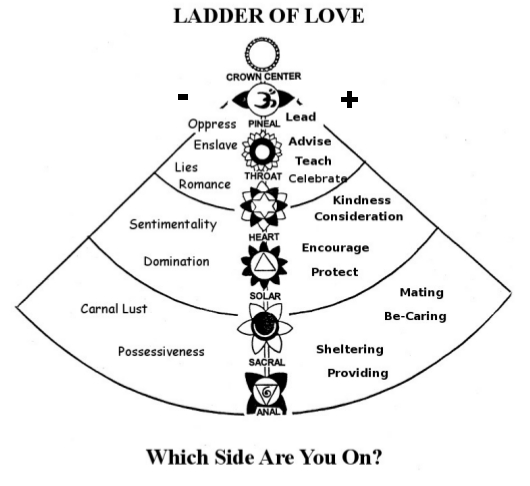
It is said that “Love makes the world go round.” Higher, unconditional love resides at the Wheel’s center. But much that is done in the name of this all-powerful influence is paltry parody. The natural impulse to extend outwards towards others takes many forms, positive and negative, as it manifests throughout the layers and sectors of the life Wheel. Some are creative, others destructive.

In creating your own personal Wheel, it is important to think about your own experiences, past and present, and what you would like to change for the better.

LoveLadder.sized

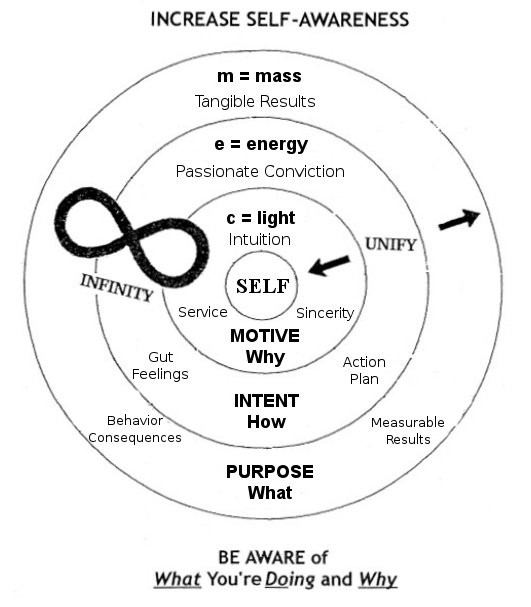
The Best Leaders Are Self-Aware

PPH Increase Self-Awareness

Albert Einstein, who had the Unified Field Theory of his heart’s desire but didn’t know it, was a world leader in science as well as humanitarian thought. What he lacked was yoga training and a direct experience of the wheels-within-wheels levels of the Positive Paradigm. The product of a repressive, European culture, he was congested at the middle level of emotions, an affliction that manifested in the form of a miserable family life. Despite early flashes of genius, he was unable to produce consistently brilliant work.

Notable leaders of modern times each have unique Life Wheel patterns that explain both their strengths and weaknesses.

Make the Choice

The paradigm choice and its consequences are summarized as follows:

  • Dysfunctional paradigms tie us in knots. They tear us apart. They drive us crazy. They push us to murder and even suicide. It’s imperative to identify them and root them out.
  • To survive intact, we must cleave to the essence of the perennial philosophy. The Quantum Paradigm of Change is a snapshot of the essential truth which the world’s great religions share in common. It offers us a way out of global madness. It gives us a means for restoring sanity to our world outlook.
  • It is a question of which worldview will prevail. Everyone must choose. (Failing to choose consciously is also a choice.) Do we cling to dysfunctional paradigms that have brought us to the brink of Titanic disaster? Or do we opt for Einstein’s new way of thinking? Do we choose to be, or not to be? To survive or to perish from the face of the earth, that is the question.
  • In Quantum Paradigm context, peace necessarily begins one individual at a time, and is accomplished from the inside out. So long as dysfunctional paradigms put individuals at war within themselves, general ignorance will continue to escalate into worldwide conflict.
  • Paradigm choices have consequences for long-term survival. The Western linear progressive theory of history puts leaders operating on dysfunctional paradigms at a loss to foresee cyclical down-turns or prepare for them in time.

What’s Your Answer to Hamlet’s Existential Question?

The last post, How Do You Define GOOD, opened with a basic law of nature: in duality, every coin has two sides. “Whatever has a front, has back. The larger the front, the larger the back.” It  explains why surface appearances are often deceiving.

I bring the Two Sides Law up here again in answer to comments from a recent LinkedIn post, To Be or Not To Be PC? There, political correctness was defended:

PC is often viewed incorrectly, fundamentally it is a collective societal attempt to correct social inequity – the avoidance, often considered as taken to extremes, of forms of expression or action that are perceived to exclude, marginalize, or insult groups of people who are socially disadvantaged or discriminated against.

I responded:

Understood . . . As an Ed Admin grad student, I wrote a paper for a law seminar on Affirmative Action. I observed that, however worthy the goals, the legislation missed the point. Not only was it unenforceable. It would trigger backlash. Which in time proved to be a correct assessment. I recommended Positive Action as a viable alternative for achieving the legislation’s worthy goals then — and still do. The surface definition of PC is, of course, impeccable. But applications and abuses have drifted so far afield from the verbal window dressing and original intent as to be unrecognizable. “Good intentions . . . “

These days, when promises seem too good to be true, I instinctively know they’re a ruse — a cover for something opposite and equally awful. A Shakespearian observation captures the gist. “Methinks he doth protest too much.”

“Change we can believe in?” “Social equity?” Methinks such slogans are market-tested veneer, engineered by behind-the-scenes puppet-masters to tap into and exploit our deepest desires and highest aspirations. They mask political agendas that have nothing whatsoever to do with seductive but empty wrappers. When politicians protest too much, you can depend on their front being a cynical cover for unacceptable, unspeakable motives.

To Be or Not To Be PC

Remember Daniel-san and Mr. Miyagi from the Karate Kid? After Daniel wins the tournament, John Kreese, abusive Sensei of Cobra Kai, corners Miyagi in the parking lot and swings at him twice.

Miyagi simply ducks. Kreese misses, smashing first one fist and then the other through a parked car window, shattering the glass and lacerating both hands.

In Karate Kid III, Kreese calls on a Vietnam war buddy to act as the agent of his revenge. Treacherous but slick, Terry Silver, wealthy owner of a toxic waste disposal corporation, confuses Daniel to the point of self-destruction. Daniel mistakes his best friend for his enemy, and vice versa.

“Have no mercy,” was Kreese’s creed.

Silver gives Daniel three rules for winning an unfair fight. First, “If a man can’t stand, he can’t fight. So break his knees.”

Second, “If a man can’t breathe, he can’t fight. So break his nose.”

Third, “If a man can’t see, he can’t fight. So gouge out his eyes.”

That brings us back to the theme of an earlier post, “Change the Rules of the Knowledge Game.” The progressive/atheist Rules of the Politically Correct Game prevent believers (along with those they try to control) from being able to see and take a positive stand against evil.

PC advocates confuse the public, presenting true friends of the people as enemies, and vice versa. Even the existence evil is cast into doubt. It’s quibbled away in double-talk speculations, relegated to the fringes of speculative theory – outside the “accepted” rules of what can be known.

By PC standards, the concept of evil is demeaned, presumed to be a moralistic, judgmental, prejudiced fiction. This is a Yes and No. But denying the existence of evil by an exclusively materialistic standard prevents believers from being able to see grave danger, name it and protect from it – much less fight intelligently and successfully against it.

Is there method to this madness? Take a moment to think about it. Who stands to benefit from this blindness? Who stands to lose?

This picture of the PC problem may help:

Can't See.sized

Here’s how the Motive/Purpose/Intent (MPI) standard – the Why/How/What – applies to Daniel’s situation. He sees the surface What of Mr. Miyagi’s refusing to train him for another karate event. He compares it to Silver’s sly What – an all-too-eager willingness to act has his trainer.

What Daniel doesn’t know because he can’t see them are the underlying intangibles. Mr. Miyagi doesn’t support the fight because there’s no worthy Purpose. His Motive is to protect Daniel’s best interests. In contrast, Silver has set Daniel up to fight, even pressured him into entering the contest. But his ulterior Motive (the Why) is to exact revenge. His Purpose (the How) is to defeat and humiliate Daniel as painfully as Kreese was beaten, breaking Miyagi’s heart in the process.

Details. But important ones. For lack of inner awareness, Daniel was steered into a world of hurt. As are we all in similar circumstances.

Here’s another example of confusions resulting from operating on limited and limiting PC rules taken taken directly from an ongoing LinkedIn discussion in the New Philosophy Network. The thread is called HOW DO YOU DEFINE EVIL?

I entered the discussion, thinking my viewpoint would be interesting, perhaps even helpful, by offering this comment:

I’ve written to this subject, so let me sum up a few basics from my perspective. First, morality is technically an ephemeral social construct at the surface of the Life Wheel, whereas virtues (compassion, including kindness, gentleness, courage, etc.) are inherent potentials residing at the middle level of the Wheel. Evil in Positive Paradigm context is defined as destructive acts or intentions which violate the integrity of the whole, the aim of destroying the life pattern itself. If there’s further interest, pictures and explanations are available online. Pls. see http://wp.me/p46Y5Z-9B (“How Bad People Become Leaders”).

There were two responses. One dismissed the definition as a bit obtuse. The other seemed like a back-handed compliment – condescending, perhaps flirtatious. Thanks Patricia, nice and simple for a simple mind like me to understand. I would love to read some of your books 🙂

Not sure what to make of this, I reviewed many of the 523 comments posted over the past 24 days. They were sickening, both literally and figuratively.

The opening statement, made by medical doctor and research scientist, is this:

Christians condem anyone who does not follow their beliefs to live forever in Hell ( the bosom of all evil) , Fundamentalist followers of Islam believe everyone who does not follow their beliefs are evil and condem them to death via evil attrocities, Other religions have gods to protect them against evil, and gods to explain evil. Society explains evil through Freudian concepts of psycopathy and sociopathy. It would seem that evil is perpetuated by intolerance of other peoples beliefs?
And is this not the basis of human conflict throughout all history? What are your philosophical views on this concept?

(Turns out, it’s the platform for promoting a forthcoming book.)

But a wide range of contributors — atheists, agnostics and theists – chime in. The first comment reads, Evil is just anything contrary to the norms of the one judging and no more. The concept rests on inauthentic or authoritarian thinking.

A “top contributor” takes it upon himself to moderate the discussion, repeating the same mantra, straight out of the PC progressive handbook – evil is what effectively undoes or blocks any progress to greater purposeful complexity and abundance.

Suffice it to say, the level of discourse quickly degenerates into a testosterone-saturated, contentious and extraordinary disrespectful exchange. “Childish” comes to mind. The troll word is thrown back and forth. On the defensive, one commenter states:

I would prefer your responses were less transparently hostile (and as abusive of metaphor as you have accused me of being, I suspect to win the point). : ) I am not a member of any sort of ‘guys’ and my pants are on.

One remark criticizes the self-nominated moderator: Your sarcasm is showing; you should at least try a little to be more balanced, your post is so one-sided and shows such negative bias you should be embarrassed at the lack of balance. It’s so unbalanced it reminds me of the Titanic after it hit the iceberg. . . .

To some extent, I empathize with the deep, underlying frustration. They’re struggling inside the box of dysfunctional paradigms. Trapped as if in a Japanese wicker-woven finger-prison, the harder they struggle to get out, the stucker they get. They sense that somewhere, somehow, something is terribly wrong – but without a comprehensive paradigm, they have no way to identify the heart of the problem much less find positive solutions.

I’ll speak further to important issues from this heated discussion in the next post, “The Great Reconciliation.” But here, the subject remains defining evil.

In “How Bad People Become Leaders,”I offered another picture, defining “evil” as anti-life: intentionally shattering and fragmenting the creative pattern. In Positive Paradigm context, the intentions and actions of any person (or group) that destroys its own and/or threatens to annihilate enemy groups, devoid of respect for the inherent sanctity of life, are defined as evil.

In metaphysical circles, by the way, in addition to extremes of black and white magic, there are shades of gray and yellow, depending on the extent of harm done and degree of intentionality.

In Karate Kid III, the central villain runs a toxic waste disposal business – an apt metaphor for abusive defenders of toxic PC ideas and attitudes! Why do I take such exception to PC “ideologies?” Because misleading, dysfunctional paradigms are life-threatening, a danger even to human survival itself.

In Shakespeare’s Hamlet, the procrastinating prince debates the suicide option: To be or not to be, that was his question. He waivers and philosophies right up the the 11th hour. As a consequence, in the final act, the stage is littered with bodies – not only his, but also others whom he might have saved.

If rules of the knowledge game prohibit the general population from seeing genuine evil clearly for what it is and if they inhibit us from standing firm against it, they effectively prevent us from protecting ourselves and those we love from it’s toxic, destructive effects. In the name of tolerance, PC progressives pretend to be the best friends of minorities and women. In practice, they function as worst enemies. As a first step, would-be survivors must restore a full-spectrum reality map that allows them to recognize who’s who, and what’s what.

To be or not to be, asked Hamlet. That is the question. Today, to be or not to be PC is the burning issue. Whether to commit national, even global suicide through ignorance, or to WAKE UP to existing dangers of Titanic proportion and take a positive stand – while there’s still precious time left.

What’s Your Definition of GOOD?

In duality, there are two sides to every coin. It’s a basic law of nature. “Whatever has a front, has back.” Further, “The larger the front, the larger the back.” This explains why surface appearances are often so deceiving.

I mention the Two Sides Law here because I’ve been following a LinkedIn discussion group called The New Philosophy Network. The subject of the particular “thread” is HOW DO YOU DEFINE EVIL?

Not to worry. You haven’t missed much. Philosophy isn’t what it used to be. If there was any “love of wisdom” (the definition of philosophy), it got lost in the one-upsmanship jousting of an extraordinarily uncivil ego contest.

But it got me to thinking about the opposite, shadow side of evil. Did the negative approach influence the quality of conversation? Has anyone asked lately, HOW DO YOU DEFINE GOOD?

Come to think of it, I did awhile ago. So here, for the sake of balance, is the three-part Essay on GOOD from Conscience: Your Ultimate Personal Survival Guide.

globe

Essay 30. GOOD

“The true genius of living is to carry the spirit of the child into old age. And what is the spirit of the child, but that of wide-eyed open wonder, excitement and zest, the optimistic attitude that nothing is too good to be true, that the world is literally a wonderful place?” — Norman Vincent Peale, Enthusiasm Makes the Difference

“We all want the good things in life; we all desire to be surrounded by friends; but we have no right to expect to attract any of these things except when our own lives have earned us the right to be honored, respected, and admired. . . .” — M.P. Hall, Magic: A Treatise on Esoteric Ethics

“It’s the one characteristic that connects all the defendants: a genuine incapacity to feel with their fellow man. Evil, I think, is the absence of empathy.” — Medical Officer, Nuremberg

THE FRONT

The roots of good mean to unite, be associated, or suitable. The term goes through seventeen permutations in Webster’s Dictionary alone.

The first definition is a general term of approval or commendation. Good means suitable to a purpose or effect. It means efficient, producing favorable or beneficial results. It can mean fresh, unspoiled, uncontaminated. It can mean valid, genuine, or real, as in good money or a good excuse.

Good means healthy, strong or vigorous, as in good eyesight. The word is used to mean financially safe or sound. It means honorable, worthy, or respectable. It is used to mean enjoyable, desirable, pleasant or happy, as in the good life. Good can mean dependable, reliable or correct, as in good advice. It can mean thorough or complete, as in a good job of cleaning.

Good can mean excellent of its kind, as in a good novel or considered the best, as in her good china. It can mean morally sound or excellent, virtuous, honest, just, pious, devout, kind, benevolent, generous, sympathetic or well-behaved and dutiful.

It can mean proper, becoming, correct (good manners) and therefore socially acceptable (a good family). It can mean able, skilled, or expert, as in a good swimmer.

It can mean loyal or conforming, as in a good Democrat. In law, it means an effectual or valid title.

The Ten Commandments that Moses gave to the people of Israel, enumerated in the fifth chapter of Deuteronomy in the Old Testament, are a generally accepted code of right conduct. They prescribe what we should and should not do to live a good life. Though the cultural context is different, in principle they are consistent with I Ching philosophy.

Revisiting them from an I Ching point of view enriches their meaning. For example, the seventh commandment has become the focus of special public attention, taking on political overtones. “Neither shalt thou commit adultery.” This one-sentence commandment has depths of meaning which span the energy continuum.

For example, at first chakra level, it includes refraining from contaminating air, water and food with pollutants. At the second, it includes not violating marital or parental responsibilities.

At the third, it includes not tampering with legislation for antisocial purposes. At the fourth, it includes not mixing compassion with sentimentality or greed.

At the fifth, it includes not misconstruing scriptures to suit political agendas. At the sixth, it includes not adulterating conscience with the ego impulses.

In addition, each level’s “shalt not” implies a positive shadow: “thou shalt.” At the first chakra level, this includes taking active responsibility for cleansing air, water and food of pollutants.

At the second chakra level, it includes fulfilling family commitments. At the third, it includes adjusting corporate and government practices to serve the common good.

At the fourth, it includes quietly serving those in need without public fanfare. At the fifth, it includes aligning personal and political goals with natural and scriptural law.

At the sixth, it includes practicing self-awareness methods to purify ego.

THE BACK

In I Ching context, evil violates divine and natural law. It is antithetical to the life process, tearing the pattern apart. Good and evil cannot be equated with yin and yang. Good is inclusive of the harmonious whole, both yin and yang, attainable by males and females of every race without limitation.

In moralist context, violating codes of generally accepted social or sexual conduct is regarded as bad, the opposite of good. Sages, however, define correct or incorrect behavior in terms of context and results. Right or wrong action is defined in terms of the immediate situation and the actor’s deepest, underlying motives.

It Is Possible to Make A FRESH START

I started “A Fresh Start is Urgently Necessary” by saying two coincidental things happened that day. I described the first, the internet being down. (Turns out a heedless farmer severed a fiber optic cable.) The second had to wait until today. Namely, I connected the dots between an overnight YouTube music search and the challenges inherent in presenting the  timeless I Ching to the Millennial generation in a way they can identify with and own.

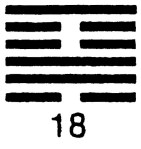
For starters, here’s the Common Sense Book of Change version of Hexagram 18.

hex 18

FRESH START

Even when it seems that all has been spoiled,

it is possibleto make a FRESH START.

Be willing to face your faults.

Find out how to correct them.

The situation will gradually improve

if you are sincere and work hard.

Be sure you know what you want.

Avoid delay.

The unfamiliar graph is called a hexagram. It’s an ancient short-hand method for expressing countless generations of experiential wisdom about the correspondence between chi (energy) flow in the human mind/body (the microcosm) and in the universe (the macrocosm). In yogic philosophy, these six lines correlate with six basic chakras (wheels, or subtle energy centers) located at intersections along the human spine. Each of the centers is associated with specific developmental stages. A primary purpose of yogic practices is to awaken, balance and integrate these levels of experience.

The straight and broken lines of the hexagram are a binary-digital way of expressing alternating, expanding and contracting life rhythms. In the Book of Change, any or all of the six lines can change into its opposite. This results in 64 possible permutations. It’s not coincidence that the ancient I Ching and modern DNA patterns are exact correlates. This is one explanation for the healing effects of medical sciences based on the I Ching hexagrams.

Admittedly, the specifics are beyond my comprehension, for the most part because I trust from experience in the practical results. Just as I use my computer without a deep understanding of how it operates, I have benefited greatly from working with the I Ching and its off-shots. Both sciences, modern and ancient, for many of the same reasons, simply work.

To carry forward the question — When the Lights Go Out, Who Will Millennials Call? (see wp.me/p46Y5Z-cm) — consider this. If/when today’s hospitals are rendered inoperable by grid failures, and/or healthcare as we know it is made unavailable due to social-political malfunctions (like Obama un-care, for example), where can we turn for practical health sciences that maintain health and heal dis-eases? Modern medicine as a profession and a social-political corporate conglomerate has become, for many people, for many reasons, a nightmare. We especially need a Fresh Start in this important area of our lives.

My short answer: long after grid-dependent lights go out, the same basics that work seeming magic with the I Ching will still be available to those familiar with Traditional Chinese Medicine (TCM) methods — including Chi Kung and Tai Chi. The sooner people become fluent in the self-healing arts, the better off — for countless reasons — most of us will be.

I’ve been emphatically told by the one I most trust that “The mind will play any tune you ask it to.” When he speaks, I unpack every word. (He doesn’t waste them.) There is more meaning to this key than simply “Mind over matter” or “Beliefs generate results,” though in terms of self-healing these are included. Training the mind as a musical instrument to skillfully, deliberately apply the I Ching‘s 64-permutations of dynamic “if-then” consequences (analogous to existing computer-driven chess games) would greatly enhance one’s ability to recognize prevailing self-defeating tunes. Further, one could discover better tunes, decide which to play when, and learn how to “ask the mind” to play them.

Advanced meditators describe hearing a celestial “music of the spheres.” Just imagine, if you will, what wondrous music is available to those with “ears to hear.”

Much of I Ching-based philosophy focuses on understanding how fluctuating energy patterns affect human behavior, as well as how they can be used to create harmonious relationships and orchestrate viable institutions of governance. Much has been spoiled by lack of awareness of these patterns (tunes) and ignorance as to how to steer institutions effectively. By reintroducing this vital information, correcting what I have repeatedly described as a “fatal information deficit,” the damage resulting from such ignorance could be repaired and a Fresh Start initiated.

Unfortunately, much of this tradition has a very bad “rep.” It’s been spoiled by a complex mix of misunderstanding, misapplication, and misrepresentation. For example, when I went on YouTube looking for music (the second coincidence I mentioned earlier — see wp.me/p46Y5Z-cJ), what I had in mind was chakra/DNA healing ragas. What I found instead was a commercialized, psychedelic offering of “feel good” audio engineering. Comments likened listening to taking psychotropic drugs that induce the illusion of mind-altering experience. They raved about hallucinations experienced while tripping and listening at the same time.

My Aha: So much of what has been spoiled and cries out for a Fresh Start is the I Ching itself. Today it needs to be approached from the modern science of mind-exploration. It needs to be repackaged as a delightful, game-oriented Lumosity experience, but founded on a profoundly motivating purpose: human survival. Not unlike the Christian tradition, which has suffered greatly in the wrong hands for centuries, the timeless wisdoms must be “reinvented” and approached as if new: First time, every time.

compass clock

It’s the 11th hour, for sure. But, as it has been written, With God all things are possible –including, even, at this late hour, a Fresh Start. But the clock is ticking. God — the Tao — is infinite. Time is not.