Tag Archives: Yoga

Discovering the Missing Link

This afternoon, as an after-thought, my author-journalist LinkedIn connection emailed me, “On another note, your years living in Europe and your other international travel sound interesting. Must be a good story there. Would love to hear more when time permits.”

As a matter of fact, a section in Rethinking Survival describes the highlights of living in Europe. So I’ll share some of them here.
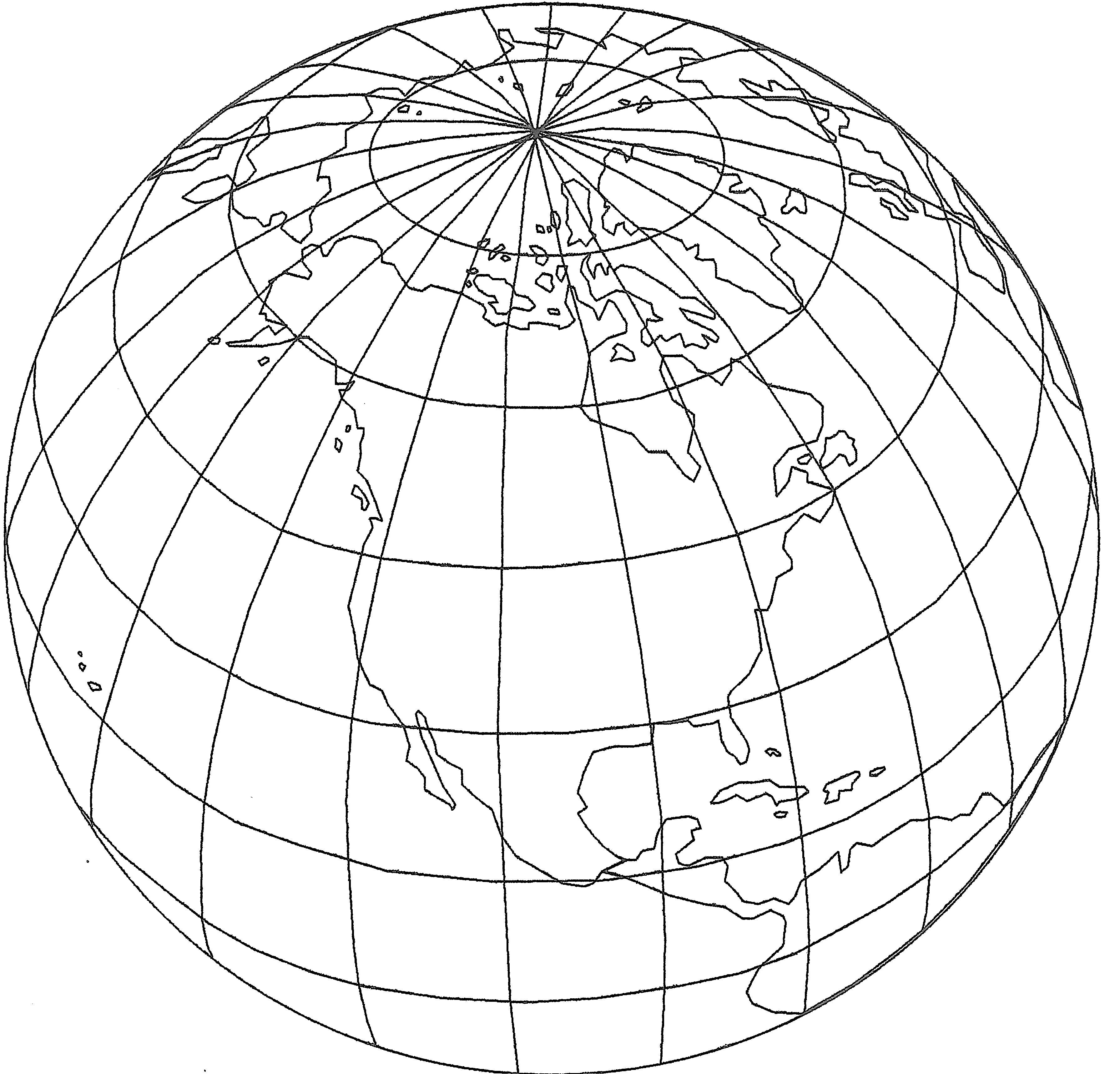
globe

EUROPE: Discovering the Missing Link

“If you love your children, tell them how the world works.” — Dr. Phil

According to the people who raised me, the way the world worked was this. If you “pleased” them, then they would take care of you: feed you, house you, pay the bills for your clothes . . . let you live. If you didn’t, they’d disown you, cut you off, write you out of their will. The end. Survival depended exclusively on being very good at pleasing those who controlled the money and the material resources which come from it.

In my case, this was a problem. What pleased one adult didn’t please the next. And what pleased me didn’t necessarily please any of them. It was, at best, a con. Bottom line: I had no idea of how the world really works, only that mine at the time didn’t work for me. When conflicting survival demands came to a head, I had to split. “Get out of town, Tonto. Pronto.”

The year Nixon was elected president, a poster hanging in my dorm hallway said it all. It showed him wearing Uncle Sam’s pin-stripe suit and top hat, finger pointing to recruit. The question posed:  “Would you buy a used car from this man?” My answer was, “No way!” I wasn’t in a position to change the country, so I changed my location. At the invitation to join up with a touring Brazilian chamber orchestra, I left for foreign lands.

Living abroad began the process of divesting the cultural conditioning I’d taken for granted. Being the only English speaker in the group made me rethink communication, getting down to the basics. When it took an effort to find the words, it was amazing how little really needed to be said. Accompanied with suggestive body language and facial expressions. a few words went a long way.

However, I found that change of scene, of language and cultural settings, changed nothing of substance. “Wherever you go, there you are.” In Sandor Vegh’s violin master class, students from around the world agonized over the same dilemmas I thought I’d left behind. They too thought they could escape problems just by walking away – but nothing is so easy.

Nao, a darkly mournful Japanese violist, described the shock of discovering her older brother’s dead body hanging limp in his clothes closet. Chiao, a bright shining extrovert, grieved over love lost. When she beat him to take first place in a violin competition, Alberto chose a less threatening lover as his companion.

My German hosts, who’d survived WWII, however, had much to teach. They didn’t take survival, as I had up to that point, for granted. A cellist friend with whom I stayed in St. Georgen, located in the Black Forest of South Germany, told me her mother’s story. To save her starving children’s lives during the Russian occupation of Berlin after the war, Frau Hass changed from oppressed housewife to heroic protector. In contrast, Herr Petersen, a 75-year-old portrait painter – my Düsseldorf landlord – recalled war time as “the best years.” It was only then– albeit of extreme necessity– that formal, inhibited Germans came out of their shells and actually talked with one another.

For me, the highlight of studies at the Robert Schumann Konservatorium wasn’t the music teachers, but a modest, insightful kinesiology instructor. Frau Lehru wasn’t a musician herself. But vocal and instrumental teachers alike sent students beyond their help to her.

The pianist whose lessons were scheduled the hour before mine told me her story. Herr Dreschel had given up on her as either lazy or untalented. But Frau Lehru diagnosed the real problem — pinched spinal nerves. Recommended visits to a chiropractor worked “miracles.” Elated, she was a “new person.”

I went to her studio and asked Frau Lehru to coach me. Her lessons were wonderful. She saw timidity in my posture and tension in the way I held my violin. She gave me exercises to correct not only my posture, but the underlying attitudes which bent me out of shape.

“Platz machen,” she encouraged me. “Make room! Don’t crowd me!” And, “Auf wiederstand waschen.” Figuratively, Grow upwards. Stand tall under the pressure of resistance and adversity.

In retrospect, it was if she’d reinvented the yogic disciplines which sitar and tabla students are taught in India, where music technique is balanced with breathing and physical exercises. Her gift inspired a change in my career goals. Rather than teach technique, I could help many more musicians by becoming an exercise-and-therapy coach in one, like her. She was much too busy to consider writing about her methods and results. I would do this for her with a book called The Body as Instrument: How to Tune It. (Still later, ratcheting up another notch, I aspired to build schools to facilitate a whole generation of coaches like Frau Lehru.)

Even more influential than people, however, were two books I discovered in Düsseldorf’s International Book Market on Königs Allee. In combination, they substantially broadened my life’s horizons. One was the Wilhelm/Baynes English translation of the Chinese I Ching, the Book of Change. The other was Carl Jung’s autobiography, Memories Dreams and Reflections. This Swiss analyst also wrote the introduction to the Wilhelm/Baynes translation.

I’m now aware of much that’s been written about Jung’s darker side. But in 1970, I resonated with his descriptions of self-discovery. In particular, I related to the story about his quickest cure. A young woman, the daughter of wealthy, stylishly atheistic parents was instantly healed of her neurosis upon learning of her heritage. Her grandfather had been a Talmudic scholar. Though an embarrassment to her parents, he was regarded by peers as a saint. This knowledge gave her permission to know what she “knew,” and released her psychological suffering instantly.

As it happened, I’d just been contacting my grandparents, asking them to write me about their history. I did so because Herr Oswald Peterson, my portrait painter landlord, insisted I was not American. “Who are you?” he wanted to know.

I’d already known that in her youth, my father’s mother, Grandma Ellie West, had a gorgeous soprano voice. What I learned from her letters was that she’d auditioned for John Philip Sousa’s world tour and was invited to join his band as a soloist. But she decided to stay home instead to marry my grandfather, Hub. She heartily approved of my European music jaunt. “Good for you!”

I was fascinated to learn from Grandpa Dave, my mother’s father, that his father came from Russia. He was a “very good” tailor by profession and a Talmudic scholar as well. A-ha. Who would have guessed? It opened a door of new possibilities in my mind.

Because Jung experienced dreams as the winged messengers of key insights, I began paying attention to mine. The dream I remember best was of climbing the third-story stairs of Herr Peterson’s building. He’d never repaired the roof after the WWII, so the top flight led to rubble and open air.

In my dream, however, I discovered a new floor that hadn’t been there before. It was dimly lit and full of draped furniture, covered with cobwebs. As I brushed away the dust, details of this new room began to emerge. It was as if I were entering into a new level of personal awareness.

As for the I Ching, I’d had a hunch about it for a very long time. Dr. Ellsworth Carlson, who lived in Shansi, China during WWII, was an Oberlin College classmate of my parents. When I was nursery school age, he’d bounced me on his knees at Harvard. As Freshman student, I took his course in Asian History at Oberlin. What stuck with me how vast an influence the I Ching had on Chinese thinking for 8,000 years and counting.

In fact, when I left for Europe, I carried only my violin and one small suitcase. Of that, half was filled with clothes and personal items. The other half contained sheet music and one small book: the Legge translation of the I Ching. It made no sense to me. I could barely get through a page or two before giving up. But I kept coming back to it. There was something important there that I had to know more about.

Finally, with the Wilhelm/Baynes edition, I had a version I could relate to. It literally became my teacher. It gave me a whole new concept of how the world really works. Not just this family or that institution or the other county. Not arbitrary and capricious, fluctuating fashions, but the constant anchor over time. From it, I could deduce the fundamental energy dynamics of action and reaction which drive relationships, internally at a psychological level, and externally in terms of practical, day-to-day events and their long-term consequences.

It was an extension of the logic my English teacher Miss Elson impressed on my high school brain. But more. It gave me a map of logical consequences, as inevitable as computer language. “If this, then that.”

For example, If you kick people, they kick back (if they can) or otherwise resist. If you are kind, you inspire love and trust in others. If you violate natural law, nature bites back (your mental health suffers; relationships deteriorate; your behavior becomes erratic and social/physical survival is imperiled). Asian cultures call this “the law of karma.” Its operation is also described in biblical terms: “As ye reap, so shall ye sow,” and “to everything there is a season.”

In sum, its 64 permutations map a progression of the AC-DC energy changes which constitute the natural law of repetitive, cyclical change. From my point of view, this ancient, timeless science fills a critical blind-spot in Western thinking, lacking which, all efforts are partial and incomplete. Put another way, the glaring absence of this information explains why so much goes so wrong, despite even the best of intentions on the part of politicians, priests, coaches and leaders of every ilk.

. . .  [an understanding of natural law], the practical, middle (energy) level of three-part experience, is essential to the whole. It’s a sorely missed link in our functional knowledge base. Without wisdom and skill at this middle level of experience, spiritual aspirations cannot be realized nor can political policies be effectively implemented. Ongoing sex scandals which plague high-level military leaders, politicians and Christian clergy give a hint of what’s missing from their training, causing them to fail miserably at great expense to those they should be serving.
Rethinking SEX & TANTRA

Today is a tongue in cheek test of the SEO factor, to find out who is visiting this blog and why. Visitors, are you there? What do you think? Your comments are welcome!

globe

9. SEX

“Sexual union is physical enactment of the virtue/power, the te of Taoism. It is the resolution of the physical dichotomy of male and female, of self and not-self. Man enters woman while woman receives man. Two bodies become one. Physical separateness is transcended. Each is the completion of the other.” — Ray Grigg, The Tao of Relationships

“Everybody affected by feelings of guilt and shame will have negative feelings about their sexuality. These feelings block the flow of primal life force through-out the entire body. Equally, at a physical level, any negativity toward your sexuality or parts of your body leads to chronic tension in muscles throughout the body. This means that your energy can no longer flow between your Tan T’iens, or centres of Divine Energy. ” — Russell & Kolb, The Tao of Sexual Massage

“If we want to reach our boys and help them develop mature and responsible attitudes towards sex, we need to understand their motivations. As a culture we are much more aware of and sympathetic to the pressures around sexuality girls feel. The confusion boys feel is hidden, hidden under their own masks of macho posturing and under the weight of our misconceptions of toxicity about boys.” — William Pollack, Real Boys

THE FRONT

Roots of sex, discrimination and science all mean to divide. Webster’s definition of sex includes either of the two divisions, male or female, into which persons, animals or plants are separated, with reference to their reproductive functions. Sex refers to the character of being male or female, all the attributes by which males and females are distinguished. It can refer to anything connected with sexual gratification or reproduction, or the attraction of those of one sex for those of the other. It can also refer to sexual intercourse.

The dictionary does not differentiate between sex and gender stereotypes. While the biological differences between human males and females remain constant, their roles and prescribed behavior varies from culture to culture, and within cultures over time.

For example, Margaret Mead, a pioneering anthropologist, challenged the stereotypes of her day both in the moral conduct of her personal life and in the conclusions of her published research. In Coming of Age in Samoa, she reported that the many different ways boy and girl children can be raised will shape their attitudes and relationships into very different patterns.

She described one tribe that taught their children easy-going, accepting attitudes towards sex and raised contented, peaceable adults. In contrast, a cannibal tribe raised fierce warriors by systematically frustrating their infants, hanging them on tree branches to swing unattended, withholding basic touch and caring. Current civilizations resemble the cannibals more often than the peaceable, contented tribe, both in training and results.

Tantric yoga is a discipline which trains students to change sexual impulses from a culturally conditioned detriment to intentional accelerator of personal growth. Its premise is that forbidding people to think about sex has the opposite of intended effect. For centuries it’s been know that if you tell people not to think of white elephants, they’ll think of nothing else.

Slamming the lid on libido drives it into the inaccessible “unconscious.”

While publicly feigning compliance, people thus repressed indulge compulsive sexuality in extreme. Perhaps intentionally, perhaps not, sexual deviance has been systematically programmed into the world’s highly educated elite for centuries, making them vulnerable to blackmail and/or public humiliation for their inevitable discretions, placing them at the mercy of puppet masters who wield secret powers behind the scenes.

To prevent such personal/political undoing, energy science trains students to be wise, skillful and practical in sexual matters, fulfilling intimate needs without tearing the fabric of their emotional, family and professional lives apart.

As with communication, power and peace, the purpose and expression of sex evolves as awareness grows. For humans, the sex act begins and ends in the mind, the body’s most erogenous zone. Depending on attitude, it can be experienced as debasing or pure bliss. Sex can be a mating for the purpose of reproduction. It can be a one-sided expression of lust or will to dominate, motivated by insecurity, cruelty or even revenge. It can also be a source of healing, an expression of compassionate love. Comprehensive sex is practiced with reverent understanding that the individual act mirrors the sacred union of opposites.

THE BACK

An inversion of sexuality is frigidity or impotence, the lack of attraction to the opposite sex or incapacity to reproduce. It implies rejection of the creative, reproductive process. Negative role models, unfortunate experiences, inhibiting education or poor health are possible contributing factors.

In mythology, an androgynous person balances male and female aspects from within. If used as an excuse to shun the challenge of relationships, aspiring to this perfect state forfeits the learning opportunities associated with being human. There’s time enough in the hereafter for the even harder lessons reserved for angels.

——————-

Ray Grigg, The Tao of Relationships: A Balancing of Man and Woman. (Humanics New Age: Atlanta, GA, 1988.) p. xiii.

Russels & Kolb, The Tao of Sexual Massage. (Fireside Books: New York, 1992.) p. 55.

William Pollack, Real Boys: Rescuing Our Sons from the Myths of Boyhood. (Random House: New York, 1998.) p. 151.

Rethinking PEACE

Given the extraordinary amount of pain suffered in many parts of the world today — not the least of which being the very real fear of nuclear annihilation — I’ve chosen a message of PEACE from Conscience: Your Ultimate Personal Survival Guide.

 Essay 61. PEACE

When the forces of nature unite in profound harmony,

heavenly PEACE fills the earth.

Lives blossom. Prosperity increases.

Easy communication makes it possible

for people to understand one another.

This leads to cooperative efforts that will be fruitful.

Tranquility follows fulfillment of life goals.  

— Patricia West, The Common Sense Book of Change

Conflict is woven into the fundamental fabric of nature. The sea and land meet in violent conflict and make waves together. The plow turns the meadow and wheat springs forth. . . Conflict is evidence that human beings are engaged in something interesting. . . [It] plays a key role in the growth of character and the development of stable relationships. Conflict makes us into who we really are. — Brian Muldoon, The Heart of Conflict

The principle of economy in movement arises from a state of internal harmony. A mind that is at peace is not easily swayed or disturbed. This principle also plays a vital role in daily life, whether in business or in combat. If one over-reacts and responds with excessive or unnecessary action, one is at a disadvantage.-Mantak Chia & Juan Li, The Inner Structure of Tai Chi

THE FRONT

Webster’s defines peace as freedom from war or a stopping of war. It can refer to a treaty or agreement to end war or the threat of war. It’s defined as freedom from public disturbance or disorder, public security, law and order. It refers to freedom from disagreement or quarrels.

Peace also means harmony or concord. It’s used to describe an undisturbed state of mind, absence of mental conflict, serenity, or tranquility. To keep one’s peace means to be silent, keep quiet.

The timid are satisfied with peace defined by predictable routine, without conflict or challenge. The aggressive prefer peace defined as defeat of enemies or absolute control over subordinates. The peace of the grave is cessation of life. I Ching philosophy guides careful thinkers away from these extremes.

In I Ching context, peace is an inward state of calm that manifests as outward poise. Where timid and aggressive definitions both depend on external circumstances, the experience of tranquility depends only on oneself. External conditions will always be in flux. Therefore, looking for peace in the world is an exercise in futility. Internal states, however, are subject to self-governance.

In Asian traditions, peace is akin to the yogic concept of contentment — an attitude of grateful acceptance of all seasons and quiet openness to the rhythms of life. In biblical context, the lyrical stanzas of Ecclesiastes capture the wisdom of natural law:

 To every thing there is a season, and a time to every purpose under heaven:

A time to be born, and a time to die;

a time to plant and a time to pluck up that which has been planted;

A time to kill, and a time to heal.

The sage takes responsibility for attaining inner peace as the first step towards world peace. Inner quiet begets the attitude of confidence, which in turn generates acts of compassion, courage and generosity. World organizations which would impose military peace upon warring nations comprised of individuals each at war internally have no hope of success.

Conflict, like peace, starts from the inside and projects outwards. Therefore, no matter what military force is applied, so long as people are educated into internal conflict, external wars will continue to break out.

St. Paul’s epistle to the Ephesians takes on significant new meaning in the light of I Ching wisdom. Peace seekers would do well to consider it carefully:

2.14.  For he is our peace, who hath made both one

and hath broken down the middle wall of partition between us;

2.15. Having abolished in his flesh the enmity,

even the law of commandments contained in ordinances;

for to make in himself of twain one new man, so making peace.

Meditative practices which intentionally focus on the corpus callosum as the middle wall which separates and/or unifies right and left brain (yin/yang, male/female) functions give practical means for implementing biblical insight.

THE BACK

Conflict and war are opposites of peace. Only the context of motive, purpose and intent determines whether they are necessary and to long-term benefit, or unwarranted and uselessly destructive. Shunning either out of fear invites danger.

Enforced silence is a perversion of peace. A totalitarian state can outlaw free expression. It may compel rigid conformance and suppress dissent. However, it cannot contain the vitality of the creative life force, which always prevails.

———————–

Patricia West, The Common Sense Book of Change. (+A Positive Action Press: WI, 2000.) No. 11.

Brian Muldoon, The Heart of Conflict. (G.P. Putnam’s Sons: New York, 1996.) p. 9.

Mantak Chia & Juan Li, The Inner Structure of Tai Chi. (Healing Tao Books: Huntington,

NY, 1996.) p. 35.

Rethinking Christ at Christmas

RETHINKING SURVIVAL

 Excerpts

No matter what your beliefs, you’ll find Rethinking’s explanation for Christ’s enduring influence both fascinating and persuasive.

I came to the story of Jesus fairly late in life. When it finally came time to focus on The New Testament, I was ready and well prepared to appreciate it. It hadn’t been spoiled by being introduced too early, before I was mature enough to relate to the teachings as an adult. No one had spoiled the teachings for me with prejudiced opinions or by bad example. There was no social or authoritative pressure put upon me to either believe or not believe. It was my choice.

I came to the teachings, especially St. Matthew, with an open mind and uncluttered brain. Further, I Ching and yogic backgrounds put the life and times of Jesus in perspective. Many of his teachings and so-called miracles, it seemed, were built on tacit understandings generally accepted at a time when people lived far closer to nature than most of us city-folk do today. This bedrock of common understanding has since, for the most part, been lost or forgotten.

His story didn’t seem like hocus pocus to me, as intellectuals often assume. In the context of Chinese sages and Hindu yogis, it was plausible and wonderful. Here was an extraordinarily great master who choose to arrive on Planet Earth at a tipping point in history. Civilization had reached critical mass. This rare, great being had the compassion and power to influence the fate (survival versus extinction) of the human race. His demonstrated love, courage and personal sacrifice changed the course of history.

Not coincidentally, it seemed that at the time I was making friends with St. Matthew (the early 1980’s), humanity was slowly approaching another tipping point, another time when, again, human survival, cannot be taken for granted. There was a message here for those with “ears to hear.” It influenced me to write Rethinking Survival for the purpose of giving people worldwide the means to see Christ’s power and purpose with fresh eyes. The Positive Paradigm of Change offers a context within which his life, death and transfiguration are understandable.

It gives us an opportunity to rethink the example of his life, teachings and sacrifice. It’s a means to save the hope of the Christ child from the bathwater of false distortions. It offers a way out of narrow-minded strife in political and religious arenas alike.

Bottom line: I found that the Old Testament and the New Testament which completes it both work for me. What goes on at the surface, cultural level of institutional religions is a different matter. Sadly, too often, it’s apples and oranges. Disconnected universes. So it bears repeating: distortions at the ephemeral surface cannot negate the power and validity of the scriptures. Whatever unfortunate baggage and associations have accrued to the teachings, release them. However jaded you’ve become, get over it. However tragic the past, forgive it. Go back and rethink the teachings. See them like a genius, through fresh eyes, as if for the first time, new again. It’s worth it.

The 19th century poet William Wordsworth likened the paradigm’s center to “life’s Star.” Einstein’s earliest glimpse of eternity came from a compass. It gave him his first experience of something powerfully magical hidden behind the world of things. The True North center is the source of all-encompassing compassion, the Buddhist equivalent of Higher Love. It’s the fountainhead of Christian “charity.”

The Positive Paradigm model answers Bill O’Reilly’s implicit question. During a 60 Minutes interview on CBS, Norah O’Donnell asked for his take-away from Killing Jesus. His response: “The Christian savior was able to attract a following and a level of popularity that nobody to date has replicated.”

O’Reilly’s phenomenal success rides on technology earlier unknown. “He had no infrastructure,” O’Reilly marveled. “. . . He had no government, no PR guy, no money, no structure. He had nothing, yet he became the most famous human being ever.”

How can this be?

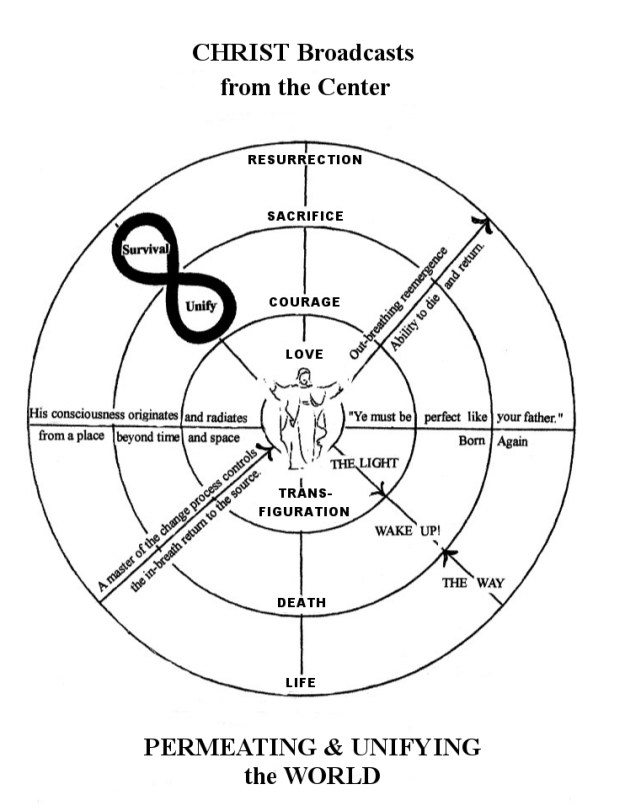
The level from which Christ broadcasts explains his extraordinary influence both then and now. His consciousness originates deep within the Life Wheel. It radiates from a place beyond time and space in all directions, permeating the entire field of creation, touching everyone everywhere. This explains the literal truth in his promise, that he would be with us always, even to the end of days.

0 CHRIST Permeates

The Positive Paradigm also gives us a picture of how disciples’ reports of Christ’s death and resurrection can be literally true. Accomplished meditation practitioners withdraw attention from the physical body and then return to ordinary consciousness on a daily basis. A true master of the change process controls the in-breathing return to the creative source and out-breathing reemergence into the material plane of physical experience. Proof of this mastery is the demonstrated ability to die to the physical body and then return.

Yogic literature is full of stories about masters who chose the time of their physical departure as well as the time, place and circumstances of their next incarnation. In this, Christ’s example is not unheard of.

It’s motive and magnitude of effect that make his story unique. His was an act of supreme self-sacrifice and compassion for self-doomed humanity. He had the power and will to buy humanity one last hope of survival — a final opportunity to WAKE UP in time to prevent ultimate extinction — being erased from the cycle of life altogether.

What’s critically important to remember here is that the example of his sacrifice speaks to everyone, everywhere. Jesus did not perform his apparent miracle to set himself above and apart from humanity. Quite the contrary. He did it to set an example of what’s possible, with the command that each of us should follow in his footsteps. “Ye must be perfect like your father.”

The Positive Paradigm is a model of potentials within each of us which make this command plausible and viable. The dynamic, creative process is on-going. The pattern of continuous regeneration is the deepest heritage of every individual. Whether aware of it or not, we continuously, daily, with every breath, release and die to the old in order to regenerate and be reborn to the new.

By extension, Christ’s example of mastering the change process applies not only to individuals but to the civilization as a whole. The world as we know it seems threatened, as if coming to an end. Yet those who hold the key to life and the universe, like modern day Noahs, have the opportunity — and responsibility — to ride the tide of the times and begin again, not just for themselves, but for the sake all life on Earth. They are the ultimate survivors who have it in their power to reseed the next generation, following Christ’s example to perpetuate the wheel of life.

globe

Einstein’s New Way of Thinking

Rethinking Survival

Here’s a summary of basics from Rethinking. The title reflects Einstein’s prophetic words:

A human being is part of the whole called by us “‘Universe,’

a part limited in time and space.

We experience ourselves, our thoughts and feelings

as something separate from the rest . . .

This delusion is a kind of prison for us,

restricting us to our personal desires and to affection

for a few persons nearest to us.

Our task must be to free ourselves from the prison

by widening our circle of compassion to embrace

all living creatures and the whole of nature in its beauty. . .

We shall require a substantially new manner of thinking

if mankind is to survive.

— Albert Einstein [emphasis added]

 RS web

The Positive Paradigm is the unified (and unifying) theory which Einstein sought. He missed it because he lacked a non-linear, concentric circle structure which expresses the dynamic relationships of his three variables in a two-directional, infinite continuum.

 The layered structure of the Positive Paradigm Wheel gives new meaning to Einstein’s observation that a problem can’t be solved at the same level on which it was created. “We can’t solve problems by using the same kind of thinking we used when we created them.” It gives new meaning to “Go deep,” and “We can’t be satisfied with superficial answers.” The model literally pictures the widening circle of compassion. It shows the way to escape from the prison of separatist thinking.

 As the book cover shows, three concentric circles orbit around a common center. The three variables of Albert Einstein’s famous formula, e = mc2 (energy, mass and light) are placed within this wheels-within-wheels structure.

 The figure-eight-shaped symbol of infinity is used in the Positive Paradigm Wheel. Because the Creator is characterized as infinite, beyond time, using this physics symbol is an especially appropriate way to symbolize the linking of the levels.

 As light travels on the outward path, it transforms from wave to particle. As pure, generative potential expands, silence transforms into ideas and then emotions within the middle level of the wheel. These in turn materialize into actions that produce physical, tangible results. On the return path, the process reverses. Matter disperses. It returns to its basic elements. It contracts, receding from particles to waves and then into the perfect silence from which it came.

 The Positive Paradigm Wheel mirrors the microcosmic structure of atoms as well as the macro-cosmic structure of planetary systems. At the microscopic level, its concentric rings mirror the structure of atoms around a nucleus. It equally mirrors the symmetry of the planets orbiting around an organizing star, the sun. On the largest scale of magnitude, it reflects the in- and out-breaths of perpetually expanding and contracting universes.

 This familiar atomic structure repeats smallest to largest in the patterns of nature, from snow flakes and intricate flowers to spiders’ webs and sea shells. Similar symmetrical patterns in repeat worldwide in the art of every culture — including the prayer wheels of Native Americans, the colored sand mandalas of Tibetan Buddhists, the stained glass windows of European cathedrals and the intricate geometrical patterns that cover Muslim Mosques, to name but a few. They speak to the universal awareness of a central inner reality. They confirm a continuity of experience deeper than individual lives or transitory cultures.

 Outer levels of the Positive Paradigm Wheel are ephemeral extensions a timeless, absolute center. But the layers of concentric circles aren’t literally separate and discrete. Rather, they are a continuum along the infinite spectrum of creation. Within each layer are numerous degrees and distinctions which can be verified only by direct experience.

 The word Change in “The Positive Paradigm of Change” emphasizes that this isn’t a static model. It is dynamic, inclusive of the outward path of creative extension as well as the inward return to the creative source. This change is called “positive” because the creative process as a whole is in accord with the organic laws of nature encoded in the Book of Change. Positive change is quite distinct from the unnatural, superficial and arbitrary changes of short-sighted human devising

 This Positive Paradigm of Change shows how to think in the new manner Einstein called for. Working with it instills the ability to link the inner with middle and outermost levels of experience. The goal is to integrate conscience with emotions, reason and actions.

 The Positive Paradigm Wheel as an organizing model of experience isn’t really new, however. Restoring it now isn’t so much a paradigm shift as a return to what Aldus Huxley called the timeless, perennial philosophy which the world’s major religions share in common.

 This model emphasizes the holistic quality of creativity associated with genius. In fact, the secret to thinking like a genius has been known for thousands of years. Yogis call it Raja Yoga. “Raja” is the Sanskrit word for “king.” “Yoga” means “link” or “union.”

globe