Category Archives: Uncategorized

The Positive Paradigm Handbook Will CHANGE the Way You See Yourself

globeThe Positive Paradigm of Change gives change agents a practical method for achieving the positive, long-lasting change which all of us want, many promise, but few are able to achieve.

The Positive Paradigm Handbook will change the way you see yourself and relate to the world – forever. It gives you:

  • a functional picture of how your life really works, and by extension, what moves the people around you.

  • the map for achieving fulfillment, personal happiness and higher love.

  • an instrument for organizing your personal life, making realistic decisions and acting more effectively to achieve intended results.

  • premier tools for cultivating self-awareness, making the unconscious conscious, and mapping goals for personal change.

  • a comprehensive standard for assessing your leadership skills, maximizing this potential, and choosing which leaders to follow.

  • a powerful diagnostic tool for identifying the roots of disease-causing stress and correcting lifestyle imbalances.

  •  profound insight into the causes of discrimination, sexual abuse and PTSD, as well as  how to heal from their effects.

  • a realistic standard for recognizing true friends from mortal enemies.

Ultimately, it gives those who follow through the edge on long-term success, tipping the scales of history in favor of human survival, one person at a time. If these claims sound intense, they are. But they’re well founded.

To be continued. Follow next week for the Seven Basic Axioms of the Positive Paradigm.

Rethinking RESPECT

“The wisdom of the ancients can inspire a reinvention of democracy now.” In this context, RESPECT is the necessary balance to the earlier blogs on FREEDOM and POWER.

 globe

53. RESPECT

Through the text runs a moral thread, which foreshadows the most noble ideals of Confucianism: A respect for the Natural Order, an esteem for self-cultivation, and a sense of social justice.  — Kerson and Rosemary Huang, The I Ching

.

As long as companies think of employees as costs rather than assets, they will always be tempted to reduce the costs rather than invest further in the assets by providing safety nets for health care, retirement, and all the things that help people to get through their lives with dignity.  — Autry & Mitchell, Real Power: Business Lessons from the Tao Te Ching

.

Our respect for ourselves determines (a) the amount of respect we crave from others and (b) our need to push for control and dominance. . . when you are in a situation when you feel disrespected, it causes a negative response [as if] the outside world, through your ego, is your only source of psychological support or nourishment.  — David J. Lieberman, Make Peace with Anyone

THE FRONT

.

Roots of respect mean to look at, or look back on. Webster’s first definition is to feel or show honor or esteem for, to hold in high regard, or to treat with deference. It also means to show consideration for, to avoid intruding upon or interfering with, as to respect others’ privacy. It can mean a deference or dutiful regard, as in respect for the law. Respect is used to indicate courteous regard, as in respect for others’ feelings.

.

In the context of Affirmative Action objectives, respect refers to acceptance of diversity in public life, honoring each individual’s dignity and value, regardless of national origin, age, gender or personal beliefs. This implies more than an obligation to pay token lip service to legislation or an attitude of condescending tolerance. It supports the welcoming, embracing view that everyone has something of unique value to offer; that the whole is completed and enriched by contributions from every possible point of view.

.

In Native American, Buddhist and Hindu traditions alike, children are taught a reverence for all of life, extending not only to humans, but nature as well. This includes creatures of the animal and insect kingdoms, as well as rivers and oceans, forests, mountains, deserts, jungles and even the air we breathe. Together they weave the fabric of life on earth, and evoke a commitment to maintaining the delicate balance of life-sustaining elements.

.

In corporate context, unfortunately, respect takes on the qualities of intimidation, fear of retribution, and enforced loyalty. In the context of inner city gang cultures, respect takes on intense meaning. The slang word “dis” means to disrespect. News stories tell of youth so outraged when strangers show disrespect that they kill for revenge. Their extreme desire for external show of personal respect changes to its extreme opposite, the ultimate show of disrespect for life.

.

Sages teach enduring respect for the timeless essence of all traditions, but do not hold onto particular forms of its expression after their usefulness has been outgrown. In Chinese history, the life span of successful dynasties was extended not by resisting change, but by embracing it.

.

When barbarians hordes assailed the empire’s gates, royal advisors, knowing that resistance was futile, recommended that the newcomers’ vitality be respectfully assimilated by mutually beneficial intermarriage of races and ideas.

.

When paradigms are in flux as new approaches are sought to answer new questions and meet new needs, messengers of change are often shot as if traitors by short-sighted, self-serving gatekeepers of the passing order. This may impede progress, but cannot turn back the clock.

.

When the times are dangerous and the need for growth imperative, attempting to inhibit urgently necessary change is as dangerous to the civilization as is attempting to stop a mother’s labor pains once the birthing process has begun.

.

If, through our examples, we taught our children self-respect, self-awareness and a fearless respect for life, they’d experience no need to demand respect from others. Then disrespectful behavior would trigger not rage, but rather compassion and a commitment to uplift the ignorant and less fortunate.

.

THE BACK

Disrespect is the opposite of respect. Often it’s a product of sheer laziness and inattention. It can manifest as careless word choice or manner of dress. It’s reflected in failure to maintain one’s health, relationships, tools or property. This attitude is passed down through the generations and perpetuated by imitating bad examples.

.

The word respect is perverted when used in the context of Mafia-like extortion. It becomes a euphemism for submission due to extreme fear and the illusion of powerlessness. Corrupt governments and organized crime rings which depend on passive acquiescence to stay in power are not respecters of life, nor do they receive of authentic respect.

—————

Kerson and Rosemary Huang, The I Ching. (Workman Publishing Co.: New York. 1985.)  Preface.

James A. Autry & Stephen Mitchell, Real Power: Business Lessons from the Tao Te Ching. (Riverhead Books: New York, 1998.) p. 186.

David J. Lieberman, Make Peace with Anyone: Breakthrough Strategies to Quickly End Any Conflict, Feud, or Estrangement. (St. Martin’s Press: New York, 2002.) p. 15.

—————

* See the Conscience Page for a description of the structure-within-structure format of the Essays, an overview of CONSCIENCE: Your Ultimate Personal Survival Guide, and an alphabetical list of the Essays.

Rethinking POWER

Because democracy is defined as “power to the people,” the Essay on POWER follows FREEDOM. With the stage set, the third blog – Rethinking Democracy – will summarize personal observations made in Rethinking Survival.

globe

ESSAY 57. POWER


 Nothing under heaven is as soft, receptive and yielding as water.

Its gentleness dissolves the hard, erodes and absorbs the rigid.

Thus, those who bend endure long after the unbending have snapped.

So it is that the low and high trade places, and the forceful loose their influence.

Like water, sages embrace humility to endure,

remaining flexible and responsive to the needs of the time.

This is known by many, but practiced by few.

— Patricia West, Two Sides of a Coin: Lao Tze’s Common Sense Way of Change

*

“The principle aim . . . is to unfold a Tao of economics; it has always seemed to me appropriate to establish and re-establish a truer alignment of political and economic forces with the natural processes and, through the ancient Chinese I Ching, such an endeavour is possible.” — Guy Damian-Knight, The I Ching on Business and Decision Making

*

“Part of what goes into acting decisively in any life situation, along with aggressiveness, clarity of thinking, the awareness of one’s own death, is training. The warrior energy is concerned with skill, power, and accuracy, with control, both inner and outer, psychological and physical. . . He has developed skill with the “weapons” he uses to implement his decisions.” — Moore & Gillette, The Warrior in His Fullness

THE FRONT

The root of power means to be able, potent. Webster’s first definition is the ability to do, act or produce. It refers to a specific ability or faculty, like the power to hear. It refers to a great ability to act or affect strongly using vigor, force, or strength. Power is used to describe the ability to control others, or the authority to influence, such as legal authority.

.

Power refers to the source of physical energy or mechanical force that can be put to work, like water power. It points to a person or thing having great influence. It can mean a nation which dominates other nations. Power also refers to spirit or divinity. An archaic use implies an armed force: army, navy, or military strength, like air power. In optics, power refers to the degree of magnification of a lens, microscope or telescope.

.

R.L. Wing elaborates on the adage, “Knowledge is power,” pointing out the unique advantage gained from focusing the I Ching magnifying lens on daily life. “The power and astuteness that we gain from this universal perspective,” she writes, “can be applied to any of life’s situations.” In addition, “We recognize situations that hold no promise because they are structured in a way that will cause their own downfall.” In other words, knowledge gives us insight to recognize where various choices are likely to lead, resulting is better decisions.

.

In Taoist thinking, laws of nature explain why power over time reverts to the people. While drops of water are insignificant, they add up. The momentum driving a tidal wave is formidable. Divided by fear, ignorance, and narrow materialistic beliefs, individuals remain insignificant. Unified in wisdom by common purpose, people become powerful indeed. Leaders, whether a Stalin or a Mandela, ride the waves of time like energy surfers, directing their followers either towards slaughter or towards freedom.

.

Great temporal power of itself implies no value. Its effect, whether positive or negative, depends on the context within which it’s used, either consciously or unconsciously, skillfully or incompetently, for good or evil. The results of a warrior’s prowess, military arsenal and self-control depend on how, when, where and why they’re applied.

.

For example, in the last century Germany produced both a Hitler and an Einstein. Hitler was obsessed with the occult. He wanted to harness unseen forces to further his goal of world domination. Einstein, on the other hand, searched for the subtle laws of physics. He hoped thereby to discover a Unified  Field Theory which perfectly describes the operations of nature. Had he prevailed, he would have re-invented the I Ching and its off-spring, the Positive Paradigm of Change.

.

THE BACK

The opposite of power is powerlessness. Though energy is inherent in every life form, and every individual has the potential to express a unique variation of power, through any combination of external circumstances and personal choices, it can remain latent and dormant, an opportunity lost.

.

A perversion of power is malicious aggression. Using force to harm others, even destroying life to steal material possessions or gain political power, violates natural law. In time, harm returns to the abuser in equal proportion to damage done. Herein is practical proof of biblical wisdom, “Justice is mine, sayeth the Lord.”

Snippets from The Positive Paradigm Handbook

globe

WHY PARADIGMS MATTER

Ideas drive results. People’s beliefs drive their actions.

Actions that stem from a simple, complete and accurate paradigm result in personal fulfillment, harmonious relationships, and economic prosperity.

Actions based on false, incomplete and inaccurate paradigms, however well intended or passionately defended, are the cause of widespread misery, suffering and deprivation.

As detailed in Rethinking Survival: Getting to the Positive Paradigm of Change, a fatal information deficit explains the worldwide leadership deficit and related budget deficits.

In a dangerous world where psychological and economic warfare compete with religious extremism and terrorism to undo thousands of years of incremental human progress, a healing balance is urgently needed.

Restoring a simple, complete and accurate paradigm of leadership and relationships now could make the difference between human survival on the one hand, and the extinction of the human race (or the end of civilization as we know it), on the other.

cov wheel

The TWIN BASICS of POSITIVE CHANGE

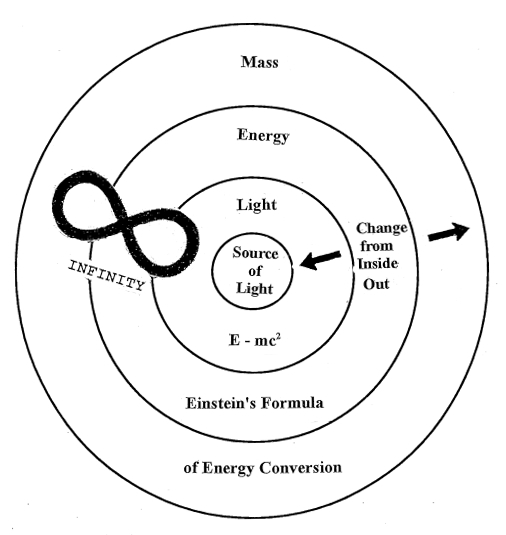
Inside to Out. Individual change begins from the inside and radiates outwards from the central hub of the Positive Paradigm Wheel. Light initiating from the silent innermost center extends outwards. Guidance and inspiration are articulated in language. These ideas, expressed with genius and passionate conviction, drive motivated action that manifests in positive results.

Smallest to Largest. Transformation begins with the smallest unit, the individual. Therefore, the quality of family life depends on the functional integrity of each family member. Large organizations are improved by first improving the quality of family life. Qualitative reform of whole nations is achieved only by restoring the internal integrity of their agencies and supporting business connections.

Einstein’s New Way of Thinking

Human survival, Einstein warned us, cannot be taken for granted. Tipping the scales of history in favor of survival depends on freeing ourselves from the mental prison of limited, delusional thinking:

A human being is part of the whole called “Universe,” a part limited in time and space. We experience ourselves, our thoughts and feelings as something separate from the rest . . . This delusion is a kind of prison for us, restricting us to our personal desires and to affection for a few persons nearest to us. Our task must be to free ourselves from the prison by widening our circle of compassion to embrace all living creatures and the whole of nature in its beauty. . We shall require a substantially new manner of thinking if mankind is to survive.

The Positive Paradigm of Change pictures Einstein’s widened circle of compassion, complete with his magical, magnetic all-encompassing center.

It’s also the answer to comparative religion legend Joseph Campbell’s prescient hint:

We don’t have a mythology for people recognizing the humanity of a person on the other side of the hemisphere. I’ve often wondered if some of the notions coming out of quantum physics, quantum interconnectedness, don’t express that.

In the interests of human survival, the purpose of The Positive Paradigm Handbook: Make Yourself Whole Using the Wheel of Change is to make this new way of thinking as widely known and usefully available as possible.

The Who, When, How, What and Why

Logical questions then follow. Who should use The Positive Paradigm Handbook? When should the Handbook be used and how? What are the benefits? Why is this method of “thinking like a genius” so effective?

Who? The Handbook is intended for self-selected survivors with the heartfelt desire to improve themselves and the courage to rethink their lives. Everyone everywhere with basic English language skills and a commitment to ensuring survival for themselves and those they care for can and should use The Positive Paradigm Handbook.

As the next-generation Book of Change, the Handbook is especially useful to those in responsible leadership positions as well as those who advise them. However, it is equally useful to truth seekers and decisions-makers in every walk of life.

The Handbook should be required reading for young people who need to understand the way the world really works and how they fit in.

When? It’s natural to cling to what’s already known and familiar, especially when it seems as if there’s no better solution to an admittedly bad situation. Many find the possibility of extinction so threatening that they refuse to even think about it.

However, this doesn’t make danger disappear. It just leaves escapists unprepared to face inevitable change. Regardless of what may or may not come, denial, resistance and procrastination are a dangerous waste of precious time.

Once it’s accepted that there is a hopeful and positive approach to facing today’s dangers, the time to work with the Handbook and internalize this worldview is NOW.

What? As the title suggests, the end result of using the Handbook is restored wholeness. The process of comparing one’s immediate personal organization to the Positive Paradigm standard of completeness is a means for recognizing excesses and deficiencies, the better to correct them, thus restoring balance, integration and harmony to the whole. Benefits from using the Handbook are cumulative. Depending on diligence and frequency of use, they increase exponentially.

On the one hand, intentionally aligning and linking the levels of experience will increase self-awareness, improve relationships and lead to effective decision-making. On the other, as beliefs and actions become significantly the less fragmented, the side-effects of stress and related mental/physical disease will decrease accordingly.

Why? In part, working with the Wheel of Change remedies the right- and left-brain imbalances that lead to dysfunctional results. Plugging left-brain language into the right-brain imagery of concentric circles has the balancing effect of stimulating both sides of the brain simultaneously. Further, diminishing the noise of emotional pain and overcoming the dichotomies of either/or thinking opens access to the innermost realms of conscience and the inspirational guidance associated with great leaders and inventive genius.


Rethinking FREEDOM


globe

40. FREEDOM

“The natural laws of the universe are inviolable: Energy condenses into substance. A person who neglects to breathe will turn blue and die. Some things simply can’t be dismissed.

.

“It is also part of the cosmic law that what you say and do determines what happens in your life.” — Brian Walker, Hua Hu Ching : The Unknown Teachings of Lao Tzu

.

“Especially for those of us who lived in single cells, we discovered that sitting down just to think is one of the best ways of keeping yourself fresh . . . to address the problems facing you. You could stand away from yourself in the past and examine whether your behavior was befitting to a person who tried to serve society.” — Nelson Mandela, Interview, Larry King Live

.

“When employees trade love, soul and freedom for maximizing profits, corporations lose their human center, and that’s as deadly for corporations as it is for us. The unhappiness and suffering that trade-offs create suggest that the paradigm is the culprit. We’re using bad software, and it’s distorting our concepts of what’s going on. We need all three together to be creative. When we’re destructive, it’s not because our nature is destructive, but because the trade-off paradigm is destructive to us.” — Breton & Largent, Love, Soul & Freedom: Dancing with Rumi on the Mystic Path

.

THE FRONT

.

Freedom is the state or quality of being free, implying exemption or liberation from the control of other people or arbitrary powers. It means liberty and independence. It implies exemption from arbitrary restriction or a specified civil right. It can mean exemption or release from imprisonment, or being able to act, move or use without hindrance or restraint. It means being able of itself to choose or determine action freely, at will, implying ease of movement performance or facility. It means being free from the usual rules or patterns. It can also mean easiness of manner, or sometimes an excessive frankness and familiarity.

.

Like the words peace, love and unity, freedom is a state attained on the inside first, only then reflected in external circumstances. In I Ching context, freedom is a state of in-dependence, depending on inner resources for guidance, protection and peace. The freedom sages seek is the cessation of negative, involuntary patterns of behavior. Breaking the chains of destructive cause and effect is a function of focus combined with self-correction, forgiveness and atonement (at-one-ment) in positive action.

.

Those secure in themselves dedicate their lives to extending the freedom they value for themselves to others without prejudice. Abraham Lincoln, for example, had the soul of a sage. He intuitively knew the basics of magic, and recognized the difference between black and white rules. He wrote, “As I would not be a slave, so I would not be a master.” As if direct from the Treatise on Esoteric Ethics, Abe delivered a speech in Wisconsin where he said, “Let us have faith that right makes might, and in that faith do our duty as we understand it.”

.

Yet legal prohibitions cannot end of slavery. Saying and doing whatever one wants as a puppet of blind impulse isn’t true freedom. Seeing through negative filters of fear, pride, or apathy is as limiting as literal blindness. Even in a society that calls itself democratic, to the extent we’re unaware of inner wisdom and the laws of natural change, we’re not really free.

.

Soul is like the in-breath of life. Love is like the out-breath. Freedom is the intertwined marriage of soul and love in balanced, rhythmic exchange. When we can’t breathe freely, we slowly starve from within, and wither mysteriously even in the midst of apparent prosperity.

.

Breton and Largent, quoting the Sufi mystic Rumi, write, “Whatever we do, we do from our inner compass. That’s free:

.

Take someone who doesn’t keep score,

Who’s not looking to be richer, or afraid of losing,

Who has not the slightest interest even

in his own personality: He’s free.”

.

In I Ching context, the self-mastery attained by thinking and acting consistently from a positive paradigm that’s simple, complete and correct is the most precious, inalienable freedom.

.

Nelson Mandela’s life is proof that it’s not circumstances which enslave.

.

THE BACK

.

The opposite of freedom is imprisonment or slavery. This includes not only external, physical incarceration, but internal, self-imposed limitations. Bad attitudes, negative emotions and self-destructive habits can be as addicting as tobacco, alcohol or drugs, undermining personal freedom.

.

Recklessness and heedlessness are perversions of freedom. If a mistrusted authority says not to drink, smoke or drive too fast, for example, the first thing a rebellious teen will do to assert “freedom” is disobey, regardless of the consequences. Sadly, this is the hard way to learn the connection between foolishness and disaster.

.

————————

Brian Walker, Hua Hu Ching: the Unknown Teachings of Lao Tzu. (HarperSanFrancisco: New York, 1992.) #40.

.

Nelson Mandela, Larry King Live Interview, aired May 16, 2000. cnn.com/transcripts.

.

Denise Breton & Christopher Largent, Love, Soul & Freedom: Dancing with Rumi on the Mystic Path. (Hazelden: Center City, Minnesota, 1998.) p. 7.


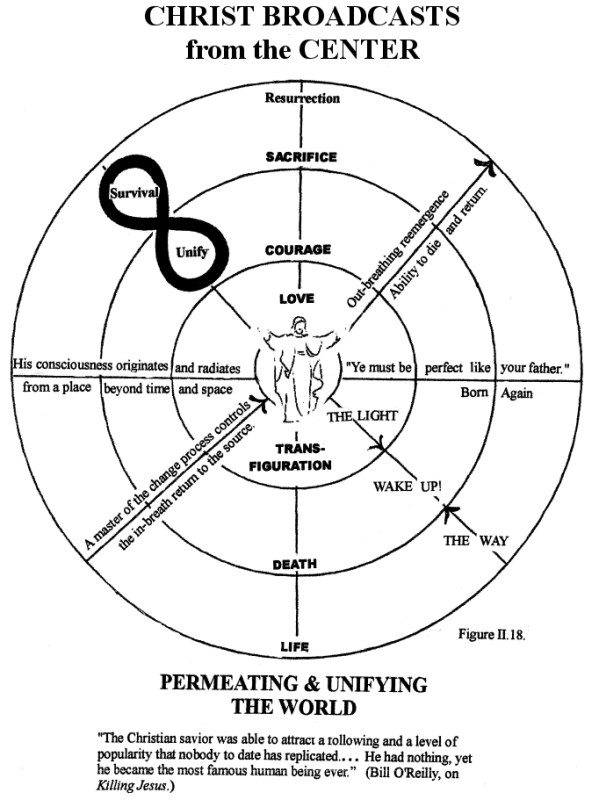
Rethinking CHRIST at EASTER

May this Easter be a time of miracles and new beginnings.

II-18 rev

Rethinking SEX & TANTRA

Today is a tongue in cheek test of the SEO factor, to find out who is visiting this blog and why. Visitors, are you there? What do you think? Your comments are welcome!

globe

9. SEX

“Sexual union is physical enactment of the virtue/power, the te of Taoism. It is the resolution of the physical dichotomy of male and female, of self and not-self. Man enters woman while woman receives man. Two bodies become one. Physical separateness is transcended. Each is the completion of the other.” — Ray Grigg, The Tao of Relationships

“Everybody affected by feelings of guilt and shame will have negative feelings about their sexuality. These feelings block the flow of primal life force through-out the entire body. Equally, at a physical level, any negativity toward your sexuality or parts of your body leads to chronic tension in muscles throughout the body. This means that your energy can no longer flow between your Tan T’iens, or centres of Divine Energy. ” — Russell & Kolb, The Tao of Sexual Massage

“If we want to reach our boys and help them develop mature and responsible attitudes towards sex, we need to understand their motivations. As a culture we are much more aware of and sympathetic to the pressures around sexuality girls feel. The confusion boys feel is hidden, hidden under their own masks of macho posturing and under the weight of our misconceptions of toxicity about boys.” — William Pollack, Real Boys

THE FRONT

Roots of sex, discrimination and science all mean to divide. Webster’s definition of sex includes either of the two divisions, male or female, into which persons, animals or plants are separated, with reference to their reproductive functions. Sex refers to the character of being male or female, all the attributes by which males and females are distinguished. It can refer to anything connected with sexual gratification or reproduction, or the attraction of those of one sex for those of the other. It can also refer to sexual intercourse.

The dictionary does not differentiate between sex and gender stereotypes. While the biological differences between human males and females remain constant, their roles and prescribed behavior varies from culture to culture, and within cultures over time.

For example, Margaret Mead, a pioneering anthropologist, challenged the stereotypes of her day both in the moral conduct of her personal life and in the conclusions of her published research. In Coming of Age in Samoa, she reported that the many different ways boy and girl children can be raised will shape their attitudes and relationships into very different patterns.

She described one tribe that taught their children easy-going, accepting attitudes towards sex and raised contented, peaceable adults. In contrast, a cannibal tribe raised fierce warriors by systematically frustrating their infants, hanging them on tree branches to swing unattended, withholding basic touch and caring. Current civilizations resemble the cannibals more often than the peaceable, contented tribe, both in training and results.

Tantric yoga is a discipline which trains students to change sexual impulses from a culturally conditioned detriment to intentional accelerator of personal growth. Its premise is that forbidding people to think about sex has the opposite of intended effect. For centuries it’s been know that if you tell people not to think of white elephants, they’ll think of nothing else.

Slamming the lid on libido drives it into the inaccessible “unconscious.”

While publicly feigning compliance, people thus repressed indulge compulsive sexuality in extreme. Perhaps intentionally, perhaps not, sexual deviance has been systematically programmed into the world’s highly educated elite for centuries, making them vulnerable to blackmail and/or public humiliation for their inevitable discretions, placing them at the mercy of puppet masters who wield secret powers behind the scenes.

To prevent such personal/political undoing, energy science trains students to be wise, skillful and practical in sexual matters, fulfilling intimate needs without tearing the fabric of their emotional, family and professional lives apart.

As with communication, power and peace, the purpose and expression of sex evolves as awareness grows. For humans, the sex act begins and ends in the mind, the body’s most erogenous zone. Depending on attitude, it can be experienced as debasing or pure bliss. Sex can be a mating for the purpose of reproduction. It can be a one-sided expression of lust or will to dominate, motivated by insecurity, cruelty or even revenge. It can also be a source of healing, an expression of compassionate love. Comprehensive sex is practiced with reverent understanding that the individual act mirrors the sacred union of opposites.

THE BACK

An inversion of sexuality is frigidity or impotence, the lack of attraction to the opposite sex or incapacity to reproduce. It implies rejection of the creative, reproductive process. Negative role models, unfortunate experiences, inhibiting education or poor health are possible contributing factors.

In mythology, an androgynous person balances male and female aspects from within. If used as an excuse to shun the challenge of relationships, aspiring to this perfect state forfeits the learning opportunities associated with being human. There’s time enough in the hereafter for the even harder lessons reserved for angels.

——————-

Ray Grigg, The Tao of Relationships: A Balancing of Man and Woman. (Humanics New Age: Atlanta, GA, 1988.) p. xiii.

Russels & Kolb, The Tao of Sexual Massage. (Fireside Books: New York, 1992.) p. 55.

William Pollack, Real Boys: Rescuing Our Sons from the Myths of Boyhood. (Random House: New York, 1998.) p. 151.

Rethinking ACTION

One of the 64 Essays on Change is posted each consecutive Sunday. The choice is decided either by requests made on the Contact Page and/or immediate relevance to current events. See the UPSG Essays page for a description of the structure-within-structure format of the Essays, an overview of CONSCIENCE: Your Ultimate Personal Survival Guide, and an alphabetical list of the Essays from which to choose.

On the new moon of March 9, 2014, the first of the Essays to be posted was Number 61 on PEACE. It was selected as a timely response to events in the Ukraine. The following Sunday, the very first Essay, CRIME, was selected, followed by its companion Essay Number 18 on MOTIVES.

The final Essay, Number 64 has been selected for Sunday, March 30th, the second new moon in the month of March. It completes a triad that started with CRIME, then MOTIVES, and now, consequent ACTION. This Essay has immediate applications to the progression of world events.

Bloggers have likened Putin’s actions to the strategy of Sun Tzu’s Art of War. America’s leaders have been faulted for lacking the ability to think in terms of positive action responses. It therefore behooves everyone, everywhere with an eye to the future, in the interests of human survival, to fill in that void.

globe

64. ACTION

“Military action is important to the nation — it is the ground of death and life, the path of survival and destruction, so it is imperative to examine it. . . The Way means inducing the people to have the same aim as the leadership, so that they will share death and share life, without fear of danger.” — Sun Tzu, The Art of War

“The warrior is always alert. He is always awake. He knows how to focus his mind and his body. He is what the samurai call “mindful.” . . . As a function of his clarity of mind, he is a strategist and a tactician. He can evaluate his circumstances accurately and then adapt himself to the “situation on the ground.” — Moore & Gillette, The Warrior in His Fullness

“We cannot stop the seasons of history, but we can prepare for them. Right now, in 1997, we have eight, ten, perhaps a dozen more years to get ready. Then events will begin to take choices out of our hands. Yes, winter is coming, but our path through the winter is up to us. . . History’s howling storms can bring out the worst and best in a society.” — Strauss & Howe, The Fourth Turning

THE FRONT

Webster’s defines action on a sliding scale of meanings. Taking in the full spectrum as a whole is an eye-opener. Originally it was a physics concept, the state of being in motion. From there the definition changes to habitual conduct characterized by energy and boldness. It changes again to include the effect produced by something (like a drug), or the way organs or machines work.

Action is used to describe the function of a piano or a gun. It shifts to take on the connotation of a legal proceeding by which one seeks to have a wrong put right. It’s the term used to describe military combat. Lastly, in slang it denotes excitement, specifically gambling.

Over a life-time, novelist Earle Stanley Gardner worked to develop a best-seller formula: a virtuous hero whom everyone loves to see in action. The result, Attorney Perry Mason, solves crimes and puts wrongs right in the court of law. He’s a deliberate blending of Robin Hood and Sherlock Holmes. Robin defended the betrayed and down-trodden. He took from the rich to give to the poor, helping them stand against oppressors. Sherlock used his highly trained powers of observation and deduction to trace devious crimes to the unseen hand of the evil Moriarty, then courageously drew the villain out to defeat him.

New law students are often grieved to find reality so far removed from fiction. Just so. Gardner knew people bought his books exactly because they longed for what’s missing in their lives. But fiction soothes without solving. The times call for a multitude of Positive Perrys taking positive action every day, here and now.

Movie action heroes also exemplify the intellect-action blend of leadership we miss. To become a Jedi knight, Luke SkyWalker first must train to attune himself to “the force.” Indiana Jones similarly blends the best of right and left brain worlds. Both he and Nazi opponents search out the arc of the covenant, then the grail. The enemy wants the key to world domination; Indy and his beloved father seek “illumination.” They respect the wisdom of ancient times and adventure to recover lost treasures. The I Ching is another of the ancient lost treasures, both used and abused by seekers through the ages.

Unlike these action heroes, intellectuals who contempt practical people and workers who enviously mistrust the educated are equally lop-sided actors. For positive results, scholars and street-smart frontliners must join ranks. Better still, we should each train ourselves like action hero role models to balance self-awareness and action, to live fully effective, each in our own way.

George S. Patton, the general who defeated Hitler’s army, quoted scriptures like a bishop, knew Shakespeare’s verse by heart.

THE BACK

The opposite of action is inaction. This may be appropriate. Those who patiently wait also serve. Other times it’s due to indifference or paralysis of will. Procrastination, delaying action, may be a result of ambivalence. Lack of commitment or conflicting goals and beliefs often work unconsciously to sabotage consistent action.

A perversion of action is hyperactivity, sometimes the result of a chemical imbalance, other times an effort to avoid thinking. Restricting youthful energies, forcing children to sit too long inactive, can trigger rebellion as an extreme and opposite reaction to boredom.

————

  • Sun Tzu, The Art of War, trans. Thomas Cleary. (Shambhala: Boston, 1988.) p. 41.
  • Robert Moore and Douglas Gillette, “The Warrior in His Fullness,” in The Awakened Warrior: Living with Courage, Compassion & Discipline, ed. Rick Fields. (Putnam’s Sons: New York, 1994.) pp. 29-30.
  • William Strauss & Neil Howe, The Fourth Turning: An American Prophecy. (Broadway Books: New York,1997.) p. 7.

The Positive Paradigm Handbook is Coming SOON

HERE’s a sample from the Coming Positive Paradigm Handbook!

globe

PREFACE

The Positive Paradigm Handbook will change the way you see yourself

and relate to the world – forever.

  • It gives you a functional picture of how your life really works, and by extension, what moves the people around you.

  • It gives you the map for achieving fulfillment, personal happiness and higher love.

  • It give you an instrument with which to effectively organize your personal life, make realistic decisions, and act more effectively to achieve intended results.

  • It gives you premier tools for cultivating self-awareness, making the unconscious conscious, and mapping goals for personal change.

  • It gives you a comprehensive standard for assessing your leadership skills, maximizing this potential, and choosing which leaders to follow.

  • It gives self-healers and therapists a powerful diagnostic tool for identifying the roots of disease-causing stress and correcting lifestyle imbalances.

  • It gives profound insight into the causes of discrimination, sexual abuse and PTSD, as well as how to heal from their effects.

  • It gives everyone a realistic standard for recognizing true friends from mortal enemies.

  • Ultimately, it gives those who follow through the edge on long-term success, tipping the scales of history in favor of human survival, one person at a time.

If these claims sound intense, they are. But they’re well founded.

As a teenager, I was fascinated by the fact that Einstein’s abstract formula, e = mc2, could produce powerfully tangible results — the atomic bomb!

Later, I was even more intrigued to discover that this same formula, when plugged into the concentric circles of the Positive Paradigm Wheel, not only resulted in the Unified Theory of Einstein’s lifelong quest. It was capable of generating equally powerful and practical personal results.

The Positive Paradigm Handbook reveals this Unified Theory and supplies the tools needed to start thinking like a genius. By internalizing this method, making it your own by repeated use, your life will be changed in ways only dreamed of before. Virtually endless in its practical applications, it can be pointed like a laser beam to illumine every field of endeavor.

The Handbook is the bare bones take-away from Rethinking Survival. The author’s personal background, academic credentials, research and experience are described in Getting to the Positive Paradigm. But here, what matters is simply that it works and that owning it is a matter of personal survival.

Based on the foundation of the earlier books on change, The Positive Paradigm Handbook goes directly to the heart of personal, practical application, here and now. The purpose of working with the Handbook is to ingrain Einstein’s “substantially new way of thinking,” which, he said, is required “if mankind is to survive.”

In a world seemingly intent on fracturing experience into smaller and smaller niches, the Positive Paradigm provides an urgently needed counter-balance, applying an opposite and equal weight in a unifying direction.

Rethinking MOTIVES

One Essay on Change is posted each consecutive Sunday. The choice of which is decided either by requests made on the Contact Page and/or immediate relevance to current events.

Tonight, 03/23/14, I’m following through on a promise made in answer to the question, “Crime, Is It Natural?” I told Barrister Brendon Moorhouse, a reported Sherlock of the Courtroom, that I’d respond to this important question on this website with my perspective. After all, CRIME just happens the very first of the 64 UPSG Essays. However, I’ve waited until the following week because the companion Essay on Motives speaks more closely to the subject of investigating crimes, white collar as well violent ones.

globe

18. MOTIVES

“Although the feelings mentioned above [sadness, pessimism, guilt, emptiness] may accompany a depressed mood, the most prevalent effects usually involve low energy and lack of motivation. . . An effective way of lifting these moods involves using music to activate our resources.” — John M. Ortiz, The Tao of Music: Sound Psychology

“It occurred to me that the only way to figure out what had happened at a crime scene was to understand what had gone on inside the head of the principal actor in that drama: the offender. And the only way to find that out was to ask him. . . If we could give the law enforcement community some insights into the process, the internal logic, of how violent offenders actually decide to commit crimes and why they come up with their choice of crimes — where the motive comes from — then we could provide a valuable tool in pointing investigators toward what for them must be the ultimate question: Who? Stated as simply as possible: Why? + How? = Who.” John Douglas, The Anatomy of Motive

“On some level, you are meditating all the time. One goal of meditation practice is to become aware of that. Another is to extend that awareness to more and more areas of your life. . . It takes practice and conscious effort to restructure the mind and move it from habitual patterns.” – Andrew Weil, 8 Meditations for Optimum Health

 THE FRONT

The root of motive means to move. Webster’s single definition refers to “some” inner drive, impulse, or intention that causes a person to do something or act in a certain way. It’s an incentive or goal.

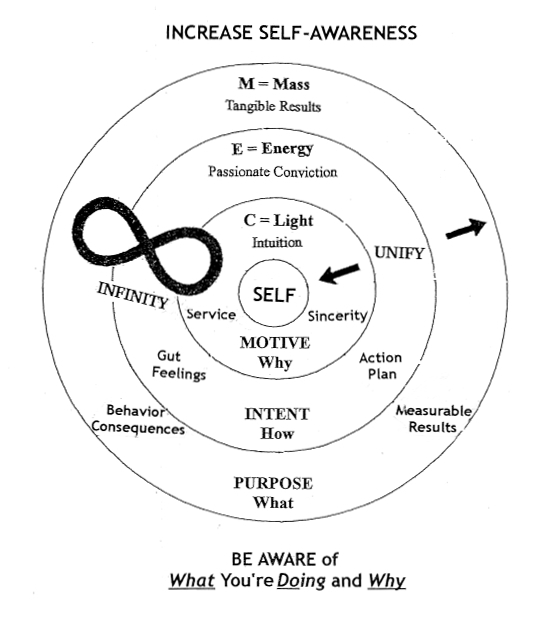
Motive, purpose and intent explain human behavior. Unless viewed as a whole, what we see is taken out of context and misunderstood. You see a man take someone else’s car. That’s intent, the what. You see him grab the keys and drive off. That’s purpose, the how. But unless you know his motive, why he did it, the picture is incomplete. Was he desperately racing to save his beloved child’s life, escaping from vengeful gang lords, or simply lusting after a fancy new car?

We’re fascinated by crime. Mystery novels, detective movies and sensational murder stories on TV news are big business. We stretch our minds to second-guess the ending, figure out who committed the crime, and why. We look for the mistakes that reveal dark secrets and lead to the criminal’s undoing. We’re satisfied only when truth is revealed and order is restored by justice.

At heart, what we’re really trying to understand is ourselves. We’re haunted by a pervasive sense of wrongs committed against us, or by us. We can’t quite bring ourselves to recognize what they are, or to admit our own mistakes. But a nagging sense of unfinished business leaks out as voyeurism.

Ultimately, it’s the stifled voice of conscience that persistently calls us back to our neglected dreams and deepest longings for fulfillment. Those who allow themselves to be defined by others, who live in habitual fear of people’s opinions and fail to honor their inner sense of calling commit a soul-searing violence akin to suicide. The crime they commit is against their own true selves.

Failing to be true to oneself can be the hardest crime to detect. Finding one’s true calling can be the greatest mystery of all. People who march to others’ drums, unconscious of their motives and what moves those around them, live in painful confusion. Only those who know how to listen and dance to the inner music of their soul’s desire live in joyful harmony with themselves and the world around them.

 The I Ching is a means for turning the camera around, focusing in on ourselves. Uncovering hidden motives might cause initial discomfort. But it can lead to positive changes. After analyzing them, we have the option to decide on better ways to accomplish intentional ends.

Our what and how isn’t always appropriate to our why. Other solutions may accomplish our goals without committing crimes against ourselves and others.

 THE BACK

The opposite of motive is motiveless, to be without awareness of calling, any conscious purpose, or impulse to action. This condition is sometimes an extreme reaction to an extended period of frenzied, excessive, forced action. People experience it as apathy, shell shock or burn out.

 When crazed criminals go on sprees, kill strangers and wreak havoc on public property, their acts are regarded as random and senseless. To all but the most highly attained, the subtle laws of cause and effect are incomprehensible. There’s wisdom in accepting the unfathomable as Job did, saying, “The Lord giveth, and the Lord taketh away.“

 ————————–

John M. Ortiz, The Tao of Music: Sound Psychology. (Samuel Weiser: ME, 1997.) p. 7.

John Douglas, The Anatomy of Motive. (Scribner: New York, 1999.) pp. 25-26.

Andrew Weil, 8 Meditations for Optimum Health. (audio cassette, Upaya,1997.)

—————————

Illustration from Conscience: Your Ultimate Personal Survival Guide


Aware2

Rethinking PEACE

Given the extraordinary amount of pain suffered in many parts of the world today — not the least of which being the very real fear of nuclear annihilation — I’ve chosen a message of PEACE from Conscience: Your Ultimate Personal Survival Guide.

 Essay 61. PEACE

When the forces of nature unite in profound harmony,

heavenly PEACE fills the earth.

Lives blossom. Prosperity increases.

Easy communication makes it possible

for people to understand one another.

This leads to cooperative efforts that will be fruitful.

Tranquility follows fulfillment of life goals.  

— Patricia West, The Common Sense Book of Change

Conflict is woven into the fundamental fabric of nature. The sea and land meet in violent conflict and make waves together. The plow turns the meadow and wheat springs forth. . . Conflict is evidence that human beings are engaged in something interesting. . . [It] plays a key role in the growth of character and the development of stable relationships. Conflict makes us into who we really are. — Brian Muldoon, The Heart of Conflict

The principle of economy in movement arises from a state of internal harmony. A mind that is at peace is not easily swayed or disturbed. This principle also plays a vital role in daily life, whether in business or in combat. If one over-reacts and responds with excessive or unnecessary action, one is at a disadvantage.-Mantak Chia & Juan Li, The Inner Structure of Tai Chi

THE FRONT

Webster’s defines peace as freedom from war or a stopping of war. It can refer to a treaty or agreement to end war or the threat of war. It’s defined as freedom from public disturbance or disorder, public security, law and order. It refers to freedom from disagreement or quarrels.

Peace also means harmony or concord. It’s used to describe an undisturbed state of mind, absence of mental conflict, serenity, or tranquility. To keep one’s peace means to be silent, keep quiet.

The timid are satisfied with peace defined by predictable routine, without conflict or challenge. The aggressive prefer peace defined as defeat of enemies or absolute control over subordinates. The peace of the grave is cessation of life. I Ching philosophy guides careful thinkers away from these extremes.

In I Ching context, peace is an inward state of calm that manifests as outward poise. Where timid and aggressive definitions both depend on external circumstances, the experience of tranquility depends only on oneself. External conditions will always be in flux. Therefore, looking for peace in the world is an exercise in futility. Internal states, however, are subject to self-governance.

In Asian traditions, peace is akin to the yogic concept of contentment — an attitude of grateful acceptance of all seasons and quiet openness to the rhythms of life. In biblical context, the lyrical stanzas of Ecclesiastes capture the wisdom of natural law:

 To every thing there is a season, and a time to every purpose under heaven:

A time to be born, and a time to die;

a time to plant and a time to pluck up that which has been planted;

A time to kill, and a time to heal.

The sage takes responsibility for attaining inner peace as the first step towards world peace. Inner quiet begets the attitude of confidence, which in turn generates acts of compassion, courage and generosity. World organizations which would impose military peace upon warring nations comprised of individuals each at war internally have no hope of success.

Conflict, like peace, starts from the inside and projects outwards. Therefore, no matter what military force is applied, so long as people are educated into internal conflict, external wars will continue to break out.

St. Paul’s epistle to the Ephesians takes on significant new meaning in the light of I Ching wisdom. Peace seekers would do well to consider it carefully:

2.14.  For he is our peace, who hath made both one

and hath broken down the middle wall of partition between us;

2.15. Having abolished in his flesh the enmity,

even the law of commandments contained in ordinances;

for to make in himself of twain one new man, so making peace.

Meditative practices which intentionally focus on the corpus callosum as the middle wall which separates and/or unifies right and left brain (yin/yang, male/female) functions give practical means for implementing biblical insight.

THE BACK

Conflict and war are opposites of peace. Only the context of motive, purpose and intent determines whether they are necessary and to long-term benefit, or unwarranted and uselessly destructive. Shunning either out of fear invites danger.

Enforced silence is a perversion of peace. A totalitarian state can outlaw free expression. It may compel rigid conformance and suppress dissent. However, it cannot contain the vitality of the creative life force, which always prevails.

———————–

Patricia West, The Common Sense Book of Change. (+A Positive Action Press: WI, 2000.) No. 11.

Brian Muldoon, The Heart of Conflict. (G.P. Putnam’s Sons: New York, 1996.) p. 9.

Mantak Chia & Juan Li, The Inner Structure of Tai Chi. (Healing Tao Books: Huntington,

NY, 1996.) p. 35.

Clinton, Putin and Einstein’s Worst Nightmare

Once again, the U.S. and Russia are edging towards the death dance JFK engaged in with Nikita Khrushchev during the 1962 Cuban missile crisis.

The ego-sparing between Hillary Clinton and Vladimir Putin has been escalating for months, almost as if to precipitate the current crisis, only ostensibly over the Ukraine.

We know George Soros is behind Obama and heir apparent Clinton. Heaven only knows what puppeteer is pulling Putin’s (or for that matter, Soros’s) strings.

None of this is said lightly. In fact, the title Rethinking Survival: Getting to the Positive Paradigm of Change refers to Albert Einstein’s prescient warning. Human survival can no longer be taken for granted. Nuclear annihilation, so terrible a prospect that most of us refuse to wrap our minds around the possibility, doesn’t disappear by just denying it.

A ground swell of public opinion should be stirred to put worldwide pressure on leaders to back off from the terrible brink. This is the Positive Action response to the threat of mortal danger recommended in the section “We’re in a Terrible Mess.”

Open letters to Putin, Clinton, Soros and Glenn Beck set the stage. Here are excerpts from the frontispiece:

 “Cynics may ask, ‘Why do paradigms matter one way of the other? What do they have to do with survival?’ My repeated answer is, ‘A great deal!’ Rethinking Survival applies directly to practical politics. As an example of what’s possible, here are four open letters to world leaders currently dedicated to shaping the directions of our collective future.

 “VLADIMIR PUTIN: Let history remember you differently from the first consolidator of all the Russias, Ivan, who impoverished the serfs and was called “The Terrible.” Be remembered as Vladimir, who protected his people, prevented starvation and was called “The Wise.”

“HILLARY CLINTON: John F. Kennedy’s undelivered speech left us a legacy. Parallel to Einstein’s unfinished quest for the Unified Theory, the time is right to pick up Kennedy’s fallen flag and move forward, using the Positive Paradigm as the basis of a common leadership initiative.

­”GEORGE SOROS: In a flash, history’s greatest persecutor of truth changed into its greatest advocate. Like Saul become Paul, you still have time to open your eyes and truly soar in the annals of history by making a similar reversal. Apply the Positive Paradigm to your own life choices. See Part Three: Atheism Answered.

“GLENN BECK: Back Clinton and Putin’s efforts to transcend ego animosities for the sake of something truly worthwhile. Call on them to build lifeboats ahead of the crash looming ahead. Help them complete the unfulfilled legacies of Einstein and JFK. We have lost time to make up for.”

Commentators on TheBlaze, notably Jay Severin, have decried Russia’s so-called “intervention” in the Ukraine and expressed outrage over the ironic possibility of Putin receiving a Nobel Peace Prize. Though, why not? He’d fit right in with other recipients like Henry Kissinger and besieged Americans’ current disastrous leader.

Severin is adamant that his boss, Glenn Beck, has done much more for world peace than Putin. Hmmm. I’m not so sure about that one. What’s still missing is a critical piece of the information puzzle, lacking which, things continue to go terribly wrong, even despite the best of intentions.

The greatest irony of all is that Einstein had the key all along, but never knew it. Read Rethinking Survival for the missing Unified Theory. A five star Amazon review describes it as: “A broad brush stroke type of book that touches and colors so many elements and areas of life. A great read and well worth the investment.”

Read it. Give the Positive Paradigm of Change a chance. At stake is nothing less that human survival.

 globe

Rethinking Discrimination

On Jan. 3, 2014 at 4:45pm a blog posted on theblaze.com announced that “Greta Van Susteren is one of few people who understands how to talk about racism.” Beneath that was the comment, “If national talks about racism could all be led by Fox News anchor Greta Van Susteren, we’d all probably be in a better place.”

I checked out the comments she made on “Off the Record.” To summarize, Greta says racism exists and it’s terrible. But using the race card wrongfully is just as bad. Public figures who stir up the pot are dividing the nation, not healing it. They’re doing a real disservice to those with valid grievances. She called for “Real Solutions to Solve Real Racism.”

The first comment on her remarks was posted by BMRCG, who wrote “Bravo Greta! Although it is your opinion and it is commentary, I agree 100000000% with every last word. There are many in society that perceive life through emotion and feeling, much in the same way animals perceive their world. They have either lost the ability to think critically or never had it to begin with.”

I second this enthusiastic comment! Since Affirmative Action was my obligatory subject as a grad student in the UW-Madison Department of Educational Administration, I had to think long and hard about discrimination. As part of my story, Rethinking Survival has a lot to say on the subject.

So here are a few samples:

 THREE LEVELS OF LAW ARE OUT OF SYNCH:

Affirmative Action Was Doomed from the Start.

Why it Matters Now

The American Declaration of Independence names three kinds of law: the laws of man, of nature and nature’s God. The Book of Change is based on the laws of natural change. They emanate from and depend on divine law and serve as the rightful foundation of civil law. Clearly, human laws legislated in ignorance of or in opposition to natural and divine law are not likely to work out well. Policy makers at all levels would do well to give this point careful thought.

– P.E. West. The Common Sense Book of Change

In 1976, I participated in an educational law seminar, “How to Enforce Affirmative Action Legislation in Higher Education.” This assumption-driven premise (en-force) was backwards from the start. I applied the standard of natural law to social dynamics, backed it up with Jungian psychology, and arrived at the conclusion that the legislation was not only unenforceable. It would trigger backlash. Though hardly a popular viewpoint then, with twenty years time, my analysis proved correct.

 I wrote that we must first correct critical mistakes in our thinking which prevent both naming the problems we face and solving them. Experts mistakenly dismiss everything that’s not exclusively “rational” as “irrational.” The super-rational, highest octave (intuition, conscience, and divine guidance) and the sub-rational, lower octave (emotions and animal instincts) are lumped together as the “unconscious.” Poetic, biblical language is taken literally. Light and dark, male and female are mistakenly equated with physical bodies and skin types rather than dualistic pairs of cosmic energetic compliments which operate within each of us.

Based on this analysis, I made recommendations for what I called a Positive Action alternative for achieving valid Affirmative Action goals.

 ——————–

 Affirmative Action legislation was but one example of the disconnect between policy and practice which results when levels of law are out of synch. So long as rules of the knowledge game (epistemology — who has permission to know what, and in what ways) continue to close people off from the richness of their inner lives, negative discrimination (projection and scapegoating) will also continue.

 ——————

A keystone of this philosophy is the virtue of moderation. It acts as a fulcrum, balancing the alternating, see-saw ups and downs between opposite extremes. An example related to Affirmative Action legislation was the upsurge in the 1960s and 70s of radical feminism and angry black power in reaction to dominant oppression by white males. They are two extremes, opposite and equal mistakes. However, two wrongs don’t make a right. The second compounds the first, making a bad situation even worse. Solutions rest elsewhere. An easier way to approach the same understanding now would be to work with the derivative Positive Paradigm Wheel described in Part Two.

 ——————–

 In accepting an internship in 1976 at the Wisconsin Association of School Boards as their Affirmative Action advisor, I was intentionally seeking to broaden my horizons in what Goleman describes as “self-directed learning.” I was taking on an unfamiliar role within what, for me, was a whole new world. I was a relatively young, inexperienced woman being initiated into an old boys’ club. I was a university grad student mentoring with street-smart lobbyists who despised pointy-headed intellectuals. And the approach to “change” I brought to both the UW and to WASB — The Book of Change (the boundary-spanner’s handbook) — was continents and centuries apart from their ideas about change.

WASB’s Director, George Tipler, hated Affirmative Action legislation with a passion. As his staff secretly confirmed, the only reason I’d been brought on board was to get federal monies. The Association had been awarded a grant to train school board members on the school administrator hiring process, but only on the condition that an Affirmative Action component was included.

Nevertheless, when I pushed his buttons (as he said,“Put up or shut up”), George gave me his grudging respect. He introduced me to his lobbyist world, taking me to the Wisconsin State Capitol. He included me in lunch meetings with legislators, where he elaborated emphatically on his opinions.

But he also distanced himself, signaling to his constituents that it was okay to ignore my work. I organized a mandated state-wide seminar on Affirmative Action for school board members and district administrators. He set its date as the first day of deer hunting season. Morbid symbolism aside, no self-respecting rural school board member could be expected to attend.

To satisfy mandated requirements, I collected an anthology of papers written by seminar presenters. He had each article printed on different, pastel-colored paper. His staff snickered, “the fruit salad” manual.

However, there was some fun along the way as I managed to score enough “points” to keep the leader board even. My favorite example was the state-wide seminar on “How to Select Your School District Superintendent.”

For the sake of a five-minute presentation, I had to sit all day up front on the panel podium. Wearing my navy polyester pants suit, power red-white-and-blue neck scarf, and navy pumps, I was posed like politically correct window-dressing, while Lyle Bruss, the main presenter from Green Bay, droned on about selecting and interviewing candidates. His assumption: all were males.

Every time Lyle used the “he” word, I (quite inadvertently) winced. “Yeuch.” An audience member picked up on this, winked at me and elbowed his neighbor. Pretty soon, every time Lyle used the “he” word, the whole audience was going “Yeuch” back at him, chortling. It took Lyle several minutes to catch on. When he finally did, he turned beet red and made a flustered remark about having four daughters, all of whom were referred to as “he.” Point made, without my having to say a word.

——————

In his later bid for the presidency, Perot focused on the national deficit. He overlooked the greatest one of all: the leadership deficit. He propounded laudable policies, but was unable to enforce them, even within his own organization.

Just as policy was not enough to make Affirmative Action goals a reality, so policies out of synch with natural law fail miserably in corporations as well. The deficit which begins with limiting, skewed education incapacitates management. This reflects in government and world economies alike — a disaster of Titanic proportions.

The knowledge deficit — the change science sadly lacking in leadership training — cripples us. Politicians continue to talk about the urgent need for change. But they know not whereof they speak, any more than did the pseudo-Shogun honchos at E.D.S. Federal.

———————

 . . . tacking Affirmative Action legislation as an overlay on the surface level, while failing to address a deeper, divisive worldview, couldn’t help, and most likely would make matters worse. (Figure II.14 shows why enforcing morality with Affirmative Action legislation backfires, as well as the alternative Positive Action approach which works.)

———————–

Bottom line: exploitation is an energy dynamic, a symptom of self-destructive imbalance. To the extent that individuals operate on incomplete, inaccurate and false paradigms, they remain insecure, unconscious and functionally disconnected from their higher potentials. Out of that pain and suffering, like Kissinger, like Soros in the extreme, they will continue to feel justified in dominating, controlling and exploiting whomever they can, however they can — playing out power addictions with hypocritical talk of philanthropy.

Affirmative Action legislation has not changed these dynamics — nor, as discussed earlier, could it. Looking in the wrong places doesn’t help. Blaming outside enemies as an excuse to avoid self-examination and correction is a futile waste of precious time and energy. Although venting frustration in politically motivated social movements — even terrorism and outright war — may temporarily feel good, it doesn’t address the underlying paradigm deficiency that drives hatred, violence and injustice. It therefore can’t put an end to catastrophic outcomes.

Rethinking Suicide at New Year’s

globeTonight I’m remembering the year I worked as a legal secretary for a divorce attorney. His income was seasonal. Before the Christmas, business was slack. He shrugged it of philosophically. He knew he’d make up the difference and then some after New Year’s.

 Then, people who’d gone into the holiday season with unrealistic expectations crashed with opposite and equal disappointment. After all the anticipation, a let down was sure to follow. That’s when they decided to call it quits, in droves.

 Sometimes, calling it quits takes an even more drastic form. This is when Rethinking Survival becomes a must. Here are relevant sections.

 RETHINKING SURVIVAL – Excerpts

 Stability in the Midst of Change

Working with the Quantum Paradigm of Change gives the thoughtful person a realistic perspective on what changes and what doesn’t, of what to depend on and what not. The eternal center, deeper than change, is impervious to time. It’s changeless.

In stark contrast, on the surface, natural elements are continuously combining, separating and recombining. Matter is continuously composing and decomposing. Human organizations are inherently unstable.

Human relationships are continuously evolving. Only the power of higher love and disciplined long-term commitments override the natural process of death and decay.

For those securely established at the hub, the center holds eternal. With a correct and complete model of change, survivors are able to the maintain inner stability necessary to cope with unstable circumstances. But when people forget, they get stuck on the surface and then complain that “the center does not hold.”

Those attuned to the center don’t identify with surface changes. They know better than to take them personally. They don’t kill themselves when the stock market crashes. They adjust. They don’t kill others to revenge themselves on outrageous fortune. For the sake of their own sanity, they simply forgive and remain open to new opportunities.

From a limited human perspective, experience sometimes seems just, the logical consequence of past behavior. Other times, life seems to make no sense whatsoever. Most unjust. But that’s life as we know it on Planet Earth. “Shit happens.”

TO BE OR NOT TO BE: Beliefs and Information Make the Difference

“To be, or not to be: that is the question:
Whether ’tis nobler in the mind to suffer
The slings and arrows of outrageous fortune,
Or to take arms against a sea of troubles,
And by opposing end them?

Shakespeare. Hamlet

The specter of suicidal thoughts haunted my up-bringing. It’s taken me over fifty years to track this demon to its lair and tame it. In retrospect, in simplest terms, I was raised in a family, reinforced by a culture, which disconfirmed my very existence.

A girl who in no way matched demeaning stereotypes — who had no desire to either cynically exploit or fearfully cave into them — was simply a non-being. She could not and should not exist. The tacit message: “Make yourself gone.”

At first I coped with less catastrophic compliance — denial. I reasoned like this: “Women are stupid, fickle and helpless. If I’m not stupid, fickle and helpless, then I’m not a woman.” I disowned the labels associated with gender and escaped into music and books.

Only later, a yogic energy understanding of the difference between feminine essence and cultural molds allowed me to rescue the baby from the bath water, reestablish an identity in harmony with the facts.

Shakespeare studies as well as reading and re-reading Faulkner’s masterpiece, The Sound and the Fury, helped clarify my dilemma.

So did Ph.D. dissertation research that explained the scarcity of women in school administration. It brought to my awareness the programmed stereotypes, antithetical to competent behavior, that I had to root out of my unconscious mind.

In Europe, I clicked with an “A-ha!” moment when a boyfriend put me down with the cliché, “Es gibt nicht so was,” which translates roughly as, “You’re impossible.” Literally, the words mean, “There is no such thing,” or “You don’t exist.” My angry answer was immediate. “Hier bin ich!” I pointed to myself with the literal retort, “Here I am!”

Surely no one intended by such mindless language to harm me, or Marilyn Maraffe either. Yet she is still dead and the lives of those affected by her suicide changed forever. This gifted young cellist, belittled and pushed to the sidelines by condescending males who knew not what they did, dropped out of Oberlin’s Music Conservatory.

She fell into depression, closed herself in her garage and turned on the ignition of her black VW Bug. She left a copy of Shakespeare’s Romeo and Juliet on the passenger seat beside her, opened to the death scene.

She didn’t intend to die. It was cry for help. But crying wolf can backfire.

By an unfortunate quirk of fate, the neighbor who arrived home from work punctually at the same time every night, who should have opened garage doors in time to rescue her, had an errand to run that night. He didn’t find her in time.

. . . In an inhospitable world that continues to disconfirm my true identity, pushes to wipe me off the map, cram me into the narrow molds of other people’s convenience, I practice the positive phoenix response open to everyone, everywhere. When outrageous misfortune impels to suicide, I die to the old, but only to continuously recreate myself new and better.

“Hier bin ich!” I am here still yet!

Einstein’s Energy Variable

 . . . Those denied access to material and social resources are often forced inside. Of necessity, turning inward, they depend for survival on strengths drawn from the middle and center of the wheel. At times, deprivation and hardships yield the opposite and equal blessings of in-sight and emotional fortitude.

At other times, however, excessive investment at the middle level results in delusions, latent with the potential for erupting into violence. In any case, making a virtue of necessity by rejecting the material world prevents completion of the pattern. It can’t correctly be equated with spirituality.

Societies which enforce an exclusively materialistic worldview that denies the experience of everything not tangible and measurable place severe hardship on those whose inner lives are especially active. Denying high energy people’s drive and failing to provide practical methods for articulating and harnessing inner energies creatively can literally drive people crazy, to suicide, or at best, underground.

Many “sensitives” survive by channeling socially banned, unacceptable awareness into the arts: music and literature, including romance, murder mysteries and science fiction.

Humor provides another outlet for releasing the pent-up emotional tensions which cause illness. The Quantum Paradigm gives credence to the Norman Cousin’s belief that “laughter is the best medicine. ”It validates the healing wisdom of Patch Adams, the paradigm-breaking physician whose clowning with patients has earned international fame.

————–

 The Danger: Programmed assumptions too often drive our decisions, actions and ultimately, survival options. Even with the best of intentions, misinformed people operating on conflicting beliefs destroy themselves and others.

Sometimes the process is quick. Murder. Suicide. Usually it’s slower — atrophy and self-sabotage.

This is why it’s imperative to recognize and root out the assumptions based on dysfunctional paradigms that tie us in knots. They tear us apart. They drive us crazy.

To survive intact, we must cleave to the essence of the perennial philosophy. The Quantum Paradigm is a snapshot of the essential truth which the world’s great religions share in common. It offers us a way out of global madness. It gives us a means for restoring sanity to our world outlook.

 ————-

Alien invaders delight in cheating. They stack the deck, gumming up the works with false information driven by dysfunctional paradigms.

If you accept the game and its rules as alien agents define them and proceed to rebel against uncivil authorities, mindlessly hating and resisting, YOU LOSE. (Alien invaders win.)

. . . The only chance of winning — ultimately, surviving — is to demand a new, clean, unmarked deck — one with all the cards. In other words, make a fresh start based on the accurate and complete Quantum Paradigm.

LET THE NEW YEAR BE THE TIME OF YOUR START FRESH.

All best! Pat West

globe

Answering Chrystina’s Question

globeToday, December 30th of the waning year 2013, Chrystina Trulove-Reyes posted a question about Rethinking Survival.

She wrote: “I would like to know more about the book. Is it about survival, the human condition, or mythology.”

Hmm. I answered back, “Good question. The short answer is, All of the above. The long answer deserves a post.”

Here I must caution, as I do in Rethinking, about the flexible nature of the English language. We often miss each other coming and going because the same word can mean many different things. This makes clarity in communication challenging — at best.

My answer as to whether Rethinking is about survival, the human condition, or mythology depends on what you and I mean. And it’s not really an either-or choice.

This isn’t just a quibble.

For example, take the word “mythology.” In the full spectrum use of “mythology,” it can simply mean fiction. But sometimes the slang use implies unscientific and therefore utterly false.

In a certain way, Chrystina, you’re creating a mythology with Cleopatra Stevens at survivingthezombieapocolypse.wordpress.com. But your story, though fiction, also speaks to the human condition.

Joseph Campbell, the famous comparative religion buff, used “myth” to describe the creation stories of the world’s great religions. These stories may be fiction, but they have served to answer our deepest questions. How did we get here? What is humanity’s place in creation? They define our common purpose and suggest possible futures.

From Campbell’s perspective, Yes. Rethinking is about mythology and the human condition. It’s basically one and the same subject.

“Paradigm” is another word for myth. It’s a structure for how we define ourselves, the operating rules of the world we live in, and humanity’s possible futures. Paradigm is used interchangeably with world view and belief system. Rethinking is, most importantly, about the importance and effect of paradigms.

In this context, Rethinking is also about survival. My point is that our belief systems — paradigms, world views, mythologies — shape our experience. To the extent that they’re false — don’t correspond with the facts — they can drive us crazy, push us to murder or even suicide. They can endanger our very existence.

When Einstein said we will need a substantially new way of thinking if humanity is to survive, he was referring to the dangerous effects of limited, separatist thinking. According to him, we must to expand our circle of compassion to get free from the prison of limiting world views.

Rethinking answers this urgent need.

So, Yes. it is about human survival. Yes. It is about mythology insofar as the term is interchangeable with paradigms and belief systems. And, Yes, because paradigms have a great impact, for better or worse, on the human condition, it is about this as well.

Thus my short answer: All of the above.

globe