Category Archives: Education

What Is YOUR Worst Fear?

Stay just the way you are,” pleaded a friend. Another graduating pal scribbled in my 1964 year book, “Stay as sweet as you are.” A third warned, “Don’t ever change!”

Looking back, the strange and impossible expectation that we live the rest of our lives frozen in time, forever unchanged, was at best, unrealistic.

What lurked beneath the surface was fear of the open-jawed monster – the Unknown – looming ahead, threatening to swallow up this class of bright-eyed but poorly prepared graduates, changing each of us forever in unforeseen ways.

Back then, we were as cocky-confident as the youthful Luke Skywalker who boasted, “I’m not afraid.”

Little did we suspect then, as savvy Yoda warned, “You will be.”

Had we been cavemen, our dreads would have been limited to the instinctual fear of loud noises or falling off sharp cliffs.

But we were born in the year nuclear bombs ended WW II with horrifying finality. The list of fears we grew up was quite different from those of our earliest ancestors.

Even so, following the example of our elders, most of us have continued to engage in daily tasks, hiding behind a hedge of busy-work to fend off the unacknowledged terrors that lurk on the furthermost edges of awareness.

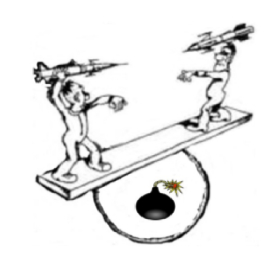
Today, international leaders and the rogue terrorists of shadow governments continue to flirt with Einstein’s dreaded nuclear destruction. Horrific headlines have become so familiar that we’ve become numb to bad news. Likely outcomes of nuclear war are so horrific that the mind refuses to wrap itself around the possibility of a world suddenly changed forever.

We say to ourselves, “If we deny the possibility, refuse to even think about it, it can’t happen.”

But according to Plato, we’ve got it backwards. “We can easily forgive a child who is afraid of the dark; the real tragedy of life is when men are afraid of the light.” For, seeking light on all levels – literal facts, metaphysical truth and inner illumination – leads us to recognize what inevitably changes as well as what does not. It secures triumph over petty fears and victory over illusory death.

Yet, rather than acknowledge danger and take decisive action to avert it, we continue to fend off awareness of the monster of all fears – total annihilation. Instead, we fritter away precious time and energy sweating over inconsequential “small stuff.” We allow ourselves to be seduced by the trivial and irrelevant . . . until, finally, inevitably, calamity strikes and finds us unprepared.

What is the greatest fear you allow yourself to be aware of?

Do you categorically dread any change to your comfortable (or at least familiar) status quo?

The list of specific possibilities is virtually endless. Fear of abandonment, of failure, of success, of poverty, of rejection, of ridicule. There’s the death of loved ones and finally one’s own decline and departure from the physical.

Importantly, are you aware of what you DO about your fears? For, in fact, you do have a wide range of options to choose from.

You can unconsciously project them onto others and make them happen. Or take responsibility to face and overcome them.

You can deny them, bury your head in the sand and hide. Or go to the opposite extreme and overcompensate: adopt a fatalistic hedonist “Eat drink and be merry” attitude. Or choose one of gratitude, focusing on and appreciating the good things of life now, while they last.

As ever, there are two sides to this coin. On the one hand, fear attracts danger. Dwelling on fears can make them come true. But, on the other hand, denying the existence of one’s fears invites danger as well.

Timing is also a important. Now versus later also factors into end results.

Where’s your balance point? It’s a puzzlement.

From Conscience, here are a few thoughts to help sort it out.

globe bullet size

Essay 34. FEAR

Tao does not seem to be something we need to acquire. We are already a part of it. We can, however, do a great job of blocking its manifestation within us. We primarily block the Tao through fear and tension. . . Fear is the source of blockage; it underlies our painful, negative emotions, even though its presence is usually hidden.” — Wolfe Lowenthal, There Are No Secrets

Ninety-five percent of the beliefs we have stored in our minds are nothing but lies, and we suffer because we believe all these lies. In the dream of the planet, it is normal for humans to suffer, to live in fear, and to create emotional dramas . . . If we look at human society we see a place so difficult to live in because it is ruled by fear.” — Don Miguel Ruiz, The Four Agreements

Fear is an essential part of our nature, installed in our DNA, no doubt for very good reason. Fear is an alarm system. It is there to push us in one direction or another, out of harm’s way. . . it is part of our intelligence, part of an ingenious guidance system to help ensure our survival — as individuals, as communities, and as a species.” — Thom Rutledge, Embracing Fear and Finding the Courage to Life Your Life

THE FRONT

An Old English root means sudden attack, ambush or snare. Webster’s first definition is a feeling of anxiety and agitation caused by the presence or nearness of danger, evil, or pain. It suggests doubt, timidity, dread, terror, fright or apprehension.

Alternatively, fear is defined as a respectful dread, awe, or reverence. Fear of God is often a combination of both types, including both awe for the majesty of God’s creation and guilty anticipation of punishment for wrong-doings.

Fears are part natural, part the result of cultural conditioning. Those which are unreal are best dispelled by analysis and understanding. Those which are justified are best faced by correcting and atoning for one’s own mistakes as well as preparing to meet and overcome external dangers.

Working with the I Ching helps us discriminate between appropriate fears which require positive action and illusory fears to release and forget. It is an invaluable aid in the process of cultivating self-honesty for the purpose of self-correction. It is equally useful in the process of articulating immanent dangers and deciding on the best strategies for effective response.

Primal fears are associated with correlative chakras. At the first chakra level, the fear is of physical death. At the second, loss of sexual prowess or family support. At the third, the fear is of losing of material and financial accumulations, along with social connections and influence. At the fourth, failure in love relationships. At the fifth, fears turn to losing face or being judged wrong or inadequate in intellectual matters. At the sixth, one fears loss of connection with the creative source.

As one ascends the evolutionary ladder, emotion-based fears lessen, seen in larger perspective. Integrating and balancing the levels reduces the influence fear has on decision-making.

Some fears have physical causes. For example, habitual muscle tension packs lactic acid into the fascia, producing chemically-induced anxiety. Relaxation and stretching exercises which release tension and reduce acid levels relieve tension anxieties.

Fear is also stimulated by abusing internal organs. Excessive sugar and/or alcohol intake causes metabolic imbalances. The kidneys and liver are stressed by the burden of excess toxins and fluids. The nervousness, anger and fear associated with imbalance in these organs is corrected by improving lifestyle choices.

Cultural conditioning causes still other kinds of fear. Authorities who use terror as a means of control instill a sense of inadequacy and helplessness. Hitler, for example, was the product of an authoritarian, fear-based culture as well as the embodiment of its shadow opposite, destructive megalomania.

Fears denied or unresolved undermine self-confidence, sabotage love relationships, and turn life against itself. They manifest in the physical body as heart disease and cancers.

Fear of God, meaning awe, on the other hand, is life-protective. Direct experience of divine connection (the timeless heritage which everyone everywhere shares in common) overcomes ephemeral fears with the larger light of wisdom and higher love.

Awareness of unseen benevolent powers standing by us on all sides though danger and distress restores strength and courage. It is also the ultimate deterrent to wrong-doing.

THE BACK

Ignorance is the root of fear-caused suffering. Its antidote is confidence gained through inner knowledge and direct experience. Trust that deep within, we each hold the answers to every question and solutions to every problem is the beginning of wisdom.

Terror is a perversion of natural fear. Terrorists may believe playing on fear is the best way to control subordinates or get the attention of unjust leaders. However, unlike math, where two negatives make a positive, two wrongs don’t make a right.

Who Is Qualified to Know What – and How?

Have you ever thought about how the organizations you were born into – family, communities, governments – society in its many interdependent forms and interrelated facets – came into being? Or are you concerned about where they might now be headed?

I certainly do. Often.

Nor are we alone. Over history, serious thinkers have pondered the subject. A LinkedIn connection recently asked for my thoughts on the possible relationship between awareness and responsibility. He framed his question in the context of social contract theory.

Though initially the subject might seem academic, it’s the basic stuff of human survival. The quality of our lives – even, ultimately, our existence – depends on the level and quality of awareness leaders bring to their organizations.

In turn, their success as leaders depends on the trust, integrity and loyalty of their followers. For in fact, rights and responsibilities on both sides – leaders AND followers — are a two-way street. And when the delicate balance of expectations and obligations is violated, social fabric unravels.

contract

Yet the subject doesn’t get the serious attention it urgently deserves. The consequences of taking for granted what we have inherited, with too little awareness of dangers risked by squandering the fragile blessings we enjoy, need comprehensive rethinking NOW – before it’s too late.

I responded to the question with a LinkedIn article, “Natural Leadership or Authority – Where in the Wheel Do YOU Stand?” (See www.linkedin.com/pulse/natural-leadership-authority-where-wheel-do-you-stand-patricia-west.)

A comment on that post by Lloyd Amogan sparked this extension of the subject. With his permission, I’ll quote:

Yes, there is a relationship between social contract and awareness. The awareness has to involve both our physical levels and our Spiritual levels of Awareness/Consciousness, and not many are familiar with the Spiritual Levels, hence very few are qualified to teach.

I responded:

Your premise poses an interesting question, Lloyd. If the relationship “HAS to involve” full-spectrum awareness, yet many are NOT aware, how does lack of awareness impact of the status of the contract? Some theorize that the contract is “understood” or “implied.” Is this sufficient? What consequences follow from a lack of conscious, intentional involvement in the social contract?

An after thought, if Hobbes was unfamiliar, was he unqualified to write on the subject?

Hobbes, by the way, was famous for his view that, without the overseeing rule of a leviathan ruler, human life is necessarily “solitary, poor, nasty, brutish, and short.” Spiritual awareness, in his world view, was NOT a factor on either side of the leader-follower equation.

In contrast, trusted advisors to the rulers of long-lived Chinese dynasties depended on a high-level of awareness to maintain social-political stability. The Book of Change, the leadership manual upon which they depended, instills a comprehensive understanding of the human dynamics which drive social-political organizations.

The applications of the following Essay on Knowledge offer an approach to leadership awareness that might have a positive influence on the future directions of existing organizations:

globe bullet size

Essay 20. KNOWLEDGE

Lao Tzu believed that intuitive knowledge was the purest form of information. For that reason, he expressed his philosophy in the form of thought experiments — mental exercises designed to enhance and evolve the intuitive skills. In the Tao Te Ching, he compels us to use intuition as an equal partner with logic.” — R.L. Wing, The Tao of Power

There is a stream of transcendental, information power flowing into the DNA. . . The I CHING, which, by this hypothesis, is coincident with the DNA system, is perhaps the textbook for this cosmic force, the static tension and dynamic flux flowing into the matrix of the DNA.” — Martin Schönberger, The I Ching & The Genetic Code

Modern science tells us that the human organism is not just a physical structure made of molecules, but that, like everything else, we are also composed of energy fields. . . We, too, ebb and flow like the sea. We, too, are constantly changing. How do we, as human beings, deal with such information?” — Barbara Ann Brennan, Hands of Light

THE FRONT

Roots of knowledge mean both acknowledgment or confession, as well as to play, give, or move about. Webster’s first definition is the act, fact, or state of knowing, specifically direct acquaintance or familiarity with a fact or place.

It can mean awareness or understanding. It can mean acquaintance with the facts, range of information grasped by the mind, or enlightenment. It can mean the body of facts, principles accumulated by mankind. An archaic meaning includes carnal knowledge.

Epistemology is the branch of philosophy which defines the rules of knowledge at any given time/place, setting limits by its answers to these questions: What can be known, how, and by whom? Answers have political overtones, often assigning roles according to class, race, age or gender. They influence cultural decisions about the distribution of wealth, power, social status and access to legal protections.

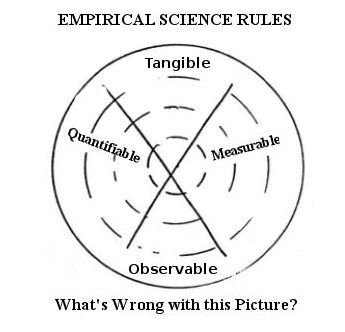
Empirical science respects only information known through reason. Universities train students to dissect and analyze with quantitative and verbal skills. At its best, reason is a tool of constructive discernment, capable of articulating both tangible and intangible information.

With proper training, it can be used to harness the sub-rational, serve the super-rational and link the two, balancing their extremes. As such, reason is a harmonizing function.

Using reason to rule out, avoid or even demean awareness of sub- and super-rational experience is an abuse of the critical faculty.

One overlooked knowledge matrix is ingrained in our very DNA. Many striking resemblances between the structure of DNA and I Ching hexagrams suggest at least one fascinating explanation for how/why this information source resonates with inner knowing. For example, it can’t be accidental that both are both based upon a binary-quaternary code that generates a system of 64 possibilities.

The chakra system of energy transformers which traverse the spine is another knowledge matrix that affects how we process and transmit information. Each chakra filters perception. Each influences the way we interpret experience. Their existence explains how/why the inspired ideas of every religion or science change over time, being diluted and narrowed to fit the thinking of less evolved followers.

One proof of this process is the wide array of Western psychologies, each relevant to a specific chakra issue. Skinner’s is a first chakra psychology based on behavior. Freud focused on sex, a second chakra issue. Adler thought in terms of power, the third chakra. Fromm wrote about love, the fourth chakra focus. Jung was interested in literary symbols and self-actualization, which are fifth and sixth center interests.

Asian sciences, however, have recognized the interactive relationships amongst these concerns. They provide practical methods for integrating the chakras to pave an optimally functioning two-directional highway of continuous energy and information.

Chakra filters also explain why some users interpret the I Ching through the filters of the sub-rational, using it as an oracle of divination. Farmers rely on it to predict the weather and agricultural yield. Others reject such use, preferring to regard The Book of Change as a rational manual for personal improvement and professional advancement.

Traditional Chinese Medicine (TCM) practitioners refer to it as a psychological and/or medical diagnostic instrument. Still others view it as a super-rational code book, giving it spiritual interpretations. For example Taoist masters interpret it as a yogic manual detailing the alchemical process of inner transformation.

Because it encompass the whole of human experience, the I Ching actually accommodates all of these perspectives – and more.

THE BACK

Ignorance is the opposite of knowledge. It can be the innocence of an inexperienced child, or the result of being kept in the dark, deceived or misled. Some people know, but deny who they are and what they know. The social price of being different seems too high. Others fail to use love and creativity to bridge the gap between inner knowledge and outer experience, and succumb to madness.

Delusion is a perversion of knowledge. It’s a belief that things are as one wants or fears, not as they actually are; or thinking one knows everything there is to know, when one doesn’t. Untrained mediums are sometimes misguided either by their own fantasies or dark angels posing as benefactors.

Overcoming Limitations

In writing an invited article for the international journal Prabuddha Bhrata, I was so bold as to speculate about the prophecized End of Times. In retrospect, I’m having second, third and fourth thoughts.

Here’s what I wrote:

. . . wherein is consolation to be found during the present difficult times? For Hindu sages foresaw them. We are now enduring the decline described as the Kali Yuga. Christ similarly foretold the End of Times. It lies in this. Time does not exist for accomplished sages who dwell in the eternal center of the Life Wheel. To enlightened beings, it is but an illusion. They experience themselves as eternal, at one with the Creator. For them, life will go on whether or not the world as we now know it continues. If even for this reason alone, seeking inner enlightenment is an urgent priority.

How can one really know about such things? Such opinions are necessarily based on hearsay, albeit the testimony of sages is consistent on such matters.

To the point is a description of time as a fourth dimension in the marvelously articulate and entertaining book The Tao of Meditation:Way to Enlightenment by Tsung Hwa Jou. He writes:

Like the shadow, which cannot perceive something above or below its plane, we live in a three-dimensional world, able only to experience reality in segments of time.

According to Mr. Jou, Man’s epistemologies and methodologies are all right from a three-dimensional point of view, and since this is our only possible viewpoint, they constitute the best means to the truth about our reality. Every religion, philosophy, or science is right in three dimension. . . with this caveat: these partial approaches to truth are like different windows in a large building. Each affords us a different view of the outdoors. A unified perspective, however, is gained only by leaving the building.

He continues:

What is the shape of life from a four-dimensional point of view? . . . Suppose there are sentient beings who have a natural capacity to see the four-dimensional shape of things. They could tell us what the shape of our life is; that is, they could see all at once what to us is separated as past, present and future.

Likewise, he assures us that in the fourth dimension, birth and death are not separate, discrete experiences, but rather part of an ongoing, continuous whole. Our birth and death are just another transformation of one form to another.

In sum, he agrees with other accomplished meditators who regard time as we experience it as but an illusion. The perception of beginnings and endings is the result of human limitations – being capable of seeing in only three dimensions.

Why does this matter to us NOW? Look at it this way. Mr. Jou’s Motive, his WHY appears to be a kindhearted desire to share wisdom received from direct experience, for which he is infinitely grateful. His Purpose, the HOW is to detail in a book the methods and benefits of meditation along with the supporting science which explains its effectiveness. His Intended end result, the WHAT, is to give readers a time-tested way to improve the quality of daily life for both individuals and their social combinations:

If people began to think past the limitation of three-dimensions, there would be more respect between men in the business of living together for the common good. Three-dimensional tensions would dissolve, and a spirit of cooperation and mutual generosity would spring up in human affairs.

But he also admits that describing direct experience of the fourth dimension is like describing the taste of an apple to someone who has never eaten one. Similarly, he describes a mother frog who answers her babies’ questions about sunlight, trees and land by telling them they’ll have to wait until they mature, shed their tails and swim to the surface of the pond to experience what’s beyond for themselves:

We who philosophize about time, we who are limited to three dimensions are like a school of tadpoles wondering about another world. Until we too are able to “drop our tails” and step into that dimension, time must remain a subject of speculation to us, as a drinking glass is to a shadow. Until we can experience time as a dimensional context, it must remain a flat reflection to us as the upper world is to the water-bound tadpole.

The question/challenge for us as tadpole-like humans is HOW do we get from here (three-dimensional, conflict-driven either-or thinking) to there (fourth-dimensional awareness within and beneficial, harmonious relationships with others in the world).

Training the mind to expand awareness has been the systematic task of monastic Asian traditions throughout the ages. At the current “time,” the benefits of meditation – significantly improved awareness and effectiveness – may well be a matter of both individual and collective survival.

To that end, I’ve been looking through an assortment of books, each of which opens a different window on the subject of Spiritual Intelligence. In the PB article, I placed this term in the larger context of the two-directional, multi-layered Life Wheel:

In terms of clinical psychology, intelligence at the outermost level is described as IQ, at the middle level as EQ (emotional intelligence) and at the third as SQ (spiritual intelligence)..The levels, which actually flow along continuum, neither separate nor totally distinct, are linked in an infinite loop. The one who succeeds in joining them, living here and yet there, in the world but not of it, enjoys the experience of enlightenment – Christ Consciousness.

Each of the books on SQ (or SI) has its own point of reference, for example quantum physics, Christianity, etc. Interestingly, there’s also a forthcoming book on SI by and for Muslims based on teachings from the Koran. While a detailed summary is beyond the parameters of the current discussion, suffice it to say that although each author defines spiritual intelligence differently, they share a common intent.

Unfortunately, another thing Spiritual Intelligence books share in common is than none have gotten much traction. A quick tour through Amazon books shows that very few have been reviewed or purchased. Spiritual intelligence as a concept isn’t sexy. It is as if the concept is outside the “hearing” range of the general public. Why this remains so and what might be done to change this is yet another subject worthy of investigation and ACTION.

I do know, as do the authors of SI books who repeatedly call for “change,” that the future depends on such a reawakening. In the context of End of Time concerns, I’m reminded of Hexagram 49 of the Book of Change:

Day and night replace each other in endless cycles of CHANGE.

The same natural law generates flux in human events.

The unprepared see change as a threat,

but the well-prepared face the unknown calmly.

They know that after degeneration reaches critical mass,

regeneration follows.

In other words, one way or the other, preparation on every scale of magnitude will definitely make a great difference in the outcomes of as yet unforeseen futures waiting to be born. Overcoming the limitations of our current either/or way of thinking is an important first step. For, to repeat, as Einstein warned us, “We shall require a substantially different manner of thinking if mankind is to survive.”

For starters, thinking about this admittedly limited linear Essay on limitations may be helpful.

globeEssay 10. LIMITATIONS

The Chinese concept of change, which gives the I Ching its validity, has found its echo in chaos theory. The concepts presented by this theory give us vital information about how the I Ching functions. Understanding this may help us cross the bridge between determinist rationality and chance, and go further toward our comprehension of this age-old system, which could have a profound influence on the rest of our lives”. — Cyrille Javary, Understanding the I Ching

Let me not to the marriage of true minds

Admit impediments. Love is not love

Which alters when it alteration finds

Or bends with the remover to remove.

Oh no! It is an ever fixèd mark

That looks on tempests and is never shaken.

— William Shakespeare, Sonnet 116

The Bible encodes all the possibilities, and what we do determines the actual outcome. . .The only thing that can be predicted is the probability of different events. Yet quantum physics is a highly successful branch of science. It works. Perhaps because it recognizes uncertainty as a part of reality. In the same way, the Bible code works . . . because it recognizes uncertainty as part of reality.” — Michael Drosnin, The Bible Code

THE FRONT

A limit is a point, line or edge where something ends or must end, a boundary or border beyond which something ceases to be or to be possible. A limitation is something that limits, as some factor in make-up which restricts the scope of a person’s qualifications, activity, or accomplishment. In law, it’s a period of time, fixed by statute, during which legal action can be brought, as for settling a claim.

On the positive side, we limit ourselves consciously by choosing how to allocate our attention, time and effort. This is called discipline and commitment. On the negative side, we unconsciously diminish our potentials, tying them up in knots of insecurity and doubt. Attitude limitations are as debilitating as physical handicaps. Often they’re unconsciously acquired, internalized by cultural conditioning and negative suggestions. Identifying and correcting these attitudes, overcoming unnecessary limitations, is essential to personal growth and fulfillment.

Rules of empirical science limit the field of knowledge to tangible things. Yet when we exclude the data of extra-sensory experience, we impoverish our lives. Instinct is a survival mechanism built into animals and humans alike. Dogs and horses, however, are sometimes more savvy about people than we are; they’re not fooled by false appearances. Intuition, however, is a gift exclusive to humans. It flashes on inventive thinkers when they see new possibilities or dream of futures not yet born.

The I Ching supplies a method for revitalizing instinct and intuition gone numb through suppression or lack of attention. It helps us link the middle octave of reason with the lower and higher octaves of experience, expanding our range of hearing and awareness.

People raised exclusively on empirical science limit their concept of love and joy to tangibles — physical beauty and sex appeal. When youth fades, marriage partners who lack wisdom are tempted to break their vows. Using the I Ching, however, helps fine-tune awareness of what changes, as well as that which remains constant. Using the I Ching as the foundation of realistic relationships, we build the inner consistency necessary to sustain commitments and complete long-term goals.

But just as an individual’s time on Earth is limited, civilizations and even planets pass in due course. At each stage in history, wisdom appropriate to the times is revealed to those who seek. Drosnin speculates that Newton’s intuited but evasive Bible code was purposefully hidden until the time that computers were invented to unlock it. Similarly, Einstein’s Unified Theory eluded him because he lacked yogic I Ching wisdom. In turn, it may well be that the extraordinary value of this text has been hidden for centuries, waiting for public understanding of binary-digital computer code, energy chakras and DNA genome theory to revolutionize our approach to the Book of Change.

THE BACK

The opposite of limitations is the unlimited. We call this infinity or the unknowable unknown. We are told we have unlimited potentials, but on the material plane they are framed by choice and the structure of whatever language we speak. Only the unfathomable, unnameable essence referred to as the timeless Tao or God — the alpha-omega source of creation — is truly without limitation.

When humans defy natural limitations of time, space and form, they are said to be delusional. When they behave in reckless, unrestrained ways, in defiance of their mortality, acting as if they were invincible and above the law, this is arrogance and sheer ignorance. Knowing one’s place in the universe is wisdom; resisting it is futile.

globe bullet size

Therapists & Business Trainers as Mindfulness Teachers – Implementing Kahneman’s S2

globe

Comments added by Tony Ayaz, Business Trainer, to a recent LinkedIn article* deserve a post in themselves, not only for the important points he raised, but also as reminder of the mindfulness skill he calls “read-listening.”

Rather than speed-reading, skimming through articles for key phrases and/or surfing in search of attack points, he advocates a thoughtful reading between-the-lines. What does the author, deeper than words, really mean?

On first reading of the original comment, out of all that was written, alas, I focused only a single part, overlooking the rest. Out of context, I answered only the final paragraph. He wrote:

I think we expect too much from our brain, we have a choice, we either slow down our pace or keep going till we drop off and no retirement, except to retire in a grave, I live to work.

I responded: If you live to work, I sincerely hope it’s because you love your work and find enjoyment/ fulfillment in what you do.

But that didn’t do his comment-as-a-whole justice. I’d failed to “read-listen” to his words. He corrected me:

Patricia, I have never worked in my life, it has always been an employment and/or running a business and now teaching at uni . . . I have always found what they call as work as learning, teaching is just imparting what I learnt myself and from others like you too. I just prioritise my listed routines so my brain is kept in check, while I observe what is around me from outside my body (have you tried that, it guides your heart and mind together in sync!).

In rethinking his read-listen attitude, I connected it with lessons learned from ethnology research interviews. Here’s the description of how it works from RS:

Simply put, the researcher goes into the “field” and gets to know the people. Either formally or informally, she gathers information about the system from different insiders’ points of view and puts it together to form an overview. From this, the researcher can draw conclusions and, when appropriate, make recommendations regarding change options.

At that time, I found that all the skills previously acquired along the way served me well as an ethnology researcher. It was a living example of a favorite maxim, “Nothing is ever wasted.”

From youthful musician years, I gained listening and technical keyboard skills. Playing the piano eventually translated into typing at computers. This in turn found other applications. For example, when I paid the rent by working as a legal secretary, plugged into a Dictaphone, I transcribed dictated words faster than a speeding bullet.

All this, in turn, came in useful as a researcher. With permission, before beginning an interview, I set up a tape recorder. That way, rather than scramble to take sketchy notes during an interview, I could give the subject my full attention. I was free to observe body language, maintain direct eye contact, give non-verbal as well as verbal cues and gently keep the conversation on track.

But what a shock, when I later transcribed, word-for-word, what had been spoken! Of all that was said, I remembered only a small part. I thought I was listening carefully. But much went over my head. And of what I did hear, I often remembered it inaccurately. Only re-listening and quoting directly from transcripts allowed me to accurately report the information collected.

From this experience, I learned that, when we’re able to slow down and listen really carefully, we find out how much is missed during the rapid-fire pace of everyday communications, be it conversation or reading.

When Tony read-listens, he’s slowing down the pace, much as I should have done in reading his comments.

Read-listening is a form of practicing mindfulness, which is exactly to the point of the article in question. It compared full-spectrum awareness (repackaged in contemporary language as mindfulness) to the empirical research findings of Nobel prize winner, Daniel Kahneman.

As Tony corrected me, in his own way, he practices what might be called “meditation-in-action.” I observe what is around me from outside my body (have you tried that, it guides your heart and mind together in sync!).

Other of his comments raise thoughtful concerns. I missed their full implications on the first go round, and definitely must slow down to read-listen better in the future: I do believe no one understands the brain, it is like finding the black hole or looking for GOD particle. And, I believe it is not only outside the research it is outside the human capability and will always remain a work in progress or humans will become the creator.

These are exquisitely important questions.

But now, an A-ah! Here’s another relevant Tony-clue: To fast and slow decision making of the mind S1 & 2 could simply be linked to time and stage of life and the environment one lives in.

Historically, changes have been observed to occur in repeating patterns on every scale of magnitude. That is to say, the seasons of one’s personal life are writ large on the pages of human history. Just as, on a personal scale, the applications of listening and keyboarding shifted from music to law firms and then to ethnology research, weaving a pattern of unforeseen but consistent adaptations, so also meditation sciences shift. They remain essentially the same, but at the same time are continuously renewed to suit immediate circumstances.

No matter how often things change, nothing of real value is lost. Not possible.

By repackaging ancient sciences as Mindfulness, Jon Kabat-Zinn has adapted the timeless essence of meditative teachings, making them suitable to the pace and aptitude of today’s fractured and fracturing world.

Earlier I described therapists as agents of positive change. Now I would add, so also are thoughtful business trainers. By adopting the language of empirical research science, which has arguably reconstituted yin and yang in the contemporary terms of S1 and S2, they too are helping the next generation of decision-makers to slow down, become more self-aware and thus – one can only hope – improve the outcomes of the decision-making process.


globe bullet size

* See: https://www.linkedin.com/pulse/re-search-look-again-patricia-west

Rethinking COMMUNITY

For years now, the same familiar pattern repeats. Whenever I decide I’m finished with writing, something comes along to make me rethink my decision. Two such events triggered today’s post. One was a thought-provoking article, “Mindfulness, Behavior and Social Change” by Mark Leonard, Director/Mindfulness Trainer at the Oxford’s Mindfulness Exchange.

I responded with a question: I’ve often thought about the possibility of building intentional communities, despite the evidence that experiments in the past have not always worked out well. Any thoughts on the subject?

In fact, I had mentally sketched but not followed-through on an article about intentional communities based on my connection with Spring Green and Frank Lloyd Wright’s Taliesin Fellowship. It was an example which, for many important reasons, I would not recommend following.

He replied: I suspect an intentional community needs a suite of conditions including contemporary analogs of functions which hold traditional societies together. I think that mindfulness meditation could play a part here.

The basic axioms listed in The Positive Paradigm Handbook are my recommended contribution to this cohesive foundation. They were fatally lacking in the Spring Green experiment.

Coincidently, these axioms were the reason for accepting an invitation from Swami Narasimhananda to submit an article to Prabuddha Bharata, a journal devoted to the social sciences and humanities started by Swami Vivekananda and in continuous publication since 1896.  [See When Conflict Escalates, What Can Be Done NOW? ]

Timing being everything, I had decided a few hours earlier to list them there in the context of rethinking leadership, family and community based on timeless wisdom traditions.

My interest is based on the observation made in The Age of Heretics (Charles Krone) that when chaos enveloped the civilized European world, monasteries appeared during the dark ages as islands of purposeful community — centers of learning, healing and hospitality. Similarly, monasteries of refuge from barbarism appeared in Asian lands during particularly harsh historical times.

This dynamic seems highly relevant today, for, as Mark Leonard details in his article, the world is surely sinking into another dark ages. Intentional communities may once again become the necessary counter-balance of positive change — the means for ensuring human survival, which, as Einstein warned us, can no longer be taken for granted.

So for starters, from Conscience: Your Ultimate Personal Survival Guide, here are my original thoughts on community. It forms a hopeful basis for rethinking intentional communities. Although my frame of reference for thinking about the dynamics of change is the Chinese Book of Change, resonance with the immediately popular mindfulness movement will be immediately apparent.

globe

Essay 14. COMMUNITY

We can create communities and relationships that are based on love and intimacy rather than fear and hatred. We can learn from the suffering of others. Awareness is the first stage in healing. . . Likewise, we can create a new model of medicine as we move into the next century that is more competent and cost-effective as well as being more caring and compassionate.” — Dean Ornish, Love and Survival

As we accept the smallness of the world, the density of the population, and the myriad influences on individuals and families, someday we may recognize the community and even the whole society as the patient. Imagine, then, what a “doctor of society” might do, what kinds of diseases he or she might treat!” — Patch Adams, Gesundheit!

Each celestial body, in fact each and every atom, produces a particular sound on account of its movement, its rhythm or vibration. All these sounds and vibrations form a universal harmony in which each element, while having its own function and character, contributes to the whole.” – Pythagoras, quoted in The Healing Power of Sound 

THE FRONT

Community stems from a root word meaning fellowship. In English, the word refers to all the people living in a particular district or city. It can also mean a group of people living together as a smaller social unity within a larger one, and having interests or work in common, such as a college community.

Alternatively, it can refer to a group of nations loosely or closely associated because of common traditions or for political and economic advantage. It also covers similarity of tastes and preferences. The last definition Webster’s gives is the condition of living with others in friendly association and fellowship. The last definition has come full circle back to original meaning.

Communities are founded on a common cause. It can be as practical as survival or idealistic as freedom. Often, community cohesion is artificially stimulated by fear and hatred of a common enemy. Hitler inflamed passions against Jews and foreign bankers to mobilize his war-weary country into a second world war even more devastating than the first. Then Americans rallied behind the common goal of defeating enemies of democracy on two fronts, Asia and Europe.

In Common Sense, Thomas Paine wrote about the relationship of divine, natural and human law in a way that inspired readers at the time of the American Revolution to fight for freedom from tyranny. Winning that war did not, however, automatically secure freedom for all times. Democracy isn’t a static achievement that can be passed on unchanged from one generation to the next. It must renewed and earned again, one individual at a time, each generation at a time, continuously redefined in the context of immediate circumstances.

Nor can the structures of American-style democracy be imposed by force, whole, from the outside, on peoples whose beliefs are shaped by vastly different cultural influences. It is the common respect of life and liberty, not external forms, which is universally translatable. The music of life that moves every organization, smallest to largest, is the basis of harmonious fellowship. Approaching natural law and social organizations from the deeper understanding of the ancients could inspire a new, more humane and effective approach to international relations now, one based timeless values which the human community shares in common.

Sages say that freedom from tyranny begins with dispelling ignorance and overcoming negative emotions. True freedom and stable communities begin with the self-awareness and self-mastery which can be gained by diligent use of wisdom tools like the I Ching. First remembering the core of compassion and caring within, we can then extend and expand this good-will into healing society as well.

Put another way, it’s useless to fight for a democratic world before one cleans out the inner swamp of negative emotions. Since inner life projects into external experience, fighting tyranny in the turmoil of anger and hatred reaps results in kind. Therefore, working to establish positive community relationships before attitudes of good-will and willing self-discipline are established is a futile exercise. As Covey reminds us, first things must come first.

Conversely, the more individuals free themselves from personal problems, the more they become open to the calling to community and able to play their part in the harmony of the natural whole.

THE BACK

Street gangs, terrorist groups, religious cults and secret societies are subgroups within the larger community. To the extent that their goals oppose and even endanger the community at large, these organizations are antithetical to the general good.

Pariahs, nomads and outcasts [heretics!] are individuals excluded from society, either voluntarily or by edict. Whether justified or not, their attitudes and behavior are out of harmony with accepted norms. If enough of them find common cause to band together, they form alternative groups which become the foundation of new communities.

globe bullet size

Rethinking COMMUNICATION

The following essay from Conscience: Your Ultimate Personal Survival Guide is an appropriate companion to the article just posted on LinkedIn, “True Leaders Trust Their Inner Compass To Overcome Confusion.” It opens with a question:

When others use the same word to mean different things, how do effective leaders bridge the gap to communicate clearly? If you’d like to see the rest, here’s the link: https://www.linkedin.com/pulse/true-leaders-trust-inner-compass-overcome-confusion-patricia-west?trk=prof-post

globe bullet size

Essay 32. COMMUNICATION

He who is learning to paint must first learn to still his heart, thus to clarify his understanding and increase his wisdom.” — The Mustard Seed Garden Manual of Painting, quoted by R.L. Wing.

Painting in China made it possible to manipulate the veil of appearances so that it might be pulled away to reveal the hidden essentials of reality and lead the observer into an experience approaching ‘truth.’ Both art and the I Ching employ a triggering device that makes conscious that which has been buried in our unconscious.” R.L. Wing, The Illustrated I Ching. 

“My pen is my bokken, sword of discrimination, ruthless as it follows certain lines of thought onto the page and ignores others into nonexistence. My pen gives life or death to words. My pen cuts through partial truths, slashes weak verbs, and sparring and paring, uncovers a rare, gemlike image. . . As my mind’s chatter settles ever more deeply, my pen can follow a thought like a bee tracking nectar.” — Connie Zweig, Becoming a Warrior Writer

THE FRONT

Roots of communicate suggest sharing, to make common. Webster’s defines communication as the act of transmitting, giving or exchanging information. The means can include signals, gestures, and writing as well as speaking. The word is also used to describe the means of information changing hands, such telephone, telegraph, radio, or other systems. It’s also used to describe routes for moving troops and materials. In the arts, it connotes expressing ideas and sentiments. In mathematics and science, it includes symbols.

The definition has no shadings of meaning to indicate the multitude of verbal and non-verbal levels of information exchange, acknowledging a broad spectrum spanning cellular synaptic connections and inarticulate body language on one extreme to non-local, telepathic messaging (ESP) at the other. The definition of communication also lacks nuances that indicate motives for communicating, or whether information shared is complete or accurate.

Bad-faith extremists babel. They intentionally miss each other coming and going. Seemingly powerful extroverts (extreme-yang aggressors or oppressors) abuse communication tools as overt weapons of propaganda, intimidation and subordination. Speech is used to overpower and control. Seemingly helpless introverts (extreme-yin targets or victims) use language (along with silence) as covert weapons of self-protection or retaliation. Words are used to placate, distract or mislead.

In The More You Watch the Less You Know, TV veteran Danny Schechter observes that there’s a media war going on to win the hearts and minds of viewers. It’s going on in education too. Insiders disempower people with the potential to threaten empire-building plans by feeding them partial information piece-meal. Potential leaders are co-opted by rewarding them for knowing more and more about less and less, calling the outcome “expertise.” The right hand/brain can’t know what the left is doing.

It takes cooperative interdisciplinary work, linking not only related academic specialties, but also the levels of law, to discover solutions to apparently unsolvable economic/social/political conundrums. The most essential community-building service sincere leaders can provide is the dissemination of accurate, hopeful information that promotes positive action. As people of good-will intentionally transcend extremes, cultivating balanced mesovert communication skills, they are developing a base of values shared in common, along with means for connecting to share vital information.

Especially in the arts, however, it isn’t the writer who inspires. Words are just catalysts. They precipitate inner knowing, causing it to rise to the surface of conscious awareness. It’s the result of synchronicity. When the writer, reader, time and topic are in synch, then, Bingo! There’s a connection — communication.

THE BACK

The opposite of communication is silence, the absence of giving and/or receiving information. In a social context, ignoring others is a sign of mistrust or disrespect, a denial of their value, trustworthiness or sincerity. In meditation, however, silence in the inner sanctuary of the mind is the respectful attitude of receptive humility. In this context, cessation of dialogue is prelude to at-oneness.

A perversion of communication is cacophony. The overwhelming amount of data now available from an increasing number of sources causes information overload. City streets and public places are filled with loud, harsh noises that shatter the nervous system. This extreme causes the mind to shut down in self-protection.

Put the Common Core Back in Common Core

restore common core

Restore the Common Core” is packed with implications for education and, ultimately, human survival.

For those who haven’t been following articles posted on rethinkingsurvival.com over the past year, here’s a brief summary of the concepts embedded in the Life Wheel.

arrow bulletThe Positive Paradigm of Change is a model equally compatible with the perennial philosophy embodied in the world’s enduring wisdom traditions and with modern science. It serves to bridge the gap between religion and science.

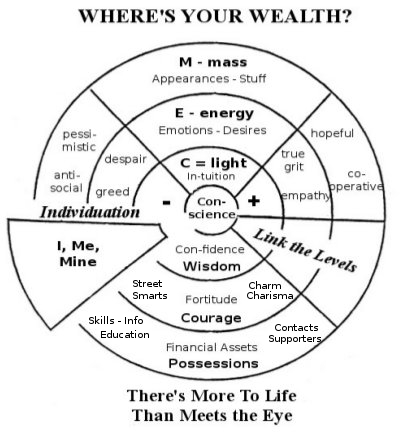
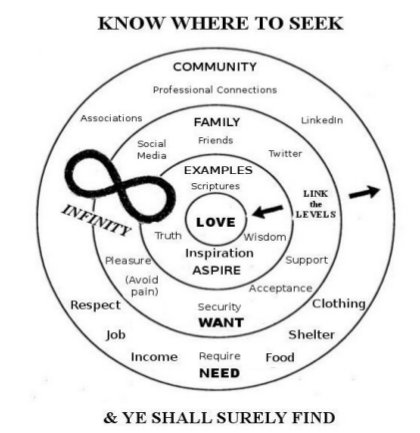
arrow bulletThe Life Wheel with its concentric circles and central, unifying hub pictures the multi-level structure of creation. This form is repeats throughout nature, from smallest to largest. It pictures the organization of snowflakes, each unique in form but identical in basic structure. It pictures the rings which orbit the nucleus of each atom as well as the planets which circle our sun.

arrow bullet

These circles correspond with the three variables of Einstein’s formula, e = mc2. Ironically he had the Unified Theory, but for lack of yoga background, didn’t know it. Briefly, the levels include the material outermost level of observable, measurable, tangible objects, then a middle level associated with energy (chi, prana) and emotions. Still deeper resides a level associated with light. It correlates with the experience of intuition or guidance. All three depend on the Source of Light – the unchanging silent Eternal, beyond duality and therefore beyond words.

arrow bullet

These levels are not actually separate. They function as an interrelated and interdependent whole, linked in an infinite, two-directional in- and out-breathing loop. Those who experience this whole succeed in integrating the levels of daily life with conscience. Those who separate the levels, who ignore some at the expense of others, prioritize levels incorrectly, or place them in conflict, will eventually find themselves in deep trouble.

arrow bullet

This universal concept can be pointed like a laser beam in any direction to illumine the field. For example, the three levels of the Life Wheel correspond with three levels of law: human, natural and divine. This relationship is acknowledged in the Declaration of Independence, which refers to the laws of Man, Nature and Nature’s God.

arrow bullet

A second example explains differing types of intelligence. On the surface, intelligence which divides and argues (using and/or abusing the tools of reason and logic) is measured by the standard of IQ. More recently, it has become fashionable to speak of EQ, or emotional intelligence associated with the middle, energy level. Deeper still is the intelligence described as intuition or inspiration. All these center around a common core which can be called “Conscience.”

arrow bullet

A third example is the use of the Wheel as a linguistic tool. Most words shift meanings depending the level of experience they describe. In the example shown here, the popular concept “Common Sense” shifts meanings with each level of the Wheel. When the levels are linked and experienced as a continuum, Common Sense partakes equally of intuition, gut feeling and sound reasoning.

Now, how is it that this Unified and potentially Unifying Theory gains so little public traction? It begs the question to simply say that many people, for a multitude of reasons, are too highly invested in the status quo. Given the life threatening circumstances that confront us, why is there still such powerful resistance to a return to what the wisest among us have consistently taught from the beginnings of time? Where is the method to the madness?

In partial answer, I offer excerpts from earlier works. The first spells out just how important paradigms are. They make the difference between success and failure, ultimately between survival and extinction. The second excerpt suggests there are deeper dimensions at play. After these two excerpts, I’ll apply all of the above to the restoring the true, eternal Common Core to the progressive/Marxist political/educational curriculum inappropriately called Common Core.

globe bullet sizeWHY PARADIGMS MATTER

Ideas drive results. People’s beliefs color their feelings, triggering basic emotions which in turn drive their actions.

Actions that stem from a simple, complete and accurate paradigm result in personal fulfillment, harmonious relationships, and economic prosperity.

Actions based on false, incomplete and inaccurate paradigms, however well intended or passionately defended, are the cause of widespread misery, suffering and deprivation.

A fatal information deficit explains the worldwide leadership deficit and related budget deficits.

In a dangerous world where psychological and economic warfare compete with religious extremism and terrorism to undo thousands of years of incremental human progress, a healing balance is urgently needed.

Restoring a simple, complete and accurate paradigm of leadership and relationships now could make the difference between human survival on the one hand, and the extinction of the human race (or the end of civilization as we know it), on the other.

globe bullet size

ALIEN INVADERS

Alien invaders infiltrating Planet Earth, weakening humans to eventually take over and enslave them, is a familiar theme in science fiction. For example, in his various incarnations, Dr. Who — television’s time traveler — continuously detects nefarious alien plots and rescues heedless humans from annihilation.

Current events indicate there’s considerable truth cloaked in that science “fiction.” Starting with the premise that hidden alien enemies are covertly scheming to undermine humanity, ask, “How would they set about to destroy us?” Logically, they’d create chaos, setting everyone at each others’ throats. They’d trick humans into mutual self-destruction by stirring up dissension and fragmenting their governments.

It’s an absolute priority for evil aliens to attack the mind. Their agents will do whatever it takes to pollute your mind. They confuse it with false paradigms. They clutter and distract it with the ongoing media circus. Every doubt planted in your mind, causing you to forget who you are, to disbelieve in your ultimate origins and creative potentials, is a victory for the dark side.

To totally undermine humanity, atheism is a must. The unifying beliefs which hold families and nations together and fortify them in times of adversity must be destroyed at all costs. Again, how would this be accomplished?

For one thing, language which makes communication and community-building possible would have to be polluted beyond repair. In the English language, for example, every value word has devolved to mean both one thing and its opposite. So people often talk at cross purposes, unaware that they’re missing each other coming and going.

Divide and conquer. Pit each group against the others. It matters not to them which side wins. Let Sharia law advocates, members of Putin’s Eurasian Union and American exceptionalists squander their precious resources duking it out. If they destroy each other and no one’s left, so much the better.

Alien invaders delight in cheating. They stack the deck, gumming up the works with lies and disinformation driven by dysfunctional paradigms.

If you accept the game and its rules as alien agents define them and proceed to rebel against uncivil authorities, mindlessly hating and resisting, YOU LOSE. (Alien invaders win.)

If you give all your attention to what other guys are doing wrong, playing the role of contrarian, YOU LOSE. (Alien invaders win.)

If you quit on humanity and live only for yourself, leading a life of self-centered indulgence, YOU LOSE. (Alien invaders win.)

If you persist in thinking narrowly in terms of political interests and institutions, not human survival, YOU LOSE. (Alien invaders win big time.)

The only chance of winning — ultimately, surviving — is to demand a new, clean, unmarked deck, one with all the cards. In other words, make a fresh start based on an accurate, complete Positive Paradigm.

globe bullet size

My younger brother once riddled me, “How many legs does a donkey have if you call it’s tail a leg?”

His solution: “Four. Calling a tail a leg doesn’t make it a leg.”

Even so, tacking the label “Common Core” on a curriculum doesn’t guarantee that the substance includes the basics on any level of the Life Wheel. Logic and reasoning skills are deficient; emotional intelligence is insulted, not enhanced; the existence of divine law is excluded, if not ridiculed, as an option.

It’s a matter of human survival to take back the language. Then restore accepted access to the true, eternal Common Core as part of a genuine, complete and accurate education in the true meaning of the word – “leading from darkness to light.”

Conform: Exposing The Truth About Common Core And Public Education by Glenn Beck & team places the political/educational monstrosity called Common Core directly in the camp of the evil aliens described above. They start with the premise, “Information is power. Those without it have nothing. Those with it will always have CONTROL.” They state:

The dumbing-down of America is good for one group and one group only: those who currently have all the power and control. By maintaining a failing system they are forcing a collapse that will have only one “savior”: the federal government. And that’s exactly how they want it.

They continue:

We now stand at the precipice. On one side is the complete nationalization of education and complete loss of local and parental control. On the other side is a complete educational revolution – one that is rooted in individuality and that follows the principle of “maximum freedom, maximum responsibility.”

Sadly, 180 + pages of Conform are dedicated to argument and expose. Less than 30 pages are dedicated to solutions. And these, unfortunately, are limited exclusively to political measures. The most fundamental problem, the lack of a complete and accurate, unifying paradigm is neither acknowledged nor addressed. Deeper underlying origins of conflict as well as the source of genuinely positive solutions are overlooked.

Yet restoring the unifying basics of the perennial philosophy – the True COMMON CORE experienced as COMMON SENSE – an experience equally available to everyone, everywhere – is what might (just might) turn the tide of human history, tipping the balance in favor of human survival.

What Glenn Beck & company has exposed is a radically dangerous situation that calls for opposite and equally radical (truly radical) solutions.

Herein lies the opportunity hidden in dangerous times. In larger context, material resources aren’t that significant when compared with the intelligence, inner strength and inexhaustible vitality available to those whom circumstances oblige to return to the less tangible but very real levels of inner experience.

The disenfranchised (whose numbers increase exponentially with each passing day) experience the results of the prevailing materialistic, conflict-paradigm as catastrophic. They no longer have vested interests in the status quo to protect. They are the ones most likely to find the courage to move forward once again into the past, recovering the timeless treasures buried deep within the perennial philosophy of the world’s enduring wisdom traditions.

Now, as when Christ walked the Earth, the true fundamentalists and radicals (both words mean the same thing!) aren’t members of conflicting extremist groups who meddle with events on the material surface of life’s wheel. They are highly motivated individuals with the vision and determination to change themselves from the inside out. Their shining examples have a ripple effect, gaining momentum through time and space.

globe bullet size

* N.B. The current trend towards disempowerment of the masses is prelude to oppression and tyranny on an unprecedented scale. Co-opting education in the guise of Common Core, turning public school children into Nazi-cloned, obedient zombies, is one piece of a much larger puzzle. Attacks on Second Amendment rights is another. See: http://writerbeat.com/articles/4737-Should-civilians-be-allowed-quot-military-style-quot-guns-

The Evolution of My Understanding

A post-Thanksgiving exchange with a LinkedIn connection (I’ll call him Dave, a favorite name) made me realize I owe it to readers to describe from personal experience why I’ve come to place so much importance on Natural Law. It’s critically important to be fluent in its operations. It’s equally essential to understand how it’s related to, though different from, Divine Law. As I’ve learned from personal experience, a little knowledge can get you in a lot of trouble.

dragon

Dave and I have never met. He hasn’t, to the best of my knowledge, read any of my books, so isn’t familiar with the autobiographical account written in Rethinking Survival. So other than candid answers to his frank questions, his impression is based on posts I’ve written.

We originally hit it off in an exchange of comments. In response to “Boundary Spanners Connect at the Center,” posted September 10, 2014, he wrote:

Wow and thanks Patricia! That was Profound and easy to read. Writing such articles take real skill and something of real value to communicate. I especially liked the hors d’oeuvre at the beginning that made me want to read the rest. Half way through I said out loud, “I think I love you”. I certainly enjoyed reading your article very much. I just clicked “follow”, although I hate the concept of “leaders” and “followers” because I am fiercely independent. I think of it instead as “subscribe”; as in “offer me some more of your tasty wares”; rather than tell me what to think…

I can relate to independent. Mom didn’t call the toddler-me an “independent critter” for nothing. So I answered back:

In-dependent = depending on the True Self deep within. Fiercely = connected with the passionate energy of the middle level. Love you too! Thanks for the subscribe, Dave. : )

Dave’s 80-something parents, who live in South Africa, flew to California, where both he and his brother now live. He dedicated the duration of the Thanksgiving holiday season to family. After they left, he wrote:

I told my mother about you and she asked me if you were a Christian. I said that you were aware of God and often reference Christian tenets in your writing, but that your belief system seemed much wider than that. I did not feel the need to try and label you, but said that you are driven by natural law that springs from the Creator; and that is enough for me.

But that got me to thinking. How would I have answered if she had asked me directly? Then one thing led to another. Later I wrote back:

I was thinking of how to answer your mother’s question, and remembered a post from last December, “Rethinking Christ at Christmas.”. . . I’ll include the link so you can forward it to her – in case she would like to see it.

I continued:

In terms of her asking if I am Christian, the correct answer is that I love, respect and do my best to follow Christ. I’m not sure that’s the same thing as being a “Christian.” (I was not born/raised in a Christian family.)

But, having reservations about his description, I continued.

However, I am not driven by natural law. Rather, ignorance regarding the relationship of divine, human and natural law is a fatal blind spot in our education. It prevents us from understanding and connecting with Christ. (The blog will show you, literally, what I mean. If we can’t recognize/navigate that middle, energy level of natural law, we’re left stuck on the material surface.)

My belief system is “much wider” than Christian tenants, but, then again, so is Christ.

My understanding is that the essence of Christ is vastly greater in time/space than institutionalized Christian religions. Again, the illustration in the blog shows how this must be so. Christ told us he was before the world, is with us always, and will continue to exist long after the world does not. So, if his presence permeates all time and space, in effect of his presence permeates all religions.

Dave’s lengthy, astute response is too long to quote in entirety. Two paragraphs relevant to the critically important distinction which is the purpose of my blogging today (12-13-14 is an “interesting” date – perhaps the right time to make a breakthrough, finally get across the all-important sequence I’ve been laboring to define).

Religions have too much dogma. For me, the only absolute truth is that every individual is responsible directly to God for their own decisions and actions. No human intermediaries are required. Any person can communicate directly with God. Not only can they; they should.

I could not say it better!

But here’s where the conversation became murky, and needs clarification:

My remarks about natural law may not fit your definition exactly, but to me, natural law is God’s law. That said, I use the term more often in the context of physics and chemistry, without declaring who the author is.

From my point of view, two critically important distinctions must be emphasized. First, Divine Law is the Creator’s law. It rules that which is timeless, unchanging and eternal. It pertains to the source of (but cannot be equated with) the created world measured and quantified by human sciences. I don’t quibble about names. The Creator is an essence beyond words. Call it the Tao. The Universal Mind. The Divine by any other name is still eternal.

Second. Natural Law is a related but distinctly different subject. The Book of Change, the Chinese I Ching codifies the 64 permutations of alternating, cyclical change. It is the binary-digital code of duality, the blueprint of DNA – that which has a beginning and an end in time. It maps the dynamics by which creation emanates from the hub at the timeless center of the Life Wheel, and then recedes, being absorbed back into the stillness of original silence.

That’s a lot of big words and still bigger, mind-boggling ideas. But, in simple language, I’ll want to tell you why this distinction between Divine and Natural Law is so critically and personally important to me.

In the evolution of my understanding, I began an as agnostic. As described in Rethinking Survival:

The silver lining to being uprooted early and often is that assumptions others take for granted weren’t deeply ingrained. I was raised by adults from different religions who held conflicting political beliefs. Not all of them could be right. It was my responsibility to sort things out, make sense out confusion and choose for myself. “Take the best and leave the rest.”

As to the existence of God, I had no opinion. I didn’t know whether or not God existed. I didn’t really care. It didn’t seem to make a difference in the conduct of my daily life one way or the other. I was quite content to live according to the maxim,“The reward for a good life is a good life,” which appealed to me as sensible and satisfying.

But then things changed. I began to have experiences which were outside the boundaries of anything I’d thought possible, unlike anything I’d learned from anyone anywhere. One day at the downtown YWCA, a yoga teacher intoned, “When the student is ready, the master appears.” And the very next day, as I was hitch-hiking to a concert, violin case in hand, out-of-town yoga disciples stopped their VW bug to pick me up. They were in Madison to attend a seminar. I was invited. Their teacher picked up on me. I ended up in India, and doors to a new life opened.

In retrospect, there was nothing in my training that gave me a frame of reference to help put this swami in context. He was a con artist. He performed cheap magic tricks that impressed gullible physicians and therapists, and seduced vulnerable women.

He had a modest degree of attainment, mistakenly assumed to be “spiritual.” He could read minds and manipulate material objects. He knew just enough about Natural Law to seem powerful to naïve Westerners. He cynically claimed to be a man of God, a celibate monk and penniless renunciate. But he wasn’t.

What was lacking in my education was an understanding that Natural Law exists. With simple mastery, anyone can do magic tricks. (They’re called sidhiis, or powers.) My pesudo-logic went something like this: “The Swami is powerful. Power comes from God. Therefore he is a man of God. God is good. Therefore the Swami can be implicitly trusted as good.”

His hapless students had never been taught to discriminate in the positive meaning of the word. We didn’t recognize the importance difference between holiness and magnetism, between sincerity and smooth-talking charisma.

Here’s the bottom-line, the extremely important point I want to impress, the lesson learned from this sad experience, to be passed along as a cautionary tale. Divine Law and Natural Law are NOT the same. One is an off-shoot of the other. But there is nothing sacred about Natural Law. Depending on the motive, purpose and intent of the user, power can be used to serve and heal. It can also be abused to exploit and even destroy. It can be turned to serve good or evil. It expresses in the extremes of black and white magic, was well as intermediate shades of gray and yellow.

Tony Silver’s rules for an unfair fight (remember the Karate Kid?) sum up the disadvantages of limited and limiting education:

A man who can’t stand, can’t fight. So break his knees.

A man who can’t breathe, can’t fight. So break his nose.

A man who can’t see, can’t fight. So gouge out his eyes.

In effect, education which doesn’t teach us how to take a stand, breathe deep and see life for what it is, complete and whole, cripples and suffocates us. It blinds us to the dangers inherent in our immediate circumstances. It renders us powerless in the face of dark-side puppet masters who practice black magic to dominate and control unsuspecting innocents. It renders us unable to protect ourselves and those we care for. It sets us adrift, unable to recognize the difference between shadow and substance, between lies and truth, and between illusory, false teachers who distract with cheap magic tricks versus true leaders who offer genuine hope.

In the evolution of my understanding, here’s my take-away from the swami experience. Just as the biological process of metabolism is essential to physical health, so also the process of mental metabolism is equally important to psychological well-being. We take in experience raw and whole. But then it’s imperative to digest it. Take responsibility to decide what is beneficial and healthy. Put it to good use. But eliminate the rest before it festers, causing disease and decay. Release release poisons from the system completely.

In the case of the swami experience, the beneficial effect worth keeping was that it shook me out of my culturally-induced coma. It gave me first-hand experience of invisible forces which bad guys manipulate with impunity to get whatever they want, at everyone else’s expense. It also led me to other experiences. There are protections. Working with the Book of Change, for example, was a life saver. It gave me the leverage to recognize danger, put it in perspective and protect myself from it.

My choice was to honor and maintain connection with the life-sustaining eternal center. I released as poisonous the anger/pain which causes many to react to unfortunate experiences with false teachers by rejecting the Creator whom they only pretend to represent. That would be to choose starvation rather than taking responsibility to process life’s challenges intelligently.

As a child, I thought the question of God’s existence didn’t matter. Now I recognize that operating on the basis of a complete and accurate reality map makes all the difference. There’s more to life than our materialist teachers taught us. Seeing life whole and complete is the starting point of clear thinking and effective, positive action. It’s imperative to recognize that there is an eternal center which abides deep within, regardless of whatever abuses of power are perpetrated in the name of God. It continues to exist whether or not we choose to be aware of it.

In the evolution of my understanding, I’ve come aware that bad guys succeed in wielding temporal power by abusing natural law with impunity. They succeed only by keeping the rest of us in ignorance, the mother of slavery and seed of suffering. I’ve become convinced that the way out of mortal danger is for good guys to open their eyes, breathe in their courage and take a stand. Human survival will depend upon the leadership of those who exercise their God-given free will, who choose to wake up to the magnitude of the danger we’re in, and who are capable of wielding their natural powers/potentials in the service of the larger good.

“Promise Them Anything, But . . .”

dragon

The state-of-the-political/marketing-art is to conduct surveys to determine what people really, really want — what they feel they can’t live without – and then promise them exactly that. Frame (disguise) whatever you have for sale in terms of those most basic, deepest needs. After they’re hooked, then switch.

Here’s the upside of this dismally deceptive state-of-the-art: The empty promises are a well-researched, accurate gauge of peoples’ valid needs and deepest desires. A partial check-list includes: Change we can believe in. Hope. Accountable, transparent government. Authentic leadership. A paradigm shift. Compassion. Collaboration. Opportunity. Freedom. Justice.

But the burning question remains. How do We-the-People (whose desires are exploited by false leaders/teachers to make themselves rich and powerful), get from here to there?

How do we get from cynical promises (which self-serving, irresponsible opinion-pollsters have no intention or ability whatsoever to deliver) to the real deal?

This is a pervasive, many-faceted problem. I keep making unpleasant encounters with new variations. Two recent examples include a book on the future recommended by a LinkedIn connection who claimed it resembles mine. The second was a CEO’s LinkedIn post about Ferguson issues (which is also the focus of “Beware of Disinformation” shown below.)

Naming names would miss the point. It’s the dynamic, not particular individuals, I’m targeting. Besides of which, only counter-productive rounds of retaliatory accusations would result from being specific.

In both recent examples, dilution/co-opting of language/ideas is the constant. I’m learning that this dynamic is as pervasive in the knowledge industry — universities and publishing corporations – as it is in politics. The formula seems to be, take all the most sacred words in the language and turn them into buzz. That way, whatever you have for sale takes on the aura of the sacred. Conversely, when those with authentic ideas which could actually deliver on those deepest needs use these sacred works – people who represent a serious threat to status quo power-holders – can’t be recognized. Because the powerful words have been co-opted, it’s next to impossible to distinguish genuine and sincere leaders from the glut of false gurus on the market.

In my two recent examples, a futurist and a CEO have poured as many as buzz words as possible into a single glass. “Positive. Change. Revolution. Collaboration. Paradigm. Unity. Equity.” Then shake, do not stir.

The futurist comes highly recommended from the small community of back-scratching, best-selling new age gurus who promote each others’ books. He spins a vague vision of “quantum interconnectedness” to predict what one reviewer calls a future of the “spiritual-Borg:” collectivists ruled by and dependent on community consensus. He takes an ancient, scriptural reference to akasha and turns even that into a glamorous but meaningless buzz word.

But there is a glimmer of hope. Every once in awhile, an authentic voice arises which stands above the rest. Someone recognizes that personal self-responsibility rather than collective action is the first line of positive action. Someone, who, like me, insists that positive change necessarily takes place one person at a time, and from the inside out.

Let me introduce you to John Williams, who posted a LinkedIn blog called “Principles We Can Take Away From Ferguson.” At last count, there were 53 views and 3 likes (one of them mine). No buzz. No empty promises. But solid, first-rate, practical recommendations.

However, in contrast, sadly but predictably, at last count the self-promoting CEO had 91,528 views and 2,278 likes (as well as very mixed-reviews). His article reads like the carefully manicured product of a focus-group process, full of empty, shop-worn buzzers – “positive” being the worst offender. All the changes he recommends depend on experts and groups conducting empty, tried-and-disproven committee efforts guaranteed to accomplish nothing much.

My take away is that the knowledge industry promotes and protects the Agents of Disinformation. It marginalizes, when it can’t entirely exclude, other voices. It feeds on the demands/expectation that we be told (whether it be true or not) only what we want to hear.

Below, in “Beware of Disinformation,” I acknowledge Edward Bernays as the inventor of public relations, known in Hitler’s time as propaganda, and today as spin. The remedy available to We-the-People is genuinely Positive Action.

To this end, let’s rename the dragon and snake described below.

Because he’s been tied in a knot, turned upside-down and headed due South, I gave the dragon the pet-name DRAG. Let’s uncoil our energies and desires, turn them right-side up and redirect them True North. Let’s put paralyzing fears and confusion behind, take heart/courage to deserve a new name, GET IT ON.

Similarly, uncoil the American Revolution’s mascot, the rattlesnake on the Tea-Party flag that warns, “Don’t Tread on Me.” I nick-named him DON’T because he resists oppression, but hasn’t as yet generated authentically positive alternatives. Let him show us his true value and take a new name: CAN DO.

Let’s breathe life into our representative mascots, allow them the full-spectrum colors of their energetic potentials, rather than letting them see (and be seen) in black and white extremes only.

BEWARE of DISINFORMATION

An entangled dragon completes the earlier picture, “Hidden Danger Eludes Us.”

drag-sized

This suggestive image surely has as many meaning as there are viewers. However, this time, I’ll tell you a few of the things “Drag” (my pet name for him) means to me – in this context.

In Chinese mythology, dragons represent the invisible power associated with spirit – universal intelligence, the psyche or soul. They’re somewhat similar to the coiled snake called Kundalini in the Hindu tradition. In latent form, she rests unconscious at the base of the human spine, but gradually uncoils to rise through the energy centers called chakras as human consciousness evolves.

Another close relative is the coiled red-on-black rattlesnake pictured on the yellow flag flown by colonists during the American Revolution. “Don’t” is my pet name for him, short for “DON’T TREAD ON ME.” In recent times, Don’t has been given second life by Tea Party members, sending the message that like their ancestors, they’re fed up to the boiling point of rebellion with government abuses.

However, in this particular illustration, Drag appears (to me) to be in trouble. He’s uncoiling, but he’s tied in a knot. He’s stuck. Further, he’s not rising. His head points not True North, but due South, which (to me) means BIG TROUBLE.

Here’s the segue to the earlier picture of teeter-tottering adversaries engrossed in murderous enmity, oblivious to the live grenade beneath them, threatening both with extinction – the final oblivion.

see saw & bomb sized

There are several different directions this can take. I’ve narrowed the choices to three. Because I’ve already written on this in Rethinking Survival, I’m just summing up major points here. In each case, ongoing Ferguson events and the escalating outpouring of opinions make my point – in spades.

1. Most of us are ignorant of the natural law encoded in the Book of Change. We are (almost as if intentionally) left in ignorance of how we tick at an energetic/emotional level. By extension, we act in ignorance of the human dynamics that drive human relationships, from families to governments and international conglomerates. For this reason, we fail even in sincere efforts to create the positive change everyone wants, many promise, but few deliver.

To me, the invisible ticking time-bomb (threatening both missile-throwing rivals without prejudice) represents volatile unconscious energies. Politicians, marketers and their handlers know how to set them off. They intentionally fuel and harness mindless animosities to enrich military armaments industries and their stockholders, to the danger (and impoverishment) of the rest of us.

2. Especially in the case of Ferguson, the volatile mistrust and empty slogan throwing are grist for escalating police-state dynamics which threaten the freedom of ALL of us. We’re pointed, goose-stepping towards the creation of another fascist state, all in the sentimental double-speak names of freedom, human rights and “justice.” Ironically, the USA is tied in knots. Bottled up long enough, the inarticulate, volatile aspirations and frustrations of the coiled rattlesnake explode, heedless of what targets they destroy –or what the long-term consequences. Oppression of an even more nightmarish form is in the works, being fueled, ironically, in the name of resisting and ending oppression.

3. A critical key is the prevailing dysfunctional empirical science paradigm to which most of pay token lip service. It disallows the existence of not only the subliminal level of emotional content that underlies rational thought and action, but also the deeper core of True North reality called conscience, or the True Self.

Without the Positive Paradigm of Change, we’re stuck, operating blindly without a complete and accurate road map. Even when we have the intuitive experience of the middle and innermost levels of the Life Wheel, we don’t have permission/confidence to know what we know.

We haven’t been educated to recognize the sleeping dragons that move us. We remain ignorant as to how to effectively harness them so they take us in the direction of the positive change we ardently desire.

Further, we don’t recognize when/how others intentionally manipulate our unconscious drives, and NOT in our best interests. We don’t have the means for protecting ourselves from manipulators and their dark intentions.

Nor is this lack of a functional, positive paradigm and its related methods/protections an accident. The information is available. But creative, useful work is systematically banned from public awareness. A positive paradigm is our best interests, but NOT in the interests of those who profit hugely from systematically manipulating the public.

I warned about Bernays and the illusion of democracy in Rethinking Survival. As yet, no one has paid attention. Why not is explained in an eloquent blog (to the same point) by Charles Cawley called “Americans: happy to be manipulated?” posted 11-25-14 on writerbeat.com. It’s but a small leap to connect the dots between dishonesty (disinformation, manipulation, culturally reinforced ignorance) and the outcomes, like Ferguson and its ripple effect in all directions.

Cawley writes, in part:

The principles of Behaviorism developed by BF Skinner and Bernays are key to the foundations of modern advertising, business practice and politics.. . Cosmetic politics have created a generation of reactive politicians who second guess what will appeal to voters and say what is needed to get people to vote for them. This can include significant dishonesty. This process is reactive and marginalizes or even excludes new ideas, policies, and creativity to provide solutions to current economic and political issues. . .

The issue of propaganda is immense and desperately needs urgent attention. However, vested interests have heavily bought into the manipulative dishonest approach to propaganda (a la Bernays and Skinner) and they are a major barrier to engaging with the future. . . . they appear to be destroying democracy. How much more serious can you get than this?

Cawley repeats my frequent warning, WAKE UP!

If we do not wake up and replace manipulation to engineer obedience with stimulation to work well events will crush us all.

It is as serious as that.. . . We have the choice to end this delusional activity ourselves or let events do it for us. The latter will be an immeasurably more costly, painful and bitter experience. This is the dark negative heart of behaviorist manipulation.

I go one step further.

It’s not enough to pinpoint the dynamics of manipulators and their smoke screen of disinformation. A remedy in the form of correct and positive information – a complete and accurate reality map – is also required. False information must be rooted out; it must then be substituted with a practical, useful replacement.

In sum, we’re sitting on a time bomb and fail to recognize it. We’re distracted by dramatic, polarizing events which mask the deeper dynamics and inherent danger to us all. To repeat Einstein’s warning, “We shall require a significantly new manner of thinking if mankind is to survive.” I agree with Cawley. It’s that serious. Human survival is at stake.

dragon-green-sized

Survival Basics We Didn’t Learn in School – But Should Have!

Thinking – really thinking – about way the world works and how we fit into it is essential to human survival. This, in large part, depends upon careful, conscious use of the primary tools of logic and language.

Digging deeper than programmed assumptions to understand what we truly mean is one of the basic skills we never learned in school, but should have! Being able to clearly express our concerns and insights is equally important.

This includes knowing the precise definitions of words – how we intend them, as well as the many ways they can be misconstrued by others who use them differently.

Each of the 64 Essays in Conscience: Your Ultimate Personal Survival Guide addresses the Tower of Babel dilemma, where it’s shown that the words we use every day have devolved to mean one thing as well as their opposites. Each Essay highlights the many different meanings assigned to a single, key concept in the English language. Each then focuses on the word’s use in the context of the natural law encoded in the Chinese I Ching.

Westerners, for the most part, remain ignorant of the order implicit in dynamic natural law, as well as the critically important, two-way role it serves as the “middle man” gatekeeper between human and divine law. We suffer the adverse consequences of this blind spot in every aspect of our lives. Unfortunately, even many urban, “modern” Asians seem to have become disconnected from their wisdom roots.

The following is one example: the word ORDER.

As with each of other 64 key terms, its meaning is illuminated by placing gradations within the levels of the Life Wheel. The first principle of Dr. Kushi’s “Principles of Order of the Universe” acknowledges the ONE which resides at the timeless center hub of the Wheel. Infinity is represented by its creative extension process, with its alternating, rhythmic expansions and contractions. The outline below could be expanded and elaborated upon in volumes, and still barely touch the surface of the implications.

Forthcoming blogs will elaborate on the basic principles of universal order which we should have learned as the basics in school and need to know NOW, as an urgent matter of survival.

globe

29. ORDER

Principles of the Order of the Universe:

1. Everything is a differentiation of ONE Infinity.

2. Everything changes.

3. All antagonisms are complementary.

4. There is nothing identical.

5. What has a front has a back.

6. The bigger the front, the bigger the back.

7. What has a beginning has an end.

8. Nothing is solely yin or solely yang.

9. There is nothing neutral.

10. Large yin attracts small yin. Large yang attracts small yang.

11. Extreme yin produces yang, and extreme yang produces yin.

12. All physical manifestations are yang at the center and yin at the surface.

— Michio Kushi, Natural Healing through Macrobiotics

In the secure, high-synergy societies, wealth gets spread around, it gets siphoned off from the high places down to the low places. It tends, one way or another, to go from rich to poor, rather than from poor to rich.  — Abraham H. Maslow, The Farther Reaches of Human Nature

When evil men plot, good men must plan. . . When evil men shout ugly words of hatred, good men must commit themselves to the glories of love. Where evil men would seek to perpetuate an unjust status quo, good men must seek to bring into being a real order of justice. — Martin Luther King, Jr., The Words of Martin Luther King, Jr.

THE FRONT

Roots of order mean straight, row, or regular series. The first of Webster’s seventeen definitions is a social position or rank in the community. Order means a state of peace or serenity, observance of the law, or orderly conduct. It can refer to the sequence or arrangement of things or events, a series, succession. [As in, “Order in the court room!” or “It’s time to put your affairs in order.”]

Order can refer to a fixed or definite place, system or law of arrangement. It can refer to a group or class of persons set off from others by some trait or quality. It can mean a group of persons constituting an association formed for some special purpose, like the Order of Knights Templars, or a community of monks or nuns following a rule.

Order can refer to a group of persons distinguished for having received a certain award or citation. Order can mean a general state, as in “not in working order.” It can mean a command, direction or instruction, usually backed by authority. It can mean an established method or system, as of conduct or action in meetings or worship. It can be a request or commission to make or supply something, such an order for merchandise or services.

In I Ching context, order refers to the sequence in which straight and divided lines are placed in the three-line trigrams which represent the eight building blocks of nature. Alchemical interactions amongst these primal natural forces are mapped by pairing trigrams in every possible combination. The 64 six-line hexagrams which result are placed in ordered matrices, sometimes encompassed by a circle. Different sages place these figures in different order with different effect.

However, any or all of the lines within each six-line configuration can change to its opposite. So the myriad possibilities inherent in any circumstance have the potential to shift in an infinite number of directions.

The implication (and opportunity) is this: Despite appearances, nothing within a given situation is static, nor can the fluid, dynamic permutations of change be controlled or foreseen. Put another way, those who understand how to work with the laws of change can use them to advantage, accepting that no situation, no matter how dire, is either hopeless or without useful possibilities. Order lies in the process, not immediate specifics.

Cutting edge physicists continue to probe the order of the universe. In The Elegant Universe, Brian Greene builds on violinist Einstein’s vision, describing the string theory which “can heal the breach between gravity and quantum, unifying all of nature’s ingredients.” His book is recommended to those who “want to get a real appreciation for the amazing miracle that the universe is.”

The I Ching is recommended for the same reasons. Its advantage over modern physics is first that it is time-tested and proven, second that its careful use over time can bring abstract intellectual theories closer to home, making them applicable to immediate, practical concerns. For it is only with a profound understanding of how the world works, that these dynamics can be applied to establish communities like those envisioned by Maslow and King, where equity and justice prevail.

THE BACK

In biblical context, the shadow side of order is chaos, the primordial state which predates manifest creation. This is different from the chaos physicists study, which refers to turmoil or dynamic instability within which humans have not yet recognized inherent order.

In social context, rigid caste structures based on blood lines or material possessions are perversions of the dynamic natural order. Pigeon-holing or excluding people by race, age, gender or economic status is a competitive strategy; it has nothing to with inherent divine order, human potentials or functional competence.

The Evolution of My Aspirations

Leaders can’t be defined by a standardized, one-size-fits-all list of traits. This is the premise of True North: Discover Your Authentic Leadership. Instead, authors Bill George and Peter Sims found that authentic leaders consistently define themselves in terms of their unique personal stories.

Naturally, they got me to asking myself, what’s mine?

There definitely have been defining moments. Looking back, there have also been consistently recurring themes.

But it took a recent direct message from a new twitter follower to put my answer into focus. Chelsea Hanson, a Business Growth Coach from Green Bay Wisconsin tweeted, “Great to connect . . . I love learning about how people got started in their work. . . how did you get into what you are doing?”

I tweeted back, “Likewise! 🙂 Step by little step. Pieces of mosaic fall into place to form the patterned picture recognized only with hindsight.”

It’s been my consistent belief that, of all the things I could do with my life, I should choose that which does the greatest amount of good for the greatest number of people. With that standard in mind, my aspirations have been shaped and transformed, expanded and focused with each new experience.

The autobiographical section of Rethinking Survival describes early influences. It started with Miss Elson, my senior year English teacher.

Though I didn’t take her seriously at the time, Miss Elson told me I should be a writer. My answers to her essay questions showed the marks of an original thinker. In contrast, she let me read a batch of classmates’ papers to demonstrate the mindlessness she labored to shake up.

What is life?” she asked. Like wind-up toys, most regurgitated definitions memorized in biology class. Catholics added their church credo to the mix. From her I learned that there’s more to being human than the ability parrot others’ words. It includes the capacity to reason and articulate clearly.

Later, while I was earning an M.A. in English M.A. at the UW-Madison, my aspiration was to be like Miss Elson. Without the tools of language and logic to analyze experience and express one’s concerns, how could people name, much less solve their problems? At the time, the highest calling I could imagine was to teach students how to think — really think — for themselves.

My aspirations continued to evolve as a music student in Düsseldorf, Germany. For me, the highlight of studies at the Robert Schumann Konservatorium wasn’t the music teachers, but a modest, insightful kinesiology instructor. Frau Lehru wasn’t a musician herself. But vocal and instrumental teachers alike sent students beyond their help to her.

The pianist whose lessons were scheduled the hour before mine told me her story. Herr Dreschel had given up on her as either lazy or untalented. But Frau Lehru diagnosed the real problem — pinched spinal nerves. Recommended visits to a chiropractor worked “miracles.” Elated, she was a “new person.”

I went to her studio and asked Frau Lehru to coach me. Her lessons were wonderful. She saw timidity in my posture and tension in the way I held my violin. She gave me exercises to correct not only my posture, but the underlying attitudes which bent me out of shape.

“Platz machen,” she encouraged me. “Make room! Don’t crowd me!” And, “Auf wiederstand waschen.” Figuratively, Grow upwards. Stand tall under the pressure of resistance and adversity.

In retrospect, it was as if she’d reinvented the yogic disciplines which sitar and tabla students are taught in India, where music technique is balanced with breathing and physical exercises. Her gift inspired a change in my career goals.

Rather than teach technique, I could help many more musicians by becoming an exercise-and-therapy coach in one, like her. She was much too busy to consider writing about her methods and results. I would do this for her with a book called The Body as Instrument: How to Tune It.

Still later, ratcheting up another notch, I aspired to build schools to facilitate an entire generation of coaches like Frau Lehru. A primary purpose for earning the Ph.D. in Educational Administration from the UW-Madison was to hold the credential required to build an accredited alternative school. My envisioned School-Without-Walls was intended to serve the unmet needs of other boundary-spanners also seeking to fill in the gaps of our failing educational system.

Each new experience has continued to lead to the next. Many steps later, I’ve come full circle to fulfill Miss Elson’s early prediction. Today, I’m a writer because I’m certain that I’ve succeeded in putting my finger on the pulse of a critical information deficit. It explains the excruciating painful, potentially fatal world-wide leadership deficit.

Further, I am certain that the Positive Paradigm of Change not only fills a critical information gap in the way we train our leaders, but that, like a laser beam, it illumines every field of endeavor towards which it’s pointed. This includes not only leadership and governance, but also education, the arts and sciences.

Today my aspiration is for this information to reach the greatest number of people possible, in order to do the greatest possible amount of good. The stakes could not be higher, for I take Einstein’s prophetic warning deeply to heart: “We shall require a substantially new manner of thinking if mankind is to survive.”

If you agree, and if you can help, let’s talk!

globe

Gatekeepers & the Knowledge Industry

The following open letter to physicist/author/media personality Dr. Michio Kaku virtually wrote itself. I was attempting to work on a very different, scheduled blog, but it nagged at me until it was finally posted on LinkedIn.

It leaves me with questions and second thoughts. Some, for example, have to do with the many levels of gatekeepers who guard the doors of the knowledge industry. Colleges and Universities grant degrees. Federal and state departments of education regulate curriculum and license those deemed qualified to administrate and teach in public schools. Professional associations certify members to practice in specific fields. Until recently, the publishing industry held yet another monopoly on the content and distribution of knowledge.

In all cases, the front side of the gatekeeper coin is “quality control.” The public interest is being protected,” is the rationale. But the opposite, back side of the same coin is the vested interest of insider power-holders in maintaining a status quo that operates to benefit a few at the expense of the many.

An overriding survival question looms large. Who protects the interests of the public from the multitude of self-interested gatekeepers? I speak with the authority of experience. My statistical research dissertation inadvertently proved with .99% significant results that the selection of principals in Wisconsin public schools is a closed shop, decided in an informal pre-selection process by existing administrators.

To discredit the messenger bearing this unwelcome news, professors used punitive grades to guarantee that I’d never teach at the university level. Just an example. It’s water long since passed under the dam. No real loss.

The point here is that the public loses big time when the knowledge industry devolves to the status of a power fiefdom. Nor do I post blogs with the expectation of winning popularity contests now. There’s far more at stake. Human survival hangs in the balance.

globe

An Urgent Open Letter To Michio Kaku

Dear Dr. Kaku:

Recently I received two messages apparently prompted by books on Einstein, Human Survival and the Positive Paradigm of Change. They deserve your attention. One claims to have found the Holy Grail of Physicists for which you’re also searching. The other asserts that I must submit my work, which if correct, would “revolutinate” physics, to the test of mainstream scientists. Both were sent by LinkedIn connections I’ve never met personally.

Someone of your stature and professional qualifications is best qualified to answer them. I can, at best, make a few personal comments from my point of view.

The first message was sent by a researcher educated in Madrid, now residing in Argentina. Jorge Barcellos lists Portuguese and Spanish as languages of proficiency. English isn’t on the list, though he seems to do okay.

In light of earlier blogs on Millennials, his avatar choice is especially interesting. It’s an Einstein photo and quote: “I fear the day that technology will surpass our human interaction. The world will have a generation of idiots.”

I responded to his original invitation with another Einstein quote, the premise of Rethinking Survival. “We shall require a substantially new manner of thinking if mankind is to survive.”

Here’s what he wrote back:

Dear Patricia.

I finished this year’s work of uniting the whole physics.
I managed to complete the dream of Einstein.
The theory of everything is a theory of information.
which clearly demonstrates the existence of a creator.
Continuity of Awareness after death.
Board quantum mechanics and relativity theories about the same algebraic theory and simple.
Resolving the apparent paradox between time-space between the two theories.
And also 100% compatible with the classical mechanics and electromagnetism.
In general the theory unifies all the physics goes beyond allowing join the religious understanding of the existence of the universe!
However it is not very different from the final agreement would be imagined by physicists in the past!
The grand universe is a quantum computer that uses strings on your hardware!
And it creates in its interior a holographic structure that is called reality!
What I am describing here all the math supporting structure is not philosophy!
It is the result of a string theory in 5 dimensions!
Thank you for listening.

Jorge Barcellos.

WOW!

His closing, “Thank you for listening,” is poignantly simple and humble for someone who has accomplished a work with potentially huge historical impact. Why?

After taking a few days to think this over, I sent back a brief message thanking him for contacting me. I asked if he had published his findings, or is planning to. (It would seem that if Jorge has truly accomplished what he claims, his name would be worldwide news, well-familiar to everyone.) So far, no response.

Is he, perhaps, relatively unknown, as am I, because his work has necessitated working alone (as did Einstein’s until his discovery was completed and confirmed), sheltered from the slings and arrows of outrageous academic-publisher politics?

I have no doubt that all that he claims is possible. Even so, giving him this benefit of the doubt, I still have reservations. Most importantly, it’s this: Sages throughout time have discovered the Unified Theory of which I’m speaking, but experientially – not intellectually. This inner knowing transformed their lives, exponentially improving the quality of their personal relationships and physical health, as well as giving them supernatural, seemingly magical power over the forces of nature.

This inner illumination is not unique. It’s the essence of the perennial philosophy that pervades the world’s enduring religions. Everyone, everywhere shares this same innate potential for transformation in common.

So many questions. Why did his choose to share his discovery with me? Was it because his work confirms and reinforces mine?

Does Jorge intend, as do I, to use the Unified Theory which completes Einstein’s work to facilitate the new way of thinking which might – just maybe – ensure human survival? Would it be used to protect us from the consequences of poor decisions made by leaders by whose technology exceeds their humanity?

What does he foresee as the consequences of his work, for himself and for others?

Has he remained in the shadows for fear that his work will fall into the wrong hands? This scenario is far from impossible After all, Einstein’s work was not used (as it might have been and still could be) to unify and lift humanity, but rather to build atomic bombs. Could this knowledge be used against humanity again, for example, to build high-tech, genetically engineered robots like the death-dealing “Sentinels” envisioned in the latest X-Men movie?

On a lesser scale, could Jorge be anticipating the vengefulness of professional rivals? The possibility is not unheard of. For example, it has been suspected that Mozart’s early, unnatural end was orchestrated by the jealousy of a lesser composer, Antonio Salieri,

Does Jorge dread the consequences of truth-seeking like those suffered by the medieval philosopher featured in last week’s post, Abelard? Power holders accused him of heresy. He was obliged to recant. His books were condemned and burned. He died in prison shortly afterward.

Or is it possible that Jorge dreads the competitive politics of mainstream academic scientists, who have a vested interest (on many levels) in preventing his ideas from getting into the hands of those who would use the information to change their lives – even society – for the better?

After all, tyrants hate truth and go to extraordinary lengths to bury it, discredit its messengers, and use the legal system (via exclusive contracts,non-competition agreements, dead-end patent lawsuits, the IRS . . . whatever dirty tricks work) to prevent life-saving ideas from reaching the public.

Can I help ensure that Jorge’s work reaches the new breed of humanistic corporate leaders described by Art Kleiner in The Age of Heretics – those who can and will put his ideas to good use? With the little clout I have, I’ll do my best!

I devoutly hope, Dr. Kushi, as a wielder of far greater clout in the fields of both physics and public opinion, that you too will give him the benefit of the doubt, do whatever it takes to bring these potentially scale-tipping ideas to the public, and protect their creator from the slings and arrows of outrageous academic politics.

globe

The second message I mentioned came Roberto Neves Silva. It’s copied to an intimidating list of scientists (much longer than the message itself). Their names suggest worldwide membership.

Roberto lists Portuguese as his native language and claims proficiency in English. He gives his location as Brazil and occupation as Prefeitura do Municipio de Sao Paulo –1993 – Present (21 years).

He lists the acronym EPCAR to represent his education, which he apparently assumes is meaningful to others. I searched several places, but the only EPCAR that comes up on the web is the East Polk County Association of Realtors. I don’t think that’s what he means.

Here’s what he sent:

I have read your ideas on your website
I see that if you are right it would revolutionate physics.
It must be tested by physics mainstream scientists, how many of them agree on test your theories ?

An extraordinary number of assumptions are packed into this brief communication.

First, it’s doubtful that he did little more than scan. Had he read thoughtfully, he would know for a certainty that he’s addressing someone who doesn’t agree with his faith in empirical science as a method for arriving at Truth.

Second, he assumes that he and/or his mainstream peers have the authority to require that my ideas be submitted to their validity tests. (Does he believe I am held to this standard as an absolute, regardless of whether or not I agree with it?)

Third, he assumes that my ideas aren’t valid until/unless a certain number of scientists test and validate them. From my point of view, Truth is not a matter of consensus. It certainly doesn’t require a stamp of approval from mainstream academic authorities (some of whom may be far afield from Truth themselves). I trust, Dr. Kushi, that you would agree.

The kindest response I can muster is simply to repeat, the Unified Theory of which I speak is first and foremost experiential. Its origins rest deep within each of us, at the center of the Life Wheel – something taboo and outside the narrow, constricting parameters of empirical science. Like Einstein, I’m advocating, as a matter of human survival, a substantial rethinking of this incomplete, dysfunctional paradigm.

Nowhere do I claim that the ideas I’m presenting are revolutionary. Though presented with a model that meets the dual standard of Occam’s Razor – utmost simplicity with maximum inclusiveness – the basic concepts are not news.

Nor is revolution in my worldview a positive value. According to the Chinese Book of Change, revolution simply implies revolving back and forth in cyclical pendulum swings over time, accomplishing little of substantive value.

In contrast, the Positive Paradigm of Change which embodies Einstein’s Unified Theory reflects the unchanging essence of eternal Truth as it has been consistently experienced by the deepest thinkers of every generation.

Truth itself is not revolutionary. Rather, time and time again we fall asleep. When inspired teachers or sudden shocks have the effect of reawakening us to who we truly are, we only imagine that it’s new and for the first time.

My bottom-line response to the verification demand: Truth is not subject to the whims of power-holding gatekeepers or rules of democracy, where the most influence and/or votes win the day. Consistent with Gandhi’s worldview, One with God is a majority.

To Survive, Change Your Rules

Expanding Rules of the Knowledge Game would give problem-solvers greater leverage over a wide range of social-political malfunctions, from budget deficits to crime (legalized theft included).

A wider field of accepted information options would give a broad new range of diagnostic tools for pinpointing origins of unjust discrimination, inequitable wealth distribution, work-place violence, addictions and mental-emotional depression. It would give a new face to healing PTSD and preventing suicide.

What these personal, social and political ills have in common is a fatal knowledge deficit.

But before defining Rules of the Knowledge Game (epistemology), I’ll share two examples from personal experience. They’re comical, but they demonstrate the basic mistakes people make on limited information.

The first occurred when I was 6 and my brother David was 5. We were living in Tuscon, Arizona at the time. A blond-haired playmate age 3 who lived down the street adored David. Jason pleaded with his mom for a hair cut just like David’s. He expected the change to transform him into the likeness of his idol. But he came home from the barber streaming tears of childish disappointment.

The brush cut didn’t change his hair color from blond to David’s dark brown, nor did it transfer any of the desirable qualities associated with his hero to Jason.

The second happened when I was in my mid-20s. Rooming with a yoga student in Madison, Wisconsin, I was increasingly troubled as more and more of my stuff – kitchen utensils and even clothing – went missing. When I asked Mukit (her initiate name) if she knew anything about this, she explained why she felt free to take whatever she wanted.

“We are all One,” she said. By her logic, it followed that my stuff was hers too.

These are just small examples of the twin mistakes that continue to repeat when our reality maps aren’t complete and accurate. Writ large, they generate crimes and tragedies in every area of life, on every scale of magnitude.

What is lacking is the two-directional, in- and out-breathing reality map which accounts for all dimensions of personal experience and puts them in prioritized perspective.

Today’s prevailing Rules of the Knowledge Game exclude vitally important components of the human condition. Here, “Rules of the Knowledge Game” refers not to philosophical inquires into truth, but rather punitively enforced social-political taboos which prescribe what can be known, by whom, and how.

These rules stipulate what kinds of knowledge are allowed as well as others that are prohibited. Knowledge is sometimes made off-limits to second-class citizens (low income people, for example). Subtle ways of obtaining information (intuition, conscience) are written off as non-existent or invalid.

Here’s the tacit logic behind limiting the field: “Knowledge is power. IF I want to hoard power (and the resources it yields) in order to control others, THEN I must deny others access to knowledge that would empower them.”

To heal the harm incurred by limiting what can be known (ruling out the senses, intuition and conscience as valid information sources), it is imperative to reintegrate these decision-making influences into the rules of what is acceptable.

Currently, rules of empirical science dictate that only knowledge about material, tangible, observable and quantifiable objects is valid. Only university educated, degreed and certified “experts” using standardized research methods are qualified to obtain and disseminate knowledge. Here’s the picture of the hollow shell allowed by these rules.

material rules sized

Please don’t get me wrong. I’m not saying this approach to obtaining information is invalid. In its place, on the surface of material appearances, it is an important piece of the knowledge puzzle. It’s a necessary balance to the opposite and equally exclusionary “religionist” mistake of elevating inward experience to the exclusion of the material world.

BUT, however necessary, it is not sufficient.

Throughout his lifetime, both in personal experience and professionally, the pioneering Swiss analyst Carl Jung dealt with the suffering caused by squeezing the richness of life experience into this hollow mold. As a matter of personal sanity and social health, he advocated “individuation” as a process for reintegrating all the layers and levels of life into conscious awareness.

The Life Wheel compliments Jung’s work. It can be used as method to assist in this process of making the unconscious conscious, of restoring access to inner knowing that has been repressed by socialization, including education.

Here is a picture to show you what I’m getting at:

Wealth.sized

On the outward path, the individuation process differentiates the individual from the universal center. It integrates timeless unity with the outward layers of idea, energy, action and results. This was the reality check Mukti needed – a correct picture of where my personal boundaries began and hers ended. We are one at the center, but not on the surface. It was NOT okay for her to take my things.

On the inward, return path, the individuation process reintegrates personal, separate identity with awareness of the timeless, universal source. This is what Jason lacked – a concept of his own inherent value, independent of the people. events and circumstances around him. The qualities he admired in David weren’t defined by physical attributes. Looking on the outside for the inherent self-worth he already had on the inside was a sure recipe for disappointment.

What is needed to change the Rules of the Knowledge Game is access to a useful reality map, one that includes the whole of human experience, one that is easily converted into a practical diagnostic and decision-making tool. That is the purpose of working with the Life Wheel. It can easily be personalized to ask, “Where in the Wheel Am I NOW?” — “Where Do I Intend To Be?” — and then decide – “How Do I Get from Here to There?”

Expanding Rules of the Knowledge Game to match the whole of life can be a matter of life or death. For example, just as 3 year-old Jason tried to acquire my brother’s virtues through imitation, David, in turn, copied his dad. As a Yale grad, David chose to become a physician, following in the footsteps of our Harvard-trained cardiologist father.

David too accepted the scientist’s belief that exclusively empirical science can explain everything. He dismissed other approaches to knowledge as ignorant superstition. He rejected as quackery my quest for deeper knowledge about the origins and purpose of life.

I dearly hope when when faced by extreme adversity, he’ll not, for lack of inner awareness, make the same choice his medical role model did.

When we first found out in the year 2002 – 50 years after the fact – that Kirby hadn’t died of a sudden heart attack (as we grew up believing), that he died from a self-inflicted gunshot wound to the back of the head, my younger sister Annie was instantly reminded of a haunting poem by Edward Arlington Robinson.

Whenever Richard Cory went down town,
We people on the pavement looked at him:
He was a gentleman from sole to crown,
Clean favored, and imperially slim. . . .

. . . he was rich – yes, richer than a king –
And admirably schooled in every grace:
In fine, we thought that he was everything
To make us wish that we were in his place.

So on we worked, and waited for the light,
And went without meat, and cursed the bread.
And Richard Cory, one calm summer night,
Went home and put a bullet through his head.

This poem dramatizes the saying, “Appearances are deceiving.” The key difference it illustrates is this. Those who endured external adversity by patiently waiting for the light survived. Whereas Cory, who seemed to “have it all,” lacked awareness of the inner resources needed to cope with hidden suffering.

Without the confidence that comes from inner wealth, all the riches in the world cannot withstand the despairing, dark of night of the soul.

In sum: the first front against suffering remains knowledge. Knowledge – complete and correct – is the beginning of empowerment. Ultimately, changing the Rules of the Knowledge Game is matter of personal as well as human survival.

globe

Happy One-Year Anniversary

October marks the one-year anniversary of the +A Positive Action Press WordPress website, RethinkingSurvival.com. Looking back, I’m amazed at the way daily, incremental baby-steps have added up.

With the help of (sometimes) forbearing computer savvy friends, I’ve gone from cut-and-paste technology to working with a photo-shop clone to produce illustrations. Starting with no marketing skills and less interest, I’ve swallowed my pride and actually gotten interested in the process. From being overwhelmed by Twitter, I now really enjoy direct messaging with savvy, fun new folks. Certainly limiting myself to messages of 140 characters or less has significantly altered my writing style for the better. : )

So tonight I thought I’d take a break from my current projects to revisit the Essay on Practice from Conscience. Written in the year 2000, it’s not in my current voice. But it speaks to my immediate appreciation for the benefits of daily discipline.

globe

27. PRACTICE

Each T’ai Chi movement is related to a particular hexagram of the I Ching. This relationship holds vital clues to a deeper understanding of Chinese thought which, like all valid world-views, is based on knowledge of the self gleaned from the practical experience of meditation. — Dal Liu, Tai Chi Ch’uan and I Ching: A Choreography of Body and Mind

Practice is essential. Through regular practice, you will become familiar with the feeling of being relaxed. You will find that you can achieve results with shorter and shorter practice sessions. You will become like a pianist who is ready to play a beautiful Mozart sonata as soon as her hands touch the keyboard. — Kenneth S. Cohen, The Way of Qigong

One should never rush in entering Taoism. . . One must proceed step by step, never advancing to the next stage until one is ready. One need not fret. If one discharges one’s tasks and proceeds with training perseveringly, then the transitions are virtually automatic. — Deng Ming-Dao, Chronicles of Tao

THE FRONT

Practice means to do or engage in frequently, make a habit or custom. It means to do repeatedly in order to learn or become proficient; to exercise or drill oneself. Practice is using one’s knowledge, as in a profession. To practice is to adhere to beliefs or ideals. It means to teach or train through exercise. An archaic definition suggests intrigue, trickery, or scheming.

Practice is closely related to the words discipline and preparation. It implies the ability to anticipate the future and make decisions about how best to make ready for it. It was the practice of Chinese emperors to consult ministers and sages for information on how to prepare for the future. They, in turn, consulted the I Ching to decide the best ways to adjust to alternating seasons of hardship and plenty in order to maintain social, political and economic equilibrium.

By biblical account, Joseph was sold into slavery by jealous older brothers and taken to Egypt. Thus, he found himself in the right place at the right time to fulfill his destiny. By correctly interpreting Pharaoh’s dreams, he saved countless lives, including those of the brothers whom he forgave.

He foresaw coming changes in nature and drew conclusions as to how prepare for the future. The practice of disciplined conservation during seven years of plenty allowed Pharaoh to feed his people during the seven years of drought which followed, thus preventing starvation, mass suffering and social upheaval.

Applications to current economic practices should be abundantly clear. Squandering resources during times of abundance is a sure recipe for famine, widespread misery and unrest when the rhythmic pendulum of history swings, replacing times of plenty with times of hardship. Wishing and hoping current “good” times will last forever because we want them to, refusing to heed clear warning signs that they never do, foolishly puts everyone at risk.

Music is a demanding discipline which emphasizes the importance of regular practice, preparing in advance to perform well. Similarly, martial arts instill respect for regular practice, cultivating the ability to adjust quickly and skillfully to sudden danger. In this case, the body itself is the instrument and tuning it a fine art. As Chuck Norris says, “Practice, practice, practice! Practice can save your life.” God forbid you’ll ever be attacked. But be ready.

Through the daily practice of meditation balanced by Tai Chi meditation-in-action, it is possible to make teachings real through experience, fulfilling the maxim “Learn by doing.”

Then, with sustained focus and loving attention, everyday activities and relationships are transformed into spiritual and martial arts training. Practice becomes a way of life, an ongoing proof of commitment in action. It’s not just a few hours set aside from the rest of the day. Nor is it to be flaunted, foolishly attracting envy and vengeance.

In Cleary’s translation of The Taoist I Ching, meditation and action alternating in rhythmic sequence are described as equally important complements. Inner stillness develops the abode of rest. Action completes and tests the abode of rest. Progress achieved by steady, gradual, consistent efforts accomplishes far more than dramatic spurts of activity that can’t be sustained over time.

Understanding the philosophy and science of the I Ching intellectually is relatively easy. Putting it into practice is more of a challenge. It’s not like something memorized for class, and then you’ve got it forever. It requires consistent attention and renewal, applying the readings to myriad kaleidoscope changes during the ongoing process of a lifetime.

THE BACK

The opposite of practice is lack of foresight and disciplined preparation for the future. Aesop’s fable of the race between the tortoise and the hare captures the difference between making steady progress toward a goal and the lazy assumption of inevitable victory, sleeping until it’s too late.

Enforced drilling is an inadequate substitute for intelligent practice. Mechanical repetitions without understanding and involved commitment are pointless. Repeating affirmations instead of taking positive action doesn’t produce quality results.

 globe

What the Generations Share in Common

Before writing on ways Millennials might use an Inner GPS App to decide where they want to go and how to get there, I searched the web for similar posts. There are tons of researched opinions on what Millennials want and need.

Marketers survey Millennials asking what they want to buy, from whom, and why. Business experts list the leadership qualities Millennials need.

But this particular approach is more inclusive. It goes a bit deeper.

Even in a world gone mad, as members of the human species, our basic wants and needs remain the same. On the surface of the Life Wheel, we all need food, clean water, shelter and clothing to survive. Some sleep also helps.

In a civilized world, we need the means to purchase these basics: income and/or a job. Respect in the larger community also helps.

At the middle energy/emotion level of the Life Wheel, most of us want to be accepted and supported. We want to feel secure. We want to enjoy the pleasures of life and, whenever possible, to avoid pain. In sum, we want to share our lives with fellow human beings.

At the innermost level, we crave answers about the purpose and meaning of our lives. We seek value. The boldest and bravest even aspire to know Truth. We want to know what Love IS. We crave unity, the stuff of Einstein’s Unified Theory, but continue to look for it in all the wrong places. (That, however, is the subject of another post still on the drawing board.)

The question here, however, is Where in a high-tech, polarized world gone mad, where the levels of the Wheel are fragmented and out of synch, can Millennials go to fulfill these universal requirements?

world gone mad.sized

Behind Millennials’ bravado and superficial social masks, their woes aren’t much different than they’ve ever been. The Buddha put suffering in perspective by promising to bring a dead child back to life if the grieving parents could find any household in the local village that had not been visited by death.

But of course, they could not.

The recent public revelation by movie star, political activist and philanthropist Jane Fonda translates universal suffering into today’s familiar terms. Her mother, Frances Ford Seymour, committed suicide at age 42 when Jane was 12. Only recently did the facts come out which led to closure. At age 76, to write her memoir, Jane looked up her mother’s medical records. There she found the key to understanding her mother’s behavior. From age 8, Frances had been the victim of sexual abuse.

Nor has life exempted me. My father, William Kirby West (named for his ancestor William Kirby Brewster, one of the earliest pilgrims who sailed from England to the New World on the Mayflower), committed suicide when I was 6. Since the subject was taboo in my dysfunctional family (a mirror of the dysfunctional society at large), no one told me the truth. I grew up believing my heart surgeon father died of a sudden heart attack at age 33. Only when I was 50 did my failing mother finally “remember” the facts surrounding his death.

This isn’t my only personal story. For example, (if you’ll pardon a bad pun), Swami Rama was one of the first to introduce yoga to the West. His front was that a celibate monk who’d taken vows of poverty. But appearances were deceiving.

Behind the scenes, he was a bold-faced hypocrite, liar and sexual predator who betrayed the trust of his students. A Yoga Journal author called his abuse of Tantric teachings “spiritual incest.” Translate: rape. In the hands of this opportunist, the teachings (a priceless heritage) were a convenient “product” that thirsty, naïve Americans wanted. He used them to make himself (for a short while) very rich and somewhat famous.

Oh well. “Something’s lost but something’s gained in living every day.”

The point here is that I haven’t allowed the slings and arrows of outrageous misfortune on the Wheel’s surface to define me. Instead, I’ve chosen to live by my mottos. First, “Take the best. Leave the rest.” Second, “Resist not evil. Persist in the good.”

I’ve repeatedly healed – made myself whole again – thanks to my inner apps (in this case, based on the King James version of The Bible and the Chinese Book of Change). I trust that nothing that happens on the surface can touch or change the essence of who I truly AM.

This blessing, the Inner App, is what I would love to share with millennials, as well as the parents and grandparents who dearly wish them well. It necessarily starts with a complete and correct reality map that puts the whole of life into perspective.

Here’s a picture of universal needs, wants and aspirations and the ways many millennials seek to fill them:

MILLENIALS.sized

An aside to millennials. The world of hurt we’re in today was foretold by Christ and foreseen by yogic seers long before that. It has been a long time coming. Today’s mess cannot be taken personally. Nor is it appropriate or helpful to blame your elders. (If you believe in karma, consider that, even if for reasons unknown to you now, you’re the one who picked the time and place of this particular incarnation, maybe to fulfill an important purpose).

Be that as it may, put things in perspective. You think your elders let you down; but they were equally disappointed by theirs. On the opposite side of the coin, each generation of elders continues, for the most part, to sincerely do the best they know how, often in the face of terrible odds.

So let’s cut each other some slack.

Millennials as well as their elders are welcome to come aboard the Inner App project. After all, it’s in everyone’s best survival interests.

For if we taught ourselves to think holistically, in concentric circles, and if we organized / prioritized our lives accordingly, we’d begin thinking like Einstein, like geniuses.

If enough of us tuned in to the universal inner compass and began treating each other with compassionate respect, we’d fulfill Einstein’s dearest wish and start getting along. It might even tip the balance of history in favor of human survival.

Because that truly is what’s at stake.

globe