Tag Archives: Change

The Right Reason

It keeps nagging at the back of my mind to revisit the standard I was taught to use for rethinking past decisions, and for making better ones going forward.

Here it is.

Twenty years ago, this approach seemed simple, clear and useful. It seemed that my life would go a lot better if I stopped to think through my choices before acting. Maybe other people’s lives would turn out better if they did too.

For example:

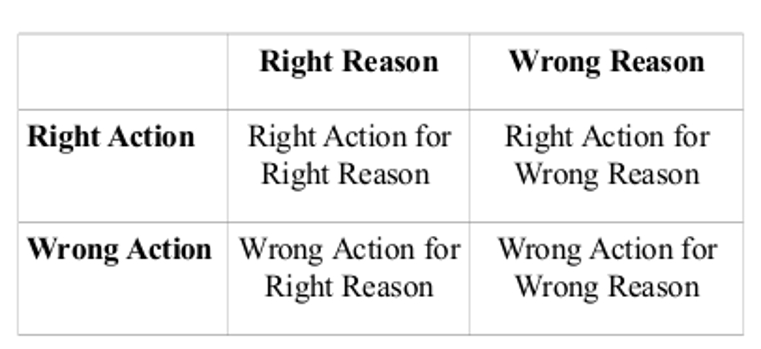
Right Action for Right Reason: I write books in order to enrich people’s lives, tipping the balance in favor of human survival.

Right Action for Wrong Reason: I choose to write books that will be bestsellers in order to get attention and make tons of money.

Wrong Action for Right Reason: I stop writing books because people aren’t yet ready to hear what I have to say.

Wrong Action for Wrong Reason: I stop writing books because I no longer have hope for the future.

Though it’s hard to second guess why others do what they do, much less foresee the long-term consequences of their choices, I’m tempted to make a calculated guess:

Right Action for Right Reason: I run for public office to serve We the People.

Right Action for Wrong Reason: I run for public office to defeat enemies I disagree with.

Wrong Action for Right Reason: I criticize opponents in order to be elected.

Wrong Action for Wrong Reason: I criticize opponents in order to diminish them.

But (obviously) things aren’t always so simple. If I overthink, I can sink way deep into swampy rabbit holes of no return.

Can I really know what is right? Are the reasons I give for my actions honest and sincere? Or are there hidden motives lurking in the personal past that drive me? Ones I’m unwilling or unable to admit to myself? Ones that perhaps color my thinking, possibly distorting outcomes?

For example:

Right Action for Right Reason: Ever since a librarian told the six-year old, orphaned me that books are my friends, I read and write seeking and offering friendship.

Right Action for Wrong Reason: I extend good-will as I understand it, I overlook the possibility that what is of value to me has no value to others.

Wrong Action for Right Reason: I offer unwelcome, unsolicited information hoping to prevent unnecessary mistakes and painful suffering.

Wrong Action for Wrong Reason: I offer unwelcome, unsolicited information in the mistaken belief that I can rescue those I care about from the consequences of their choices.

Projected on to others, similarly complicated inner dynamics might look something like this:

Right Action for Right Reason: I heroically carry on my family legacy in order to complete unfinished, worthy goals.

Right Action for Wrong Reason: I work to fulfill my family’s legacy by following the political path my predecessors.

Wrong Action for Right Reason: I excite peoples hopes and exhaust combined resources, fighting to create an idealized, better future.

Wrong Action for Wrong Reason: I am compelled to push past what is possible right now, sacrificing the long-term good that with patience could have evolved.

It gets ever more complicated. And only time will tell.

Power vs. Control

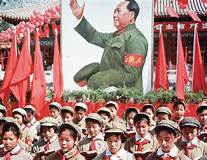
During Tucker Carlson’s interview with Xi Van Fleet, a survivor of Mao’s cultural revolution, she explains that Mao rewrote history and controlled education as a way to secure what he regarded as absolute power.  

But here’s where an understanding of the perversion of the language becomes critical to defeating the globalists .. . among whom Mao was a precursor. 

Restoring the language is essential in the path to overcoming them.  

Understand this: they may have worldly the control. They may call it power. But it’s only control. 

True power is defined in Power vs. Force by Dr. David R. Hawkins.  

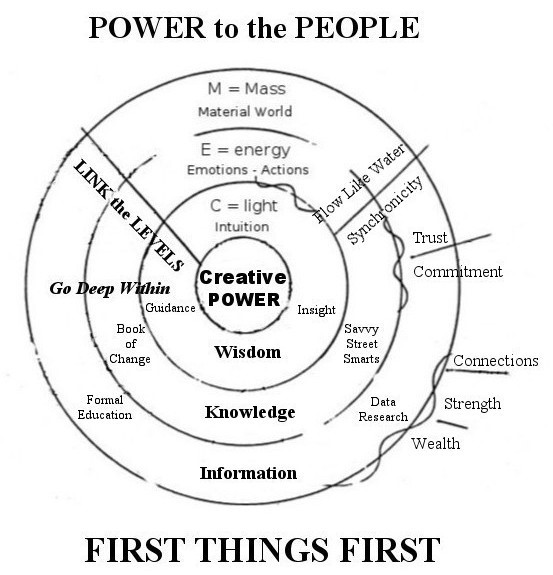
To the extent that we believe in God and in ourselves, We the People have the real power.  Because creative power is connection with Source.  It’s a subtle, energizing, quickening essence.

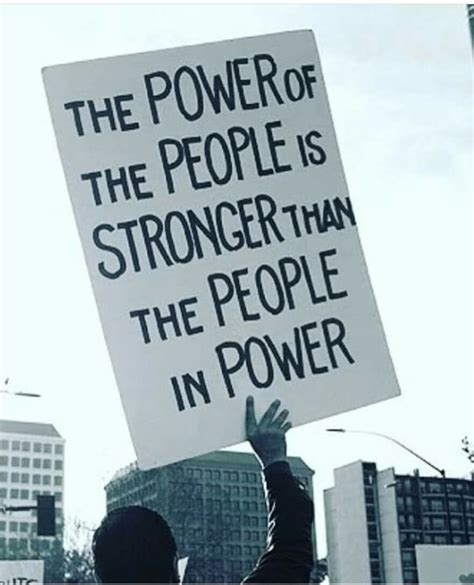
We the People have true power. Tyrants don’t. What they call power is merely control over resources. External, ephemeral illusory control.  

We the People overcome wannabe tyrants – the globalists — by remembering and claiming our innate inner power. We overcome external control and dominance with inner spiritual power. With knowledge, education, and by remembering who we are.  

There’s a recurring theme running through recent video posts. “Wake up, wake up, wake up” to what globalists are doing. But it’s not just to what they‘re about. More importantly, We the People need to wake up to our own power. Like Lambert, the sheepish lion, remember who we truly are.

That’s how we take back the reins. Then globalists are exposed for what they are. Powerless, empty shells. 

Remember the scene in movie version of Stephen King’s The Stand. In jail, the opponent of Randall Flagg, the darkside demon, scorns him, laughing, “You’re just another scurrying rat going about your rat business.” No power at all, in the true sense. 

Here’s a pondering on various meanings assigned to the word Power, dating back to the millennial year 2,000. Interestingly, definitions of power span all levels of the quantum Life Wheel.

57. POWER

Nothing under heaven is as soft, receptive and yielding as water.
Its gentleness dissolves the hard, erodes and absorbs the rigid.
Thus, those who bend endure long after the unbending have snapped.
So it is that the low and high trade places, and the forceful loose their influence.

Like water, sages embrace humility to endure,
remaining flexible and responsive to the needs of the time.
This is known by many, but practiced by few.

— P.E. West, Two Sides of a Coin: Lao Tze’s Common Sense Way of Change

The principle aim . . . is to unfold a Tao of economics; it has always seemed to me appropriate to establish and re-establish a truer alignment of political and economic forces with the natural processes and, through the ancient Chinese I Ching, such an endeavour is possible. — Guy Damian-Knight, The I Ching on Business and Decision Making

Part of what goes into acting decisively in any life situation, along with aggressiveness, clarity of thinking, the awareness of one’s own death, is training. The warrior energy is concerned with skill, power, and accuracy, with control, both inner and outer, psychological and physical. . . He has developed skill with the “weapons” he uses to implement his decisions. — Moore & Gillette, The Warrior in His Fullness

THE FRONT
The root of power means to be able, potent.

Webster’s first definition is the ability to do, act or produce.

It refers to a specific ability or faculty, like the power to hear.

It refers to a great ability to act or affect strongly using vigor, force, or strength.

Power is used to describe the ability to control others, or the authority to influence, such as legal authority.

Power refers to the source of physical energy or mechanical force that can be put to work, like water power.

It points to a person or thing having great influence.

It can mean a nation which dominates other nations.

Power also refers to spirit or divinity.

An archaic use implies an armed force: army, navy, or military strength, like air power.

In optics, power refers to the degree of magnification of a lens, microscope or telescope.

R.L. Wing elaborates on the adage, “Knowledge is power,” pointing out the unique advantage gained from focusing the I Ching like a magnifying lens on daily life.

“The power and astuteness that we gain from this universal perspective,” she writes, “can be applied to any of life’s situations.” In addition, “We recognize situations that hold no promise because they are structured in a way that will cause their own downfall.” In other words, knowledge gives us insight to recognize where various choices are likely to lead, resulting is better decisions.

In Taoist thinking, laws of nature explain why power over time reverts to the people. While drops of water are insignificant, they add up. The momentum driving a tidal wave is formidable.

Divided by fear, ignorance, and narrow materialistic beliefs, individuals remain insignificant. Unified in wisdom by common purpose, people become powerful indeed. Leaders, whether a Stalin, Mao or a Mandela, ride the waves of time like energy surfers, directing their followers either towards slaughter or towards freedom.

Great temporal power of itself implies no value. Its effect, whether positive or negative, depends on the context within which it’s used, either consciously or unconsciously, skillfully or incompetently, for good or evil. The results of a warrior’s prowess, military arsenal and self-control depend on how, when, where and why they’re applied.

For example, in the last century Germany produced both a Hitler and an Einstein. Hitler was obsessed with the occult. He wanted to harness unseen forces to further his goal of world domination. Einstein, on the other hand, searched for the subtle laws of physics. He hoped thereby to discover a unified field theory which perfectly describes the operations of nature. Had he prevailed, he would have re-invented the I Ching.

THE BACK
The opposite of power is powerlessness. Though energy is inherent in every life form, and every individual has the potential to express a unique variation of power, through any combination of external circumstances and personal choices, it can remain latent and dormant, an opportunity lost.

A perversion of power is malicious aggression. Using force to harm others, even destroying life to steal material possessions or gain political power, violates Natural Law. In time, harm returns to the abuser in equal proportion to damage done. Herein is practical proof of biblical wisdom, “Justice is mine, sayeth the Lord.”

An Extraordinary Opportunity

In duality, as a Law of Nature, hidden within every danger is an opposite and equal opportunity. In today’s intensely dangerous times, if only we can see and reach out to catch it, at the center of the ferris wheel ups and downs of current events rests the prize of an extraordinary opportunity. 

This came to me today (Friday, October 20, 2022) as a special message for our Chinese friends, who’ve shared with the world the treasure of the preeminent I Ching, The Book of Change.  

It came about as the result of making a personal query. I’ve been coughing up karmic hairballs to release and heal for a few weeks now. This morning (one can hope), had to be the climax and finish of that process. 

I tell you about it because I recognize that my personal experience parallels the collective one. My individual process of releasing karmic cycles in order to make a clean fresh start could well serve as a catalyst for a larger-scale healing of long-held grudges between China and the Western world. 

The personal story involves the suicide of my cardiologist father, William Kirby West, in which opioid addiction played a part. In dream state this morning, I became aware that an ancient repeating cycle of karma was involved. I was at risk of playing it out once again. But this time, by recognizing the potential danger, I had the opportunity to break the cycle. Release it. Let it go and be healed forever. 

What then flashed in mind was the parallel between my risk and a news clip I’d seen the day before. It featured a collage of the faces of thousands of Americans who’d died of fentanyl overdoses. It filled a full wall, representing not only their loss, but the ripple effect of suffering experienced by their families and friends. 

Connecting the dots still further, I recognized that the U.S. border crisis that’s flooding the country with fentanyl imported from China is part of their revenge, tit for tat, for what had been done to them during the Opium wars. In an earlier century, European pirates and profiteers caused a demoralizing plague of addictions in China. Holding this grudge, they’re revisiting that plague on Westerners now. Round and round the cycle of retaliation, revenge and pay-back goes. 

But it’s time to STOP it. Now. We have an extraordinary opportunity to recognize the repeating pattern and heal this suicidal no-win dynamic NOW.  

In the 3D materialistic paradigm of competition, conquest and control, Chinese overlords imagined that their land was the center of the world. Their pride was bruised beyond measure when that bubble of illusory superiority burst. They’re challenging the U.S. as if to grab back their perceived rightful place in the world as its central dominant “force.” 

But in 5D quantum reality, this is tragic nonsense. Control is a non-issue. Only God, Source, Tao, the Creator (however you choose to name it) – certainly no race, no nation, no gender, no religion — is at the Center of the ferris wheel of life: 

In the Unified Field Theory, encompassed in the archetypal Life Wheel, we have a complete and accurate reality map that supports universal change from the inside out. In shifting to this Quantum Paradigm world view, we have the extraordinary opportunity to finally, at last, come to understand and live by the awareness that everyone, everywhere is made in the image of Creator, endowed with the same creative potentials. 

It’s time to give up the addiction to power, dominance and control. To forgive mistakes made in ignorance. To let go of an unfortunate past in order to focus on the extraordinary opportunity to heal and make manifest the potentials of a brilliant, hopeful future. 

We have nothing of true value to lose, and everything to gain. Time is precious. Human survival is in the balance. Let’s go for it NOW! 

Patricia West is author of The Common Sense Book of Change and Two Sides of a Coin: Lao Tze’s Common Sense Way of Change. She’s currently working on The Phoenix Response: Dying To Be Reborn – in the Same Lifetime.   

Can You Hear Me? – IC – 110520

“Holy crap!” (Excuse my language.) Puzzle pieces were coming together with rapid fire speed!

Early November 30th, the blue moon already in full affect, I sat up knowing I should check out Jack Balkin’s version of SACRIFICE, the final outcome of today’s reading.

When I wrote the Common Sense Book of Change, all the readings came easily. All except one. SACRIFICE. I rethought it for the second edition, and revised it again for the third.

And I’m not the only one who’s had trouble getting it right.

That’s why, when a media celebrity dared psychoanalyze the Bible, I questioned his skewed view of Abraham’s call to sacrifice. In Rethinking Sacrifice, I responded with a more comprehensive, Life Wheel understanding:

[Sacrifice] is the essence of the challenge offered in Exodus. “Return unto me and I return unto you.” It emphasizes travel on the inward path from surface to center of the Life Wheel, releasing attachments to ephemeral possessions, limited opinions/identities, and outgrown lifestyles.

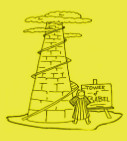
I pointed out that definitions of sacrifice, like virtually every value word in the English language, span the continuum, black to white and everything in-between. The language has been adulterated. I’ve called it The Tower of Babel Effect. The following quote could not be more timely, given current events:

. . . even people with the best of intentions use the same words to mean very different things. They miss each other coming and going, only vaguely aware of the disconnect. . . Instead of being used as a means for unifying human beings, language is often degraded into chaotic paralyzing noise – a weapon for stirring up animosities, division and confusion.

(NB. I’ve expanded on the limitations of good intentions elsewhere. Bottom line: lacking the underpinnings of a complete and accurate paradigm, they easily slide down the slippery slope that leads to the dark side. It’s worth your time to consider.)

To the point here: inverted definitions are used to excuse slave trafficking, pedophilia and worse:

Pagan sacrifice of children and animals is irrelevant to the meaning of Abraham’s test. At issue is the difference between transcending pain for the sake of higher love versus selfishly destroying life (whether with physical, verbal and/or psychological violence) to get what one wants here on earth.

Anyway. As I was saying. It was very early. . . 1:30 a.m. My brain synapses were firing at triple speed. I was remembering that at the time he published The Laws of Change, Jack Balkin was Knight Professor of Constitutional Law at Yale Law School.

Balkin’s hefty, scholarly work is a wonderful resource, one which complements my small, easy-to-read version. No doubt his appreciation of Natural Law profoundly enriches his applications of the Constitution to current events.

In any case, my mind was busy connecting the dots that link Common Sense advocates over time – from Tom Paine’s book, Rudy Giuliani’s website and the Taoist approach to the Book of Change. In short time, I published a bonus blog, What Happened to Common Sense?

On a different note, President Trump spoke in Wisconsin (my home state) on November 2nd. An event within the event resonated with my post, What Happened to Unity, where I wrote:

God and the good angels are broadcasting loud and clear. But it’s hard to get through. The message is being jammed, the signal blocked.

What happened in Kenosha? The podium mike failed. People couldn’t hear. Trump improvised. He joked, turning it into a game. As technicians struggled to get the sound system working, the President shouted to the crowd. “Can you hear me?” “Can you hear me now?” They bantered back and forth til the problem was solved.

The following morning a Mike and the Mechanics tune Silent Running popped into mind. Great song. Prescient. I looked it up on Youtube and found I’m not the only one who thinks so. One comment asked, “Does anyone else feel this song has significance right now?” It got 407 likes and 55 replies. It’s worth a listen and a watch. Here are the lyrics:

Balkin’s perspective is Confucian, meaning he’s primarily interested in human behavior and social order as it manifests on the surface of the Life Wheel. In contrast, a very different version, The Taoist I Ching translated by Thomas Cleary, focuses on yogic practices associated with the middle, e=energy level.

So, for today, I though you’d find it interesting see three versions – just a taste — set side-by-side. With U.S. election results up for grabs, this is the reading for October 5, 2020.

TRAVEL is the initial answer to the question, “What should we be aware of NOW?” It appeared last time as a changing component of the November 2nd reading. In part, the CSBOC version reads:

In dealing with strangers exercise careful self-control. Talk little. Listen much. Learn from everyone who has information to share. Avoid dangerous exposure.

(Before sacrificing much of today’s original content, I initially had a paragraph here about the the famous saying, “Keep your powder dry.”)

In the Balkin version, TRAVEL is called The Wanderer. He comments:

You are in a period of transition. Things are not yet certain, and it is not yet clear how you fit into them or what your identity is supposed to be. The text compares your situation to that of a wanderer who is traveling through a strange land.

Cleary says of Travel:

You should not remain attached to the realm you pass through. If you are concerned with externals, you forget the inward; by pursuing ramifications you abandon the root.

The changing line in the second place advises, “Moderate careful behavior will win the respect of your leaders.” When advice is heeded, it changes to a second outcome, which in the CSBOC reads:

A balanced relationship between the individual and the whole is achieved through service in the spirit of SACRIFICE. Changing selfishness to compassion and acts of kindness builds bridges of mutual trust. Unselfish giving benefits everyone involved, helping the community to overcome obstacles and dangers. Avoid twin dangers: selfishness and self-denial.

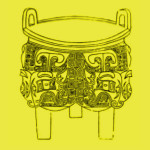
The Balkin version calls it The Caldron, or Ding. Descriptive terms include:

He comments:

A Ding is a sacred vessel, normally made of bronze, in which ritual foods were prepared and cooked during religious ceremonies.. . Through this ritual, people purified themselves and rededicated themselves to spiritual ends.. . Ding teaches that you can transform yourself and your world IF you do so not for selfish ends but in pursuit of something valuable.

The Cleary version calls it The Cauldron:

The comment:

Producing illumination through following an initiatory process, the mind becomes daily more humble while illumination increases. . . When empty and illumined, that enlightenment illumines all, and the mind cannot be moved by the vagaries of wealth and status.

The classic Wilhelm/Baynes translation uses the word Ting. It hints of secret teachings:

There is in man likewise a fate that lends power to his life. And if he succeeds in assigning the right place to life and to fate, thus bringing the two into harmony, he puts his fate on a firm footing.These words contain hints about fostering of life as handed on by oral tradition in the secret teachings of Chinese yoga.

This image, suggestive of the “initiatory process,” supports hints of yogic meaning. It associates the material cooking vessel with the lower energetic center (dan tien), the place where basic materials are combined, transformed and then circulated throughout the system. Markings, front and back are changing I Ching hexagrams.

In sum, today seems to be a time of transition, best used to digest, assimilate and transform raw elements to a higher purpose.

Let this be food for thought to those with ears to hear.

How the CSBOC Came To Be

For those who wondered, I’ve already answered eight of your most often asked questions, including“What makes the Book of Change so unique and important? Why is it especially relevant worldwide?”

wondering face

Here, I’m answering another question: “Why is this particular version, the Common Sense Book of Change (CSBOC), an excellent choice for me to work with right now?”

As strange as it appears at first glance, there are actually several good reasons. So let me tell you more.

Discourse sized

First, I should let you know that today, publishing is a just hobby for me. The world will go its own way. I no longer think can any book change the world.

But it certainly changed me. It’s no exaggeration to say the I Ching saved my life. More than once.

So, for me, if the Common Sense Book of Change helps even one of you, that is enough. I would be satisfied. As it has been written, “To save one life is to save the world entire.”

I also recognized that the I Ching is not the only book with life-saving potential. The most powerful is the Bible. In my case, however, early in life, poor examples confused and repelled me. I do believe that in their infinite mercy, good angels guide and protect truth seekers through any medium available. Angels are not limited by the restrictions of human religion. : )

So long before I was ready for the New Testament, the I Ching was there to get me through some rough transitions.

Angel Calling

Now, then. How did I come to create this little book? I am American, not Chinese. Nor am I a scholar with advanced degrees in Chinese language and literature. I’ve described my personal journey in several places. For example, in The I Ching & Me, I wrote:

For me, the Book of Change is a gateway to magic. On this side, it has been a close companion, good friend and advisor through the years. On the far side, perhaps remembered from lifetimes past, it speaks to me from a place beyond time and space.

With it, I was never alone, even and especially when I was loneliest in crowded rooms. When the world impelled suicide, it brought me back to a deeper, all-pervasive love of life.

So I will share a few sections from Rethinking Survival about how I met the book, and how it has grown on me.

ICgraph

I wrote about the origins of CSBOC in Rethinking Survival:

. . . I’d had a hunch about [the I Ching] for a very long time. Ellsworth Carlson, who lived in Shansi, China during WWII, was a classmate of my parents at Oberlin College. When I was nursery school age, he bounced me on his knees at Harvard.

As Freshman student, I took Dr. Carlson’s course in Asian History at Oberlin. What stuck with me how vast an influence the I Ching had on China for 8,000 years and counting.

So, when I left the U.S., all I took with me was my violin and one small suitcase. Of that, half contained clothes. The other half held sheet music and one small book: the Legge translation of the I Ching.

It made no sense to me. I could barely get through a page or two before giving up. But I kept coming back to it. It led to something important I had to know more about.

When I happened upon the Wilhelm/Baynes edition in Düsseldorf’s International Bookshop on Konigs Allee — Finally! — I had a version I could relate to. It literally became my teacher. It gave me a whole new concept of how the world really works.

Not just this family or that institution or the other county. Not arbitrary and capricious, fluctuating fashions, but the constant anchor over time.

From it, I could deduce the fundamental energy dynamics of action and reaction which drive behavior, internally at a psychological level, and externally in relationships and day-to-day events.

It was an extension of the logic my English teacher Miss Elson impressed on my high school brain. But more. It gave me a map of logical consequences, as inevitable as computer language. “If this, then that.”

For example, If you kick people, they kick back (if they can) or otherwise resist. If you are kind, you inspire love and trust in others. If you violate natural law, nature bites back — your mental health suffers; relationships deteriorate; your behavior becomes erratic and social/physical survival is imperiled.

Asian cultures call this “the law of karma.” Its operation is also described in biblical terms: “As ye reap, so shall ye sow,” and “to everything there is a season.”

In sum, its 64 permutations map a progression of repetitive, cyclical change.

Tai Chi Tu

I’ve also explained why I felt compelled to write a simpler, accessible version, free of unnecessary jargon, sexism and cultural baggage:

There was, as in all things, a downside to the Wilhelm/Baynes version. It was unnecessarily difficult, sexist and elitist. A confusing overlay of cultural baggage obscured its meaning. After working for ten years with every version I could find, I wrote an easy-to-use version called The Common Sense Book of Change, intending to make this treasure available to anyone with an open heart and basic reading skills.

I fantasized on the possibility of teasing the Chinese people into reclaiming their heritage, self-publishing it as small yellow book (the traditional Chinese color of wisdom) in a pocket-sized form to replace Mao’s little blood-red book. No matter how many new versions have come out since then, it still works for me.

seated crosslegged
Here is the story of how the CSBOC came to be:

More “neatsies” surround my small version of the I Ching, the Chinese Book of Change. I wrote it in 1975 during the window of time after I moved back from Spring Green to Madison, but before I had a job. As a leap of faith, I concentrated on the writing, putting off a job search until the book was done. This was a bit scary. Money was going to run out very soon.

I sat cross-legged on the bare wood floor of a living room furnished with cardboard boxes. I spread every version I owned in a half-circle around me. They included the Wilhelm/Baynes translation brought back from Germany, of course. There was a battered second-hand paperback by Joseph Murphy, a research fellow in Andrha, India, as I recall, who quoted the Old Testament in the judgments. Others included the spiral-bound Workbook by R. L. Wing, a hardbound version which presented the I Ching as a form of astrology and a hippie-like paperback.

I trusted that the Platonic-like ideas of the I Ching are timeless, the common heritage of all humanity. They’re not the exclusive property of a particular culture or class. Each of these authors was drawing on the same source for inspiration, expressing universal experience from different viewpoints. So I opened my mind, asking for the deeper meaning these versions shared in common.

I was certain that the most powerful ideas are the most simple. They deserve to be expressed in the clearest language with fewest words possible, free of flowery poetry, scholarly hocus pocus, sexist assumptions (the so-called “superior man”) or other distortions. I intended to make my version easy to read – accessible to anyone with basic reading skills and an open heart.

The format just “came” to me. It worked fine. Fifty words, no more or less, for each hexagram. Ten words, no more, no less for each changing line. The images came easily. I worked systematically from start to finish, no looking back. With the exception of “Sacrifice,” which I revisited fifteen years later, I’ve made no revisions.

Eventually, I called this version The Common Sense Book of Change. I like the word “common.” To me, it doesn’t signify “ordinary” or even “vulgar,” as some use the term, but rather “universal.” “Common” is the root of both “communication” and “community.” And the allusion to Tom Paine’s Common Sense isn’t accidental.

But there’s more to this story:

Upon its completion, the kaleidoscope turned instantly.

Results of the civil service test for Typist III positions came in the mail, along with a list of job openings.

My first interview was at the UW-Madison Department of French and Italian. The Chairman not only gave me the job on the spot. He decided from my resume that I had administrative potential and made me an offer. The Department’s Administrative Secretary III had given notice. She was moving out of town soon. There was no replacement. If I was willing to do her job for Typist III pay, and if I took the pending Ad Sec civil service exam, and if I got one of the five highest scores to qualify for an interview, I could have the job. . . .

I agreed, did administrative work for typist pay, took the exam, qualified for an interview, and within a few months took a leap up the career ladder that secretaries usually took years to accomplish. I was suddenly earning more than ever before. . .

I concluded:

The reward for this leap of faith was immediate. I took it as confirmation from the powers that be that I’d made the right choice to put the book first.

listen with the heart


Rethinking HOPE

hope

Paradoxically, the following Essay on Hope compliments the one on Death shared in The Phoenix Response. Tellingly, it reflects beliefs significantly different from those held by my grandparents, Ellie and Hubble West. It might explain, at least in part, their experience of old age.

Nor is the subject merely academic. As I currently face unanticipated health challenges, like many baby-boomers of my generation, I’m being challenged to face and rethink my personal survival expectations.

I’ll explain all this at length later. But for now, here are my earlier thoughts on Hope, for your thoughtful consideration.

Essay 63. HOPE

That the God of our Lord Jesus Christ, the Father of Glory, may give unto you wisdom the spirit of and revelation in the knowledge of him:

The eyes of your understanding being enlightened; that ye may know what is the hope of his calling, and what the riches of the glory of his inheritance in the saints,

And what is the exceeding greatness of his power to usward who believe, according to the working of his mighty power. . .

— St. Paul, Ephesians

Here the people could stand it no longer and complained of the long voyage; but the Admiral cheered them as best he could, holding out the good hope of the advantages they would have. He added that it was useless to complain, he had come [to go] to the Indies, and so had to continue it until he found them, with the help of Our Lord.  — Christopher Columbus, Journal of the First Voyage

We live at a particularly perilous moment, one in which self-deception is a subject of increasing urgency. The planet itself faces a threat unknown in other times: its utter destruction. . . The splitting of the atom, said Einstein, has changed everything, save how we think. And thus, he observed, “we drift toward unparalleled catastrophe.” — Daniel Goleman, Vital Lies, Simple Truths

We are seeing a health care system in pain, people in pain, and a world in pain. I believe that something can be done to make it better. — Patch Adams, Gesundheit!

THE FRONT

Webster’s defines hope as a feeling that what is wanted will happen. It’s a desire accompanied by expectation. It can mean that which one has a hope for. It can mean a reason for hope. A meaning listed as archaic is to trust or rely.

In I Ching context, hope transcends short-sighted wishing and emotional wanting. It is a trust that one has the wherewithal to respond appropriately to every change of fortune. It is not total self-sufficiency, but awareness that one’s efforts are met half way. When one does the best one can, the rest is supplied in the right way, at the right time.

Daniel Goleman emphasizes the direct relationship between honest self-awareness and survival. Like Einstein and like Strauss and Howe (authors of The Fourth Turning), Goleman is a messenger of awareness we’re often trained to block out.

His vision accords with The Book of Change philosophy in this: ignoring dangers, deceiving ourselves that all is well when it isn’t, doesn’t make problems go away. It only renders us powerless to recognize early warning signals in time to prepare and ameliorate the worst that might come.

In The Fourth Turning, Strauss and Howe emphasize that declining resources will necessitate major changes in healthcare delivery. Anticipating that the cost of health-care will continue to rise and become increasingly unaffordable, they recommend that cost-effective, affordable alternatives along the lines of Adams’ work be put in place now.

Forward-looking health practitioners are therefore now turning to inexpensive, preventive self-maintenance practices like Tai Chi, Qigong and yoga.

There are hidden benefits to timely austerities. Though it is unfortunate that people see fit to return back to self-responsible methods only as a last resort, if the prospect of hard times returns people back to their more simple and beneficial roots, it is a (however well disguised) blessing.

In his epistle to the Corinthians, St. Paul wrote of hope in the context of faith and charity. His hope isn’t Webster’s hope of wanting and expecting. Like I Ching hope, it is trust that human events which make no sense in the short-term fit into the larger pattern of life, and that God’s will inevitably in the long-term prevails.

THE BACK

The opposite of hope is despair. Seeing one’s situation as hopeless is a self-fulfilling prophecy. So long as one places hope in externals, one feeds the illusion of powerlessness. Turning the focus of hope inwards makes all the difference.

Self-deception is a perversion of hope. Lacking a concept of cyclical change, linear thinkers hope to control time. They defy the aging process or pretend change can’t or hasn’t happened rather than adjusting and benefiting from new opportunities that arise to replace the ones which pass away.

A Magical Day

magic

Did you ever have a magical day – one that stands out amongst the countless miracles that abound, most often unnoticed and unappreciated, in the midst of daily life?

Today offered one of those rare and precious times for me, bringing up basic life questions important to us all – about the quality of life and very purpose for surviving.

So I’ll share with you what happened and why, in the seemingly endless blur of discouragements and doubts, it shone like a confirming ray of hope, strengthening my resolve to complete the book now listed on CreateSpace as The Phoenix Response.

Today’s story begins, once again, by connecting the dots between two seemingly ordinary events leading to an extraordinary outcome.

The Longevity Book by Cameron Diaz sparked the first. My eyes halted over it while scanning the bestseller bookshelf at Walmart. The hunch flashed that it had an important message for me. I should look into it.

The second was triggered by the first. I thought back to my grandmother, Ellie West, who gave up a promising singing career to marry my grandfather, Hubble.

Late in her life, Ellie told me about the day he proposed. During a walk in the local park, he stopped in front an enormous sun dial set in granite and pointed to the attached plaque. Engraved onto the metal were the words of poet Robert Browning. “Grow old along with me. The best is yet to be.”

It won her heart.

As she described the event, now white-haired and ill, she shook her head. If not cynical, she seemed at best remorseful. For her, life hadn’t turned out the way the poet promised.

Until today, however, I hadn’t thought carefully about her disappointment. Although I remembered the first two lines of the poem, I’d forgotten the name of the poet and never knew the context of those lines, much less the name of the poem from which they came.

Nor had I wondered what she hoped living to old age would be like, or how and why her expectations were left unfulfilled.

Thinking further on these things now brought magical gifts that answered doubts as to my own future directions.

With a little effort, I recovered the poet’s name, the context of the lines and the poem’s name.

The first stanza of Robert Browning’s poem begins:

Grow old along with me!
The best is yet to be,
The last of life, for which the first was made:
Our times are in His hand
Who saith “A whole I planned,
Youth shows but half; trust God: see all, nor be afraid!”

I also searched out a link to the complete poem in which the stanza appears, Rabbi Ben Ezra

This, of course, led to further questions, as well as an Aha! Who was Rabbi Ben Ezra? When did he live? How are his personal story and life work relevant to us now? More specifically, how does his history and Browning’s poem matter to my immediate question – whether or not to complete The Phoenix Response?

Long story short, the good Rabbi born and died in in northern Spain, 1089-1167distinguished himself as a poet, philosopher and astrologer. Between earliest and end years, persecuted for his beliefs, his restless wanderings took him through North Africa, Israel, Italy, England and France.

His ideas outlasted him to influence Browning. Remarkably, the longer poem is interspersed with phrases that could as easily have been drawn from my own writing: I see the whole design, Perfect I call Thy plan.

There is a hint of the phoenix legend: Leave the fire ashes, what survives is gold.

And a foreshadowing of Christ’s enduring presence throughout human history:

Earth changes, but thy soul and God stand sure:
What entered into thee,
That was, is, and shall be:
Time’s wheel runs back or stops: Potter and clay endure.

Not only are there references to a divine Potter and “earth’s wheel” but actually, in conclusion, the WHEEL of LIFE itself. He names the very image (Platonic Idea, meme, archetype – call it what you will) that serves as the substantive foundation of the Positive Action response.

The poem concludes:

My times be in Thy hand!
Perfect the cup as planned!
Let age approve of youth, and death complete the same!

At first reading, I cannot begin to fully understand this poem, much less the philosophical works which inspired it. The writing is complex and terse — more than a little bit difficult. But this much seems clear. There is a succession of ideas being handed down through the generations. Each writer starts up where the last left off, competes the next piece, and hands the work forward for another generation to pick up and continue.

I was comforted to think that my work is interwoven within a larger pattern, connected in the world of ideas with forerunners. Surely I am linked with a larger whole and charged with contributing to the evolution of an ongoing heritage.

On a personal level, Grandma Ellie handed down her unfinished aspiration for me to take the next step. John Philip Sousa auditioned and invited her to travel as a soprano soloist with his band during their European tour. Because she decided to marry instead, she saw in my life the completion of her early aspirations. She was delighted when she heard that I was studying and performing as a violinist in Europe.

And just as Grandma Ellie left me unfinished work to complete, so my writing on holism and the Life Wheel may fulfill fellow violinist Albert Einstein’s heartfelt desire. He intuited the existence of a Unified Theory. Ironically, he’d already received it, but lacked the yogic training to recognize it for what it is:

IF

Returning, however, back to the first strand — the book that sparked this line of thought. Diaz’s best-seller  promises to address a holistic life view. Its description claims: “The Longevity Book offers an all-encompassing, holistic look at how the female body ages —and what we can all do to age better.

There’s so much that could be better accomplished by applying the multi-dimensional Life Wheel model to the claim of being” all-encompassing.” This includes the concept of Einstein’s beloved compass and his call for compassion. For those unfamiliar with the work to which I’m referring or who would like a reminder, here’s a link to bring you up to speed on The Positive Paradigm.

Among reviews, I found a comment supporting my first take that The Longevity Book begs for a sequel – one which I’m eminently qualified to supply. The Phoenix Response fills many gaps crying out for completion. As the reviewer points out, Diaz wrote one book for young women, and now this second for those entering middle age.

The reviewer’s Re line states “Wish she would have taken it to a woman’s age when she’s elderly.” The comment continues “There are so many things mothers did not tell daughters that many of us in our 60’s, 70’s and 80’s have had to find out on our own – sadly.”

My basic message for everyone, up to and including baby-boomers of both genders: it’s never too late. It’s not over til it’s over. Even for those of us who’ve let go of self-care and are now paying the price, there’s always a second chance. There’s always the Phoenix Response of regeneration – going back to the magical creative process of genesis embodied in the Life Wheel.

With this knowledge, it’s possible for self-healers to repair not only original the DNA of the physical body, but also the more subtle pattern of the soul, restoring wholeness by healing literally — as the infinity pattern shows — from the inside out.

So yes, without a doubt. Not only is this work dearly needed. The way for it is actually being paved and readiness created.

So – I’m especially grateful for life-confirming days like this one when the ever-present magic speaks with exceptional clarity.

So my best wish for you is the same. May you have a magical day as well!

Two Out of Three Ain’t Enough


Eight months that seem like a life-time ago, I wrote the LinkedIn article I’m sharing below, along with excellent comments made to the post.

At the time, I was rethinking the empathy aspect of writing about the Positive Paradigm. Now, I’m about to launch another approach, one focused on healing on all three levels. Again, unless the three are present in a balanced, integrated way, it’s not sufficient.

As an intriguing book I’m reading explains, wholeness and holiness are necessary compliments. It expands on the Phoenix Response as my comprehensive approach to transcending adversity, when mere physical survival is not enough.

I’ll explain as I go what I mean. But, for today, for starters, here’s a recap of the basic concept, the spring board of what’s to come.

It concludes with questions that invite your feedback, the better to adjust to meet your specific needs in future articles. What do you think? And thanks.


pinnacle-sized

Two Out of Three Isn’t Enough

Some leaders are satisfied to sing along with Meatloaf, “Two Out of Three Ain’t Bad.”

But Authentic Leaders know better. It ain’t enough.

As I’m learning the hard way, when any part goes missing, everything suffers.

Bear with me. I’ll share why three-out-of-three is a must for me – and for effective leaders in every walk of life.

The Life Wheel — the Positive Paradigm based on the Unified Theory Einstein had, though he didn’t know it — is the personal Truth I’d dearly love to share with the world – starting with you.

IF

From Rethinking Survival:

This familiar atomic structure repeats smallest to largest in the patterns of nature, from snow flakes and intricate flowers to spiders’ webs and sea shells. Similar symmetrical patterns repeat worldwide in the art of every culture — including the prayer wheels of Native Americans, the colored sand mandalas of Tibetan Buddhists, the stained glass windows of European cathedrals and the intricate geometrical patterns that cover Muslim Mosques, to name but a few. They offer proof of the universal awareness of a central inner reality, of an inner structure common to all humanity, and to a continuity of experience deeper than individual lives or transitory cultures.

The Life Wheel reflects the perennial philosophy shared in common by the world’s enduring wisdom traditions – free of historical baggage. It is equally compatible with yoga and modern physics. It converts easily into a method for introspection and decision-making. Like a modern day Book of Change, it has the potential to become the best friend of change agents everywhere.

The value unique to the Life Wheel is, because it highlights the innate potentials we share in common, it serves as a foundation of common discourse.

Just as importantly, from personal experience, I’ve found the Life Wheel to be a great tool with virtually universal applications. Point it like a laser beam in any direction. It illumines the field.

In Authentic Leaders Depend on the Center I presented a variation on the Wheel – the MPI (Motive-Purpose-Intent) Standard – used to increase self-awareness.

One LinkedIn connection really got it! After a back-and-forth exchange, he commented:

I can also see how the MPI can work in a variety of contexts, both religious and secular. In fact, I think it could have virtually universal application – – – I hope it catches on!

BUT – it hasn’t. Not yet. For that I take full responsibility.

I have yet to demonstrate how I use the Life Wheel for introspection and goal setting. I have yet to show how it can be adapted as an analytical tool for virtually any purpose.

I haven’t effectively explained that this picture answers the plaintive question, “Why can’t we just get along?” Namely, very few of us work from a unifying concept of our common humanity. We were never taught the basics of natural law, much less how to live in harmony with it and each other. )

I’ve failed to communicate powerfully enough the connection I see between the Life Wheel and its potential to relieve human suffering. Those who’ve been taught to look for fulfillment on the shallow surface have been set up for a world of hurt. Joy returns when we know where to look, when we finally return our focus to the center, where eternal love resides deep within the heart of hearts.

The Wheel explains today’s pervasive sense of loneliness, a result of living exclusively on the noisy, frantically busy surface. It offers a hopeful, alternative life picture. When we reconnect with the center, we know that we are never, ever truly alone. Not possible.

SO – why hasn’t all this vitally important stuff been successfully communicated? In retrospect, I’m recognizing I have yet to live up to my own “three-out-of-three” standard!

For one thing, I’m still building the technical skills needed to do the Life Wheel idea justice.

For example, my first LinkedIn article, Boundary Spanners Connect at the Center, isn’t illustrated. In September of 2014, I didn’t yet know how to create images with photo-shop software. Though I’ve come a far distance in the ten months since then, I am still picking up necessary skills on a daily basis.

Just as importantly, I’m getting important feedback that my communication skills need work. Which is different from language skills. In fact, past academic background sometimes gets in the way. I’ve been faulted for seeming so precise and confident that I’m intimidating. Makes me very very sad. Not at all what I intend.

For this, the recent process of writing a guest post for authorunlimited was good medicine. I submitted a draft on the suggested subject: The important difference between knowledge and knowing. Cathy Presland emailed back an edited version.

Ouch!

Fortunately, I had an inkling as to why she made changes. I already saw her most excellent article Writing with Empathy and taken it to heart. I also followed the link to Seung Chan Lim’s video, How empathy fuels the creative process. Like magic, on that particular day, his message was exactly what I needed to hear.

My sheepish Aha. In my rush to get from “here to there,” from surface results to common understanding, I’ve been leap-frogging over the linking, middle level of empathy.

So I can tell you from sad experience, two out three – ideas and technical skills without empathy –ain’t enough!

Cathy’s quote reminded me:

In the words of George Bernard Shaw, “Do not do unto others as you would have them do unto you—they might have different tastes.”

In other words, I have been writing as if LinkedIn connections all understand and agree that everyone, everywhere shares the same center in common. But “it ain’t necessarily so.”

True, boundary spanners, no matter where they start on the surface of Planet Earth, meet at the universal center. But not everyone sees the value in being a boundary spanner. It’s on me to accept this, adjust and improve accordingly.

So back to the drawing board. As part of the Under Construction operation, I promised to restore empathy to the larger picture, accepting that not everyone is boundary spanner. And remember, respectfully, that many are not only asleep but perhaps a bit afraid of waking up.

Yet my worst worry remains. Unfortunately, it usually takes a horrific wake up call to shake people out of their complacent slumbers. From Rethinking Survival:

While we all have the option to remember who we truly are, most of us are like Lambert, the sheepish lion. It takes a smack with a two-by-four upside the head before we’re finally ready to wake up. Often it takes the form of life-threatening danger to those we care for. A personal health crisis will also do the trick. So will job loss or a run-in with natural disaster.

But, like Dorothy stranded in the Land of Oz, when you want dearly enough to return “home,” you can click your heels whenever you chose — and come to find out, you’re already there.

My preference, which I’d dearly love to share with you is this. Rather than wait for inevitable shocks, when it might be too late to survive, I’d rather you be proactive. Use the tools for anticipating change I have to offer.

As I urged in Being Proactive in the 21st Century, make yourself ready to meet whatever unknowns life has in store, coming around the next bend or two.

Working with Life Wheel maps helps mindful, authentic leaders link the levels, making the three-out-of-three option possible. With it, we can choose to be true to ourselves and realize the vision of a positive future.

Bottom line: Change is inevitable. We can experience it as resisting, passive victims or as proactive agents of positive change. I’ve given you tools to put the choices for change in your hands.

Am I communicating yet? Questions? Comments? Please let me know how I can better meet your needs.

=============================

COMMENTS

Mark Hayward st Head of Sales at TheSmallPicture.biz | NIKKEN Independent Consultant: Helping people to take control of their Wellbeing


No worries Patricia West, you made an instant fan out of me 😉

——————–

Peter Fellingham sVice President of Engineering and Co-Founder at ProtoStar Inc

Hi Patricia, I enjoy your writing style. That said, one must write with a target audience in mind; at least commercially. Otherwise you are just writing for yourself.

Patricia West AUTHOR Blogger; Author of Books on Change, Einstein & Human Survival

When writing for authors as a guest of authorulimited, I welcomed the opportunity to write for a specific audience. Here, am focused on authentic leaders, albeit in every walk of life. If you (or anyone else) has another audience in mind, I’m open to your suggestions. : )

————————-

Bob Hemmerle Senior Zen Practitioner/Baseball Umpire

If you get 1 world leader with nukes to understand this then when he sits down with the others he will have something worthwhile to share, Bravo

————————-

Richard Lipscombe THE MEMES MAN

Patricia: This is a great post. I first read this quickly last night. I had an immediate reaction. You can not, we can not communicate with someone who does not hold to their ‘truth’. I re-read it now and listened to TED talk.I still think the same. Inside all of us is mass, energy, and light as a combination – it is what I call my ‘truth’. I can deny it. I can avoid it. I can run away from it. But I can never hide from it. Most people conceal it.

So most people can never ever admit to hearing your message. It is too painful. In simple terms they can not hear that change is your choice and to choose well for yourself you have to listen to your truth.

Most posts on LinkedIn help people to consider ‘change’ as a surface ripple, a mere happening, an entertainment, a dynamic shift without meaning, and so on. They can do this because this is a place for collectives, cliques, false wisdom, fashions, and fads. They welcome all that because it does not challenge the essence of who they are and thus it can never change them. Change their ‘truth’. Truth can be changed easily if you know what it is and embrace it. Truth is continuity – we cling to it even if we do not acknowledge its existence within us. Change to truth sets up a new continuity for us. Richard.

Patricia West AUTHOR Blogger; Author of Books on Change, Einstein & Human Survival

Thanks for your thoughtful comment, Richard. That courageously mindful folks are in the minority, everywhere . . . not just on LinkedIn. . . is the stuff of tragedy. But deep within we all harbor the latent seeds of heroism. As I said, Sooner or later comes the inevitable wake-up call. Last night, after posting this, I came across an excellent example of how 9/11 changed one leader forever. I highly recommend reading – and heeding – this article: https://www.linkedin.com/pulse/crises-changed-what-i-expect-from-leaders-gerald-hassell

————————————

Cathy Presland Strategist, Trainer, and Editor-in-Chief at Author Unlimited

Patricia this is such a thoughtful piece — I love it! And the concept that we need all three of ideas, technical skills and empathy — I will take that to heart.

———————————–

Catherine Hamrick Communications Manager at the School of Agriculture & Natural Resources at the University of Delaware

On target–as usual. Thanks for shakin’ up my brain.

What IS Your Calling

Angel Calling

A timely message from Charles Caro, a senior LinkedIn expert who was most generous with his knowledge when I was a social media newbee, sparked this post. He wrote:

Patricia, You are on my list of the top people I want to contact related to my new book titled “Job Seeker’s Faithful Guide” . . . The book is targeted to job seekers wanting a resource to sustain themselves mentally and spiritually during their job search journey.

I was hoping you would share information on my new book with your connections either by message or simply sharing my posted Pulse article.

I immediately emailed back congratulating him: You’ve found an important blind spot in the job-seeking canon, and trust you’ve filled it admirably.

And forthwith posted this update:

I highly recommend Charles Caro’s work. I owe him a debt of gratitude which I’m very glad to repay in any small way possible. Please see https://lnkd.in/bX–TjH.

After further thought, I added:

You’ve got me thinking. These are times that test us all, serving to separate the wheat from chaff — those who will hear and survive, from those who have hardened themselves and will thus fall by the wayside. Perhaps I will write a post to rethinkingsurvival.com to this end that mentions your book as its trigger. Your words could well make a positive difference to those who choose to “endure to the end.”

Now where was the perfect timing – the synchronicity – in this exchange? His job-search approach touched on a burning question of my own, a follow-up to my last post confirming the personal decision to endure, Choose LIFE II.

Although the basic decision was made, I was finding it not sufficient. I was filled with grave doubts about the future. As the vitally urgent next step, I had just journaled my burning question as an I Ching query. “Why am I still Here? What is My Calling?”

A review of past LinkedIn correspondence underscored my discouragement. In a professional environment where carving niches is the norm, resonance with my boundary-spanner idea was sparse to nil.

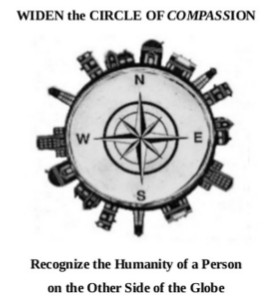
In our earliest exchanges, what I asked Charles was how to connect with like-minded thinkers. By this I meant interdisciplinary innovators who span and link professional disciplines (sciences, religions, and philosophies) by recognizing the universal source that underlies and sustains all life, on every corner of the globe. This was the thought behind illustrating Einstein’s quote in Rethinking Survival.

circle compass of compassion

As good fortune would have it, Charles himself is a boundary-spanner, demonstrated by his ability to recognize the relevance of Chinese wisdom to his Christian worldview. As a practicing Christian, his connections support his approach. For example, he wrote:

Timothy Tobin, who is one of my 1st level connections, lives in Peoria, Illinois where Caterpillar has cut 30,000 employees of the past couple years. Tim has predicted I will sell a million copies in a year. He has let his wife know she can stock the book in their Church bookstore.

In turn, the Life Wheel which is equally compatible with ancient yogic scriptures and modern physics is also compatible with a profound reverence for Christ.

Although coming from very different traditions, what we share in common is a recognition of basic human concerns. For example, my published work focuses on creating awareness of the natural laws of change as well as their relationship to their unchanging source. In describing his new book, Charles choses to call change “transition.”

The “Job Seeker’s Faithful Guide” targets everybody involved in a career transition regardless whether they are unemployed, underemployed, seeking a new opportunity or launching a new business on their own. 

So later I added this observation:

I find repeatedly when researching that two out of three levels of experience are covered — the mental and physical (“think” as in strategize and action/behavior), but the central, driving core — which depends on hearing (“knowing,” trusting, believing in the creative source) is overlooked.

Now, as to the answer to my query, the main text I consulted to examine the implications of my answer was the Jack Balkin version of the I Ching (Book of Change).

Balkin is another, formidable boundary-spanner. As underscored by his title choice, The Laws of Change, Balkin is Knight Professor of Constitutional LAW and the First Amendment at Yale Law School. (As an aside, I urged him to write on a question that fascinates me: the relevance of the Book of Change to Constitutional Law. Sadly, he responded that other work is prohibitive – for the time being.)

Like every other version, being the product of a human mind, this version is limited by the constraints of duality. Yet it is a brilliant contribution to the field and clearly a labor of love. While some might complain that he lacks the traditional linguistic and/or yogic background which Asian translators bring to the subject, in an intuitive way (perhaps exactly for that reason), his understanding rings true.

Be that as it may, to repeat, I asked, “What is My Calling?” In my case, the I Ching Answer was Hexagram 30, Li (double Fire), with no changing lines. Balkin translates Li as RADIANCE, and lists these Key Words:

The Clinging; Interdependence; Synergy; Understanding connections and interdependencies; Fire; Brilliance; Clarity; Shedding Light on Things; Enlightenment

Ah. I instantly recognized the relevance to my boundary-spanner quest.

The text explains:

The two great themes of Li are enlightenment and interdependence. Fire sheds light on everything as its radiance extends outward; but it burns brightly only as long as it has fuel to draw on. As long as the fuel lasts, the fire lasts. Whatever gives light, clarifies, and enlightens depends on something else to which it clings, something whose persistence and perseverance allows the light to shine.

My intuitive response clicked on the image of the burning bush of Exodus, from which the voice of God called out to Moses.

Burning Bush image

Balkin continues, applying these themes to relationships:

So it is with human life. The life of human beings is not free and independent. It is conditioned on circumstances, and, in particular, other human beings. If you wish to gain clarity in your life, you must understand who and what you depend on, and who and what depends on you.

Balkin advises:

Enlightenment means accepting the world for what it is, recognizing one’s connection to others, and taking care of what needs to be taken care of. This is the path to clarity and peace. Acceptance does not mean pessimistic resignation. It means facing up to the facts. Only when we can accept the world can we begin to work with it to improve it and our situation within it.

Relevant to job seekers attached to past successes (or failures), he admonishes:

Do not cling to the past, for it is gone and it will not return. Accept change. Be open-minded and adaptable. Don’t bemoan your fate. Consider how you can change things for the better, given the situation you now face. Nurture others and you will nurture yourself.

His summary states:

Fire is an apt symbol of enlightenment because the power of truth is increased when it spreads to other minds. One candle lights another, and the amount of illumination is doubled without anyone’s light being diminished. For this reason, superior people do not hoard their knowledge or their wisdom, but share it with others who are willing to accept it. In this way enlightenment eventually can reach “to the four corners of the world.”

Food for thought indeed. What do you make of it?

And, as I continue with my own reflections, I encourage you to ask your Self, what is YOUR calling?

Choose LIFE II

body-mind-spirit

Last fall’s mystery illness became a strict teacher, a blessing in disguise. It dramatically reinforced my awareness of the mutually dependent relationship between brain and gut long recognized by Asian healing traditions.

As modern medical research documents, mental distress manifests as a myriad of gut-spawned diseases – Crone’s disease, fibromyalgia, rheumatoid arthritis, irritable bowel syndrome and eventually cancers, to name but a few.

Conversely, the broad spectrum of diseases arising in the gut spawn a host of mental illnesses – not only depression, memory loss, dementia and schizophrenia, but autism and A.D.H.D, for example.

The hopeful application is this. Correctly steered, interventions on either side of the gut-psychology continuum positively affects the other. The relationship spans an infinite loop. So wherever one starts, given time and effort, it’s possible to complete the cycle, eventually restoring balance and good health.

Follow along if you like and I’ll connect the dots that led to this conclusion.

It started with asking WHY. Medical people failed to correctly diagnosis what went wrong. The ER physician (nice lady) jumped to the convenient assumption that, given my demographics, a lower tract infection was the problem. Antibiotics would make symptoms go away.

When the first round of drugs didn’t help, instead of questioning the assumption, the local nurse practitioner prescribed a battery of (expensive!) different antibiotics over following months – in increasingly stronger doses – each with its “interesting” side effects.

The duration of this “illness” was cause for some serious introspection on my part. Certainly the WHY had a mental origin. Stern teacher that LIFE is, I came to accept that I wasn’t going to be let off the hook until I came clean with myself. Release demanded self-honesty.

What I unburied was a death wish of sorts. It wasn’t that I wanted to be gone, so much as that negative suggestions from false friends absorbed over the years had worn me down to the point of critical mass.

I was increasingly motivated by dread of facing a future based on past experience. Subconsciously, I had succumbed to a death sentence suggested by people far too “nice” to kill me outright, but all too capable of driving me to slow suicide.

LIFE had sounded a warning alarm to bring me back to my Self.

Something had to change. It started with a stark decision. A conscious commitment to LIFE, whatever it takes. I wrote a confirming article, Choose Life.

Once recognition and the decision were made, LIFE responded most generously. The help and information needed to support my choice appeared from several directions.

The next step was for me to ask HOW do I return to health? And how do I change my attitudes and behavior to make my personal future different and better from the past?

Critically important information was found in Susan Forward’s Emotional Blackmail: When the People in Your Life Use Fear, Obligation and Guilt to Manipulate You.

I was instantly inspired to borrow the book from the library after reading a top-ranked review of the book which starts:

This book does a very clear job of defining emotional blackmail so you can begin to easily spot emotional blackmailers in your life. It then concludes with telling you specifically how to deal with emotional blackmail, that is, how to keep your energy, resources, and sometimes your very soul, from being stolen by them.

WOW. I could relate to that!

She writes, At the heart of any kind of blackmail is one basic threat, which can be expressed in many different ways: If you don’t behave the way I want you to, you will suffer.

Forward explains:

Manipulators work hard to deny, obscure, camouflage, prettify, excuse, rationalize, disguise, HIDE what they are doing. They make it hard, if not impossible, to see HOW they’re manipulating us. They lay down a thick FOG that obscures their actions.

FOG is an acronym that stands for the psychological warfare tactics used against targets: Fear, Obligation and Guilt.

This information is reinforced by Harriet Braiker in Who’s Pulling Your Strings? How to Break the Cycle of Manipulation and Regain Control of Your Life:

People who manipulate are often so hard to spot. They become your friend and then find ways to have their way with you. . .

A reviewer summarizes:

You can’t reason with a manipulator because of their insecurities but you can reason with your own insecurities; and best of all are the practical ways you can change your behavior to take back the power.

This book teaches you to get up, learn what you did wrong and what you should have done, and even better how not to repeat the same mistakes.

There’s also a warning given from experience:

I’ve put an end to so much manipulation in my life. It takes the wind right out of the manipulator’s sails. The book is right…the manipulator will blow really hard, so prepare yourself; it’s going to get stormy.

choose life

Another fortunate form of help followed from my decision to seek medical advice elsewhere. An intern at the UW kindly saw me on short notice. Intrigued by my situation, she brought in her mentor. Together, after reviewing the history of lab results, they confirmed that the initial diagnosis wasn’t right. The medications hurt more than helped.

Although I knew enough to eat yogurt to offset the effect of antibiotics, to repair the damage done by antibiotics they recommended taking pharmaceutical probiotics as well. This opened the door to a whole new world of science and healing.

Probiotics for Dummies, for example, includes a useful section on the brain-gut connection.

Medical researchers have long known that stress depresses immune function, but only recently have they linked stress to changes in gut bacteria.

The medical community’s interest in probiotics was initially sparked by the seminal work on GAPS (Gut and Psychology Syndrome) published by researcher Natasha Campbell-McBride.

In Gut and Psychology Syndrome: Natural Treatment for Autism, Dyspraxia, A.D.D., Dyslexia, A.D.H.D., Depression and Schizophrenia, she notes that Western medicine has long acknowledged the brain-gut connection:

The father of modern psychiatry, French psychiatrist Phillipe Pinel (17-45-1828), after working with mental patients for many years, concluded in 1807: “The primary seat of insanity generally is in the region of the stomach and intestines.”

Interestingly, she uses the same word, FOG, when in describing the mental-emotional relief experienced as the intestines heal by using probiotics to restore balance. “It is as if the fog lifts.” Ahh!

But, like cutting through the psychological FOG, cleaning out the gut doesn’t happen over night, or without difficulties. Campbell-McBride warns things often seem to get worse before they get better. Detox is a necessary but challenging middle step along the road that leads from here and there. So, again, “prepare yourself; it’s going to get stormy.”

There are important parallels between the so-called Leaky Gut Syndrome and psychological distress. In the first case, weakened intestines become permeable. Toxins and undigested food leak out and are circulated by the blood stream throughout the entire body, poisoning other internal organs – including the brain.

Similarly, psychological defenses can also be worn down and compromised, sometimes due to “second-hand stress.” In this case, when protective borders between self and others break down, toxic influences from outside undermine mental-emotional balance. Others’ fears, rage and general unhappiness poison the unprotected mind. Toxic people preoccupied with their own wants and personal dramas, even when unintentionally, do great harm.

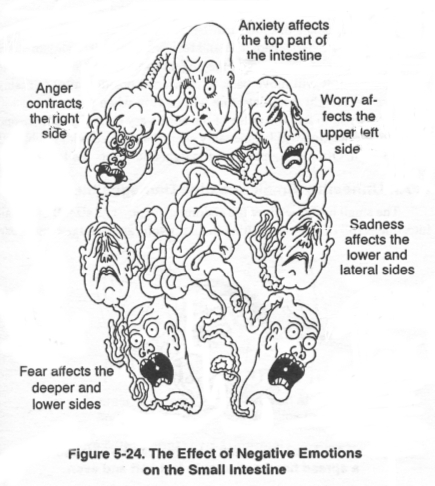
Interestingly, the GAPS/probiotics approach is highly compatible with the wisdom of Asian healers. Traditional Chinese Medicine, for example, carefully maps the gut-psychology connection. They describe the dynamics of what is called “the abdominal brain.” The following illustration captures thousands of years of wisdom in a single picture.

0 012316

According to Mantak Chia, when the intestine becomes congested, it cannot perform its physiological functions. Though you may eat well, you may be under nourished.

As he explains, each of the organs is correlated with one of the five elements. In turn, each is associated with specific positive or negative emotions:

All negative emotions are expressed in the small intestine by contraction and circumvolutions, Anger contracts the right side of the intestine near the liver. Worry affects the upper left side near the spleen. Impatience and anxiety affect the top. Sadness affects both lower lateral sides. Fear affects the deeper and lower abdominal areas.

As the I Ching instructs, the same dynamics repeat on every scale of magnitude, from cellular to universal. So many hints from sciences both ancient and modern could be taken in many directions. They apply to relationships on a personal level, to community dynamics, and governance. But those will be subject of posts yet to follow.

For starters, I’ll offer just one hint.

Campbell-McBride uses the image of a medieval fortress under attack to describe the breakdown of  defenses that result in auto-immune diseases. It parallels the Interleukin II research described earlier, where the grad students saw their research on pediatric leukemia in terms of a war between good and evil.

When confusions in gut mirror confusions of the mind – when the difference between friend and enemy is fogged — anabolic (building up) and catabolic (breaking down) functions are thrown off balance. The body  is fooled into turning against itself in self-destructive ways.

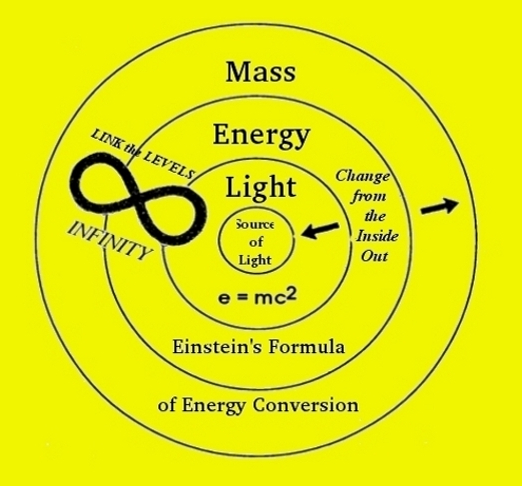
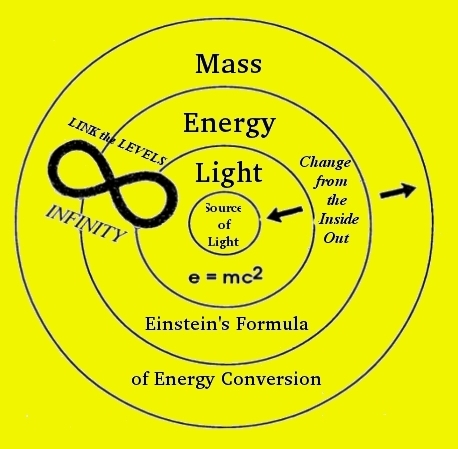
In conclusion, however, a key component overlooked in the popular gut-psychology formula must be noted. Spirit — that third, underlying, unifying and overriding component of the e = mc2 equation – plays a deciding role in the outcome of the LIFE versus death struggle to survive.

It is said that “The mind will play any tune you tell it to play.”

choose wisely

So – who is it that quietly instructs the mind which tune to choose?

LIFE itself, the soul’s advocate, is the tie-breaker that tips the balance.

Here, I allow Mantak Chia to have the final word. He describes the discipline of cultivating chi – the subtle energy that links mind and body — and the end goal of the path to which all endeavors ultimately lead: 

  • If one wishes to be a healer, success depends upon the ability to channel energy through the hands.
  • If one wishes to be an athlete, success depends upon the ability to convert energy into strength and endurance.
  • If one wishes to be free of negative influences, success depends upon the ability to transform negative energy into positive energy.
  • One who seeks enlightenment is searching for the highest source of all energy.


I write in hopes that you will find this saga helpful. If you relate, I invite you to apply your imagination and follow wherever the subject leads you.

To your health!

What Is YOUR Worst Fear?

Stay just the way you are,” pleaded a friend. Another graduating pal scribbled in my 1964 year book, “Stay as sweet as you are.” A third warned, “Don’t ever change!”

Looking back, the strange and impossible expectation that we live the rest of our lives frozen in time, forever unchanged, was at best, unrealistic.

What lurked beneath the surface was fear of the open-jawed monster – the Unknown – looming ahead, threatening to swallow up this class of bright-eyed but poorly prepared graduates, changing each of us forever in unforeseen ways.

Back then, we were as cocky-confident as the youthful Luke Skywalker who boasted, “I’m not afraid.”

Little did we suspect then, as savvy Yoda warned, “You will be.”

Had we been cavemen, our dreads would have been limited to the instinctual fear of loud noises or falling off sharp cliffs.

But we were born in the year nuclear bombs ended WW II with horrifying finality. The list of fears we grew up was quite different from those of our earliest ancestors.

Even so, following the example of our elders, most of us have continued to engage in daily tasks, hiding behind a hedge of busy-work to fend off the unacknowledged terrors that lurk on the furthermost edges of awareness.

Today, international leaders and the rogue terrorists of shadow governments continue to flirt with Einstein’s dreaded nuclear destruction. Horrific headlines have become so familiar that we’ve become numb to bad news. Likely outcomes of nuclear war are so horrific that the mind refuses to wrap itself around the possibility of a world suddenly changed forever.

We say to ourselves, “If we deny the possibility, refuse to even think about it, it can’t happen.”

But according to Plato, we’ve got it backwards. “We can easily forgive a child who is afraid of the dark; the real tragedy of life is when men are afraid of the light.” For, seeking light on all levels – literal facts, metaphysical truth and inner illumination – leads us to recognize what inevitably changes as well as what does not. It secures triumph over petty fears and victory over illusory death.

Yet, rather than acknowledge danger and take decisive action to avert it, we continue to fend off awareness of the monster of all fears – total annihilation. Instead, we fritter away precious time and energy sweating over inconsequential “small stuff.” We allow ourselves to be seduced by the trivial and irrelevant . . . until, finally, inevitably, calamity strikes and finds us unprepared.

What is the greatest fear you allow yourself to be aware of?

Do you categorically dread any change to your comfortable (or at least familiar) status quo?

The list of specific possibilities is virtually endless. Fear of abandonment, of failure, of success, of poverty, of rejection, of ridicule. There’s the death of loved ones and finally one’s own decline and departure from the physical.

Importantly, are you aware of what you DO about your fears? For, in fact, you do have a wide range of options to choose from.

You can unconsciously project them onto others and make them happen. Or take responsibility to face and overcome them.

You can deny them, bury your head in the sand and hide. Or go to the opposite extreme and overcompensate: adopt a fatalistic hedonist “Eat drink and be merry” attitude. Or choose one of gratitude, focusing on and appreciating the good things of life now, while they last.

As ever, there are two sides to this coin. On the one hand, fear attracts danger. Dwelling on fears can make them come true. But, on the other hand, denying the existence of one’s fears invites danger as well.

Timing is also a important. Now versus later also factors into end results.

Where’s your balance point? It’s a puzzlement.

From Conscience, here are a few thoughts to help sort it out.

globe bullet size

Essay 34. FEAR

Tao does not seem to be something we need to acquire. We are already a part of it. We can, however, do a great job of blocking its manifestation within us. We primarily block the Tao through fear and tension. . . Fear is the source of blockage; it underlies our painful, negative emotions, even though its presence is usually hidden.” — Wolfe Lowenthal, There Are No Secrets

Ninety-five percent of the beliefs we have stored in our minds are nothing but lies, and we suffer because we believe all these lies. In the dream of the planet, it is normal for humans to suffer, to live in fear, and to create emotional dramas . . . If we look at human society we see a place so difficult to live in because it is ruled by fear.” — Don Miguel Ruiz, The Four Agreements

Fear is an essential part of our nature, installed in our DNA, no doubt for very good reason. Fear is an alarm system. It is there to push us in one direction or another, out of harm’s way. . . it is part of our intelligence, part of an ingenious guidance system to help ensure our survival — as individuals, as communities, and as a species.” — Thom Rutledge, Embracing Fear and Finding the Courage to Life Your Life

THE FRONT

An Old English root means sudden attack, ambush or snare. Webster’s first definition is a feeling of anxiety and agitation caused by the presence or nearness of danger, evil, or pain. It suggests doubt, timidity, dread, terror, fright or apprehension.

Alternatively, fear is defined as a respectful dread, awe, or reverence. Fear of God is often a combination of both types, including both awe for the majesty of God’s creation and guilty anticipation of punishment for wrong-doings.

Fears are part natural, part the result of cultural conditioning. Those which are unreal are best dispelled by analysis and understanding. Those which are justified are best faced by correcting and atoning for one’s own mistakes as well as preparing to meet and overcome external dangers.

Working with the I Ching helps us discriminate between appropriate fears which require positive action and illusory fears to release and forget. It is an invaluable aid in the process of cultivating self-honesty for the purpose of self-correction. It is equally useful in the process of articulating immanent dangers and deciding on the best strategies for effective response.

Primal fears are associated with correlative chakras. At the first chakra level, the fear is of physical death. At the second, loss of sexual prowess or family support. At the third, the fear is of losing of material and financial accumulations, along with social connections and influence. At the fourth, failure in love relationships. At the fifth, fears turn to losing face or being judged wrong or inadequate in intellectual matters. At the sixth, one fears loss of connection with the creative source.

As one ascends the evolutionary ladder, emotion-based fears lessen, seen in larger perspective. Integrating and balancing the levels reduces the influence fear has on decision-making.

Some fears have physical causes. For example, habitual muscle tension packs lactic acid into the fascia, producing chemically-induced anxiety. Relaxation and stretching exercises which release tension and reduce acid levels relieve tension anxieties.

Fear is also stimulated by abusing internal organs. Excessive sugar and/or alcohol intake causes metabolic imbalances. The kidneys and liver are stressed by the burden of excess toxins and fluids. The nervousness, anger and fear associated with imbalance in these organs is corrected by improving lifestyle choices.

Cultural conditioning causes still other kinds of fear. Authorities who use terror as a means of control instill a sense of inadequacy and helplessness. Hitler, for example, was the product of an authoritarian, fear-based culture as well as the embodiment of its shadow opposite, destructive megalomania.

Fears denied or unresolved undermine self-confidence, sabotage love relationships, and turn life against itself. They manifest in the physical body as heart disease and cancers.

Fear of God, meaning awe, on the other hand, is life-protective. Direct experience of divine connection (the timeless heritage which everyone everywhere shares in common) overcomes ephemeral fears with the larger light of wisdom and higher love.

Awareness of unseen benevolent powers standing by us on all sides though danger and distress restores strength and courage. It is also the ultimate deterrent to wrong-doing.

THE BACK

Ignorance is the root of fear-caused suffering. Its antidote is confidence gained through inner knowledge and direct experience. Trust that deep within, we each hold the answers to every question and solutions to every problem is the beginning of wisdom.

Terror is a perversion of natural fear. Terrorists may believe playing on fear is the best way to control subordinates or get the attention of unjust leaders. However, unlike math, where two negatives make a positive, two wrongs don’t make a right.

Put Terrorism in Larger Context

Recently, much commentary has been focused on the Charlie Hebdo murders in Paris. Most are asking the wrong questions. Many look to place blame. There are exceptions however. Looking for lessons to be learned which might lead to hopeful solutions is the rare but positive approach.

Why do either/or-thinking journalists fixate on assigning or denying blame? Like spoiled children, they squabble and point fingers. “He started it.” “No, it’s their fault!” It’s time to grow up! Expand our way of thinking to recognize the all-inclusive pattern in which everyone is partially culpable and equally responsible for positive change.

The prevailing materialistic paradigm of empirical science limits the questions which can be asked, which in turn limits the places where viable solutions are to be be found. If the middle and innermost levels of the Life Wheel are ruled out, analysts are functionally blinded to the dynamics on all sides which perpetuate back-and-forth bickering, throwing self-righteous excuses for hatred and violence. When underlying motives which drive these dynamics are ignored, the parties on all sides of escalating world conflict place human survival at risk.

Terrorism is a surface symptom of much deeper problems. Attacking symptoms of disease without correctly diagnosing root causes can quell specific symptoms. But the cause, unseen and untouched, simply mutates into even more dreadful symptoms. Destroying terrorist cells is like surgically removing cancer from an affected organ, only to cause its spread throughout the body.

Intent is the WHAT, the outcome or end result that resides on the outermost level of the Life Wheel. In this case, the Paris murders and kidnappings are only the visible end result of a much larger and more complex process.

Deeper than intent is purpose, the HOW. Purpose resides at the middle, energy level of the Life Wheel. For example, one purpose of terrorism is to use violence as an instrument of economic or political upheaval in the name of “social justice.”

Still deeper than purpose is motive, the WHY that leads to violent methods resulting in death and destruction. In some very twisted way, the motive may include setting perceived wrongs right, asserting self-respect and restoring violated human dignity.

Then the questions become, What is justice? Wherein lies valid self-respect? What is the basis of true human dignity? Can these valid motives possibly be served through acts of violence that destroy lives on all sides? Sounds like a fundamental contradiction to me.

If the deepest, underlying motive is to set wrongs right, that opens many doors for alternative approaches to satisfying these motives, ones appropriate to the basic human needs crying out for expression, ones with some valid ways for actually fulling them, instead of the self-defeating methods and results we see now.

World leaders, and each of us as the leaders responsible for doing our best within our limited spheres of personal responsibility, would do well to rethink recent Paris events by putting them in larger perspective. Use the MPI (Motive-Purpose-Intent) standard to look deeper into the heart of terrorism as the first step in making positive responses leading in new directions.

Here as food for thought is an earlier essay on motives. It seems timely and may prove useful.

globe

ESSAY 18. MOTIVES

Although the feelings mentioned above [sadness, pessimism, guilt, emptiness] may accompany a depressed mood, the most prevalent effects usually involve low energy and lack of motivation . . . An effective way of lifting these moods involves using music to activate our resources.”  — John M. Ortiz, The Tao of Music: Sound Psychology

It occurred to me that the only way to figure out what had happened at a crime scene was to understand what had gone on inside the head of the principal actor in that drama: the offender. And the only way to find that out was to ask him. . . If we could give the law enforcement community some insights into the process, the internal logic, of how violent offenders actually decide to commit crimes and why they come up with their choice of crimes — where the motive comes from — then we could provide a valuable tool in pointing investigators toward what for them must be the ultimate question: Who? Stated as simply as possible: Why? + How? = Who.” — John Douglas, The Anatomy of Motive

On some level, you are meditating all the time. One goal of meditation practice is to become aware of that. Another is to extend that awareness to more and more areas of your life. . . It takes practice and conscious effort to restructure the mind and move it from habitual patterns.” — Andrew Weil, 8 Meditations for Optimum Health

THE FRONT

The root of “motive” is “to move.” Webster’s single definition refers to “some” inner drive, impulse, or intention that causes a person to do something or act in a certain way. It’s an incentive or goal.

Motive, purpose and intent explain human behavior. Unless viewed as a whole, what we see is taken out of context and misunderstood. You see a man take someone else’s car. That’s intent, the WHAT. You see him grab the keys and drive off. That’s purpose, the HOW. But unless you know his motive, WHY he did it, the picture is incomplete. Was he desperately racing to save his beloved child’s life, escaping from vengeful gang lords, or simply lusting after a fancy new car?

We are fascinated by crime. Mystery novels, detective movies and sensational murder stories on TV news are big business. We stretch our minds to second-guess the ending, figure out who committed the crime, and why. We look for the mistakes that reveal dark secrets and lead to the criminal’s undoing. We’re satisfied only when truth is revealed and order is restored by justice.

At heart, what we’re really trying to understand is ourselves. We’re haunted by a pervasive sense of wrongs committed against us, or by us. We can’t quite bring ourselves to recognize what they are, or to admit our own mistakes. But a nagging sense of unfinished business leaks out as voyeurism.

Ultimately, it is the stifled voice of conscience that persistently calls us back to our neglected dreams and deepest longings for fulfillment. Those who allow themselves to be defined by others, who live in habitual fear of people’s opinions and fail to honor their inner sense of calling commit a soul-searing violence akin to suicide. The crime they commit is against their own true selves. Failing to be true to oneself can be the hardest crime to detect. Finding one’s true calling can be the greatest mystery of all.

People who march to others’ drums, unconscious of their motives and what moves those around them, live in painful confusion. Only those who know how to listen and dance to the inner music of their soul’s desire live in joyful harmony with themselves and the world around them.

The I Ching is a means for turning the camera around, focusing in on ourselves. Uncovering hidden motives might cause initial discomfort. But it can lead to positive changes. After analyzing them, we have the option to decide on better ways to accomplish intentional ends. Our What and How isn’t always appropriate to our Why. Other solutions may accomplish our goals without committing crimes against ourselves and others.

THE BACK

The opposite of motive is motiveless, to be without awareness of calling, any conscious purpose, or impulse to action. This condition is sometimes an extreme reaction to an extended period of frenzied, excessive, forced action. People experience it as apathy, shell shock or burn out.

When crazed criminals go on sprees, kill strangers and wreak havoc on public property, their acts are regarded as random and senseless. To all but the most highly attained, the subtle laws of cause and effect are incomprehensible. There’s wisdom in accepting the unfathomable as Job did, saying, “The Lord giveth, and the Lord taketh away.“

Put the Common Core Back in Common Core

restore common core

Restore the Common Core” is packed with implications for education and, ultimately, human survival.

For those who haven’t been following articles posted on rethinkingsurvival.com over the past year, here’s a brief summary of the concepts embedded in the Life Wheel.

arrow bulletThe Positive Paradigm of Change is a model equally compatible with the perennial philosophy embodied in the world’s enduring wisdom traditions and with modern science. It serves to bridge the gap between religion and science.

arrow bulletThe Life Wheel with its concentric circles and central, unifying hub pictures the multi-level structure of creation. This form is repeats throughout nature, from smallest to largest. It pictures the organization of snowflakes, each unique in form but identical in basic structure. It pictures the rings which orbit the nucleus of each atom as well as the planets which circle our sun.

arrow bullet

These circles correspond with the three variables of Einstein’s formula, e = mc2. Ironically he had the Unified Theory, but for lack of yoga background, didn’t know it. Briefly, the levels include the material outermost level of observable, measurable, tangible objects, then a middle level associated with energy (chi, prana) and emotions. Still deeper resides a level associated with light. It correlates with the experience of intuition or guidance. All three depend on the Source of Light – the unchanging silent Eternal, beyond duality and therefore beyond words.

arrow bullet

These levels are not actually separate. They function as an interrelated and interdependent whole, linked in an infinite, two-directional in- and out-breathing loop. Those who experience this whole succeed in integrating the levels of daily life with conscience. Those who separate the levels, who ignore some at the expense of others, prioritize levels incorrectly, or place them in conflict, will eventually find themselves in deep trouble.

arrow bullet

This universal concept can be pointed like a laser beam in any direction to illumine the field. For example, the three levels of the Life Wheel correspond with three levels of law: human, natural and divine. This relationship is acknowledged in the Declaration of Independence, which refers to the laws of Man, Nature and Nature’s God.

arrow bullet

A second example explains differing types of intelligence. On the surface, intelligence which divides and argues (using and/or abusing the tools of reason and logic) is measured by the standard of IQ. More recently, it has become fashionable to speak of EQ, or emotional intelligence associated with the middle, energy level. Deeper still is the intelligence described as intuition or inspiration. All these center around a common core which can be called “Conscience.”

arrow bullet

A third example is the use of the Wheel as a linguistic tool. Most words shift meanings depending the level of experience they describe. In the example shown here, the popular concept “Common Sense” shifts meanings with each level of the Wheel. When the levels are linked and experienced as a continuum, Common Sense partakes equally of intuition, gut feeling and sound reasoning.

Now, how is it that this Unified and potentially Unifying Theory gains so little public traction? It begs the question to simply say that many people, for a multitude of reasons, are too highly invested in the status quo. Given the life threatening circumstances that confront us, why is there still such powerful resistance to a return to what the wisest among us have consistently taught from the beginnings of time? Where is the method to the madness?

In partial answer, I offer excerpts from earlier works. The first spells out just how important paradigms are. They make the difference between success and failure, ultimately between survival and extinction. The second excerpt suggests there are deeper dimensions at play. After these two excerpts, I’ll apply all of the above to the restoring the true, eternal Common Core to the progressive/Marxist political/educational curriculum inappropriately called Common Core.

globe bullet sizeWHY PARADIGMS MATTER

Ideas drive results. People’s beliefs color their feelings, triggering basic emotions which in turn drive their actions.

Actions that stem from a simple, complete and accurate paradigm result in personal fulfillment, harmonious relationships, and economic prosperity.

Actions based on false, incomplete and inaccurate paradigms, however well intended or passionately defended, are the cause of widespread misery, suffering and deprivation.

A fatal information deficit explains the worldwide leadership deficit and related budget deficits.

In a dangerous world where psychological and economic warfare compete with religious extremism and terrorism to undo thousands of years of incremental human progress, a healing balance is urgently needed.

Restoring a simple, complete and accurate paradigm of leadership and relationships now could make the difference between human survival on the one hand, and the extinction of the human race (or the end of civilization as we know it), on the other.

globe bullet size

ALIEN INVADERS

Alien invaders infiltrating Planet Earth, weakening humans to eventually take over and enslave them, is a familiar theme in science fiction. For example, in his various incarnations, Dr. Who — television’s time traveler — continuously detects nefarious alien plots and rescues heedless humans from annihilation.

Current events indicate there’s considerable truth cloaked in that science “fiction.” Starting with the premise that hidden alien enemies are covertly scheming to undermine humanity, ask, “How would they set about to destroy us?” Logically, they’d create chaos, setting everyone at each others’ throats. They’d trick humans into mutual self-destruction by stirring up dissension and fragmenting their governments.

It’s an absolute priority for evil aliens to attack the mind. Their agents will do whatever it takes to pollute your mind. They confuse it with false paradigms. They clutter and distract it with the ongoing media circus. Every doubt planted in your mind, causing you to forget who you are, to disbelieve in your ultimate origins and creative potentials, is a victory for the dark side.

To totally undermine humanity, atheism is a must. The unifying beliefs which hold families and nations together and fortify them in times of adversity must be destroyed at all costs. Again, how would this be accomplished?

For one thing, language which makes communication and community-building possible would have to be polluted beyond repair. In the English language, for example, every value word has devolved to mean both one thing and its opposite. So people often talk at cross purposes, unaware that they’re missing each other coming and going.

Divide and conquer. Pit each group against the others. It matters not to them which side wins. Let Sharia law advocates, members of Putin’s Eurasian Union and American exceptionalists squander their precious resources duking it out. If they destroy each other and no one’s left, so much the better.

Alien invaders delight in cheating. They stack the deck, gumming up the works with lies and disinformation driven by dysfunctional paradigms.

If you accept the game and its rules as alien agents define them and proceed to rebel against uncivil authorities, mindlessly hating and resisting, YOU LOSE. (Alien invaders win.)

If you give all your attention to what other guys are doing wrong, playing the role of contrarian, YOU LOSE. (Alien invaders win.)

If you quit on humanity and live only for yourself, leading a life of self-centered indulgence, YOU LOSE. (Alien invaders win.)

If you persist in thinking narrowly in terms of political interests and institutions, not human survival, YOU LOSE. (Alien invaders win big time.)

The only chance of winning — ultimately, surviving — is to demand a new, clean, unmarked deck, one with all the cards. In other words, make a fresh start based on an accurate, complete Positive Paradigm.

globe bullet size

My younger brother once riddled me, “How many legs does a donkey have if you call it’s tail a leg?”

His solution: “Four. Calling a tail a leg doesn’t make it a leg.”

Even so, tacking the label “Common Core” on a curriculum doesn’t guarantee that the substance includes the basics on any level of the Life Wheel. Logic and reasoning skills are deficient; emotional intelligence is insulted, not enhanced; the existence of divine law is excluded, if not ridiculed, as an option.

It’s a matter of human survival to take back the language. Then restore accepted access to the true, eternal Common Core as part of a genuine, complete and accurate education in the true meaning of the word – “leading from darkness to light.”

Conform: Exposing The Truth About Common Core And Public Education by Glenn Beck & team places the political/educational monstrosity called Common Core directly in the camp of the evil aliens described above. They start with the premise, “Information is power. Those without it have nothing. Those with it will always have CONTROL.” They state:

The dumbing-down of America is good for one group and one group only: those who currently have all the power and control. By maintaining a failing system they are forcing a collapse that will have only one “savior”: the federal government. And that’s exactly how they want it.

They continue:

We now stand at the precipice. On one side is the complete nationalization of education and complete loss of local and parental control. On the other side is a complete educational revolution – one that is rooted in individuality and that follows the principle of “maximum freedom, maximum responsibility.”

Sadly, 180 + pages of Conform are dedicated to argument and expose. Less than 30 pages are dedicated to solutions. And these, unfortunately, are limited exclusively to political measures. The most fundamental problem, the lack of a complete and accurate, unifying paradigm is neither acknowledged nor addressed. Deeper underlying origins of conflict as well as the source of genuinely positive solutions are overlooked.

Yet restoring the unifying basics of the perennial philosophy – the True COMMON CORE experienced as COMMON SENSE – an experience equally available to everyone, everywhere – is what might (just might) turn the tide of human history, tipping the balance in favor of human survival.

What Glenn Beck & company has exposed is a radically dangerous situation that calls for opposite and equally radical (truly radical) solutions.

Herein lies the opportunity hidden in dangerous times. In larger context, material resources aren’t that significant when compared with the intelligence, inner strength and inexhaustible vitality available to those whom circumstances oblige to return to the less tangible but very real levels of inner experience.

The disenfranchised (whose numbers increase exponentially with each passing day) experience the results of the prevailing materialistic, conflict-paradigm as catastrophic. They no longer have vested interests in the status quo to protect. They are the ones most likely to find the courage to move forward once again into the past, recovering the timeless treasures buried deep within the perennial philosophy of the world’s enduring wisdom traditions.

Now, as when Christ walked the Earth, the true fundamentalists and radicals (both words mean the same thing!) aren’t members of conflicting extremist groups who meddle with events on the material surface of life’s wheel. They are highly motivated individuals with the vision and determination to change themselves from the inside out. Their shining examples have a ripple effect, gaining momentum through time and space.

globe bullet size

* N.B. The current trend towards disempowerment of the masses is prelude to oppression and tyranny on an unprecedented scale. Co-opting education in the guise of Common Core, turning public school children into Nazi-cloned, obedient zombies, is one piece of a much larger puzzle. Attacks on Second Amendment rights is another. See: http://writerbeat.com/articles/4737-Should-civilians-be-allowed-quot-military-style-quot-guns-

“Promise Them Anything, But . . .”

dragon

The state-of-the-political/marketing-art is to conduct surveys to determine what people really, really want — what they feel they can’t live without – and then promise them exactly that. Frame (disguise) whatever you have for sale in terms of those most basic, deepest needs. After they’re hooked, then switch.

Here’s the upside of this dismally deceptive state-of-the-art: The empty promises are a well-researched, accurate gauge of peoples’ valid needs and deepest desires. A partial check-list includes: Change we can believe in. Hope. Accountable, transparent government. Authentic leadership. A paradigm shift. Compassion. Collaboration. Opportunity. Freedom. Justice.

But the burning question remains. How do We-the-People (whose desires are exploited by false leaders/teachers to make themselves rich and powerful), get from here to there?

How do we get from cynical promises (which self-serving, irresponsible opinion-pollsters have no intention or ability whatsoever to deliver) to the real deal?

This is a pervasive, many-faceted problem. I keep making unpleasant encounters with new variations. Two recent examples include a book on the future recommended by a LinkedIn connection who claimed it resembles mine. The second was a CEO’s LinkedIn post about Ferguson issues (which is also the focus of “Beware of Disinformation” shown below.)

Naming names would miss the point. It’s the dynamic, not particular individuals, I’m targeting. Besides of which, only counter-productive rounds of retaliatory accusations would result from being specific.

In both recent examples, dilution/co-opting of language/ideas is the constant. I’m learning that this dynamic is as pervasive in the knowledge industry — universities and publishing corporations – as it is in politics. The formula seems to be, take all the most sacred words in the language and turn them into buzz. That way, whatever you have for sale takes on the aura of the sacred. Conversely, when those with authentic ideas which could actually deliver on those deepest needs use these sacred works – people who represent a serious threat to status quo power-holders – can’t be recognized. Because the powerful words have been co-opted, it’s next to impossible to distinguish genuine and sincere leaders from the glut of false gurus on the market.

In my two recent examples, a futurist and a CEO have poured as many as buzz words as possible into a single glass. “Positive. Change. Revolution. Collaboration. Paradigm. Unity. Equity.” Then shake, do not stir.

The futurist comes highly recommended from the small community of back-scratching, best-selling new age gurus who promote each others’ books. He spins a vague vision of “quantum interconnectedness” to predict what one reviewer calls a future of the “spiritual-Borg:” collectivists ruled by and dependent on community consensus. He takes an ancient, scriptural reference to akasha and turns even that into a glamorous but meaningless buzz word.

But there is a glimmer of hope. Every once in awhile, an authentic voice arises which stands above the rest. Someone recognizes that personal self-responsibility rather than collective action is the first line of positive action. Someone, who, like me, insists that positive change necessarily takes place one person at a time, and from the inside out.

Let me introduce you to John Williams, who posted a LinkedIn blog called “Principles We Can Take Away From Ferguson.” At last count, there were 53 views and 3 likes (one of them mine). No buzz. No empty promises. But solid, first-rate, practical recommendations.

However, in contrast, sadly but predictably, at last count the self-promoting CEO had 91,528 views and 2,278 likes (as well as very mixed-reviews). His article reads like the carefully manicured product of a focus-group process, full of empty, shop-worn buzzers – “positive” being the worst offender. All the changes he recommends depend on experts and groups conducting empty, tried-and-disproven committee efforts guaranteed to accomplish nothing much.

My take away is that the knowledge industry promotes and protects the Agents of Disinformation. It marginalizes, when it can’t entirely exclude, other voices. It feeds on the demands/expectation that we be told (whether it be true or not) only what we want to hear.

Below, in “Beware of Disinformation,” I acknowledge Edward Bernays as the inventor of public relations, known in Hitler’s time as propaganda, and today as spin. The remedy available to We-the-People is genuinely Positive Action.

To this end, let’s rename the dragon and snake described below.

Because he’s been tied in a knot, turned upside-down and headed due South, I gave the dragon the pet-name DRAG. Let’s uncoil our energies and desires, turn them right-side up and redirect them True North. Let’s put paralyzing fears and confusion behind, take heart/courage to deserve a new name, GET IT ON.

Similarly, uncoil the American Revolution’s mascot, the rattlesnake on the Tea-Party flag that warns, “Don’t Tread on Me.” I nick-named him DON’T because he resists oppression, but hasn’t as yet generated authentically positive alternatives. Let him show us his true value and take a new name: CAN DO.

Let’s breathe life into our representative mascots, allow them the full-spectrum colors of their energetic potentials, rather than letting them see (and be seen) in black and white extremes only.

BEWARE of DISINFORMATION

An entangled dragon completes the earlier picture, “Hidden Danger Eludes Us.”

drag-sized

This suggestive image surely has as many meaning as there are viewers. However, this time, I’ll tell you a few of the things “Drag” (my pet name for him) means to me – in this context.

In Chinese mythology, dragons represent the invisible power associated with spirit – universal intelligence, the psyche or soul. They’re somewhat similar to the coiled snake called Kundalini in the Hindu tradition. In latent form, she rests unconscious at the base of the human spine, but gradually uncoils to rise through the energy centers called chakras as human consciousness evolves.

Another close relative is the coiled red-on-black rattlesnake pictured on the yellow flag flown by colonists during the American Revolution. “Don’t” is my pet name for him, short for “DON’T TREAD ON ME.” In recent times, Don’t has been given second life by Tea Party members, sending the message that like their ancestors, they’re fed up to the boiling point of rebellion with government abuses.

However, in this particular illustration, Drag appears (to me) to be in trouble. He’s uncoiling, but he’s tied in a knot. He’s stuck. Further, he’s not rising. His head points not True North, but due South, which (to me) means BIG TROUBLE.

Here’s the segue to the earlier picture of teeter-tottering adversaries engrossed in murderous enmity, oblivious to the live grenade beneath them, threatening both with extinction – the final oblivion.

see saw & bomb sized

There are several different directions this can take. I’ve narrowed the choices to three. Because I’ve already written on this in Rethinking Survival, I’m just summing up major points here. In each case, ongoing Ferguson events and the escalating outpouring of opinions make my point – in spades.

1. Most of us are ignorant of the natural law encoded in the Book of Change. We are (almost as if intentionally) left in ignorance of how we tick at an energetic/emotional level. By extension, we act in ignorance of the human dynamics that drive human relationships, from families to governments and international conglomerates. For this reason, we fail even in sincere efforts to create the positive change everyone wants, many promise, but few deliver.

To me, the invisible ticking time-bomb (threatening both missile-throwing rivals without prejudice) represents volatile unconscious energies. Politicians, marketers and their handlers know how to set them off. They intentionally fuel and harness mindless animosities to enrich military armaments industries and their stockholders, to the danger (and impoverishment) of the rest of us.

2. Especially in the case of Ferguson, the volatile mistrust and empty slogan throwing are grist for escalating police-state dynamics which threaten the freedom of ALL of us. We’re pointed, goose-stepping towards the creation of another fascist state, all in the sentimental double-speak names of freedom, human rights and “justice.” Ironically, the USA is tied in knots. Bottled up long enough, the inarticulate, volatile aspirations and frustrations of the coiled rattlesnake explode, heedless of what targets they destroy –or what the long-term consequences. Oppression of an even more nightmarish form is in the works, being fueled, ironically, in the name of resisting and ending oppression.

3. A critical key is the prevailing dysfunctional empirical science paradigm to which most of pay token lip service. It disallows the existence of not only the subliminal level of emotional content that underlies rational thought and action, but also the deeper core of True North reality called conscience, or the True Self.

Without the Positive Paradigm of Change, we’re stuck, operating blindly without a complete and accurate road map. Even when we have the intuitive experience of the middle and innermost levels of the Life Wheel, we don’t have permission/confidence to know what we know.

We haven’t been educated to recognize the sleeping dragons that move us. We remain ignorant as to how to effectively harness them so they take us in the direction of the positive change we ardently desire.

Further, we don’t recognize when/how others intentionally manipulate our unconscious drives, and NOT in our best interests. We don’t have the means for protecting ourselves from manipulators and their dark intentions.

Nor is this lack of a functional, positive paradigm and its related methods/protections an accident. The information is available. But creative, useful work is systematically banned from public awareness. A positive paradigm is our best interests, but NOT in the interests of those who profit hugely from systematically manipulating the public.

I warned about Bernays and the illusion of democracy in Rethinking Survival. As yet, no one has paid attention. Why not is explained in an eloquent blog (to the same point) by Charles Cawley called “Americans: happy to be manipulated?” posted 11-25-14 on writerbeat.com. It’s but a small leap to connect the dots between dishonesty (disinformation, manipulation, culturally reinforced ignorance) and the outcomes, like Ferguson and its ripple effect in all directions.

Cawley writes, in part:

The principles of Behaviorism developed by BF Skinner and Bernays are key to the foundations of modern advertising, business practice and politics.. . Cosmetic politics have created a generation of reactive politicians who second guess what will appeal to voters and say what is needed to get people to vote for them. This can include significant dishonesty. This process is reactive and marginalizes or even excludes new ideas, policies, and creativity to provide solutions to current economic and political issues. . .

The issue of propaganda is immense and desperately needs urgent attention. However, vested interests have heavily bought into the manipulative dishonest approach to propaganda (a la Bernays and Skinner) and they are a major barrier to engaging with the future. . . . they appear to be destroying democracy. How much more serious can you get than this?

Cawley repeats my frequent warning, WAKE UP!

If we do not wake up and replace manipulation to engineer obedience with stimulation to work well events will crush us all.

It is as serious as that.. . . We have the choice to end this delusional activity ourselves or let events do it for us. The latter will be an immeasurably more costly, painful and bitter experience. This is the dark negative heart of behaviorist manipulation.

I go one step further.

It’s not enough to pinpoint the dynamics of manipulators and their smoke screen of disinformation. A remedy in the form of correct and positive information – a complete and accurate reality map – is also required. False information must be rooted out; it must then be substituted with a practical, useful replacement.

In sum, we’re sitting on a time bomb and fail to recognize it. We’re distracted by dramatic, polarizing events which mask the deeper dynamics and inherent danger to us all. To repeat Einstein’s warning, “We shall require a significantly new manner of thinking if mankind is to survive.” I agree with Cawley. It’s that serious. Human survival is at stake.

dragon-green-sized

The Evolution of My Aspirations

Leaders can’t be defined by a standardized, one-size-fits-all list of traits. This is the premise of True North: Discover Your Authentic Leadership. Instead, authors Bill George and Peter Sims found that authentic leaders consistently define themselves in terms of their unique personal stories.

Naturally, they got me to asking myself, what’s mine?

There definitely have been defining moments. Looking back, there have also been consistently recurring themes.

But it took a recent direct message from a new twitter follower to put my answer into focus. Chelsea Hanson, a Business Growth Coach from Green Bay Wisconsin tweeted, “Great to connect . . . I love learning about how people got started in their work. . . how did you get into what you are doing?”

I tweeted back, “Likewise! 🙂 Step by little step. Pieces of mosaic fall into place to form the patterned picture recognized only with hindsight.”

It’s been my consistent belief that, of all the things I could do with my life, I should choose that which does the greatest amount of good for the greatest number of people. With that standard in mind, my aspirations have been shaped and transformed, expanded and focused with each new experience.

The autobiographical section of Rethinking Survival describes early influences. It started with Miss Elson, my senior year English teacher.

Though I didn’t take her seriously at the time, Miss Elson told me I should be a writer. My answers to her essay questions showed the marks of an original thinker. In contrast, she let me read a batch of classmates’ papers to demonstrate the mindlessness she labored to shake up.

What is life?” she asked. Like wind-up toys, most regurgitated definitions memorized in biology class. Catholics added their church credo to the mix. From her I learned that there’s more to being human than the ability parrot others’ words. It includes the capacity to reason and articulate clearly.

Later, while I was earning an M.A. in English M.A. at the UW-Madison, my aspiration was to be like Miss Elson. Without the tools of language and logic to analyze experience and express one’s concerns, how could people name, much less solve their problems? At the time, the highest calling I could imagine was to teach students how to think — really think — for themselves.

My aspirations continued to evolve as a music student in Düsseldorf, Germany. For me, the highlight of studies at the Robert Schumann Konservatorium wasn’t the music teachers, but a modest, insightful kinesiology instructor. Frau Lehru wasn’t a musician herself. But vocal and instrumental teachers alike sent students beyond their help to her.

The pianist whose lessons were scheduled the hour before mine told me her story. Herr Dreschel had given up on her as either lazy or untalented. But Frau Lehru diagnosed the real problem — pinched spinal nerves. Recommended visits to a chiropractor worked “miracles.” Elated, she was a “new person.”

I went to her studio and asked Frau Lehru to coach me. Her lessons were wonderful. She saw timidity in my posture and tension in the way I held my violin. She gave me exercises to correct not only my posture, but the underlying attitudes which bent me out of shape.

“Platz machen,” she encouraged me. “Make room! Don’t crowd me!” And, “Auf wiederstand waschen.” Figuratively, Grow upwards. Stand tall under the pressure of resistance and adversity.

In retrospect, it was as if she’d reinvented the yogic disciplines which sitar and tabla students are taught in India, where music technique is balanced with breathing and physical exercises. Her gift inspired a change in my career goals.

Rather than teach technique, I could help many more musicians by becoming an exercise-and-therapy coach in one, like her. She was much too busy to consider writing about her methods and results. I would do this for her with a book called The Body as Instrument: How to Tune It.

Still later, ratcheting up another notch, I aspired to build schools to facilitate an entire generation of coaches like Frau Lehru. A primary purpose for earning the Ph.D. in Educational Administration from the UW-Madison was to hold the credential required to build an accredited alternative school. My envisioned School-Without-Walls was intended to serve the unmet needs of other boundary-spanners also seeking to fill in the gaps of our failing educational system.

Each new experience has continued to lead to the next. Many steps later, I’ve come full circle to fulfill Miss Elson’s early prediction. Today, I’m a writer because I’m certain that I’ve succeeded in putting my finger on the pulse of a critical information deficit. It explains the excruciating painful, potentially fatal world-wide leadership deficit.

Further, I am certain that the Positive Paradigm of Change not only fills a critical information gap in the way we train our leaders, but that, like a laser beam, it illumines every field of endeavor towards which it’s pointed. This includes not only leadership and governance, but also education, the arts and sciences.

Today my aspiration is for this information to reach the greatest number of people possible, in order to do the greatest possible amount of good. The stakes could not be higher, for I take Einstein’s prophetic warning deeply to heart: “We shall require a substantially new manner of thinking if mankind is to survive.”

If you agree, and if you can help, let’s talk!

globe