Category Archives: I Ching

Your Choice

Yoda make good choices

Discipline Equals Freedom: Field Manual by Jocko Willink is exactly the right medicine for me right now. It might be for you too.

Here’s the amazon.com summary of his credentials:

Jocko Willink’s methods for success were born in the SEAL Teams, where he spent most of his adult life, enlisting after high school and rising through the ranks to become the commander of the most highly decorated special operations unit of the war in Iraq. In Discipline Equals Freedom, the #1 New York Times bestselling coauthor of Extreme Ownership describes how he lives that mantra: the mental and physical disciplines he imposes on himself in order to achieve freedom in all aspects of life.

JW’s perspective is radically different from that espoused in Jordan B. Peterson’s 12 Rules For Life. As described in If You Love Your Children. . . and . . . Tell Them How the world Works:

Essentially, [12 Rules] advises people to “man up.” All of us have the potential to be much better than we are. Before criticizing the world, our first responsibility is to improve ourselves with discipline, carving out meaning in our lives as a bulwark against the chaos of life’s inevitable hardships.

But the two approaches are, each in its own way, complimentary.

Now – JW’s background is far different from mine.

I’m a woman brought up as a musician. As a college/university-educated scholar majoring in world history-philosophy-literature, much of my later years have been dedicated to unlearning and relearning.

As a violinist and yoga practitioner, my practice disciplines focused on harmony, balance and unity.

In school administration, I looked to the ultimate decision-making manual: the ancient Chinese I Ching — The Book of Change.

JW speaks of fighting. And aggression. I approach self-improvement in terms of transcendence. Our goals and results, however, are much the same. So my approach to discipline is also, in its own way, complimentary.

I find JW’s approach to discipline almost devotional. Similar to Chinese Taoists – including the Shaolin monks who based kung fu martial arts on the I Ching — he refers to The Way of Discipline. He writes:

Discipline: The root of all good qualities. The driver of daily execution. The core principle that overcomes laziness and lethargy and excuses. Discipline defeats the infinite excuses that say: Not today, not now, I need a rest, I will do it tomorrow. . . . .

There is only one way.

THE WAY OF DISCIPLINE.

What inspired me to write this post was his chapter on NATURE VS NURTURE. He asks, What is more important? And he answers, Neither.

In the military, I worked with every type of person:

Ivy League kids with silver spoons, kids from blue-collar families, kids from strong families, and kids with no families, kids who were pampered and kids who were abused. And everything in between. Everything.

And with all those different types of people, there were good and bad. Successful and unsuccessful. And in working with businesses, I see the same thing: People from every walk of life. From the bottom to the top – and I have seen every type of person be successful.

His conclusion:

It is not about nature or nurture.

It is about choice.

He continues:

The people who are successful decide they are going to be successful. They make that choice. And they make other choices. They decide to study hard. They decide to work hard. They decide to be the first person to get to work and the last to go home. They decide they are going to take on the hard jobs. Take on the challenges. They decide they are going to lead when no one else will.

They choose who they are going to hang around and they choose who they will emulate.

Ultimately:

They choose to become who they want to become they aren’t inhibited by nature or nurture. They overcome both.

I totally agree. Choices and consequences hang together. And as pointed out elsewhere in describing the natural Law of Karma, failure to choose is also a choice — one with heavy consequences.


book header bird

There are two directions I could take from here. One is to share with you the post called What’s More Important – Nature, Nurture, OR . . ..

This subject is especially relevant in the context of answering ideologues who use the seeming unfairness of life and suffering as excuses for rebellion and destruction of social order . . . rather than discipline.

The other direction I could take is to share is the Essay on Discipline which give a balancing, complimentary perspective to JW’s military approach.

Here’s my choice. First I’ll offer a few snippets from the blog here. You’re welcome to click on the link if you’d like to see more.

Then I’ll post the Essay on Discipline below.

So. First. From What’s Most Important:

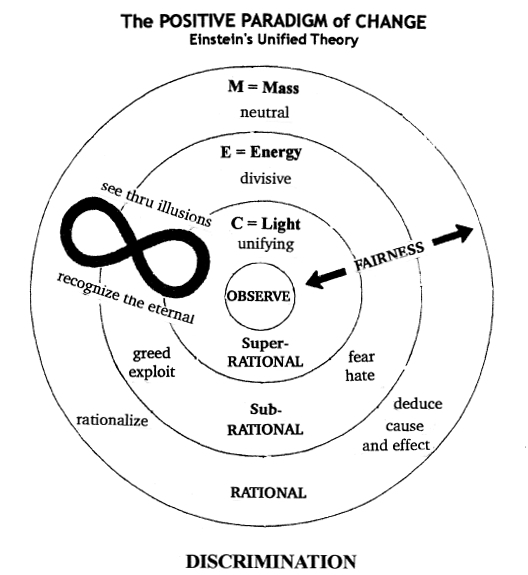
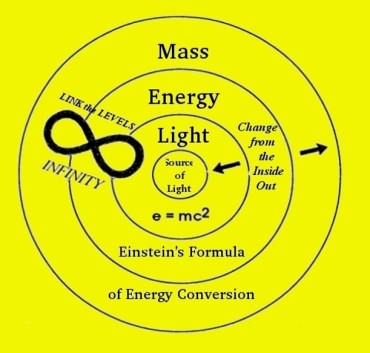
I’ll give one example here using the Positive Paradigm Wheel of Change. This picture talks to the right brain to balance the left-brain discussion which follows.

It places the relationship of nature, nurture and “much more” in prioritized context.

PPoC gold

The surface level that corresponds with MASS includes everything tangible and measurable. It’s the realm of empirical science. That would be “nurture.”

The middle ENERGY level corresponds not only with electricity, but with subtle but measurable energies that yogis call “chi” or “prana.” It’s the level associated with DNA, emotions and “gut” feelings. That’s “nature.”

The innermost level of LIGHT is associated with intangibles, including conscience. That’s the “. . . and More.”

My conclusion:

. . . leaders who intentionally live true their conscience and succeed in linking the levels of life are key to a viable future. The rest of us will depend on them to out-think, out-maneuver and succeed long after pretenders with no substantial connection to the center of life have been blown away like dust in the wind.

Phoenix - sized

And here’s the Essay. Hope you enjoy. Your comments are welcome. If you find this resonant, please share to magnify the effect.

ESSAY 26. DISCIPLINE

Tai ji is a discipline that can help you settle into the experience of your body and your surroundings and re-establish contact with what is happening now. — Chungliang Al Huang, Embrace Tiger, Return to Mountain

Obstacles and problems are a part of life. True happiness comes not when we get rid of all our problems, but when we change our relationship to them, when we see our problems as a potential source of awakening, opportunities to practice patience, and to learn. — Richard Carlson, Don’t Sweat the Small Stuff

When our emotions hijack us into overdrive, we react to others without the benefit of reason. By managing our emotions more effectively, we are able to dissolve distressing emotions, which allows us to think more clearly and use our emotional intelligence to make better decisions. — Lambrou & Pratt, Instant Emotional Healing: Acupressure for the Emotions

THE FRONT

“Discipline” comes from the same root as “disciple,” meaning “learner.” Webster’s first definition is a branch of knowledge or learning.

Second, it’s training that develops either

  • self-control, character, or

  • orderliness and efficiency, or

  • strict control to enforce obedience.

Third, it’s the result of such training or control, specifically either self-control and orderly conduct or acceptance of or submission to authority and control.

Fourth, it’s a system of rules, as for a church or monastic order.

Fifth, it’s treatment that corrects or punishes.

The pristine word means love of learning. In self-actualization traditions, discipline refers to the process by which ignorance is decreased and wisdom is increased.

In balanced measure, incorrect ideas and behavior are recognized, corrected and put away, while correct ones are introduced to replace them. This entails digging deeper than cultural conditioning to reconnect with innate potentials and inner aspirations.

The word “correct” is intrinsic to the concept of discipline. Webster’s defines correct as to change from wrong to right, removing errors. The word is also means to make conform to a standard. Further, it means to scold or punish, or to cure, remove or counteract a disease or fault. Correct also means conforming to fact or logic, to be true, accurate or free from errors.

Whether discipline is a joyful privilege or painful punishment

is decided by the motives of involved participants.

If the learning and correction are imposed externally upon unwilling parties, it’s onerous. The subjects can perhaps be forced to alter behavior. No positive inward change results from coercion, however. If anything, force breeds the opposite of intent: resentment and rebellion.

Societies that fail to inspire and foster internal self-discipline therefore pay a high price in the form of escalating crime rates, overburdened judicial systems and costly prisons.

If, however, through the power of example, a sage attracts students hungry for wisdom and self-improvement, then the condition for positive change exists. When the teacher is motivated by compassion and generosity, and students with respect and love of learning, then innate potential for transformation can be actualized.

Negative emotions can be healed and self-mastery achieved. Mutual consent and willing compliance set the stage for improving oneself and, by extension, society.

As correction agents, coercive prisons impose external discipline on people perceived as threats to society. Those capable of inner discipline, however, remain free to use even external confinement to advantage.

For example, during the time he was imprisoned by a political rival, King Wen turned apparent defeat into the opportunity to order the hexagrams of the I Ching and write commentaries. Upon release, he helped found the next Chinese dynasty. The legacy of his steadfast resolve during dark times and ability to transcend adversity remains with us even today.

Nelson Mandela used thirty years of incarceration to carefully examine and correct his character. When the time was right, the extreme revolutionary became South Africa’s most responsible elected leader. His extreme isolation changed to an opposite and equal status of unparalleled international influence.

THE BACK

Absence of discipline is of the opposite of discipline. Though the immature may regard disorganization and irresponsible disrespect for worthy seniors as a measure of freedom, it isn’t. Without self-discipline and self-correction, there is no self-improvement or sustained achievement.

External regimentation can be a perversion of discipline. In the extreme, it suppresses creativity and initiative. Coercive military conscription, slavery, or other involuntary work are violations of free will that degrade the value of life.


 

What You See Is What You Get

This post continues the threads, “If You Love Your Children . . .” and “. . . Tell Them How the World Works.”

Tragically, schools have been being co-opted by ideologues who promote the false belief that the way to end human suffering is to destroy unjust social structures. This brainwashing poses a grave danger to young people. It is more likely to end human life on the planet than to end suffering.

In thinking how to best counter destructive lies, I recalled these lines from Essay Sketches on Positive Action:

WHAT YOU SEE IS WHAT YOU GET.

Life is whatever you choose to make it.

I also remembered the words of a mentor at the Wisconsin School Board Association. Shaking his head, Senn Brown told me, “You are ahead of the times.”

Well, as the song goes, “Something’s lost but something’s gained in living every day.” Though I was already on track, I’ve learned a bit since then.

In If You Love Your Children . . , I described Dr. Peterson’s advice for withstanding unfairness and suffering. It’s summarized in 12 Rules for Life: An Antidote to Chaos:

Essentially, his book advises people to “man up.” All of us have the potential to be much better than we are. Before criticizing the world, our first responsibility is to improve ourselves with discipline, carving out meaning in our lives as a bulwark against the chaos of life’s inevitable hardships.

Certainly this is excellent advice for coping with circumstances, literally standing on the circle’s rim.

But there’s much more to life than circumstances experienced on the surface. And the origins and solutions to most of our problems lie hidden beneath that surface.

For positive solutions to current circumstances, we have to look deeper. We need to remember the fabulous inherent inner resources whose very existence is denied by believers in shallow, exclusively materialistic science who give us permission to know only that which is tangible, measurable and quantifiable.

In contrast, the wisest among the teachers of any other time and place than our immediate circumstance have consistently told us that we are far more than a physical body.

The rules of this deeper wisdom are summed up in The Positive Paradigm Handbook: Make Yourself Whole Using the Wheel of Change. It lists Seven Axioms which compliment and complete Dr. Peterson’s 12 Rules. They give depth to his assertion that all of us can be much better than we now are.

Consistent with its predecessor, the Book of Change, The Handbook holds:

  • Dysfunctional paradigms tie us in knots. They tear us apart. They drive us crazy. They push us (first individually, then collectively) to murder and even suicide.
  • To survive intact, we must cleave to the essence of the perennial philosophy. The universal Life Wheel is a snapshot of the essential truth which the world’s great religions share in common. It offers us a way out of global madness. It gives us a means for restoring sanity to our world outlook.
  • Peace and positive change necessarily begin one individual at a time, and are accomplished from the inside out. So long as dysfunctional paradigms put individuals at war with themselves, general ignorance will continue to escalate into worldwide conflict.

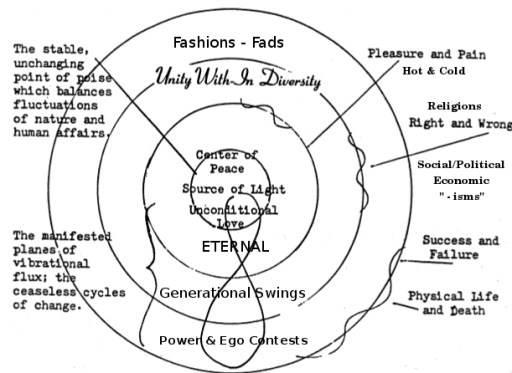
The Seven Axioms, along with basic corollaries, are based on the multi-dimensional, two-directional Life Wheel that looks like this:

levels of law - sized

These are the axioms:

AXIOM 1.  A complete and correct paradigm is the key to personal well-being and success.

AXIOM 2.  We are each a world complete, containing the potentials of the universe.

AXIOM 3.  Unity at the center and diversity on the surface are necessary compliments.

AXIOM 4.  The consequences of action are inevitable; those who respect the law of karma succeed.

AXIOM 5.  History is cyclical, not linear or progressive; nor can human survival be taken for granted.

AXIOM 6.  Used as a linguistic tool, the Life Wheel promotes clear, accurate and effective communication.

AXIOM 7.  With a correct paradigm, practical methods and useful tools, you can make yourself whole.

book header bird

Here is how I would apply these axioms to answer the radical student’s question to Dr. Peterson about unfairness, alienation and loneliness.

Taking up where I left off in “ . . Tell Them How the World Works,” I mentioned creating images to illustrate written text. This is important, because words function in the analytical (yang) left-brainer mode, while pictures speak to those of us who function primarily in the creative non-verbal (yin) right-brainer mode.

What you do or don’t see, through which ever side of the brain you favor, depends on you. If you’re fortunate to have both sides active, balanced and cooperating harmoniously, all the better.

To refresh your memory, a primary excuse ideologues use to rationalize overthrow of the established order is “thrownness:”

. . you’re a certain race and you’re born with a certain level of intelligence. You’re born in a certain culture with a certain language and in a certain socio-economic class and with a certain degree of attractiveness. And those are all things that are handed to you.

As Dr. Peterson paraphrases their argument:

The talents and catastrophes of life are by no means equally distributed. From the perspective of the standards of human justice and perhaps human mercy as well, there is something intrinsically unfair, unjust about the structure of existence itself.

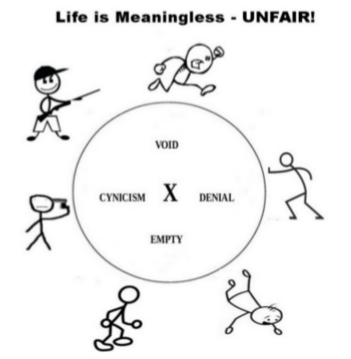
Here is my picture of the catastrophes that result from living exclusively on the surface, ignorant of the workings of our inner universe. Both center and middle levels of life are repressed to comply with exclusively materialistic rules of the knowledge game.

As an aside, let me emphasize that suffering of the natural world is magnified and twisted beyond recognition by the unnatural, unnecessary overlay of ignorance humans add to the mix.

Unfair-sized

What do you make of it?

At first glance, it makes me think of PTSD victims, suicidal drop-outs, violent protesters and serial killers. At second, it reminds me of Pastor Joe Fox’s survivalist advice. “If you believe you are helpless, that whatever you do makes no difference, that there’s no hope, it’s true.” Believing it makes it so.

To name just a few who rose above harsh circumstances – What if Nelson Mandala, born black in an apartheid nation and incarcerated for dozens of years, had acted on this world view? Or Anne Frank, who hid in an attic from Nazi oppressors until betrayed, and died at age 15 in a concentration camp? Or Helen Keller, left deaf, dumb and blind after an early disease?

In contrast, here’s a picture of life completed by inner wisdom. Mandela, Frank and Keller drew on these resources to overcome harsh circumstances. So can each of us. The image gives new meaning to Dr. Peterson’s repeated advice, “Go deep!”

Life is Mysterious

It reminds me of Solomon’s words, “To everything there is a season.” In a complete world view, through the times friendship, love, work and conflicts, the full spectrum of emotions is in-formed by self-aware introspection and, at the deepest level, the abiding stillness of inner peace.

Based on this world view, I would ever so briefly suggest that each of our present circumstances is the result of a long history of past actions. And our futures depend upon the choices made and actions we take NOW.

Also, as concluded in If You Love Your Children. . . :

What if (like Christ born in a filthy stable) you came here on a soul mission, given challenges perfectly matched to your unique calling – perhaps life lessons to be learned? What if life is complex and mysterious, but inherently just? It’s quite possible.

Phoenix - sized

But this is plenty to absorb for now. Another set of pictures shows an alternative, wisdom response to life’s suffering. But it will wait.

Closing where I started today, my School Board Association mentor, Senn Brown, told me I was ahead of my times. He said this because I warned out of the gate that Affirmative Action legislation missed the point. Not only was it unenforceable. It would trigger inevitable backlash.

I’m one of Camille Paglia’s generation. Toxic, irrelevant universities could not contain creative thinkers. She told Dr. Peterson her peers dropped out, overdosed and disappeared off the radar.

But I chose a less traveled path. Though having no illusions about the University, I completed the Ph.D., committed to earning the credential required to build relevant schools which DO meet students’ needs.

Deeper still, I held fast to the belief that relevant sciences and teachers are still available to those who sincerely seek them. And in that I was not disappointed.

I continue to write, sustained by the hunch that the day is soon coming when I and the times will finally come into synch.

In any case, you might find the rest of the Essay Sketch I opened with interesting:

WHAT YOU SEE IS WHAT YOU GET. Life is whatever you choose to make it. Make cultural heroes of people who pride themselves on their ability to beat the system and stand above the crowd — eager-to-please imitators will strive to replicate that model.

What would the world be like if, instead, value were placed on good will, friendship and cooperation? Not leveling, mind you. Communist experiments in China and Russia have proven that starving personal initiative doesn’t work any better than the everyone-for-himself approach.

Try the middle road. Give Positive Action a chance, and see what you get. Start small, with what can be done in your own personal life and inner circles. The ripples will spread in all directions.

Angel Calling

Life is Eternal

In JBP at his best, I wrote A great deal of suffering comes from ignorant fear of death. Many have been deceived into doubting the existence of the immortal structure that supports the mortal frame.”

Here, due to time constraints, it must suffice to expand on my meaning by drawing from earlier work. In Contemplation of Mortality, I quoted from Essay 2 on DEATH.

Dying patients went through the five stages, but then after “we have done all the work we were sent to Earth to do, we are allowed to shed our body, which imprisons our soul like a cocoon encloses the future butterfly,” and . . . well, then a person had the greatest experience of his life. Elisabeth Kübler-Ross, The Wheel of Life
I continue:

Webster’s definition of death is the act or fact of dying — the permanent ending of all life in a person, animal or plant. Personified, death is pictured as the grim reaper, a hunch-backed, black-robed skeleton wielding a scythe. The term refers to extinction, as in the death of hope.

These definitions, however, represent an extreme cultural bias with important effects on behavior. They reflect the materialistic belief that the physical is all there is. When the body fails, there is nothing else. There is no essence which survives to travel on.

The I Ching embodies a more inclusive, comprehensive view. Like the learned amongst most ancient cultures, Chinese sages regarded birth and death as natural changes, complementary stages of an ongoing cyclical life process.

Sages continue to regard death not as extinction, but the culmination of a winter season most wisely spent preparing for the coming spring. They teach that a soul, having learned the lessons and completed the work of one life cycle, separates from its used up shell. The shell, once the spirit moves on, collapses. The life essence, however, simply migrates, possibly to take on another form.

Further:

Fear is the natural outcome of limited materialistic beliefs equating the end of physical life with total extinction. Those who experience the True Self as immortal and indestructible are not plagued by fear of mortality. No doubt the courage and solace which sustained Socrates as he calmly accepted his death sentence — not as an escape, but an affirmation of principle — came from the depth of his soul awareness.

book header bird

Also to the point are the following sections from Rethinking Survival. The first is “Higher Love, Unity and Inclusiveness.” The other is “The Mystery of Death and Rebirth.”

Higher Love, Unity and Inclusiveness

The Positive Paradigm Wheel is the image of wholeness and completion: Higher Love. It pictures the inclusiveness which Campbell and Einstein believed essential to planetary survival. All parts are present, each in right relationship to the others. No part of life’s experience is lacking. No part is distorted or out of place.

This is the harmonious unity each one of us, by birthright, has the potential to experience. Poets describe the joining of the center with the surface as the Marriage of Heaven and Earth.

Given today’s paradigm malfunctions, the bliss of Higher Love seems like a distant dream. Yet we each have memories, however distant, mirrored in our art and sacred symbols. The mandalas and stained glass church windows are just a few of the countless examples. We each have persistent longings for “home” and romance that remind of us of what’s possible.

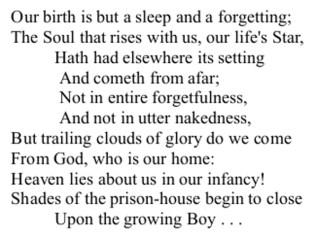
These longings are captured in the often quoted “Ode on Intimations of Immortality from Recollections of Early Childhood.” The 19th century English poet William Wordsworth lamented the socialization process that represses early awareness of divine origin:

Wordsworth

Like Wordsworth,  Einstein had glimpses, notably at the beginning and at the very end of his life. As chronicled by Walter Isaacson:

The great awakening that happen in childhood are usually lost to memory. But for Einstein, an experience occurred when he was 4 or 5 that would alter his life and be etched forever in his mind:

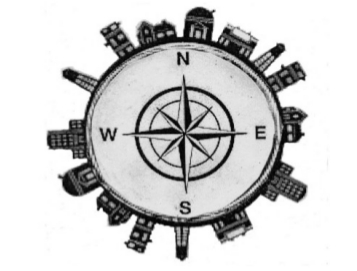
The catalyst of this lasting impression was a compass his father gave him. He remembered trembling and growing cold in excitement, awed by the “mysterious powers” of a magnetic needle that behaved as if influenced by a hidden force field. As he recalled later, “Something deeply hidden had to be behind things.”

inner-compass-sized

At about the same time, his mother introduced to him to music. It awakened awe before the magic and mystery of nature. “Mozart’s music is so pure and beautiful that I see it as a reflection of the inner beauty of the universe itself,” Einstein wrote.

For him, “love [of music] is a better teacher than a sense of duty.”

Phoenix - sized

The Mystery of Death and Rebirth

The yin-yang mysteries of life and death apply to experience on every level, from the individual, to families, nations and even planets.

. . . “The strange thing about growing old,” Einstein wrote, “is that the intimate identification with the here and now is slowly lost. One feels transposed into infinity . . . ”

In the year before his death, commenting on the passing of colleague Michele Besso, Einstein wrote, “He has departed from this strange world a little ahead of me. It means nothing.”

Making an observation that could have come directly from the Yoga Sutras, consistent with the Positive Paradigm, he consoled Besso’s family, “For us believing physicists, the distinction between past, present and future is only a stubborn illusion.”

It is said that in the middle ages, Carmelite nuns retired to their cells each night to sleep inside the wooden casket in which, when they died, they would be buried. Taken out of context, this may seem morbid. But in fact, they had it right. They were aligning themselves with the patterns of nature, the better to ultimately survive them. For each in- and out-breath repeats the cycle of release and renewal. Each night that we sleep, we let go of bodily awareness and return refreshed the next day.

On every scale of magnitude, the pattern is the same. Paradoxically,survivors who have released unfounded fears of death are freed to live to the full, here and how.

Lao Tze’s work, which breathes I Ching wisdom, illumines this paradox. He describes the relationship between the Creator and creation in the first passage of the Tao Te Ching. From Two Sides of a Coin: Lao Tze’s Common Sense Way of Change:

Unmanifest and manifest are two sides of a coin, seamlessly joined, though apparently opposite.

Entering this paradox is the beginning of magic.

Figure II.8 shows what this vision looks like when the words are properly placed within the Positive Paradigm Wheel. To the uninitiated who live exclusively on the surface of the Wheel, the eternal may seem illusive. However, the inner vision necessary to accomplish goals is found only by daring to let go of the familiar surface to travel true home to the center from which blessings then flow outward.

In the words of the God of Moses, “Return unto me, and I return unto you.”

In Passage 16, Lao Tze goes even further:

16

Here, the sage not only repeats the vision of the hero’s journey. He also describes the methods of the journey — the meditative practice of stilling the mind and emptying the heart, followed by contemplation from the detached observer’s perspective. He also describes the consequences of failing to complete the life pattern and the blessings of succeeding.

The ignorant, through inattention and willfulness, generate misfortune, pain and suffering. Those who attain the source, however, (usually with the guidance of an enlightened teacher) achieve the overview which leads to acceptance, compassion and omniscience. Those who survive intact, merge with the eternal source and begin anew, like the New Adam and Christ in The New Testament.

Preparation makes the difference, deciding who is most likely to survive coming transitions, emerging better than before through the experience. Here is the root of Positive Change:

I Ching # 49. CHANGE. Day and night replace each other in endless cycles of CHANGE. The same natural law generates flux in human events. The unprepared see Change as a threat, but the well-prepared face the unknown calmly. They know that after degeneration reaches critical mass, regeneration follows. Welcome the new. Avoid short-sighted fear.

Angel Calling

Love IS . . .

Dr. Jordan Peterson says, “Love is the desire to see unnecessary suffering ameliorated.”

I say, “Yes . . and much, much more.”

Here’s what I mean:

Essay 38. LOVE

Hear, O Israel: The Lord our God is one Lord; And thou shalt love the Lord thy God, with all thine heart, and with all thy soul, and with all thy might. Moses, Deuteronomy 6:4-5

As the Father hath loved me, so have I loved you. . .This is my commandment. That ye love one another, as I have loved you.  — Jesus Christ in St. John, The New Testament

In Taoism, we say the heart is the seat of love, compassion, joy and happiness. This is what people are looking for. But they are looking outside. We don’t know that joy and happiness is seated INSIDE our heart. We’re running around the whole world. Going to the amusement park, night club, theaters, all kinds of places in search of happiness, peace, joy. But the peace, joy and happiness are within us. – — Mantak Chia, The Inner Smile

THE FRONT

Roots of love mean to be fond, or to desire. Webster’s first definition is a deep and tender feeling of affection for, or attachment to. It can be an expression of one’s affection. It can mean a feeling of brotherhood and good will towards other people.

It can be strong liking for or interest in something (a love of music). It’s a strong, usually passionate affection, partly based on sexual attraction. In theology, love refers to God’s tender regard for mankind, or mankind’s desire for God as the supreme good. Love is the ultimate mystery. It sparks and keeps the life process going, more to be accepted and honored than psychoanalyzed.

Plato described seven stages of love. Each is a rung on an evolutionary ladder which leads from a child’s love for parents, to erotic love, to friendship, and eventually the pinnacle of divine connection. These seven steps correlate exactly with the hierarchal seven energy centers of yoga anatomy.

Plato traces the attraction between males and females to jealous gods who split a complete, content person in half at the navel. Ever since, each part has chased after the other, longing to become whole again – another yogic priority.

Tai Chi Tu - sized

Unfortunately, rather than seeking to integrate male and female energies internally, most Westerners persist in externalizing this desire for re-union. In contrast, I Ching-related healing arts provide methods for restoring inner wholeness, attaining the ultimate level of Platonic love.

The new law Christ taught fulfills the law of Moses. Further, the Old Testament command to unify the three levels of soul, heart and might into a single-minded love of One God resonates with I Ching-related practices which coordinate upper, middle and lower energy centers.

Practical methods give people of every faith practical ways to actualizing their religious ideals. Put another way, only by integrating and harmonizing the levels of mind, body and emotions can love of God be complete or the universal law fulfilled.

Healing gender, race and religious splits calls for fluency in the complete spectrum of love. Even in grimmest times, love is the omnipresent, underlying bedrock. In Rocky IV, for example, Sylvester Stallione scripted an East-West reconciliation of opposite cultures.

A nature-trained David not only defeats a technology-mutant Goliath with love and relentless grit. He wins the hearts of a hostile crowd. His victory message to international TV viewers: “If I can change, and you can change, we all can change.”

Those who turn love into a commodity exploit what people out of touch with their true selves crave most. There’s a push-pull between those greedy to get what they’ve been fooled into thinking they lack and those who profit from this illusion.

False prophets profit from persuading followers that they’re incomplete and not-okay. Further, there’s a life-changing product that can fix them. If they buy it, do whatever they’re told, turn over their power and money, they’ll be transformed and made okay. Sages grounded in reality, however, know better.

The question then arises, what happens when one is focused and centered. Does all interest in the external world and motive to accomplish cease?

Actually, it’s the opposite. As one becomes more secure from within, fear-built barriers come down. New, more authentic motives arise to replace artificial desires. As one pares away the illusion of need, the native impulse to serve with generous compassion arises.

THE BACK

In duality, hate is the opposite of love. While love grows upwards from childish attachment through degrees of maturity to altruism, hate descends to the depths of destruction. It obliterates connections, shatters hope, and in the end destroys those it consumes.

Fear-based insecurities generate a host of love perversions. Possessiveness, envy, jealousy and rivalry are variations on the theme of illusory insufficiency. In all cases, it’s the result of looking on the outside for what can neither be bought nor stolen, for the completion of Higher Love is the timeless, abiding state of one’s innermost life.

Phoenix - sized

In this context, I say to the definition of Love as “the desire to see unnecessary suffering ameliorated” . . YES. With this modifier: Love is an absolute. In duality it manifests in a multitude of ephemeral desires, altruism being one of the highest.

Angel Calling

Be Harmless, NOT Defenseless

Jordan Peterson is drawing predictable backlash upon himself.

Though a clinical psychologist, he seems irrationally intent on attracting danger, while at the same time, logically, persuasively but incorrectly protesting that retreating from conflict when you shouldn’t “will cause self-annihilation.”

The qualifier is “when you shouldn’t.” Sun Tzu, reputed author of The Art of War, is keen on the importance of knowing when to make strategic retreats. There is, after all, a time and place for every purpose under heaven.

Second, what does he mean by “self-annihilation?” As righteous warriors grounded in Old Testament faith know full well, the true Self is indestructible. So also, savvy martial artists who are seeped in I Ching wisdom trust that true identity is neither enhanced nor diminished by the dance of advance and retreat.

So what’s really at stake in pressing forward against the tide, against the grain, against the laws of nature? Why vent rage, disgust and contempt at despicable, treacherous, venomous opponents? If he exposes and humiliates them, however much deserved, they will mirror his negativity back – in spades. It’s called backlash. Every action generates an opposite and equal reaction. It’s a natural law of psychological physics.

There are other, wiser ways to shift gears — address valid grievances on higher ground without attracting inevitable vengeful retaliation.

Persisting in upping the ante, provoking human snakes, smells like pride to me. Hubris, to be precise. The stuff of tragedy in the making.

I am afraid for this highly articulate but unin-formed professor.

Here’s an example of the inevitable retaliation and escalating conflict he has drawn not only into his own personal life, but also into his neighborhood — not to mention the media.

On October 26th, 2017, he posted on Twitter: Those who consider themselves my enemies have been posting these all around my home neighbourhood.

Here’s the poster:

jbp

I tweeted back, “What else would you expect?” Afterwards, I realized that without this explanation, the remark wouldn’t make sense. Hence, this blog of explanation.

Phoenix - sized

Please understand. I do not write to humiliate or diminish Dr. Peterson. Quite the opposite. He has become to the current generation of young people what John F. Kennedy was to mine. A symbol of nobility. Of hope.

I remember as painfully as if it were yesterday what it felt like to me and my friends when we heard the news that his brains had been splattered by an assassin’s bullet.

I dearly want that NOT to happen again.

I’m writing to warn Dr. Peterson. To suggest ways to protect himself, not only for his own sake and for his family’s, but for those to whom he has become a hero – who would be shattered were he to come to harm.

To plead with him to rethink the limited psychology which allows him to rationalize such intensely emotional, dangerous risk-taking.

I’m writing to urge him to add to his armory of psychologies the survival wisdom of Lao Tze and the foundational attitudes prescribed in Patanjali’s Yoga Sutras. Their teachings have guided the lives of truth seekers of thousands years. There must be something of value to recommend them, having withstood this test of time.

For example, Dr. Peterson knows not whereof he speaks when he says, “Don’t be harmless.

Is he intentionally rejecting ancient wisdom by this word choice, or is he unaware of the significance of this virtue in ancient lore?

Lao Tze, in fact, uses harmlessness as his defense. It’s a time-honored strategy.

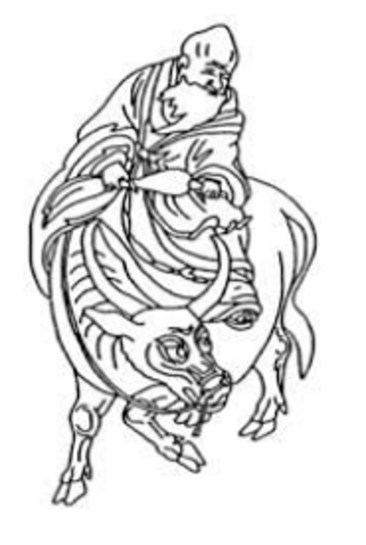
Here is a famous drawing of Lao Tze riding his ox. He is credited with writing The Tao Te Ching, which next to the Bible is the world’s most often translated scripture. It shows the enlightened sage as so intricately merged with the beast which carries him that they appear inseparable. This image represents the higher mind which has tamed and harnessed the energy of emotions. He uses them to carry him towards his destination.

Lao Tze on Ox

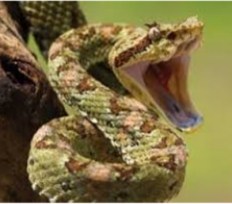
I will give you a hint of this survival approach to dealing with snakes excerpted from Two Sides of a Coin: Lao Tze’s Common Sense Way of Change.

snake

Passage 50 reads, in part:

Those who live by the law are protected by it.

They travel the world without being injured.

In the midst of hostilities, no one knows where to attack.

Wild beasts sense no openings to penetrate.

Enemies find no weaknesses to exploit.

Armies can’t locate a fortress to assault.

This accords with the following section about harmlessness used as defense strategy.

Non-Violence

Taoists abhor selfish meddling and gratuitous violence as equally destructive to individuals, society and the environment.

In this, their thinking is in accord with the most fundamental tenet of the yoga. Non-violence is the virtue listed first among the commitments which constitute the fundamental basis of yoga disciplines. The attitude of harmlessness, or non-violence, is the prerequisite upon which all more advanced spiritual practices depend.

In Sutra 35 of Book II, Patanjali informs us that:

When non-violence in speech, thought and action is established, one’s aggressive nature is relinquished and others abandon hostility in one’s presence.

Similarly, in Passage 55 Lao Tze describes sages as being accomplished in the ways of the ancient yoga masters:

Sages who master the infant’s harmlessness:

don’t startle wasps or snakes, and therefore don’t get stung;

don’t threaten angry beasts, and therefore are left in peace;

don’t bother birds of prey and therefore aren’t carried off.

Lao Tze describes non-violence as the cornerstone of social stability. In Passage 68 he tells us:

The best leaders act with subtle dignity.

Successful warriors move with alert caution.

Enduring winners shun prideful vengeance.

Good employers quietly support their workers.

The way of non-violence is the supreme treasure of communities

founded in the eternal Tao.

book header bird

Again, let me emphasize that I wish Dr. Peterson all the best. May he live long and prosper. Let him put on the full armor of God for protection. Give him the wisdom to tame his righteous indignation with the discipline of a seasoned sage. Let him survive as a shining inspiration to those who have come to treasure his innate nobility.

As yet, for whatever reasons, he remains unresponsive. The Catch 22 seems to be that since I’m not a well-known public figure, he assumes he has no grounds for communication. In Don’t throw pearls before swine, he says, “You cannot talk to people who will not engage in a discussion.”

So be it. He says he had no desire to engage in the legislative issue that catapulted him to fame, but felt compelled to do so. In exactly the same way, I had no desire whatsoever to write these blogs, but felt deeply compelled to do so. Unfathomable but somehow irresistible.

Whatever the outcome, at least I’ve done my best. And having done so, leave the future in trust to God’s will.

Angel Calling

Rethinking SACRIFICE

After listening to Jordan Peterson’s Youtube video, The Great Sacrifice: Abraham and Isaac, I thought to revisit the Essay on Sacrifice written in 2000 and later included in Conscience: Your Ultimate Personal Survival Guide.

My document search stopped at Essay 7 on Authority. Lo. Not coincidentally, I found a quote which puts the Abraham story in larger context. It helps make sense of my approach, which sheds a different but helpful light on biblical traditions:

Christ was one of the greatest mystics of all time. He knew everything that has been ever said in the Eastern traditions.

When Moses asked God, who are you? God said, I AM that I AM.

Christ in the Gospel of John says, “Before Abraham was, I AM.”

The very word Abraham comes from the Eastern word Brahman, which means the primordial being. . . So when you start looking, as paleo-linguistic anthropologists do, at the common roots of the various religions and traditions, you find that it’s all universal. Truth has to be universal. It can’t be your domain or my domain.

In a more popular vein, when I think of sacrifice, trading the lesser for the greater, the Lovin’ Spoonfuls’ tune, Did You Ever Have To Make Up Your Mind, starts humming in my mind:

Did you ever have to make up your mind,
Pick up on one and leave the other behind?
It’s not often easy and not often kind.
Did you ever have to make up your mind?

Did you ever have to finally decide?
Say yes to one and let the other one ride?
There’s so many changes and tears you must hide.
Did you ever have to finally decide?

This is the essence of the life or death choice offered us in Exodus: Choose Life. “Return unto me and I return unto you.” It emphasizes travel on the inward path from surface to center of the Life Wheel, releasing attachments to ephemeral possessions, limited opinions/identities, and outgrown lifestyles.

Looked at this way, sacrifice isn’t necessarily a negative or hurtful experience. It can be positive change: expansive, illuminating, and in the long-term, generative.

book header bird

Essay 33. SACRIFICE

A balanced relationship between the individual and the whole is achieved through service in the spirit of SACRIFICE. Changing selfishness to compassion and acts of kindness builds bridges of mutual trust. Unselfish giving benefits everyone involved, helping the community to overcome obstacles and dangers. Avoid twin dangers: selfishness and self-denial. — Patricia West, The Common Sense Book of Change

A significant part of the existential suffering of life is the suffering involved in constantly discerning — or choosing — what we are responsible for and what we are not responsible for and maintaining a healthy balance. — M. Scott Peck, The Road Less Traveled & Beyond

The pain of verbal abuse goes deep into the self and festers there. . . Verbal violence all too often goes unrecognized, except at a level that you cannot even understand yourself. You know you are suffering, and you vaguely know where the pain is coming from; but because the aggression is so well hidden, you are likely to blame yourself instead of the aggressor. – Suzette Haden Elgin, The Gentle Art of Verbal Self-Defense

THE FRONT

The root of sacrifice means to make sacred. Webster’s first definition is the act of offering the life of a person or animal or some object in propitiation of or homage to a deity. It is the act of giving up, destroying, permitting injury to, or forgoing something valued for the sake of something having a more pressing claim. It can mean selling or giving up of something of less than its supposed value.

The Old Testament story of Abraham and his son Isaac in the mountains of Moriah deserves careful consideration in regard to sacrifice.

  • It’s about willingness to trade attachment and human love for the sake of fidelity to a higher calling.

  • It’s about faith that surpasses understanding.

  • It’s about trading earthly desire to perpetuate one’s life through transmission of genes for the abundant certainty of eternal life.

Abraham was tested to prove his fidelity to the voice of inner conscience, no matter what. The parallel to the life of Jesus is direct. Christ was literally sacrificed, but, paradoxically, like Isaac, lived on, albeit on a higher level.

Pagan sacrifice of children and animals is irrelevant to the meaning of Abraham’s test. At issue is the difference between transcending pain for the sake of higher love versus selfishly destroying life using physical, verbal and/or psychological violence, to get what one wants here on earth.

This distinction is relevant to prosperity courses which flirt with spirituality, but in fact tamper with Natural Law. In the short term, harnessing aversion to pain and desire for pleasure to get what we want may work. But where’s the wisdom?

Pain and pleasure motivate animals. However, the purpose of I Ching disciplines is to overcome such instinctive reactions. Pavlovian dogs can be trained to react automatically to programmed stimulation.

Humans, however, have the unique ability to reason. By choosing to remain steadfast in commitment and true to higher calling, we realize the priceless opportunity to overcome and transcend reactive pendulum swings of nature — pain and pleasure, attraction and aversion – to fulfill our innermost, innate potentials.

In this way, following the example of Christ, who sacrificed mortal existence for eternal life, we too can change, shifting gears, raising our focus from the material surface of the Life Wheel, then from the deeper emotional level of what we want, to the central core of what IS. This, ultimately, is the purpose of mastering natural change, and the gift which a profound understanding of the I Ching has to offer.

Similarly, working with the meta-reality-map — the Life Wheel — helps articulate, focus and accelerate the self-actualization process. It is KEY to fully understanding the multiple dimensions and meanings of scriptural events.

Saving the Best

It’s important to remember, however, that fidelity to calling is the standard. Whether or not one physically lives or dies is irrelevant. Bodhisattvas, for example, are fully-attained beings who have completed their life lessons here, but choose to remain on Earth in order to serve.

We each contain the seed potentials of our most admired leaders.

If we each dig into our own depths and live the promise now by following their examples, then hope could not be extinguished by killing single individuals.

If one person of conscience stands alone, one bullet can demoralize a nation.

If conscience informs the entire community, when one leader is struck down, two, ten or a thousand more come forward to continue on.

This is the fruitfulness promised to descendants of Abraham.

THE BACK

The opposite of sacrifice is attachment. Refusing to let go of outgrown beliefs — resisting change or hanging on to people when it’s time to move on in order to grow — is antithetical to the life process. Making a show of suffering, imposing obligations and guilt on others for what they’ve been given is false martyrdom.

Slaughter of animals or innocents to atone for one’s own sins is a perversion of sacrifice. It violates the sanctity of life and free will of others. Each of us is accountable for our own actions. Therefore, taking life can’t change bad karma. Instead, it compounds trouble.

book header bird

Practical Ethics

After outlining an article on ethics, which Stefan Molyneux passionately, intuitively reasons is the necessary foundation of civilization, I did my homework. Come to find out, he went rounds on the subject with an atheist critic.

Unfortunately, for lack of the holistic Life Wheel framework which encompasses the full range of logic complimented by and reinforced with gut feeling and inner knowing, Stefan was hard put to defend his “feelings” from his ruthlessly, exclusively logical (but dead wrong) antagonist.

As shown elsewhere, the “hollow,” exclusively materialist-atheist belief system rules out the levels at which “gut feeling” and intuition reside.

MaterialistAthest

An updated version of the complete Wheel shown earlier puts ideology -isms in their limited place: on the surface, material rim, far removed from the vital energy level of gut feelings, even further detached from the core from which wisdom flows.

expanded wheel

What is fundamentally (fatally) missing from logician’s concept of ethics, however, is the dynamic action of karma. The Law of Karma is a fact of life which can’t be argued, but rather is known through direct  experience by those who pay attention. It’s axiomatic.

Though there’s more to the subject, which I’ll bring up below, for starters, here is an excerpt to the point from The Handbook:

AXIOM FOUR

Consequences of Actions Are Inevitable; Those Who Respect the Law of Karma Succeed.

Axiom Four is the practical foundation of ethics. Were it taught earlier in schools both public and private as the survival basic which it is, today’s world would be very different indeed.

For in an exclusively materialist, linear worldview, it seems possible to “get away with murder.” Unethical leaders mistakenly continue to act on the false premise that they can avoid the consequences of their actions by hiding selfish motives and evil deeds behind a mask of false appearances.

But ultimately, they deceive no one but themselves. (Remember the fate of ponzi racketeer Bernie Madoff and his two tragically unfortunate sons?)

Oscar Wilde’s Picture of Dorian Gray dramatizes the horrific consequences of hiding hideous deeds behind an unnatural mask of eternal youth and physical beauty. Just as Dorian comes to an awful end, in the circular and richly textured fabric of the Positive Paradigm worldview, attempts at evasion and deception are ultimately futile. The concept of a “perfect crime” is an oxymoron. . . .

The Old Testament describes the karmic law of return in agricultural terms. “As ye sow, so shall ye reap” and “For everything there is a season. . . ” In modern parlance, the saying that underscores the circular dynamic of poetic justice is, “What goes around comes around.”

. . . a popular riddle asks, “Why do con artists do shabby work, charge unreasonably high prices, and get away with murder?” The cynical answer: “Because they can.” However, this cynical half-truth tells only part of the story.

They can, because there’s Free Will. They can, because they’re ignorant, or else incredibly stupid. Choices have (all too often unforeseen) consequences.

Whether one believes in God or not, whether one respects Natural Law or chooses to be blind to it, these consequences are the same. In modern parlance, “Do the Crime. Do the time.” Or, as it’s also said, “Pay back is a bitch.”

Punishment for unrepentant wrong-doing can take many forms. The consequences of breaking human laws include fines, jail-time, and in the extreme, death.

But on a deeper level, over time, retribution for violating Natural Law is visited in many forms, from mental or physical disease, to personal, professional or financial misfortune.

Consequences of misdeeds often return on the psychological level. Carl Jung, the Swiss analyst who popularized the concept of archetypes, also wrote the introduction to the Wilhelm/Baynes version of the I Ching. He noted the unintended kickback from rejecting the basic axioms of religion and natural law with mere reason. There are consequences not only for decision-makers, but also those they influence.

In sum, Jung noted that modern thinkers have made a fatal mistake. The facts of inner life can’t be driven out of existence by arbitrarily banishing them from the decision-making equation. Saying God doesn’t exist doesn’t make it so. It just leaves the unbeliever at the disadvantage of being cut off from the center.

According to Jung, denying the facts of inner life has the effect of burying rejected aspects of the whole in the “unconscious,” where they continue to reap havoc on our daily lives. Politicians and journalists under the influence of unacknowledged emotional demons “unwittingly let loose psychic epidemics on the world.”

Phoenix - sized

Here is a picture of the Law of Karma (a practical function of Natural Law). It resides at the middle, energy level of the Life Wheel associated chi, prana and emotions. Beliefs (at best, emanating from conscience – the domain of Divine Law – and experienced as intuition) trigger emotions. In turn, beliefs fueled by passionate feeling drive actions which produce results of the surface level — the domain of Human Law:


Law of Karma

Phoenix - sized

The “more” to the issue of ethics suggested above is this. Because karmic return emanates from the energy level, functional ethics necessarily has a DYNAMIC component. What’s right depends to some extent on the specifics of time, place, person and historical context.

For example, while the motive – compassion – remains constant, the correct actions taken to express this motive change with the situation. Working in a day care environment with an unruly child who doesn’t know better will require different methods of correction than would dealing with a raging psychopath who intends someone you dearly love violent, deadly harm.

For this reason, the best leaders, and the most successful people in every area of life, are the ones who are most self-aware, the ones competent to link the unchanging innermost level of Motive with the fluctuating levels of strategic Purpose and practical Intent. (Hence the admonition,”Get your act  together!”)

Conversely, those who shun self-awareness, ignore the call of Conscience and go after what they want — others be damned — are a danger to themselves and others. In any case, while the Free Will to choose remains constant at the center, the unavoidable consequences implicit in the bargain will return in kind — it’s a package deal.

So here follows an Essay on Consequences:

Phoenix - sized

Essay 43. CONSEQUENCES

Unlike any kind of fortune-telling, prophecy, or magic, the I Ching does not tell the future, it can only analyze the present. Its use does not allow one to make forecasts, only diagnoses. If there were a comparison possible with a Western equivalent, it would not be to the crystal ball but to a chess playing computer program that analyzes the current situation in order to choose one of a number of options. — Cyrille Javary, Understanding the I Ching.

Quantum mechanics is a procedure. It is a specific way of looking at a specific part of reality. The only people who use it are physicists. The advantage of following the procedure of quantum mechanics is that it allows us to predict the probabilities of certain results . . .– Gary Zukav, The Dancing Wu Li Masters: An Overview of the New Physics

One of the principles of modern physics which has contributed heavily to current organizational theory states that matter is nothing but relationships. That’s the glue of an organization — relationships. Without honesty, there is no trust, and consequently, very weak relationships. — Alan Downs, Seven Miracles of Management

THE FRONT

The literal meaning of the root word is “to follow after.” Webster’s first definition of consequence is a result of an action or process, an outcome or effect. Second, it’s a logical result or conclusion, an inference. Third, it’s the relationship of cause and effect. Last, it’s defined as importance or influence, as in a high-ranking person of consequence.

Board games like chess challenge the intellect to think in terms of strategy. High ranking players, white and black, oppose each other. Contestants maneuver their pieces, the object being to take over the field. Pieces of different consequence are ranked by medieval social status as kings, queens, and bishops, down to lowly pawns.

Each has a proportional range of motion, pawns having the least. But, with persistence, pawns can traverse the field and change rank, becoming powerful players in the end.

The United States was founded in reaction to European governments that violated Natural Law, subordinating merit to class interests and siphoning the resources of workers to fill the coffers of a privileged few.

In contrast, the ideal of the original American dream honored the natural law of cause and effect. Every person was free to advance according to merit. Each was entitled to receive just compensation for honest work. All were entitled to protection of individual civil rights under the law.

Throughout history, there’s been a push/pull tension between those who respect the biblical maxim, “As ye sow, so shall ye reap,” and those who would make themselves exempt from the law. In nature, there are times of plenty and times of want, times of success and times of defeat.

Some, however, ignorantly try to short-circuit the process, by-passing the hard times that teach us humility, abusing human law to short-sighted, personal and political ends. They’d rather, by cheating natural laws, be ceaselessly, excessively prosperous, at the expense of others who suffer in perpetual want.

Rather than engage in the give-and-take process on the chess-board of life, where the light and dark, yang and yin, alternate in orderly succession, such people would fold the board, refuse to play, and withdraw from the life process. But even the attempt to evade natural consequences has consequences.

The I Ching, like the game of chess, is a miniature of the human psyche and of community relationships. Like playing three-tiered chess, working with the I Ching not only engages the intellect, but cultivates a keen sense of the hidden forces, deeply irrational and sometimes sublime, which drive and even occasionally inspire the players.

These disciplines teach us to make our choices in terms of cause and effect, mindful of long-term implications. They help us to overcome daily challenges with wisdom and grace, and prepare us to survive and prevail when confronted by opponents who would wipe us off the board.

The title Dancing Wu Li Masters refers to the Chinese word for “physics,” translated as “Patterns of Organic Energy.” Sadly, the logical connection to the I Ching wasn’t made. The Positive Paradigm of Change derived from I Ching — consistent with Einstein’s physics — holds the key to fundamental life questions which continue to elude physicists, social and medical scientists alike. Whether or not we follow through has dire consequences for future survival.

THE BACK

The opposite of consequence would be inconsequential, having no meaning or importance. However, the Chinese saying goes that even one small grain of rice can tip the scales one way or the other. Logically, if there is no action, there would be no consequences. But consequences also follow from failing to take action.

Perversions of consequences include attempts to break the cause-effect connection, either to act without paying the price or to collect unearned rewards. Out of laziness, fear or greed, wrong-doers attempt to cheat life, change the course of events by unnatural means. In the long-term, it never works as intended. Instead, violating Natural Law sets chain reactions in motion that explode when events reach critical mass.

Angel Calling

Cordial Greetings

Hello to Stefan Molyneux and Jordan Peterson.

This post, along with the companion blogs linked below, are my heartfelt response to Stefan’s passionate call for creative positive action, specifically in the most excellent discussion, Sorting Yourself Out.

I certainly agree with you that, world-wide, civilization as we know it is reaching the point of critical mass.

Not coincidentally, I have been working in parallel on the subjects of ethics, epistemology, personal freedom, and introspection – as well as their urgent relevance to human survival – for a very long time.

My particular contribution to your effort is a model that expands on your invaluable research, adding urgently needed depth. Practical tools I’ve acquired and developed could well serve to fortify your intellectual arsenals in the ongoing media battle for the hearts and minds of the general public.

Put another way, my work identifies an overlooked but fatal blind-spot in Western thinking. (I elaborate on this at length in a post called “The Gate Keeper.”) Suffice it to say here that unless/until we restore a complete and correct paradigm to common understanding, the downward spiral of history will continue on its course unchecked.

By way of introduction, I should tell you that though this contact may seem sudden and rather late in the game, in fact, I’ve foreseen the state of critical mass a long time coming, patiently waiting for the right time to come forward.

Proof of the timing is written into the concluding chapter of Rethinking Survival’s memoir section called “Who I Am To Say.”

I chose the introductory quote to underscore the fact that I’m not alone in subscribing to the premise of Rethinking Survival:

Curiosity, awareness, attention — those are the tools we need if we hope to avoid our worst mistakes — and indeed if our children are to have a future on this planet. We have come to a pass in our evolution where we all must, to one degree or another, be scientists at heart or be victims of forces we don’t understand. I am certainly concerned about our survival as individuals. But I am also concerned that if we don’t know the rules of our world — both the human and physical rules — we will be in danger collectively as well. Laurence Gonzales. Everyday Survival: Why Smart People Do Stupid Things

Between 2008 and 2009, I worked over-night third-shift hours at the Wisconsin Relay Center for the Deaf and Hard of Hearing as a Communications Assistant. Quiet times gave me the opportunity to outline a book proposal for Surviving Titanic Times:

It seemed ironic that the general public in some ways is as of hard of hearing as the deaf community. What, I wondered, will it take for the “conveniently” hard of hearing to open their ears, hear warnings of threats to their survival and build lifeboats in time?

I decided that before readiness is there, it’s smartest to keep a low profile. When immediate danger is actually on the front doorstep, it will finally become convenient for people to rethink their assumptions. Only then will the general public have an vested interest in heeding the warnings of boundary-spanners, making it safe for “non-traditional” thinkers to come forward. . . .

This is the upside of dark times. Extreme danger is a 2’x4′ sufficient to get people’s attention, wake them up to their true greatness — “the giant within.”

Most news reporters, along with the politicians and experts they interview, are products of the skewed educational system that has brought us to the brink. However, according to the maxim, “The larger the front, the larger the back,” times of gravest danger are when greatest opportunities for change arise.

Heroes emerge when the time calls. A new readiness to see what before was invisible can open new avenues of Positive Action. As Gonzales details, survivors remember their best qualities and have eye-opening epiphanies.

Quite possibly there’s a whole generation of true leaders, ruined professionally to shut them up, patiently biding their time. They’re hidden in society’s woodwork, waiting quietly with the patience of Chinese sages for the right time and opportunity to come forward, to tell their stories. They’ll educate those with an ear to hear about the fundamental rules of our world, as Gonzales calls them — not just social standards, but more fundamentally, the laws of nature — and help us find the way out of self-destructive madness.

I’ve taken the experience of journalist Dorothy Thompson, “the American Cassandra,” to heart. Reporting from Germany in the 1930’s, she found no one in the U.S. wanted to hear about Hitler’s menace . . . until Americans were galvanized into entering WWII. Then it became convenient to listen to her.

With patient forbearance, I heed the I Ching wisdom of Stillness:

52 Stillness

I remain confident that over time, quietness inevitably changes to its opposite. Stillness is fecund. It bears within it the latent seeds of future action. So it’s important to know when to be quiet, to listen to inner guidance that warns against danger. Then, when the time is right, you’ll know to be in the right place and how to take the right action.

Phoenix - sized

Here I will briefly tell you my basic premise, describe the Life Wheel in abstract, and then show how it can be set into motion and applied to specific situations. Out of infinitely possible examples, I refer to the youtube conversation to demonstrate how the Wheel works.

Here is the basic premise as stated in the Introduction to Rethinking Survival:

The Danger

Programmed assumptions too often drive our decisions, actions and ultimately, survival options. Even with the best of intentions, misinformed people operating on conflicting beliefs destroy themselves and others. Sometimes the process is quick. Suicide. Murder. Usually it’s slower — atrophy and self-sabotage.

The connection between skewed thinking and disastrous results is mirrored in the global disconnect between policy and practice. Knowledge deficits are directly responsible for bankrupt economies, personal and international alike.

In the United States, politicians of both parties use psychological scare tactics to polarize the public. They warn with phony threats, at the same time, putting all of us at risk. Like Nero who fiddled while Rome burned, leaders alienate us with disgraceful partisan bickering. At the same time, they avoid the real dangers which threaten to burst the bubble of illusory progress with excruciating finality.

In sum: Just as the Titanic’s designers failed to recognize the ship’s fatal flaw, today’s religious and political leaders, acting on misinformation, are steering the planet ever closer to the brink of destruction. Presented here for the first time, the Positive Paradigm of Change offers the hopeful opportunity to rethink our collective future, shift away from the current collision course towards disaster and ensure human survival.

Building on this premise in The Positive Paradigm Handbook, I continued:

WHY PARADIGMS MATTER

Ideas drive results. People’s beliefs color their feelings, triggering basic emotions which in turn drive their actions.

Actions that stem from a simple, complete and accurate paradigm result in personal fulfillment, harmonious relationships, and economic prosperity.

Actions based on false, incomplete and inaccurate paradigms, however well intended or passionately defended, are the cause of widespread misery, suffering and deprivation.

As detailed in Rethinking Survival: Getting to the Positive Paradigm of Change, a fatal information deficit explains the worldwide leadership deficit and related budget deficits.

In a dangerous world where psychological and economic warfare compete with religious extremism and terrorism to undo thousands of years of incremental human progress, a healing balance is urgently needed.

Restoring a simple, complete and accurate paradigm of leadership and relationships now could make the difference between human survival on the one hand, and the extinction of the human race (or the end of civilization as we know it), on the other.

Phoenix - sized

Here then is the universal Life Wheel implicit (as detailed at length elsewhere) in the world’s enduring wisdom traditions. It is equally compatible with the discipline of yoga sutras and with modern physics. Formulated as the Positive Paradigm of Change, it meets the Occam’s Razor standard of utmost simplicity with maximum inclusiveness.

PPoC gold

If gives us a complete and accurate model with which to sort out – articulate, organize and improve upon –- the levels and directions of our very complex lives. For, in fact, life – both personal and historical – is neither flat nor linear.

Here is a very early picture of how the interdependent but qualitatively different dimensions of life experience are related, prioritized and linked in the abstract.

II.05 Unity & Diversity


Phoenix - sized

In Sorting Yourself Out, Jordan Peterson compares the biblical example of Abraham’s “call to adventure” (and promise of exponential reward) to his intentional Self-Authoring process. It’s one example of what legendary comparative religion teacher Joseph Campbell called the “Hero’s Journey.” The cyclical, alpha-omega (but also inward) journey is also detailed by Clift and Clift in The Hero Journey in Dreams.

They tell us that journey starts with a call to adventure, followed by departure and initiation. These lead to sacrifice and suffering which in turn yields wisdom, then transformation and finally return to the world. We are told:

Dreams present one with symbols of transformation – the opportunity to expand one’s horizon. Painful experiences can be a great teacher – if one lets them. The hero is someone who has learned something, gained a new perspective.

Here, the stages of the Hero’s Journey are plugged into the Life Wheel, showing this multi-layered, dynamic process in motion. (N.B. This is not simply myth, but rather psychological necessity. We are each at one time or another in our lives – whether we choose to heed the call or not – invited to follow and complete the universal pattern.)

Hero's Journey

In essence, the Life Wheel is a Meta-Map. It forms the geometry of all Maps of Meaning, including the stories of not only the New and Old Testaments, but also Greek mythology and, significantly, the Bhagavad Gita.

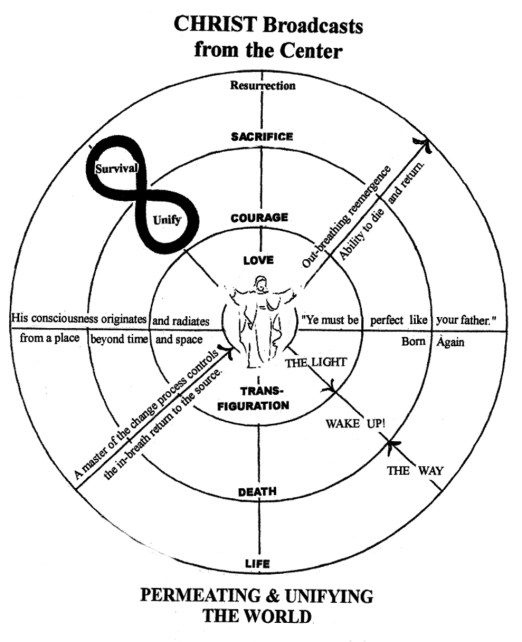
A few examples of archetypal heroes from scriptural/literary history include Odysseus, Arjuna, Moses and Christ. Here (expanding on the narrow perspectives of secular atheists and religionists alike), is the dynamic Wheel which explains the ongoing presence/influence of the extraordinary teacher who told us, “Ye must be perfect like your Father.”

Saving the Best

The Positive Paradigm Handbook: Make Yourself Whole Using the Wheel of Change shows the way to use the Wheel as a multi-purpose tool of self-analysis and positive, personal change. We can apply it as a diagnostic and decision-making tool on any scale of magnitude – personal, organizational, or societal — marking investments of attention, time and effort over time (epochs) in various life sectors.


Phoenix - sized

Disastrously, the levels of the Life Wheel are becoming increasingly fragmented and out of synch in myriad ways. Here is just one example. It pictures what Stefan Molyneux repeatedly refers to as the increasing “hollowness” of communications. It equates with the incomplete paradigm of scientific materialism that recognizes only the reality of what is tangible and measurable.

Atheists rule out their awareness (though certainly not the functional existence) of inward levels of energy/emotions and intuition/light.

MaterialistAthest

Phoenix - sized

For the sake of brevity, additional applications must be addressed elsewhere. One post is already complete. Both Stefan and Jordan emphasize the importance of reasoned, critical thinking. This subject includes the highly political field of epistemology.

They also question of how to communicate their ideas to followers with Libertarian leanings. So a post on the interior level where innate Free Will resides as well as interrelated but qualitatively different levels of “freedom” is on the drawing board.

Stefan is a notable champion of ethics as foundational to viable civilizations. I agree heartily, and the post on the little known and gravely underrated Natural Law codified in the Chinese Book of Change (along with the implicit Law of Karma) supplies the insight/ammunition necessary to WIN this argument handily. Essentially, Freedom of Choice does not guarantee a free lunch. Far from it, it bears with it the responsibility to accept the inevitable Consequences of one’s choices. In this context, I’ve briefly introduced the MPI Standard for increasing self-awareness. The basic formula: Increase Awareness of What You are Doing, How and Why. Use the Wheel to articulate, prioritize and align the levels of Motive, Purpose and Intent.

CONCLUSION

I know this is a lot to take in. How can I be of help? Do you have questions or comments for me? If so, I’ll gladly respond to the thoughtful ones.

And, in balance, how might you help me? Let’s see. Value for value is the stated exchange. I used my 72nd birthday to write this post. As of now, writing is a low-priority hobby and working late hours takes a lot out of me. Lifestyle constraints are frustrating indeed. As food for thought along these lines, please take a peek at the mind-map of what could be materialized with this work if resources were made available.

With thanks for your kind attention and response, All best – Patricia West


The Many Faces of Discrimination

Sorting Yourself Out, a fascinating conversation between Stefan Molyneux and Jordan Peterson, is a  demonstration of critical rational thinking at its best. In response, I’m sharing these earlier thoughts on reason and discrimination.

Up front, I’ll tell you, I’m not persuaded that critical thinking, even at its finest, is enough. I explained why in The Handbook:

Reason is necessary but not sufficient. When used to link the material surface with the middle and inner levels of the Life Wheel, it is a powerful tool. When turned against the life force, elevating itself as if it were the exclusive way of knowing, it presumes to judge what is beyond it. This is hubris, the catalyst of tragedy. [As bureaucratic regulations example] Rationality in the extreme changes into its opposite, producing desperately irrational results.

In Conscience, I elaborated on the uses and political abuses of reason:

Epistemology is the branch of philosophy which defines the rules of knowledge at any given time/place, setting limits by its answers to these questions: What can be known, how, and by whom?

Answers have political overtones, often assigning roles according to class, race, age or gender. Rules governing who may know what drive cultural decisions regarding the distribution of wealth, power, social status and access to legal protections.

Empirical science respects only information known through reason. Universities train students to dissect and analyze with quantitative and verbal skills. At its best, reason is a tool of constructive discernment, capable of articulating both tangible and intangible information.

With proper training, it can be used to harness the sub-rational, serve the super-rational and link the two, balancing their extremes. As such, reason is a harmonizing function.

However, using reason to rule out, avoid or even demean awareness of sub- and super-rational experience is an abuse of the critical faculty.

Though this might sound dry in the abstract, the story excerpted in Rethinking Discrimination of my working as an Affirmative Action Consultant for the Wisconsin Association of School Boards gives it a human face.

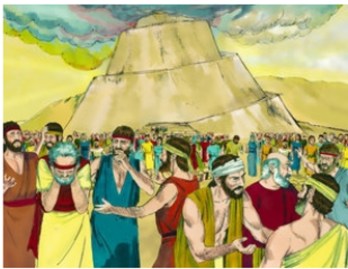
Further, in The Tower of Babel Dilemma I wrote:

It seems to me that language has devolved into quite the opposite of the English I’d learned to love and respect in high school. There, we were taught to regard language as the premier tool of logic. When used with Sherlock-like diligence, applied the powers of keen observation and heightened awareness, it could solve mysteries — not only to detect the crimes of evil-doers and the nefarious plots of national enemies, but to unravel the mysteries of life and the universe.

Turned inwards, used with self-honesty, language is essential to cultivating self-awareness. For the truth-seeker, language is a necessary vehicle of information both on the inward quest and on the return journey outwards to share results.

But even people with the best of intentions use the same words to mean very different things. They miss each other coming and going, only vaguely aware of the disconnect.

. . . Instead of being used as a means for unifying human beings, language is often degraded into chaotic paralyzing noise – a weapon for stirring up animosities, division and confusion.

globe bullet size

As one example, the following Essay on Discrimination plugs the many definitions of the over-used and abused word “Discrimination” into the levels of the Life Wheel.

ESSAY 19. DISCRIMINATION

We experience ourselves, our thoughts and feelings as something separate from the rest. . . this delusions is a kind of prison for us . . . Our task must be to free ourselves from the prison by widening our circle of compassion. . We shall require a substantially new manner of thinking if mankind is to survive. — Albert Einstein

Dealing exclusively on a rational level with an issue like discrimination which is deeply emotion-laden (sub-rational) on the one hand, and highly value-laden (super-rational) on the other, fails to acknowledge and draw on the levels where problems begin and where solutions can be found. — Patricia West, Positive Action: The Next Generation

Seeing and hearing are like food and drink; you need them every day, but you also need to digest and eliminate them every day. If they are not digested and eliminated thoroughly, they remain in the gut, eventually producing illness.Taoist Meditation, trans. Thomas Cleary

THE FRONT

Three levels of definition attribute opposite, contradictory meanings to the single word discrimination. In the context of Affirmative Action legislation, failure to recognize and sort out this confusion has resulted in muddled perceptions its purpose, inconsistent implementation and half-hearted compliance.

The Oxford English Dictionary’s rational definition of discrimination posits a neutral function of mind. To discriminate is to distinguish with the mind or intellect; to perceive, observe, or note the difference in or between.

As an analytical tool, discrimination is the neutral function of mind used to dissect a situation’s parts and deduce cause/effect relationships amongst them. As a tool, effects of its use, whether creative or destructive, depend on motives and competence.

The final definition adds a preposition: against. To discriminate against is to make an adverse distinction in regard to, to distinguish unfavorably from others. This negative definition is the sub-rational use.

It describes abuse of the critical faculty of mind to separate, distance and subordinate others, and to rationalize exploitation. Discrimination as a function of biased, negative emotions such as fear, hate, envy, arrogance or greed is the polar opposite of objective analysis.

Still further from the rational meaning of discrimination is its super-rational definition. It is not included in The Oxford English Dictionary. However, in Eastern scriptures, the highest function of mind is called “buddhi” (hence the name Buddha), translated into English as “the power of discrimination.”

This usage alludes to the ability to see through deceptive illusions, to recognize the eternal in the midst of change, to be aware of all-pervading spirit operating within gross material forms.

While rational discrimination is neutral and sub-rational discrimination has separatist results, the super-rational function of discrimination is unifying in effect. Depending on the user’s mind-set, the I Ching can be used to serve rational, sub- or super-rational motives.

Ideally, it’s used to facilitate the process of mental metabolism. When the senses are overloaded with impressions, the Book of Change can be approached as a discipline for settling the mind and organizing one’s thoughts sufficiently to define the immediate situation and ask questions about it.

As negative emotions surface, they’re named and released, not unlike the process of separating toxins from useful nutrients, eliminating them as waste. Rational thoughts are then simplified, prioritizing essentials and aligning them to basic purpose. Then, when emotions and rational mind are harmonized and stilled, the higher mind is invoked. It is in this state of tranquil revere that one pierces the veil of ordinary thought, allowing the transcendent awareness attributed to genius to come forward.

Einstein, for example, acknowledged that his famous e = mc2 formula came in a flash of inspired contemplation. He faulted his peers for what he called the “fateful fear of metaphysics,” a pernicious prejudice that’s easily as dangerous as racism or sexism.

Here are levels of discrimination placed in their Life Wheel context:

Discrim2.jpg

THE BACK

Mercy and compassion ameliorate the effects of negative discrimination. Introspective activities like self-analysis and use of the I Ching promote the positive capacity to discriminate, make correct decisions, and act wisely. In human law, the opposite of discrimination is justice and equity. In an equitable society, wisdom is promoted as the foundation of harmony and order.

In an unjust world, the discipline of positive discrimination is neglected. Ruthless extortionists in positions of political power will kill to prevent discriminating thinkers from recognizing and opposing their abuses. Tyrants promote negative discrimination. They exploit hatred, weakening their people by turning them against each other, conquering by dividing them.

It’s Hard

I identify with Jack Kornfield‘s stories about the hard work between leaving everything behind and coming to a bit of self-knowledge and calm. In the 1960s, walking away from an unhappy childhood in a troubled American society, he sought out Asian teachers via the Peace Corps and apprenticed himself to Buddhist masters.

However, a warning maxim sums up what he quickly learned: “Wherever you go, there you are.”

When Kornfield – a senior founder of the mindfulness movement – sat in a far away jungle monastery practicing meditation, he didn’t experience bliss. Instead, what came forward was a powerful mix of painful emotions – buried disappointment, fear, rage, and hatred – triggered by memories of an abusive father which he’d failed to heal earlier.

His experience confirms another cautionary maxim. As I was warned early on, best not expect quick results from introspection. “It’s hard to remember you’re here to clean out the swamp when you’re up to your ass in alligators.”

alligators

I wrote about my own personal challenges in Rethinking Survival:

Rethinking Survival is a hybrid. It’s part memoir. But far deeper, it’s the stuff of a paradigm shift. It voices the aspirations which everyone shares in common. But it also fingers the false assumptions that too often tie us in paralyzing knots. 

Inevitably, shadow issues to face were embedded within the wonderful opportunities I’ve been granted.

Each opportunity that presented itself contained within it an opposite and equal challenge to divest myself of limiting myths and misconceptions. Yogis compare the process to peeling away the layers of an onion. The Taoist I Ching scholar translated by Thomas Cleary described it as stripping away artificial veneers of cultural conditioning to restore the original True Self. Another source likens the process to the Herculean task of cleaning out the Aegean horse stables.

Further:

The same friend who told me about neatsies also reminded me about R.D. Laing’s Knots.2 Undetected assumptions wrapped in twisted logic can tie people in knots. They act like a life-draining cancer. False beliefs can drive people crazy, even to acts of criminal violence. We agreed about the dangers of living a lie, as if there were no options. This is how individuals (then dysfunctional families and nations) self-destruct.

One benefit of respecting the wisdom to be found in ancient cultures is this: Those who lived simply, close to nature, remind us of timeless truths which we as complicated urban dwellers have forgotten. Asians seeped for thousands of years in the I Ching understood much that harried moderns dearly need to recover.

For example, Confucius understood the primary importance of personal responsibility:

Confucius

Though stated in reverse order in the Tao Te Ching, Lao Tze also held that the world is necessarily changed one person at a time, and from the inside out:

18

With this in mind, I had mixed emotions about the recent American election. In Clarion Call I wrote:

Perhaps deeper than the President-Elect consciously knows (or even needs to), his words ring true across the full continuum of the Life Wheel. BUT: here is the danger . . .

Many people, due to a host of unfortunate circumstances, live primarily on the shallow surface of the Life Wheel. They haven’t the depth to recognize or respect what,  for whatever reason, they’ve forgotten. Worse, some, unintentionally or otherwise, live at odds with inner truth. They will continue to spin, distort and attempt to delegitimize DJT’s victory . . .

They will definitely stir up unnecessary conflict to destabilize the world, as if to prevent his best intentions from coming True.

Today, looking back with the advantage of hindsight, I shake my head. What a noble but sadly mistaken approach, to focus on ending corruption on a national scale, while individual hearts, families, communities and states are, for the most part, alligator-infested swamps.

Current events reinforce earlier my conclusion:

Changing the world, especially in dangerous times, is an overwhelming prospect. It’s also unnecessary. No matter how much is going wrong “out there,” the manageable unit that’s one’s first responsibility to change is the one closest to home: oneself.

Our best hope is, still yet, to think small. Begin with one’s self.

Yes, taming one’s inner alligators is hard work. Very hard. But it’s infinitely worth it.

climbing alligator


The Tower of Babel Dilemma

tower-of-babel

There was quite a while when I didn’t speak with people, other than to exchange empty greetings and conduct routine business. I was so disillusioned, attempts to communicate about anything of substance seemed futile.

During this time, working with the Book of Change kept me in touch with the deeper, better side of myself and the universe. As this work led me to reestablish meaningful connection with others, my aspirations turned towards seeking ways to share this life-saving gift with others.

If the best I had to offer humanity was the same book which had served to keep me whole, how could I persuade others of its value? Whether intentionally or not, what I have come to call “The Tower of Babel Dilemma” – the degeneration and fragmentation of the English language – is a formidable obstacle to effective communication. Glib labels and false assumptions associated with the book led to out-of-hand rejection. “Foreign.” “Ancient.” “Unscientific.” “Unchristian.” “Pagan.” “Superstitious.” “Difficult.”

It seems to me that language has devolved into quite the opposite of the English I’d learned to love and respect in high school. There, we were taught to regard language as the premier tool of logic. When used with Sherlock-like diligence, applied the powers of keen observation and heightened awareness, it could solve mysteries — not only to detect the crimes of evil-doers and the nefarious plots of national enemies, but to unravel the mysteries of life and the universe.

Turned inwards, used with self-honesty, language is essential to cultivating self-awareness. For the truth-seeker, language is a necessary vehicle of information both on the inward quest and on the return journey outwards to share results.

But even people with the best of intentions use the same words to mean very different things. They miss each other coming and going, only vaguely aware of the disconnect.

Tracking the meanings of words, I was fascinated to find that their devolution is systematic. In some cases, the same word actually means not only one thing, but its exact opposite as well.The “positive” word is an important example. Webster’s dictionary lists seventeen (!) contradictory uses.

Instead of being used as a means for unifying human beings, language is often degraded into chaotic paralyzing noise – a weapon for stirring up animosities, division and confusion.

So I set about to build the all-important groundwork for communicating about The Book of Change. I needed to rescue the language – restore it from its debased status as a smoke screen spun to camouflage self-serving intent. To this end, I outlined chapters for The Yoga Dictionary: Answering the Tower of Babel Dilemma.

As a reminder, the biblical story describes defiant humanity’s fall from unity into confusion and separation:

In Genesis, a united humanity speaking a single language and migrating eastward, came to the land of Shinar שנער‎‎. There they wanted to build a city and a tower “tall enough to reach heaven;” God, however, disapproved of such behavior as disrespectful, scrambled their speech so they could no longer understand each other and scattered them throughout the world.

The Sixty-Four Essays found in Part Two of Conscience are an off-shoot of this project. They’re meant to be used, as is the Book of Change itself, to cultivate mindfulness. They bring attention to the complexity of basic words we too often take take for granted and the critical importance of establishing a shared common ground of understanding.

Three-Part Format

Like the 64 images of the I Ching, each of the 64 Essays in Conscience: Your Ultimate Personal Survival Guide is self-contained – a miniature world complete. Each invites the reader to slow down and think carefully, taking the time to examine current beliefs and apply timeless wisdom to immediate personal experience.

There’s a method to the order of the Essays. Originally they were placed in a logical progression that seemed to tell a story. However, there’s no need to read them in sequential order. Using the Alphabetical Table of Contents is another option. If a particular subject stands out as immediately relevant or interesting, choose that one.

A three-part format gives each Essay structure-within-structure:

Part One. Though the Book of Change is dismissed as inaccessible and rarely taught in public schools, the number of influential thinkers whose ideas intuitively resonate with its timeless wisdom aren’t limited by either time or place. Quotes from the work of well-known figures serve as a springboard and bridge linking the familiar with the new.

Contrasting voices speaking to the same universal concerns highlight the yin-yang, old-new, East-West dynamic which everyone everywhere, deeper than deep, share in common.

Quotes from Chinese philosophers inspired by working directly with the I Ching include Confucius, Lao Tzu (The Tao Te Ching) and Sun Tzu (The Art of War).

Quotes from the Old and New Testament which resonate with I Ching wisdom include the Psalms of the musician/poet/ healer/warrior King David and the words of his direct descendant, Jesus Christ.

The Muslim tradition is represented, as are modern day medical practitioners, healers and teachers. Countless martial arts disciplines are based on I Ching science and philosophy, as are Tai Chi Chuan and Qigong. Bruce Lee‘s Jeet Kune Do is one well-known example.

Also included are voices of Westerners in synch with I Ching wisdom, from Plato and Christopher Columbus to William Shakespeare and Albert Einstein; from Abraham Lincoln and Sir Winston Churchill to Martin Luther King, Jr. and Nelson Mandela; from Norman Vincent Peale to Peter Drucker, Scott Peck, Steven Covey, Jim Loehr, Norman Cousins, and Tony Robbins.

Voices of creative women in harmony with I Ching wisdom include those of Emily Dickinson and Virginia Woolf, Elisabeth Kübler-Ross, Naomi Judd and Oprah Winfrey.

Part Two. “The Front” examines a specific word’s meaning in depth, giving examples with emphasis on its use in I Ching context, elaborating on implications of the quotes. Quite often changes in meaning correlate with the evolutionary path of the chakra system, reflecting an increasing level of maturity and self-awareness.

Part Three. Just as the coins sometimes used to derive I Ching readings have two sides, every idea has its shadow, opposite side. Accordingly, a brief section called “The Back” balances The Front side of each Essay to round out the picture. It briefly describes each universal idea’s mirror opposite, as well as inversions and perversions.

angel-sized

Revisiting these concepts at this particularly dangerous window of time would be a particularly helpful investment of energy and attention, as the gap between an historical election and projected inauguration stands in the balance.

Let those with an ear to hear and heart to understand take heed.

Saving the Best for Last

Over the past weeks, I’ve been enjoying The Purpose Driven Life: What on Earth Am I Here For? In its 37th of 40 chapters, Rick Warren, founding pastor of Saddleback Church, explicitly states:

Sharing your testimony is an essential part of your mission on earth because it is unique. There’s no other story just like yours, so only you can share it. If you don’t share it, it will be lost forever.

I have always had reservations about writing on Christ. On the one hand, over history, extraordinary damage has been done in his name. How could I hope to make a positive difference in a noisy field so filled with misunderstandings and confusion?

On the other, I am so much in awe of Christ’s sacred sacrifice that it seems presumptuous to dare speak of him.

But, in case it might make a difference, even if to just one soul, in the spirit of the saying, “To save one life is to save the world entire,” excerpted from Rethinking Survival,  is my personal testimony.

CHRIST

SAVING THE BEST FOR LAST: The Wait Was Worth It

I came to the New Testament relatively late in life. This was fortunate in many ways. Whenever I had the opportunity to learn about Jesus, my inner radar said, “No. Wait. Not yet.” This was something very special, something that had to be done at the right time, in the right way.

I did everything else first, as if creating a foundation upon which to build. I did my music years, my yoga years and university years. In each time frame, I closed out everything else to focus entirely on the discipline at hand.

So when it finally came time to focus on The New Testament, I was ready and well prepared to appreciate it. It hadn’t been spoiled by being introduced too early, before I was mature enough to relate to the teachings as an adult.

No one had spoiled the teachings for me with prejudiced opinions or by bad example. There was no social or authoritative pressure put upon me to either believe or not believe. It was my choice.

I came to the teachings, especially St. Matthew, with an open mind and uncluttered brain. I Ching and yogic backgrounds put the life and times of Jesus in perspective. Many of his teachings and so-called miracles were built on tacit understandings generally accepted at a time when people lived far closer to nature than most of us city-folk do today. This bedrock of common understanding has since, for the most part, been lost or forgotten.

His story didn’t seem like hocus pocus to me, as intellectuals often assume. In the context of Chinese sages and Hindu yogis, it was plausible and wonderful.

Here was an extraordinarily great master who choose to arrive on Planet Earth at a tipping point in history. Civilization had reached critical mass.

This rare, great being had the compassion and power to influence the fate (survival versus extinction) of the human race. His demonstrated love, courage and personal sacrifice changed the course of history.

Not coincidentally, it seemed that at the time I was making friends with St. Matthew (the early 1980s), humanity was slowly approaching another tipping point, another time when, again, human survival cannot be taken for granted. There was a message here for those with “ears to hear.”

It later influenced me to write Rethinking Survival for the purpose of giving people worldwide the means to see Christ’s power and purpose with fresh eyes. The Positive Paradigm of Change offers a context within which his life, death and transfiguration are understandable.

It gives us an opportunity to rethink the example of his life, teachings and sacrifice. It’s a means to save the hope of the Christ child from the bathwater of false distortions. It offers a way out of narrow-minded strife in political and religious arenas alike.

Saving the Best

Bottom line: I found that the heart of the Old Testament and the New Testament which completes it both work for me.

What goes on at the surface, cultural level of institutional religions is a different matter. Sadly, too often, it’s apples and oranges. Disconnected universes.

So it bears repeating: distortions at the ephemeral surface cannot negate the power and validity of the scriptures.

Accordingly, whatever unfortunate baggage and associations have accrued to the teachings, release them. However jaded you’ve become, get over it. However tragic the past, forgive it.

Go back and rethink the teachings. See them like a genius, through child-like fresh eyes, as if for the first time, new again. It’s infinitely worth it.

ANNOUNCEMENT – Promises Kept


globe bullet size

Those who follow my work will remember Under Construction, where I listed website changes to occur over the summer and into fall.

Well, true to my word, much has changed. Please visit rethinkingsurvival.com and see for yourself.

Earlier I promised, “Nothing of substance – the archetypal ideas presented here – will change, but presentation will improve dramatically.” So the Home Page has a new face – and content is significantly improved.

Now that Labor Day is behind us, it’s time to report on listed changes accomplished to date.

1. Much of the content of + A Positive Action Press books sold through Amazon has already been made available on website pages. When you click on the each of the book pages at the top of the Home Page, drop down menus now appear. So you can pick and choose as you prefer.

I personally recommend the Make Yourself Whole section of the HANDBOOK page as the practical sum of the rest. It might also spark your interest to know how I got to “here”  . . . information supplied in the other sections and earlier books.

Each of the five books on change is described on the Home Page. Content of each found on its own page.  In chronological order, they are:

  • CSBOC = Common Sense Book of Change.
  • 2 SIDES = Two Sides of a Coin: Lao Tze’s Common Sense Way of Change.
  • RS = Rethinking Survival: Getting to the Positive Paradigm of Change.
  • USPG =Conscience: Your Ultimate Personal Survival Guide
  • HANDBOOK = The Positive Paradigm Handbook: Make Yourself Whole Using the Wheel of Change

2. I promised current photos. You’ll find them in the NEW PHOTOS page, along with why I’ve decided to stay with my current gravaar.

3. I spoke of a possible Guest Post page. It was added, but after sorry experience I thought better of the possibility. Among other things, it would have required CrowdFunding to pay for the administrative costs, which is not a realistic option.

https://rethinkingsurvival.com/donate-2/

4. As mentioned, a DONATE page has been added. Here is the language, for your consideration:

You have the option to purchase the books described on the Home Page from amazon.com. Now, however, as an alternative, content is being be made available directly on the website as well.

If you are moved to donate in return for value received from this website — the sum of a lifetime’s search, sacrifice and hard work — that would be great!

If you can’t afford to donate, I understand. I’ve been there. Please do everyone a favor — benefit from the ideas, tools and methods as you dare. I trust you to pay what you gain forward, when and as you can.

If you are able, however, and especially if you are one of my regular visitors, please donate so that I can continue to provide timely, entertaining, and useful food for thought.

Without your help, the time I can afford to put into writing and marketing remains limited. So another way you can help is to let your friends know about rethinkingsurvival. Click on the share buttons below to magnify the benefit of what you have received here.

I leave it to you to act on the honor system, donating as you can, according to both value received and the work’s future potential.

Let the ripple effect of positive change of which I write begin here and now.

Namaste. Thank you. Patricia”

globe bullet size

Under Construction work is still in progress. Labor Day has passed but the fall equinox is still ahead. Your comments and suggestions make a difference.. What do you think?


Pray for Lee

DNA 1

I get it. It’s early August. Most of us are on summer vacation now. It’s not the time to be bothered by “serious stuff.”

But sometimes, serious stuff won’t wait.

Here, we’re been dealing with escalating medical emergencies. They have dire implications for Lee, for those who care for him, and yes – for the rest of us, too.

Please bear with me. I’ll connect the dots for you.

It started a few months ago with sleepless nights that left him too weary to work during the day. Pain of unknown origin gave Lee no rest.

He lost his appetite. Lost weight.

It seemed like a flare up of rheumatoid arthritis. So the doctors thought. But then came chest pains. Strong enough for an urgent call to 911. Even after an ambulance trip to the hospital in Baraboo and several hours in the emergency room, he continued to experience episodes of severe chest pain no one could explain.

Local doctors consulted together, then contacted Lee’s Madison specialist. It was agreed to transport him via ambulance to the UW-Madison Hospital for a cardiac cath procedure.

To make a long, convoluted story short, two days later, doctors finally agreed on a diagnosis. Lyme’s disease.

I’d heard about it, of course. But didn’t know that much about it. So, while waiting for him to be discharged, I did some research.

I found an excellent article that explains the science and history of Lyme’s. It’s a scary bad plague-like affliction of apparently epidemic proportions, though for some mysterious reason, it’s given little media attention. According to arizonaadvancedmedicine.com:

  • The organism responsible for Lyme disease was identified in 1981 by Dr. Willy Burgdorfer, and named Borrelia burgdorferi (B. burgdorferi), after its discoverer. It is similar in shape to the spirochete Treponema pallidum, which causes syphilis, the scourge.
  • Mankind’s earlier experience with a disease caused by a spirochete was syphilis, the scourge of Europe for hundreds of years. Syphilis was called “the Great Imitator” because its symptoms mimicked so many other diseases. The same is true with Lyme.
  • Lyme disease presents a host of challenges. Once the corkscrew-shaped spirochetes enter the bloodstream, they can cause a wide range of constitutional, musculoskeletal, and neurological symptoms.
  • New York pathologist Dr. Alan MacDonald found B. burgdorferi DNA in 1986 in seven out of ten autopsy samples from the brains of people with Alzheimer’s. MacDonald was also the first to document B. burgdorferi in fetal tissue, meaning the infection passes from mother to child in the womb.
  • The number of Lyme disease cases in the United States has doubled since 1991. The Centers for Disease Control and Prevention (CDC) estimates that there are nearly 325,000 new cases each year – making Lyme disease an epidemic larger than AIDS, West Nile Virus, and Avian Flu combined.

Lyme’s hides itself inside cysts so the immune system can’t find it. It also mutates, making it especially difficult to detect and treat.

In short, it’s one sneaky, sinister bugger.

Reading on Lyme’s resonated with memories of working as an assistant in the UW Hospital’s Department of Pediatric Oncology in the 1990s. Pediatric leukemia was the villain. An international team of research scientists was studying the use of Interleukin II to stimulate the body’s own immune system (T-cells to be exact) to heal this cancer.

Because I asked, one dedicated researcher described what she recognized as the deep, spiritual implications of her work. Her eyes radiated intense conviction as she described the war between good and evil going on at a cellular level. She described the insidious mechanisms of the disease and the doctors’ emotional battle to save afflicted children from pain and sure death.

That experience brought up many of the same questions I have now. Namely, why don’t practitioners of different medical sciences pool their information? Each has a significant piece, but only a partial piece of the larger puzzle. If a boundary spanner could bridge the gaps and put the pieces of the mosaic together, miracles would become possible.

I’m thinking specifically of the benefits attributed to the practice of Tai Chi and Chi Kung (QiGong). Both these approaches to healing-in-motion are based on Traditional Chinese Medicine, which in turn depends on the science encoded in the Book of Change, the I Ching.

Some preliminary work in this direction has already been done. For example, medical research documents that Tai Chi practice stimulates T-cells. In fact, this medical-martial arts discipline achieves what the researchers hoped to achieve with drugs. It stimulates the body’s immune system to protect against and reverse damage done to DNA.

Now here’s a secret hiding in plain sight. I Ching science has been correlated with DNA science. The ancients experienced through meditation what scientists much later discovered through painstaking empirical research. There is no conflict between conclusions, only many roads leading to the same knowledge.

One important difference between the medical and Tai Chi approach to healing, however, is its availability. Tai Chi has long been a family tradition passed on through the generations. It’s slowly becoming available in the West as well. But it requires an attitude of self-responsibility and diligence to practice these methods.

In contrast, drugs can be passively ingested with no intelligent participation on the part of those afflicted. Many drugs, however, have unforeseen and unwelcome side effects. In addition, some are prohibitively expensive, and for many, inaccessible.

I like to call Tai Chi the “poor man’s genome therapy.” The beauty of it is, that it hardly matters how you have become off balance or what symptoms you’re experiencing. Diligent practice restores health. It would seem that especially in a case like Lyme’s, where the symptoms are hard to detect, tend to mutate, and to take multiple forms, this universal solution is uniquely appropriate.

As it happens, I recently found a treasure in books by Jou, Tsung Hwa. The Tao of Tai-Chi Chuan is exactly what I would love to share with Lee. The introduction begins:

I was a math teacher who had published about thirty books on mathematics in Chinese. In 1964 at the age of forty-seven, I became very ill with an enlarged heart and a gastroptosis, because of years of hard work and vigorous schedules. My doctor told me that my condition was incurable using available medication.

At the same time, however, one of his friends told him about Tai Chi Chuan and introduced Dr. Jou to a teacher. He continues:

At first, I had only enough strength to practice a half hour at a time. In only two weeks, my appetite improved and the frequency and severity of my stomach pain lessened. In three years my stomach was completely healed. In five years, my heart returned to normal, and I regained total good health without the use of drugs.

This good experience led to an interest in the Book of Change. In the introduction to his version,  The Tao of I Ching, Dr. Jou writes:

Since the I Ching was first translated into German and other languages, it has awakened great interest and fascinated countless people. Yet, I believe this interest is only a fraction of the attention it deserves when it is used in the way created to be used.

His next words made me jump for joy. I could not agree more:

Remember, this is not a book on Chinese culture or philosophy. This is a book about things no more exclusively Chinese than a lake, a person or the sky.

On a hunch just now, I googled “Tai Chi & Lyme’s Disease” and found this: Nothing is Incurable! In this case, the author is describing his experience with QiGong, the precursor and close relative of Tai Chi.

But why, then, am I conflicted about offering this extraordinarily hopeful approach to healing Lee’s Lyme’s disease?

Because he thinks it’s rubbish. Has an intense aversion against it, probably the result being educated in Catholic schools compounded with an aversion to what he dismisses as “New Age bullshit.”

Well, fortunately for me, I haven’t allowed centuries of historical atrocities committed in the name of the New Testament to alienate me from the teachings of Christ. Now, I can only hope that likewise, he will see fit to give this treasure the benefit of the doubt.

I pray for Lee. I pray that he be restored to health. Not only because as a repository of training, information and experience, he is irreplaceable. (He owes it to the rest of us to get well!!!) But also because this disease can be changed into a teacher and opportunity, if he can accept it as such.

My dearest hope is that, like Dr. Jou, when faced with dire medical circumstances, Lee’s eyes and heart will open to this healing alternative to drugs. May he be like the greatest doubter changed in a flash to become greatest advocate, a Saul become Paul, if you will.

I know he has the integrity, intelligence and will power to take responsibility for his healing and make this science in all its aspects his own. In turn, his example serve to might open Lyme’s researchers minds to alternative ways of erradicating B. burgdorferi DNA. This, in turn, might open doors of help for others suffering from this dreadful plague.

I pray for Lee for many reasons. Please pray for him as well. Your prayers will certainly speed his healing. When healed, he will most definitely become a helper and healer to you and yours in ways too many to count.

Blessings and thanks to all who read this.

I’m Writing To . . .


globe

Like magic, hints about the baby steps to take next have been coming from all directions.

Today, I’m writing in answer to a comment made on Two Out of Three Isn’t Enough:

Hi Patricia, I enjoy your writing style. That said, one must write with a target audience in mind; at least commercially. Otherwise you are just writing for yourself.

For a split second, I went on the defensive.

What??!! Just mental masturbation? Focus on making money?

This particular LinkedIn connection has followed my posts from the beginning. He should know me better by now.

To state once more what I’ve repeatedly said, I write because — like so many men and women – my lonely, early years were haunted by unspeakable specters of suicide and abuses of power. If what helped save me could, paid forward, make a difference in even one life, it would, for me, be enough.

To save one life is to save the world entire.” This is the mantra that keeps me going late nights, after daily tasks are completed, even when my physical body urgently wants rest.

Though surely not intended, what “a target audience” conjures in my mind is the image of armed game hunters dressed in orange and camo garb, scouting for animals to snuff the life out of and eat for dinner.

Not that I haven’t given conventional writers’ wisdom – “know your audience” – some thought, thank you anyway. I have. A lot, in fact.

Here’s part of the problem. The Life Wheel is universal. It offers a scientific underpinning to support humanistic calls to live in peace. As written in Sages and Scientists Can Agree on This, it has the potential to restore awareness of the common humanity everyone everywhere shares in common.

On the opposite, shadow side, today’s lack of a universally accepted, complete and accurate paradigm answers the plaintive question, “Why can’t we all just get along?” Limiting, misleading paradigms are a root cause of widespread conflict and suffering in today’s dangerously volatile world.

Everyone is fascinated by both sides of change. On the one hand, we yearn for positive improvements. On the other, we dread the unknown. That’s because no one taught us the survival basics in school. We never learned how the dynamics of duality drive relationships in the world. We don’t know how to balance yin-yang opposites to maintain stability, first within, then without.

So we remain conflicted – on all levels. Ambivalent. Paralyzed. In fact, lack of survival basics has become our Achilles Heel – our fatal flaw.

Change is a word on the lips of CEOs, politicians, radicals, therapists, pastors everywhere. All use it. But very few have an in-depth understanding of what it’s about, much less have the methods and means to act as effective agents of positive change.

That’s one reason why I have a problem with niche thinking. The current trend of carving humanity into smaller and smaller, mutually exclusive either/or interest groups is a symptom of the fragmented, isolating thinking we desperately need to overcome. . . . which the Life Wheel has the potential to heal.

Fortunately, however, this coin has a flip side too. Being universal, the Life Wheel can be brought to life – animated and applied to illumine each and very tiny corner niche.

So, I’ve done my bestest to go with the flow of common wisdom.

For example, for a time I focused on MILLENNIALS. Being tech savvy, I thought, they are especially well qualified to resonate with the digital technology of the Book of Change — The I Ching. Further, they’re the ones most disillusioned of the “American dream.” Being less invested than their elders in prevailing, dysfunctional paradigms, I thought they would “get it.”

In When the Lights Go Out, Who Will Millennials Call? I wrote what still reads to me like a wake-up tour de force.

I continued with Good News and Bad News for Millenials.

Did any one get it? What more can I say? (Perhaps, I sometimes think, someone else might say it differently and better.)

Nevertheless, I tried again, suggesting what could have been billion dollar game and app ideas in An Inner Compass App for Millennials

Response? Instant contact from a venture capitalist. He wanted to pick my brain; tried to coerce me into signing a non-competition agreement that would, in effect, block further blogging. So sorry. No can do. (Reminded me of Hannibal’s words, “When the lamb cries, the wolf comes. But not to help.”)

Next, in frustration over the foolishness of a self-proclaimed millennial leader who didn’t get it whatsoever, I wrote What the Generations Share in Common.

So, moving on to other audiences.

The I Ching has been the primary decision-making tool used by LEADERS in every walk of life – government, military, monastic, medical, mercantile . . you name it . . . for thousands of years.

So I applied the Life Wheel, as the next generation Book of Change, to address a host of leaderships issues. For example, in response to a direct question, I wrote How Bad People Become Leaders; and then Savvy Leaders Go with the Flow.

In True Leaders Trust Their Inner Compass to Over Come Confusion, I introduced the Life Wheel to Authentic Leaders who already accept the importance of following their North Star.

In The Positive Paradigm Handbook: Make Yourself Whole Using the Wheel of Change, I’ve shown how THERAPISTS and SELF-HEALERS can turn the Life Wheel into a diagnostic and a decision-making tool. I have a special fondness for Jungian analysts, and said so in Therapists as Positive Change Agents.

For those who chose to frame their truth in the language of PHILOSOPHY, I wrote Change the Rules of the Knowledge Game. Here I focused the Life Wheel on the field of epistemology – the (politically charged) study of who can know what, and how.

The list goes on.

But . . . I still ask myself, how does one “target” the diverse and widely scattered audience of readers who hide painful dark secrets under the facade of their ordinary lives as housewives, students, soldiers, athletes, priests, poets, politicians, CEOs, entrepreneurs and on and on. . . ?

How does one “target” the hidden army of loved ones so poorly equipped to win the war to rescue sons, daughters and spouses from quiet desperation?

How does one effectively extend compassionate hope to the multitude of isolated, face-saving power abusers in high office — addicts driven by psychological forces outside their conscious awareness, rendered taboo by current dysfunctional paradigms.

How do I tell all of them, that like me, with the I Ching as a confidential best friend, they would find out that they are never, ever truly alone. And that everyone can choose to change for the better.

With its wisdom and support (explain its magic as you will), I have brought myself back from every temptation – from hated, the impulse to revenge, from self-pity and despair.

With its help, I’ve gleaned the benefit of lessons to be learned from adversity.

It has inspired me, instead reacting against abuse and succumbing to the danger of becoming an abuser myself, to live and to serve as a healing beacon to others.

What follows is a personal example of desperation and life-saving help excerpted from Rethinking Survival:

globe bullet size

The scriptures were inspiring. [the swami] cynically perverted them. A pundit disciple based in Minneapolis initiated gullible students in the rituals of guru worship. This aristocratic charmer held Western seekers in contempt and dummed the teachings down.

The powers of this smooth, flamboyant “holy man” were foreign to Western sensibilities. He flaunted a repertoire of magic tricks. He could change blood flow in his feet. He read minds and hypnotized students.

He reportedly bilked American students out of thousands of dollars for nonexistent hospitals in India.

By his own admission, disciples in India would have burned his ashram to the ground had they known he was habitually performing sexual tantra (rape) on unsuspecting American women. . . .

At his ashram in Rishikesh, India, three women he’d seduced got together and traded information. We realized none of us was a “special exception” to his vow of celibacy.

When we blew the whistle, he flipped out. Tantric teachings, he raged, were sacred teachings. Exposing them would damn us forever. We were terrified and backed down.

To the detriment of other relationships, I obeyed his command, “Keep still!!”

Covering his backside, the swami informed his psychologist henchmen that I was “mentally disturbed.” Protecting vested interests in their careers, they treated me as if I were crazy.

It took years to get over the pain, anger and confusion caused by their betrayals.

But I healed. I used yogic introspection to get over it mentally. To repair emotional damage, I turned to Traditional Chinese Medicine. For solace and hope, I looked to the New Testament.

But my best friend and advisor throughout was The Book of Change. I didn’t dare talk with people who knew the swami. They would have turned against me, not helped.

His powers were outside the experience of university-trained therapists. There were no qualified professionals to turn to.

Confiding in family was out of the question. If I went to them with one problem, I’d end up with two.

But with the I Ching, I could be completely honest. It has no agendas. Opening my heart to ask my questions was like talking with my True Self. Its answers rang true. Instead of tearing myself apart by warring against abuse of power, I used it to turn inward to the higher authority I could trust: my own conscience.

globe bullet size