The Ultimate Gatekeeper

Phoenix - sized

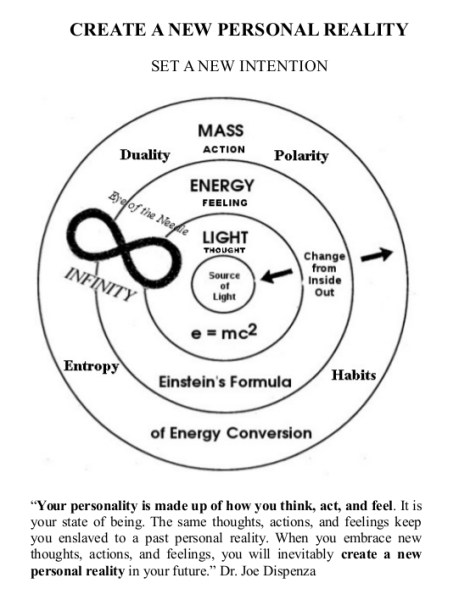
Lately I’ve been fully engaged in absorbing the remarkable work of Dr. Joe Dispenza, including his recent Becoming Supernatural. I have the yoga background to greatly appreciate just how skillfully he has translated and then integrated ancient science (defined as “with knowledge”) with cutting edge modern sciences, including Einstein’s quantum physics.

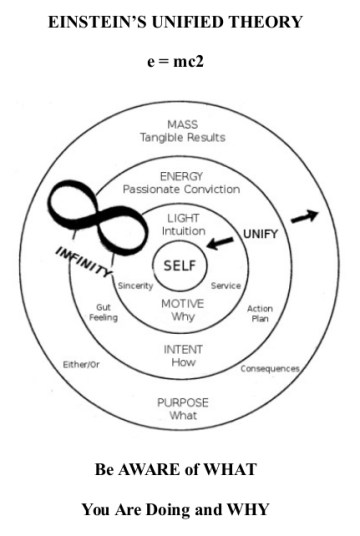
The Quantum Life Wheel I often refer to meshes perfectly with this work, as does its ancient ancestor, the Book of Change. Both of them compliment and have the potential to further enhance Dispenza’s work. For example, an early post, Sages and Scientists Can Agree on This, pictures the layers and levels of Dr. Joe’s message, in particular his instructions to “become aware of what you are doing and why.”

be aware

Dr. Joe systematically precipitates “miraculous” healings, teaching students how to “change” their lives by raising their energy — focusing awareness on the energy centers . . . blessing them, if you will. In Breaking the Habit of Being Yourself, he reminds readers: Einstein said that no problem could be solved from the same level of consciousness that created it.

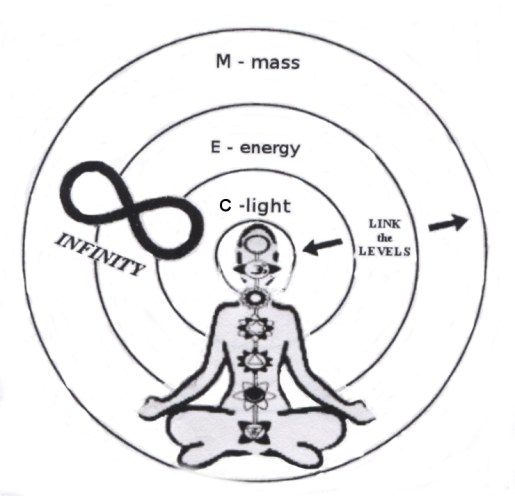
Here is an image of the chakras (energy centers) spanning the levels of the Life Wheel. It pictures the levels of awareness residing at the center of the Wheel where access to higher orders of consciousness generates positive new solutions.

Wheel2

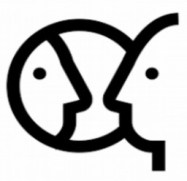
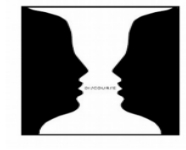
Another point of convergence is the concept that meditation can “upgrade” DNA. The 64 changes of the Book of Change have been correlated with the 64 basic strands of DNA. Nor is it coincidence that Chinese ideogram for I Ching bears a marked resemblance to the double helix of DNA.

side by side

The Preface to The Ultimate Gatekeeper which follows opens still further avenues to links and possibilities.

book header bird

The Ultimate Gatekeeper:

Restoring the Book of Change to the World

PREFACE

In the millennial year, 2000, the title of this book was The Ultimate Personal Survival Guide. It came out of a brainstorming session with a business consultant. We were discussing how to market The Common Sense Book of Change. Suzanne was totally unfamiliar with the I Ching.

We went back and forth with questions and answers about its use and value. Finally, she sat back and blinked. “It sounds like the ultimate personal survival guide,” she concluded.

She’d hit the nail right on the head. She got it!

What I learned as she drew me out with her questions was that I had taken my answers to her valid concerns for granted. Surely many others had similar doubts.

So a further step was necessary. A follow-up book was required, one which would lead people to draw the same conclusion that she had. I had to dispel myths and misconceptions which prevent this gravely misunderstood and underrated treasure from getting the international acceptance it so richly deserves.

For this is a book that truly belongs to the world. It transcends, in its essence, the limitations of time and space. Used correctly, as intended, it leads the ordinary mind towards experiences of self-awareness and transformative transcendence.

Over the years, I had grown absolutely certain that the worldwide leadership deficit (and related budget deficits) are explained by an underlying knowledge deficit. For lack of what The Book of Change has to offer, people everywhere remain perplexed as to how and why so much continues to go so horribly wrong, despite the best of intentions.

It seemed urgent to clear the decks. Making this compendium of Natural Law — the premier leadership training and decision-making manual in China for thousands of years — widely accessible now is necessary in order to fill in this fatal knowledge gap.

Mainstreaming this vitally important information is the first, necessary step towards the positive change which many call for, but remain unable to achieve.

Fourteen years later, after completing a trilogy on change, I found myself in the same predicament. How does one shake up the sleeping public? What will it take to make people worldwide aware of how important this information is, and how gravely we’re at risk due to its absence?

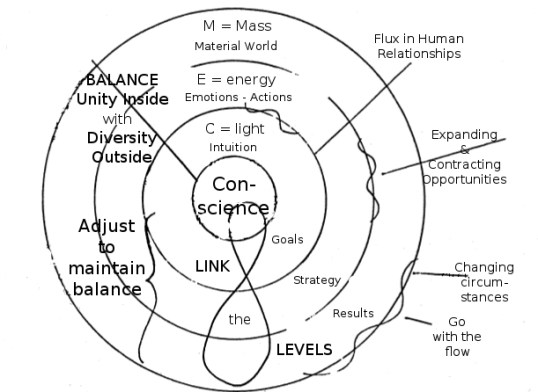
The extraordinary value of the I Ching is that it reveals the secrets of dynamic Natural Law. Working with its changes opens up access to the middle level of the Life Wheel, the “e = energy” layer of Einstein’s Unified Field Theory.

Gatekeeper

This middle level of Natural Law serves as mediating, two-directional gatekeeper between the ever-changing surface rim and the universal, timeless center. You can’t get from here to there and back again, except through the middle “energy” layer which, in Western thinking, is effectively taboo, buried deep within the inaccessible “unconscious.”

To the extent that the Natural Law of energy dynamics remains a blind spot in the prevailing, linear and exclusively empirical paradigm, we are left powerless to move beyond the surface level of experience.

To compound the loss, when stuck on the surface, the realm of light and conscience which rests beyond, on the far side of the dynamic energy level, remains functionally inaccessible.

Only by becoming intelligently competent in managing the subtle energies of the middle level does it become possible to travel further inwards for the direct personal experience of not only Light but even deeper still, its very Source.

Unfortunately, the middle level is too often clogged with painful memories, negative emotions and repressed, socially taboo urges. It becomes a barrier to deeper knowing.

For eight thousand years and counting, the Book of Change has served as an indispensable tool for resolving this dilemma. Used as intended, it can restore the unnecessarily “unconscious” to conscious awareness, reopening the levels of human potential so they can be aligned and unified.

In this context, genuine survivors fit to prevail in today’s increasingly dangerous times aren’t those with the most material wealth, possessions or political power. They’re the ones who’ve successfully navigated the middle realm, reached the far shore of enlightenment and returned to the surface with their new information intact.

Those who succeed in linking the levels of experience are genius-leaders in whatever fields they choose to engage. They’re the fortunate ones who have acquired the inner wealth necessary to both hear the still voice conscience and act effectively on the guidance they receive.

Patricia E. West, Ph.D. 

Wisconsin, U.S.A. 2019

Time to Choose: Life or Death

Today I revisited a blog called Choose Life II.  Back then — January of 2016   — its resonance with biblical verses was in the back my mind. Today, I will put them up front. They add yet another layer of meaning to the original post:

In Deuteronomy, Moses said to Israel:

15 Today I am giving you a choice. You can choose life and success or death and disaster. 16-18 I am commanding you to be loyal to the Lord, to live the way he has told you, and to obey his laws and teachings. You are about to cross the Jordan River and take the land that he is giving you. If you obey him, you will live and become successful and powerful.

19 Right now I call the sky and the earth to be witnesses that I am offering you this choice. Will you choose for the Lord to make you prosperous and give you a long life?

Three years later, I found the substance republished here just as timely and helpful as before. I hope you find it helpful too.

body-mind-spirit

Last fall’s mystery illness became a strict teacher, a blessing in disguise. It dramatically reinforced my awareness of the mutually dependent relationship between brain and gut long recognized by Asian healing traditions.

As modern medical research documents, mental distress manifests as a myriad of gut-spawned diseases – Crone’s disease, fibromyalgia, rheumatoid arthritis, irritable bowel syndrome and eventually cancers, to name but a few.

Conversely, the broad spectrum of diseases arising in the gut spawn a host of mental illnesses – not only depression, memory loss, dementia and schizophrenia, but autism and A.D.H.D, for example.

The hopeful application is this. Correctly steered, interventions on either side of the gut-psychology continuum positively affects the other. The relationship spans an infinite loop. So wherever one starts, given time and effort, it’s possible to complete the cycle, eventually restoring balance and good health.

Follow along if you like and I’ll connect the dots that led to this conclusion.

It started with asking WHY. Medical people failed to correctly diagnosis what went wrong. The ER physician (nice lady) jumped to the convenient assumption that, given my demographics, a lower tract infection was the problem. Antibiotics would make symptoms go away.

When the first round of drugs didn’t help, instead of questioning the assumption, the local nurse practitioner prescribed a battery of (expensive!) different antibiotics over following months – in increasingly stronger doses – each with its “interesting” side effects.

The duration of this “illness” was cause for some serious introspection on my part. Certainly the WHY had a mental origin. Stern teacher that LIFE is, I came to accept that I wasn’t going to be let off the hook until I came clean with myself. Release demanded self-honesty.

What I unburied was a death wish of sorts. It wasn’t that I wanted to be gone, so much as that negative suggestions from false friends absorbed over the years had worn me down to the point of critical mass.

I was increasingly motivated by dread of facing a future based on past experience. Subconsciously, I had succumbed to a death sentence suggested by people far too “nice” to kill me outright, but all too capable of driving me to slow suicide.

LIFE had sounded a warning alarm to bring me back to my Self.

Something had to change. It started with a stark decision. A conscious commitment to LIFE, whatever it takes. I wrote a confirming article, Choose Life.

Once recognition and the decision were made, LIFE responded most generously. The help and information needed to support my choice appeared from several directions.

The next step was for me to ask HOW do I return to health? And how do I change my attitudes and behavior to make my personal future different and better from the past?

Critically important information was found in Susan Forward’s Emotional Blackmail: When the People in Your Life Use Fear, Obligation and Guilt to Manipulate You.

I was instantly inspired to borrow the book from the library after reading a top-ranked review of the book which starts:

This book does a very clear job of defining emotional blackmail so you can begin to easily spot emotional blackmailers in your life. It then concludes with telling you specifically how to deal with emotional blackmail, that is, how to keep your energy, resources, and sometimes your very soul, from being stolen by them.

WOW. I could relate to that!

She writes, At the heart of any kind of blackmail is one basic threat, which can be expressed in many different ways: If you don’t behave the way I want you to, you will suffer.

Forward explains:

Manipulators work hard to deny, obscure, camouflage, prettify, excuse, rationalize, disguise, HIDE what they are doing. They make it hard, if not impossible, to see HOW they’re manipulating us. They lay down a thick FOG that obscures their actions.

FOG is an acronym that stands for the psychological warfare tactics used against targets: Fear, Obligation and Guilt.

This information is reinforced by Harriet Braiker in Who’s Pulling Your Strings? How to Break the Cycle of Manipulation and Regain Control of Your Life:

People who manipulate are often so hard to spot. They become your friend and then find ways to have their way with you. . .

A reviewer summarizes:

You can’t reason with a manipulator because of their insecurities but you can reason with your own insecurities; and best of all are the practical ways you can change your behavior to take back the power.

This book teaches you to get up, learn what you did wrong and what you should have done, and even better how not to repeat the same mistakes.

There’s also a warning given from experience:

I’ve put an end to so much manipulation in my life. It takes the wind right out of the manipulator’s sails. The book is right…the manipulator will blow really hard, so prepare yourself; it’s going to get stormy.

choose life

Another fortunate form of help followed from my decision to seek medical advice elsewhere. An intern at the UW kindly saw me on short notice. Intrigued by my situation, she brought in her mentor. Together, after reviewing the history of lab results, they confirmed that the initial diagnosis wasn’t right. The medications hurt more than helped.

Although I knew enough to eat yogurt to offset the effect of antibiotics, to repair the damage done by antibiotics they recommended taking pharmaceutical probiotics as well. This opened the door to a whole new world of science and healing.

Probiotics for Dummies, for example, includes a useful section on the brain-gut connection.

Medical researchers have long known that stress depresses immune function, but only recently have they linked stress to changes in gut bacteria.

The medical community’s interest in probiotics was initially sparked by the seminal work on GAPS (Gut and Psychology Syndrome) published by researcher Natasha Campbell-McBride.

In Gut and Psychology Syndrome: Natural Treatment for Autism, Dyspraxia, A.D.D., Dyslexia, A.D.H.D., Depression and Schizophrenia, she notes that Western medicine has long acknowledged the brain-gut connection:

The father of modern psychiatry, French psychiatrist Phillipe Pinel (17-45-1828), after working with mental patients for many years, concluded in 1807: “The primary seat of insanity generally is in the region of the stomach and intestines.”

Interestingly, she uses the same word, FOG, when in describing the mental-emotional relief experienced as the intestines heal by using probiotics to restore balance. “It is as if the fog lifts.” Ahh!

But, like cutting through the psychological FOG, cleaning out the gut doesn’t happen over night, or without difficulties. Campbell-McBride warns things often seem to get worse before they get better. Detox is a necessary but challenging middle step along the road that leads from here and there. So, again, “prepare yourself; it’s going to get stormy.”

There are important parallels between the so-called Leaky Gut Syndrome and psychological distress. In the first case, weakened intestines become permeable. Toxins and undigested food leak out and are circulated by the blood stream throughout the entire body, poisoning other internal organs – including the brain.

Similarly, psychological defenses can also be worn down and compromised, sometimes due to “second-hand stress.” In this case, when protective borders between self and others break down, toxic influences from outside undermine mental-emotional balance. Others’ fears, rage and general unhappiness poison the unprotected mind. Toxic people preoccupied with their own wants and personal dramas, even when unintentionally, do great harm.

Interestingly, the GAPS/probiotics approach is highly compatible with the wisdom of Asian healers. Traditional Chinese Medicine, for example, carefully maps the gut-psychology connection. They describe the dynamics of what is called “the abdominal brain.” The following illustration captures thousands of years of wisdom in a single picture.

0 012316

According to Mantak Chia, when the intestine becomes congested, it cannot perform its physiological functions. Though you may eat well, you may be under nourished.

As he explains, each of the organs is correlated with one of the five elements. In turn, each is associated with specific positive or negative emotions:

All negative emotions are expressed in the small intestine by contraction and circumvolutions, Anger contracts the right side of the intestine near the liver. Worry affects the upper left side near the spleen. Impatience and anxiety affect the top. Sadness affects both lower lateral sides. Fear affects the deeper and lower abdominal areas.

As the I Ching instructs, the same dynamics repeat on every scale of magnitude, from cellular to universal. So many hints from sciences both ancient and modern could be taken in many directions. They apply to relationships on a personal level, to community dynamics, and governance. But those will be subject of posts yet to follow.

For starters, I’ll offer just one hint.

Campbell-McBride uses the image of a medieval fortress under attack to describe the breakdown of  defenses that result in auto-immune diseases. It parallels the Interleukin II research described earlier, where the grad students saw their research on pediatric leukemia in terms of a war between good and evil.

When confusions in gut mirror confusions of the mind – when the difference between friend and enemy is fogged — anabolic (building up) and catabolic (breaking down) functions are thrown off balance. The body  is fooled into turning against itself in self-destructive ways.

In conclusion, however, a key component overlooked in the popular gut-psychology formula must be noted. Spirit — that third, underlying, unifying and overriding component of the e = mc2 equation – plays a deciding role in the outcome of the LIFE versus death struggle to survive.

It is said, “The mind will play any tune you tell it to play.”

choose wisely

So – who is it that quietly instructs the mind which tune to choose?

LIFE itself, the soul’s advocate, is the tie-breaker that tips the balance.

Here, I allow Mantak Chia to have the final word. He describes the discipline of cultivating chi – the subtle energy that links mind and body — and the end goal of the path to which all endeavors ultimately lead: 

  • If one wishes to be a healer, success depends upon the ability to channel energy through the hands.
  • If one wishes to be an athlete, success depends upon the ability to convert energy into strength and endurance.
  • If one wishes to be free of negative influences, success depends upon the ability to transform negative energy into positive energy.
  • One who seeks enlightenment is searching for the highest source of all energy.

I write in hopes that you will find this saga helpful. If you relate, I invite you to apply your imagination and follow wherever the subject leads you.

To your health!

Half-Brained is Half-Assed: Put the Yin Back into Your Yang Decisions

In the year 2000, I wrote a dozen Essay Sketches on Positive Action. I’m just now getting back to them. They emphasize the urgent necessity of restoring right-brain balance to left-brain decision-making. Put the other way around, they identify what has gone terribly wrong in the world for lack of this balance.

The first sketch identifies the origins of linear-thinking stereotypes:

ONLY THE TRUTH, PLEASE!

Leading imagination to the single source, the poetry of scriptures describes subtle experience in familiar terms.

Great harm comes from taking metaphors literally. Timeless truths are misconstrued to rationalize bigotry. Nature’s complimentary polarities, masculine and feminine, light and dark have wrongfully been limited to physical characteristics and then attached to moral judgments: “good” and “bad.”

Males are deemed categorically good; females are exclusively bad. Light-skinned people are supposedly good; dark-skinned ones aren’t.

Nothing could be further from scriptural intent. Complements play equally vital parts in the music of life as interdependent aspects of a perfect whole. We are all wired with the same AC/DC (yin and yang) energy circuitry.

What is evil is separations within or without. Liberate scriptures from literal-minded abusers.

The second sketch builds on the first:

HALF-BRAINED IS HALF-ASSED

Indiana Jones blends the best of right and left brain worlds. He and Nazi opponents search out the arc of the covenant, then the grail. The enemy wants the key to world domination; Indy and his beloved father seek “illumination.” They not only study ancient civilizations, but adventure to recover hidden treasures. To become a Jedi knight, Luke SkyWalker trains to attune himself to “the force.”

Intellectuals who contempt practical people and workers who despise the educated are equally half-brained incompetents. Divided we fall prey to the dark side. For positive results, well-educated scholars and street-smart front-liners fighting the war that counts in inner city trenches and rural outposts must join ranks. Patton, the general who stopped Hitler, quoted scriptures like a bishop, knew Shakespeare’s verse by heart.

These sketches explains why, in today’s hectic world. working with the Book of Change has extraordinary value. It is the time-tested method for restoring the balance of calm, quiet, introspective right-brain “knowing” to aggressive, materialistic left-brain analysis.

How have we come to rule out this integral part of existence, the hidden half which completes our whole-brain potentials?

Einstein called it the “fateful fear of metaphysics.” Physics – what is physical and observable — is real. In addition, however, the intangible which rests beyond or within us is equally real. As Einstein was well aware, that which is deeper than physics – meta-physics – complements and completes the tangible.

In early works, I pictured the integral levels of experience in this way:

Flux & Stability

Without this right-brain balance in our decision-making, we are but half of what we could and should be. Often, we function in ignorance of and against the grain of our own best interests.

Here is the picture of a divided world view where the language of poetry, taken literally, results in divisive stereotypes.

II-10 rev

As such, those of us who live in a world designed and dictated by the rules of empirical science are at a terrible loss. We have been programmed (“educated”) rule out every part of experience, however, real, which cannot be seen and touched, measured and quantified.

According to Swiss analyst Carl Jung, this either/or world view places intangibles outside of our conscious reach. Nevertheless, buried, overlooked and forgotten, they still continue to influence us, but from the “unconscious” parts of our mind.

Jung had much to say about this loss:

Our time has committed a fatal error; we believe we can criticize the facts of religion intellectually. . . The gods have become diseases; Zeus no longer rules Olympus but rather the solar plexus, and produces curious specimens for the doctor’s consulting room, or disorders the brains of politicians and journalists who unwittingly let loose psychic epidemics on the world.

Jung understood that restoring health and common sense to our world could be gained by methods which make the unconscious conscious. The Book of Change is a premier method for accomplished this goal. It’s no accident that Jung was instrumental in restoring the first genuinely usable English translation to the West. He actually wrote the introduction to the Wilhelm/Baynes version of the I Ching.

The Common Sense Book of Change continues in this tradition, for the same purpose. It simplifies the scholarly approach, making this treasure accessible to anyone with basic English language reading skills and an open heart, free of irrelevant and unnecessary sexist, elitist language.

So, this is critically important. It’s time to make yourself whole. If you haven’t already, put the yin balance back into your yang decisions.

Tai Chi Tu


Lao Tze & the I Ching Go Hand in Glove

The Tao Te Ching and I Ching compliment each other like the right and left hands of a pair of gloves. Working with either book illumines the other.

I’ll give you an example that compares and contrasts these two treasures.

SunriseSunrise


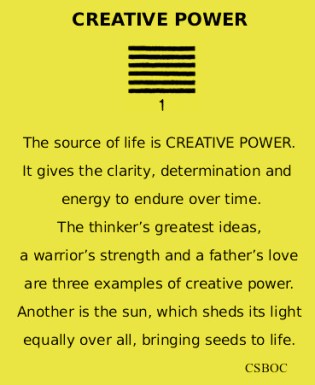
Starting at the beginning, here’s a Book of Change description of the Creative Source.

01 Creative Power

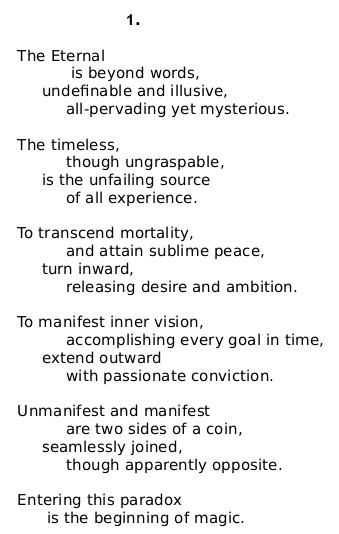
Now, look at the first passage the Tao Te Ching to see how Lao Tze expands on the same concept.

01

Receptive Openness, the compliment of Creative Power’s complete yang, is complete yin. The Common Sense Book of Change expresses it thus:

Passage 4 of Two Sides of a Coin: Lao Tze’s Common Sense Book of Change expresses the same vision this way:

04

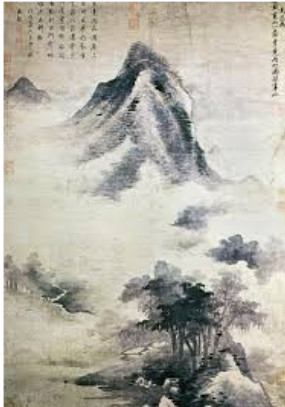
Chinese landscape

The difference between these complimentary approaches is in their use. Work inter-actively with the I Ching to trigger inner knowing, making the unconscious conscious. Sit quietly with Lao Tze’s aphorisms, allowing them to serve as passages to higher levels of consciousness.


Fate or Free-Will?

Our life is such a curious mix of givens and decisions.

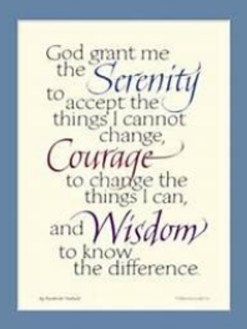
St. Francis of Assisi captured the eternal give-and-take dance between what we can and cannot change:

Now. Let’s take these three God-given variables – SERENITY (peace, calm composure), COURAGE and WISDOM – and put them in I Ching perspective.

For it has been my experience that using The Book of Change as a wisdom-fulcrum tips the balance in favor of what can be changed.

I’ll give you a dynamic example from recent experience.

In an unsettled state of mind, I queried the book asking, as I often do, “What should I be aware of NOW?” The result was Hexagram 47 with a changing line in the 4th place.

The description was right on, matching my mood exactly. It was a chicken-and-egg-like situation. Which came first, the economic or mental stress, I do not know.

But reassurance that “the time will pass” was what I needed right then. It gave distance to seemingly endless difficulties. The advice, “use hardship to develop inner strength” reinforced St.  Francis’ SERENITY option.

The critically important insight, however, was embedded in the dynamic changing line:

Line 4: Placing trust in unreliable people puts your goals in danger.

Aha! I was letting difficult people and their on-going circus dramas distract me from my goals. I let them push and pull me down, forgetting my True Self. A host of spiraling problems all stemmed from that single basic mistake. Correcting that fault had the potential to turn many things on many levels back in a positive direction.

The first step was to take this important hint to heart and have the courage to act on it. The key point of interception was to refocus on my values, on whom I love and whom I serve. Put first things first.

Coincidentally,” identifying the root cause of “danger” indicated in Line 4 resulted in Hexagram 29, DANGER, which offers further advice on the right way to proceed.

I was especially impressed by the resonance between the two readings. Both highlight the importance of holding fast to goals and avoiding negative thoughts/emotions.

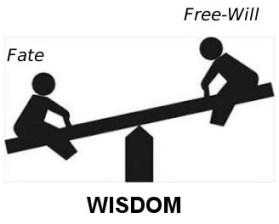
 The I Ching WISDOM-fulcrum changed emphasis from SERENITY to the COURAGE option of the St. Francis prayer, tipping the balance away from passive acceptance of what cannot be changed towards that which can.

So it is that magical transformations on many levels begin with changing negatives to positives. Again, almost sage-like, espousing the way of spiritual alchemy, St. Frances gave us a key to positive change:

Please. Do take a minute or so of your precious time to think about this. Let it resonate with you. Ask, Where is your focus? Are you able to tip the balances in your life, giving weight to the positive side of the seesaw?

Maybe, just maybe, if you’re not already friends with the I Ching, it would be well worth your while to try something new. Working with The Common Sense Book of Change might just give you a new way to leverage the balance between fate and free-will in a positive direction.

Magic Is in the Eye of the Beholder

eye of the beholder

What we know as science today would have been considered magical in the days before the operations of electricity were discovered and harnessed. Automobiles, airplanes, and computers we take for granted today would have seemed phenomenal in days passed.

Much of science fiction depends on tricks of changing technologies over time. For example, I remember the story of a hero who saved the day by astonishing the natives with a solar eclipse. When the critical moment arrived, with a flamboyant gesture and incantation – “hocus pocus” – he vanquished enemies by the apparent power to make the sun go dark.

Now, it seems, we have magic in reverse. We have so much come to depend on technology, that the inner workings of our potentially powerful psyches and our connection with the forces of nature seem like “magic.”

We are haunted by distant memories of who we once were and could be againthat deeper, truer intangible part of ourselves. Modern “education” rules out our latent, subtle powers and potentials, as if whatever cannot be measured and quantified cannot and should not be.

Yet we are enchanted by fantasy and science fiction which tease and lead us to remember.

hist of magic

The science (meaning “with knowledge”) which explains the magic of synchronicity demystifies this method for reconnecting with our larger mind and its place in the universe.

When people use a term like magic, they give little thought to the full range of possible meanings it might have. It might be a good idea to rethink what we see as magic – all the uses and abuses which have accrued over time.

To that end, I offer the following Essay on Magic.

image - harry potter

ESSAY 37. MAGIC

Magic is the art of manipulating the unseen forces of nature. A white magician is one who is laboring to gain the confidence of the powers that be. A black magician is one who seeks to gain authority over spiritual powers by means of force rather than by merit. The white magician’s motto is: “right is might.” The black magician’s motto is “might is right.” — M.P. Hall, Magic: A Treatise on Esoteric Ethics

One must distinguish between ordinary magic and consciousness of the harmonic relationships of nature — the philosophy of magic — which is the right gesture at the right place at the right time. Its applications, often excessive, and falsified by popular greed and ignorance, have given birth to superstitious magic and crude sorcery. — Isha Schwaller de Lubicz, Her-Bak: Egyptian Initiate

Taoists say, “Know magic, shun magic.” They mean that through the cultivation of knowledge, you can know precisely how natural calamity and human enmity can be avoided. You can know all the ways in which you might be affected and be able to meet crisis on the challenger’s own terms. The Taoists do not mean that you should learn the ways of others in order to be like them, only that you should learn the ways of others to avoid being manipulated by them. — Deng Ming-Dao, Scholar Warrior: An Introduction to the Tao in Everyday Life

THE FRONT

Webster’s defines magic is the use of charms, spells and rituals in seeking or pretending to cause or control events, or govern certain natural or supernatural forces. It can refer to anything mysterious and seeming inexplicable, or to an extraordinary power or quality (the magic of love). It refers to producing baffling effects or illusions by sleight of hand or use of concealed apparatus. Used as a verb, it means to cause change, or to make disappear.

Of all dictionary definitions, magic is the most incomplete. Little is known of its pristine meaning. The word occult explains why the public knows so little about true magic. This knowledge is intentionally withheld from the unprepared.

“Occult” is defined as hidden, secret, beyond human understanding and therefore mysterious. (Webster’s shows empiricist bias, saying occult designates alleged mystic arts, such as magic, alchemy or astrology.)

In fact, as Hall’s Treatise details, magic is a systematic discipline based on Natural Law. Practitioners are competent to direct natural energies at will. However, few have the courage and compassion to make the personal sacrifices required to pursue this path of knowledge.

Even fewer attain the wisdom to use such power wisely. Prudent masters therefore keep their traditions as carefully guarded secrets, safely away from unqualified seekers who, as Hitler wanna-be’s, would abuse what they could.

For the general public, it suffices to know that such powers do exist, so that when they are used, the possibility of what’s going on is recognized. An appropriate question to consider is, “What color is the magic?” According to Hall, there’s not only positive white and negative black, but yellow and gray as well. It depends on how intentional and extreme the capacity for either good or evil.

Patanjali’s yoga sutras outline the preliminary stages of magician training.As the ancient compendium  of Natural Law, The I Ching (Book of Change) is the necessary complement of all self-awareness disciplines. Exercising conscious awareness of and control over one’s own internal energies is the necessary first step in white magic schools.

With time, mastery over nature comes of its own accord as a by-product of self-knowledge. Because one’s potentials mirror and resonate with those of the entire universe, as one becomes competent to change one’s own internal states at will, one spontaneously begins to influence nature and others.

By his own admission, Aleister Crowley is a black magician. His teachings bear distorted resemblance to occult knowledge. However, his credo, “Do what thou wilt” is the antithesis of the white magician’s prayer, “Thy will be done.”

Witchcraft is incomplete. Practitioners take natural law out of context, seeking occult powers rather than self-mastery, sometimes without social conscience, sometimes in defiance of Divine Law. Seductive claims aside, being incomplete, no witch practices white magic.

Rarely do white magicians announce their presence. They don’t have to. They quietly think, and, as Lao Tze put it, all is accomplished. Christ was an exception to the rule. He was competent to change water to wine. He also performed the ultimate miracle, resurrecting the dead. Such acts, however, were not self-serving. They were done to serve the Father, to teach and to quicken faith.

THE BACK

Miracles are events without natural cause. They are different from magic, which operates within the bounds of natural change. Miracle is defined as an event or action that apparently contradicts known scientific, natural laws, and is therefore attributed to supernatural causes . . .  an act of God.

Special movie effects, card players’ sleights of hand and illusionists’ feats are accomplished by cleverness, manual dexterity, or computer technology. Though they’re irrelevant to bona fide magical powers, they tease the imagination and stir forgotten knowledge of latent potentials and what is truly possible.

We are Team Humanity

I was challenged tonight to think deeply about promoting my books. Is it just to make money? In marketing efforts, have I gone sideways, forgetting larger, fundamental purpose and goals?

How can I express how deeply the conviction goes, “To save one life is to save the world entire?”

As a young girl, in a world where adults failed me entirely, books kept me alive. Years later, I wrote intending to put on the shelves that for which I earlier searched but could not find. I wrote to help confused, bewildered young people like the young woman I once was survive.

It is to pay forward what authors ancient and modern gave of themselves to me . . . solace, hope and faith. That is why I write. And that is why I will to fight to cut through the clamor of competition to be heard.

Along these lines, I remembered an article written in December of 2014. It says the same thing in a different, maybe better, way. Then, I had given up the fight and left. But kind words and second thoughts led me back into the fray . . on my terms.

Discourse sized

Richard Lipscombe hinted I would have second thoughts about leaving WB. He also said exactly what (he probably knew) would tempt me back:

Patricia, thanks for your intellectual efforts in your posts – you made me think about stuff that I otherwise would not have ever really contemplated. Good teachers make us think, they make us challenge the essence of who we are in the process, they are gift bearers, they are rare, and most of all they are not out for themselves but for us the students.

In writing what follows, it became clear to me that you guys are my teachers too. The process of writing Fresh Start II made me really think, for which I thank you all. Richard. Tony. François. SEF. TerryAM.

I was quite the poker fan for a while. Take-aways include the maxim, “Don’t explain. Don’t complain.” That is pretty much how I operate. But this time, I need to make an exception. To prevent future misunderstandings, I will (without complaining), explain why I decided the effort to make a Fresh Start is worth it.

For starters, I was trained as a musician. My social metaphors are harmony and cooperation. An orchestra comprised of talented soloists playing inspired music under the direction of a single conductor is my ideal community.

I swim like a golden fish in music, scriptures and things metaphysical. Competition is not only foreign to me. It is anathema.

In duality, there are two sides to every coin. Granted, without a doubt, there are some benefits to competition. But in today’s political/corporate world, the law of diminishing returns has pushed the pendulum to the opposite extreme. In an either/or world that pits winners against losers, losers are continuously scrambling to beat out the winners. Winners can never relax. They’re obliged to be constantly looking over their shoulders, wary of losers scheming to overtake them.

Is that really necessary? Are we nothing more than Darwinian animals, surviving at others’ expense? What about Survival of the Wisest, Jonas Salk’s alternative approach?

For example, look at American sport through the eyes of an uninitiated foreigner. The story goes that in the early 1960’s, a Jewish immigrant recently arrived in New York City attended his first football game. But the spectacle of grown men racing up and down the field, butting heads, competing to take possession of a ball seemed ridiculous. He shrugged, “How much cost a ball?”

Keeping our eye on the ball — the life-fulling goals everyone everywhere share in common – is what’s too often forgotten in the heat of ego competition. That’s why it seemed time for me to part ways with WB. Competing for ratings is not conducive to building a community of like-minded, purposeful writers. The pressure to comment for its own sake too-easily leads to empty ego-assertion – one-upsmanship — rather than contributing to the substance and purpose of each particular post.

I’m sure many guys have fond memories of participating in team sports. Politics, I suppose is the real world application of rivalries harnessed to social ends.

But my memories aren’t fond at all. Years spent in the UW Department of Educational Administration were an eye-opener as to what has gone so terribly wrong in education. Former football coaches and military vets were in charge of dictating how schools are run. Professors’ attitudes were saturated in violence and competition.

Where I defined “administration” in terms of its root, “ministry” (meaning service), the prevailing definition was “the allocation of scarce resources.”

The difference goes far deeper than gender or cultural preferences. It is a matter of human survival. The competitive attitude is a primary cause of world conflict, the reason we’re in such a terrible mess. Nor (as Einstein observed) are solutions are to be found in the same mode that has generated the problem.

In other words, it is exactly because my musician, yogic perspective is so different from the “norm” that I have a lot to offer to the WB community.

For the record, be assured I wasn’t born with a silver spoon in my mouth. Life hasn’t been any easier for me than for anyone else. Nor do I think I’m better than others. Metaphysically, that’s not possible. Students and teachers are warp and woof of the same fabric, giving and receiving in an infinite loop through the generations. We’re in it together.

In my world view, reverence for life is fundamental. Non-negotiable. This is why I recently took such exception to a comment made in the personal attack mode, with name-calling and overt disrespect. Again, it was symptomatic of all that has gone wrong in this world.

If I sometimes seem harsh (as one LI connection accused), the impatience has to do with my sense of urgency. The stakes are too high. Time is too short.

Also, although I sometimes speak in philosophical terms and use scriptural references, it is not to show off (as another LinkedIn detractor charged). It’s my reality. It’s simply who I am. I don’t write to impress or intimidate. It’s a calling. It’s my life work and heartfelt desire to put what I’ve learned (often the hard way) and who I am (for better or worse) at the service of those willing/able to benefit.

So, please, rather than faulting an imperfect messenger, focus on the message. We are Team Humanity. The ball worth fighting for is human survival, which, as Einstein has warned us, can no longer be taken for granted.

Namaste2

The I Ching Works Like a Cosmic Clock

Among other things, the I Ching works like a cosmic clock, telling us the time.

In the Old Testament, King Solomon expressed the natural, rhythmic alternations of time in poetic form:

To everything there is a season, and a time for every purpose under heaven: A time to be born and a time to die; a time to plant and a time to pluck up that which is planted. A time to kill, and a time to heal; a time to break down and a time build up . . . a time to love and a time to hate; a time of war, and a time of peace.

The Book of Change puts its users in touch with these pulsating, alternating rhythms of life. It connects us with inner knowing – call it intuition or conscience – that anticipates approaching changes, the better to prepare for what is to come.

It serves as a reminder that our lives change like the seasons of nature. Fall follows summer. Spring follows winter.

It lends perspective to the current times and what is likely to come next.

In I Ching context, faith is akin to trusting a highly refined sense of timing. It is an atunement with the same inner clock which guides migrating birds and informs heroic displays of virtue.

Some people experience this inner knowing as a sense of personal destiny or keen sensitivity to the zeitgeist direction of the times.

Faith guides our feet, not only towards good fortune, but away from danger. An example from the New Testament is Joseph, husband of Mary, protector of Jesus. He accepted Mary and her child on faith.

When a fearful King Herod was intent on killing new born males to thwart the prophecy of his downfall, Joseph “knew” it was time to escape from Jerusalem, thus saving the infant’s life. He also knew when danger had passed, and it was time to return the boy to his homeland.

Using the interactive Common Sense Book of Change (CSBOC) is a powerful way to get in touch with the native common sense we are all born with, but too often forget under the pressures of hectic daily life.

The text maps the natural patterns of change which trigger predictable passages from one stage to another in our lives.

Those who live close to nature are instinctively closer to their own natural rhythms, something city dwellers too often lose touch with. For those who long to remember who they truly are, but have forgotten, working the I Ching is especially rare and precious blessing.

Use the CSBOC To Increase Self-Awareness

Did you know that Swiss analyst, Carl Jung, who gave us the concept of archetypes and influenced appreciation of dream analysis, also had great respect for the Chinese I Ching? He used it as as a tool for making the unconscious conscious.

In fact, Jung was instrumental in bringing the first usable English translation to the West. He wrote the introduction to the Wilhelm/Baynes version by giving an example of using it. He queried asking for a comment on the translation. The answer received was, in effect, that a vessel of great value which had fallen into disrepair was being restored.

My small yellow book follows Jung’s example. In the Introduction, I ask, “What does the Common Sense Book of Change (CSBOC)  have to offer its readers?”

Its answer: “Awareness.” A changing line yields the likely future outcome of following through. “Gain.” (I’ll show you how this works below.)

But even before starting, the book emphasizes the importance of practicing a thoughtful process of question- asking:

The quality of results depends on the state of mind in which information is received. It is therefore essential to learn how to approach the Book of Change in the best possible frame of mind.

So quiet yourself. Get past the clutter of chaotic thoughts to focus on forming a worthy question.

. . . There are many techniques for calming the mind and focusing attention. One of these is usually practiced before asking the question.

Bottom line: consulting the Book of Change is not only compatible with yogic and mindfulness practices of introspection, contemplation and meditation. They work synergistically. Settling the mind to ask the right question induces a meditative state. The ability to induce a meditative state enhances the quality of questions asked and value of answers received.

To give you the flavor of working with The Common Sense Book of Change, I’m sharing the example given in the book.

If you initially feel uneasy with this approach to increasing self-awareness, you might find the answers to commonly asked questions reassuring.

If this is new to you, try approaching it with the attitude for approaching the unfamiliar recommended by Samuel Coleridge, a “willing suspension of disbelief.” Or, as I do, at the start, prayerfully invoke protection and guidance according to your beliefs.


SAMPLE READING

First I collect my materials. I need three pennies, a pad of paper or notebook, a pen or pencil and the Book of Change.

Then I find a quiet place to sit. I take a few minutes to settle down. I clear my mind of other thoughts and silently watch the breath until it becomes slow and even.

Then I think carefully about what is going on, what is troubling me, and the issues I need to know more about. I list the decisions I have to make and consider what consequences are likely to follow from my future actions.

For the example in this book, I have decided to ask, “What does The Common Sense Book of Change have to offer its readers?”

I enter the date and my question in the Diary Section at the back of the book.

Concentrating on my question, I take my three pennies, shake them a few times in my gently closed fist and roll them onto the flat surface in front of me.

The first throw of my three coins comes up three heads. The value of heads is two, so I multiply three times two to get six.

Since this is an even number, I draw a broken line on my pad of paper. It will be the bottom line. Because all three coins were the same, I place an “X” next to this line to show that it is a changing line.

My bottom line looks like this:

Place Throws Values Sum Line

Bottom H H H 2 2 2 6 ___ ___X

Then I take the three coins and throw them again. This time I get two tails and one head. The value of tails is one, so I add one and one to get two. I add this to the two for the heads coin to get four.

Since four is an even number, I place a broken line in the second place over the bottom line. My pad of paper now looks like this:

Place Throws Values Sum Line

Line 2    T T H 1 1 2 4 ___ ___

Bottom H H H 2 2 2 6 ___ ___ X

̀I follow the same procedure four more times. My final hexagram looks like this:

Place Throws Values Sum Line

Top       T H H 1 2 2 5 _______

Line 5   T H H 1 2 2 5 _______

Line 4    T T H 1 1 2 4 ___ ___

Line 3     T T H 1 1 2 4 ___ ___

Line 2     T T H 1 1 2 4 ___ ___

Bottom  H H H 2 2 2 6 ___ ___ X

The next step is to find the number of my reading. I turn to the chart at the back of the book. The bottom three lines of my hexagram are all broken.

I turn to the chart at the back. In the “lower trigram” column of the chart, the picture which matches this figure is “k’un.”

The top three lines of my hexagram are two solid lines over a broken line. In the “upper trigram” row of the chart, the picture which matches this figure is “sun.”

By going to the box which shows the combination of upper and lower trigrams, I find the number 20. I therefore turn to Hexagram 20 for answers to my question.

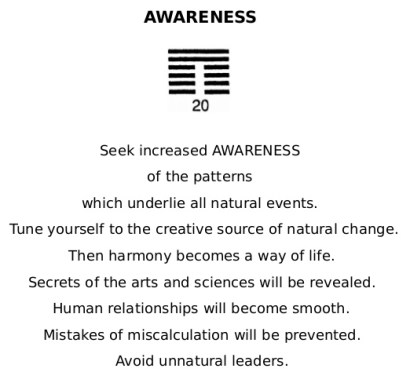
Hexagram 20 is AWARENESS. So the answer to my question, “What does the Common Sense Book of Change have to offer its readers?” is AWARENESS. It reads:

Seek increased AWARENESS of the patterns which underlie all natural events. Tune yourself to the creative source of natural change. Then harmony becomes a way of life. Secrets of the arts and sciences will be revealed. Human relationships will become smooth. Mistakes of mis-calculation will be prevented. Avoid unnatural leaders.

Because the bottom line is a changing line, I go to the page directly opposite the hexagram, titled “Direction of Change.” I read the sentences for the bottom line. They advise:

Narrow-minded self-interest is not enlightened. Broaden your views. Include others. (42)

The number in parens after the warning represents the hexagram which results when the bottom line changes to its opposite, a firm line.

The new hexagram, GAIN, indicates the change that would result from the AWARENESS this book has to offer its readers. Turning to Hexagram 42, I read:

GAINS can be made after analyzing the situation correctly. When a person’s life goals are kept firmly in mind, no time is wasted. A way can be found to use whatever resources are at hand to serve one’s purpose. Serving others can be compatible with personal gain. Avoid smug self-satisfaction.

I then turn to the back of the book. In the Diary Section, I write the numbers of the hexagram and any changing lines next to my question. Then I decide what future actions I to take.

Finally, I enter a few sentences to describe my thoughts and decisions into the Diary Section. That way, I know I can return to my question, the reading and my decisions later to think more about them.

I hope this helps. Any questions? Comments? Your feedback is welcome.

How the CSBOC Came To Be

For those who wondered, I’ve already answered eight of your most often asked questions, including“What makes the Book of Change so unique and important? Why is it especially relevant worldwide?”

wondering face

Here, I’m answering another question: “Why is this particular version, the Common Sense Book of Change (CSBOC), an excellent choice for me to work with right now?”

As strange as it appears at first glance, there are actually several good reasons. So let me tell you more.

Discourse sized

First, I should let you know that today, publishing is a just hobby for me. The world will go its own way. I no longer think can any book change the world.

But it certainly changed me. It’s no exaggeration to say the I Ching saved my life. More than once.

So, for me, if the Common Sense Book of Change helps even one of you, that is enough. I would be satisfied. As it has been written, “To save one life is to save the world entire.”

I also recognized that the I Ching is not the only book with life-saving potential. The most powerful is the Bible. In my case, however, early in life, poor examples confused and repelled me. I do believe that in their infinite mercy, good angels guide and protect truth seekers through any medium available. Angels are not limited by the restrictions of human religion. : )

So long before I was ready for the New Testament, the I Ching was there to get me through some rough transitions.

Angel Calling

Now, then. How did I come to create this little book? I am American, not Chinese. Nor am I a scholar with advanced degrees in Chinese language and literature. I’ve described my personal journey in several places. For example, in The I Ching & Me, I wrote:

For me, the Book of Change is a gateway to magic. On this side, it has been a close companion, good friend and advisor through the years. On the far side, perhaps remembered from lifetimes past, it speaks to me from a place beyond time and space.

With it, I was never alone, even and especially when I was loneliest in crowded rooms. When the world impelled suicide, it brought me back to a deeper, all-pervasive love of life.

So I will share a few sections from Rethinking Survival about how I met the book, and how it has grown on me.

ICgraph

I wrote about the origins of CSBOC in Rethinking Survival:

. . . I’d had a hunch about [the I Ching] for a very long time. Ellsworth Carlson, who lived in Shansi, China during WWII, was a classmate of my parents at Oberlin College. When I was nursery school age, he bounced me on his knees at Harvard.

As Freshman student, I took Dr. Carlson’s course in Asian History at Oberlin. What stuck with me how vast an influence the I Ching had on China for 8,000 years and counting.

So, when I left the U.S., all I took with me was my violin and one small suitcase. Of that, half contained clothes. The other half held sheet music and one small book: the Legge translation of the I Ching.

It made no sense to me. I could barely get through a page or two before giving up. But I kept coming back to it. It led to something important I had to know more about.

When I happened upon the Wilhelm/Baynes edition in Düsseldorf’s International Bookshop on Konigs Allee — Finally! — I had a version I could relate to. It literally became my teacher. It gave me a whole new concept of how the world really works.

Not just this family or that institution or the other county. Not arbitrary and capricious, fluctuating fashions, but the constant anchor over time.

From it, I could deduce the fundamental energy dynamics of action and reaction which drive behavior, internally at a psychological level, and externally in relationships and day-to-day events.

It was an extension of the logic my English teacher Miss Elson impressed on my high school brain. But more. It gave me a map of logical consequences, as inevitable as computer language. “If this, then that.”

For example, If you kick people, they kick back (if they can) or otherwise resist. If you are kind, you inspire love and trust in others. If you violate natural law, nature bites back — your mental health suffers; relationships deteriorate; your behavior becomes erratic and social/physical survival is imperiled.

Asian cultures call this “the law of karma.” Its operation is also described in biblical terms: “As ye reap, so shall ye sow,” and “to everything there is a season.”

In sum, its 64 permutations map a progression of repetitive, cyclical change.

Tai Chi Tu

I’ve also explained why I felt compelled to write a simpler, accessible version, free of unnecessary jargon, sexism and cultural baggage:

There was, as in all things, a downside to the Wilhelm/Baynes version. It was unnecessarily difficult, sexist and elitist. A confusing overlay of cultural baggage obscured its meaning. After working for ten years with every version I could find, I wrote an easy-to-use version called The Common Sense Book of Change, intending to make this treasure available to anyone with an open heart and basic reading skills.

I fantasized on the possibility of teasing the Chinese people into reclaiming their heritage, self-publishing it as small yellow book (the traditional Chinese color of wisdom) in a pocket-sized form to replace Mao’s little blood-red book. No matter how many new versions have come out since then, it still works for me.

seated crosslegged
Here is the story of how the CSBOC came to be:

More “neatsies” surround my small version of the I Ching, the Chinese Book of Change. I wrote it in 1975 during the window of time after I moved back from Spring Green to Madison, but before I had a job. As a leap of faith, I concentrated on the writing, putting off a job search until the book was done. This was a bit scary. Money was going to run out very soon.

I sat cross-legged on the bare wood floor of a living room furnished with cardboard boxes. I spread every version I owned in a half-circle around me. They included the Wilhelm/Baynes translation brought back from Germany, of course. There was a battered second-hand paperback by Joseph Murphy, a research fellow in Andrha, India, as I recall, who quoted the Old Testament in the judgments. Others included the spiral-bound Workbook by R. L. Wing, a hardbound version which presented the I Ching as a form of astrology and a hippie-like paperback.

I trusted that the Platonic-like ideas of the I Ching are timeless, the common heritage of all humanity. They’re not the exclusive property of a particular culture or class. Each of these authors was drawing on the same source for inspiration, expressing universal experience from different viewpoints. So I opened my mind, asking for the deeper meaning these versions shared in common.

I was certain that the most powerful ideas are the most simple. They deserve to be expressed in the clearest language with fewest words possible, free of flowery poetry, scholarly hocus pocus, sexist assumptions (the so-called “superior man”) or other distortions. I intended to make my version easy to read – accessible to anyone with basic reading skills and an open heart.

The format just “came” to me. It worked fine. Fifty words, no more or less, for each hexagram. Ten words, no more, no less for each changing line. The images came easily. I worked systematically from start to finish, no looking back. With the exception of “Sacrifice,” which I revisited fifteen years later, I’ve made no revisions.

Eventually, I called this version The Common Sense Book of Change. I like the word “common.” To me, it doesn’t signify “ordinary” or even “vulgar,” as some use the term, but rather “universal.” “Common” is the root of both “communication” and “community.” And the allusion to Tom Paine’s Common Sense isn’t accidental.

But there’s more to this story:

Upon its completion, the kaleidoscope turned instantly.

Results of the civil service test for Typist III positions came in the mail, along with a list of job openings.

My first interview was at the UW-Madison Department of French and Italian. The Chairman not only gave me the job on the spot. He decided from my resume that I had administrative potential and made me an offer. The Department’s Administrative Secretary III had given notice. She was moving out of town soon. There was no replacement. If I was willing to do her job for Typist III pay, and if I took the pending Ad Sec civil service exam, and if I got one of the five highest scores to qualify for an interview, I could have the job. . . .

I agreed, did administrative work for typist pay, took the exam, qualified for an interview, and within a few months took a leap up the career ladder that secretaries usually took years to accomplish. I was suddenly earning more than ever before. . .

I concluded:

The reward for this leap of faith was immediate. I took it as confirmation from the powers that be that I’d made the right choice to put the book first.

listen with the heart


How Much Do You Know about the Book of Change (& Why Should You Care)?

Tai Chi Tu - sized

Listed below are eight common myths and misconceptions shrouding the perennial, venerable Chinese I Ching. Answers to these commonly asked questions give good reasons why you would benefit greatly from working with it.

circled Q

ONE

Q. What does an ancient book from a foreign land have to do with me, here and now?

A. Everything. The I Ching as a compendium of Natural Law is neither time nor place-bound. It speaks to the questions we all ask about the human condition. For over 8,000 years, with good reason, it has endured as the foundation of Chinese healing, governing and military arts alike. No equivalent exists in the West. Most importantly, it fills a fatal gap in the way Westerners have been taught to think.

TWO

Q. If it is so important, why isn’t it taught to young people in schools?

A. Good question! Probably because the assumptions described below are taught as if fact.

THREE

Q. Isn’t the Book of Change unscientific – just hocus pocus? Primitive or New Age superstition?

A. Like any other wisdom tradition which has endured over time, the I Ching has inevitably been subject to misuse. This doesn’t, however, reflect on its inherent value. In fact, this compendium of Natural Law is so highly sophisticated that Western science is just beginning to catch up with it.

For example, in the 1800s, Leibniz acknowledged that its mathematical foundations long preceded his calculus. The single and broken lines of the hexagrams are analogous to binary-digital computer code. Further, its 64 hexagrams have been directly correlated with DNA structure.

FOUR

Q. Question: Is the I Ching a sacred book, like the Bible? Is it part of a religion?

A . Answer: Yes and no. Taoists, Buddhists, and Confucians, despite their differences, hold the I Ching in highest regard. It is used to connect with inner knowing, on the one hand, and consulted for practical advice regarding every aspect of daily life, on the other. To them, the sacred and secular are inseparably intertwined, interwoven as the warp and woof of the fabric of life.

This book maps the dynamics of the Law of Karma – the foundation of practical ethics. Much has been written elsewhere on this subject.

FIVE

Q. Isn’t The Book of Change pagan and therefore off-limits to Christians? Doesn’t it contradict or oppose the teachings of the Bible?

A. There is no conflict. Natural and Divine Law are two different subjects. The Book of Change is a compendium of Natural Law. The two are compliments. As such, Chinese sages respected nature as a manifestation of the Tao, or God. As described elsewhere, both the Old and New Testaments show an understanding of the nature compatible with the I Ching worldview. This is quite different from pagans who by-pass Divine Law, worshiping nature instead.

In fact, many people with the best of intentions find their lives going terribly wrong for lack of the understanding (call it emotional intelligence) cultivated by working with Natural Law. Ongoing sexual and financial scandals which plague hierarchies secular and religious are directly linked to this ignorant lack of awareness: a fatal blind-spot in our education.

SIX

Q, Is the I Ching used to predict the future, like a crystal ball? Is it meant for divination, meaning to get what one wants or locate missing objects?

A. Advanced sages who understood numerology used it to produce astonishing results. But the I Ching is most often used as a method for making better decisions, in part because it serves to make the unconscious conscious. Truer to original meditative intent, people often use it to practice mindfulness. Working with The Book of Change helps quiet the mind, increase self-understanding, and then better understanding of others.

SEVEN

Q. Can the I Ching be fully understood or appreciated without knowledge of the Chinese language?

A. Hindu’s are attached to the exclusive value of the Sanskrit language, Jews to ancient Hebrew, and Muslims to the original language of the Koran. However, the source of truth is beyond language. Its cultural expression at a particular time and place varies, but the basic essentials are necessarily the same.

EIGHT

Q. Isn’t it better to learn about natural law from the European philosophers Locke, Hobbes, and Rousseau, as America’s founding fathers did?

A. No. Their philosophy is intellectual speculation. Although they use the same words, that is where the similarity ends. The I Ching is based upon thousands of years of experience by leaders trained in the meditative arts to observe their inner states. They recognized exact correlations between inner and outer experience. Through careful observation, they detailed the operations of nature and the dynamics which drive human relationships.

Let’s Get It Right!

Einstein home page

I’m breaking a long silence, moved to respond to an only partially correct commentary that appeared on theblaze.com. In “Our nation is sick, but we are too distracted by the symptoms to cure it,” Aaron Colen writes:

Attempted bombings, targeted killings, violent protests, and poisonous rhetoric are only symptoms. Yet we spend much of our time treating them, repeatedly popping painkillers to ease a persistent headache without realizing we have terminal brain cancer.

He continues:

That’s because it’s easier to believe we can solve all our problems by silencing the other side than it is to admit that the corruption in our hearts and the disregard we have for our fellow Americans is the disease from which all the subsequent division and destruction proceeds.

My response: he has the problem right, but not the deepest cause, much less a cure. One out of three isn’t enough!

So long as one’s basic world view is skewed, false beliefs generate negative emotions. These in turn drive violent behavior. Addressing the behavior without the false beliefs that create fear, hatred, and rage is a time-wasting exercise in futility. To generate the positive change of which many speak but few can deliver, we must address first things first.
Put another way, as I’ve said in many ways, paradigms are literally a matter of life or death.

In Rethinking Survival, I put it this way:

Programmed assumptions too often drive our decisions, actions and ultimately, survival options. Even with the best of intentions, misinformed people operating on conflicting beliefs destroy themselves and others. Sometimes the process is quick. Suicide. Murder. Usually it’s slower — atrophy and self-sabotage.

The connection between skewed thinking and disastrous results is mirrored in the global disconnect between policy and practice. Knowledge deficits are directly responsible for bankrupt economies, personal and international alike.

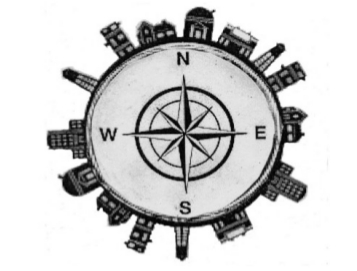
The old/new, complete and accurate paradigm I’ve repeatedly described and applied is The Positive Paradigm . . . an inclusive reality map, one people worldwide can easily comprehend and agree upon. It is equally compatible with scriptures and modern science, bridging the gap between them. It fulfills Einstein’s intuited search for the Unified Field Theory, picturing how all parts of creation are related, interwoven and interdependent.


inner-compass-sized

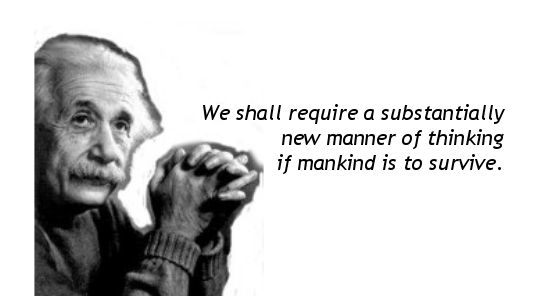
Working with the Positive Paradigm empowers the “substantially new manner of thinking,” which, Einstein said, is necessary “if mankind is to survive.”

Critical Mass

debate sized

Three separate threads weaving in escalating intensity over the past weeks are resolving now, forming a fabric greater than the individual parts.

Here I’ll briefly describe the parts and how each illumines the others.

First, throughout, I was listening along with the one respectfully called Old Avatar to YouTube videos published by KrisAnne Hall and her husband/co-host, Pastor J.C. Hall at Liberty First University. (I would prefer Truth First, but that’s just me.)
In any case, their mission is to educate Americans about the Constitution. In the process, they analyze current events by that standard. How true are the actions of government officials, elected or appointed, to the Constitution they’re sworn to uphold?

Not a pretty picture.

Increasingly curious, OA went to original sources for first hand answers. First he read a through a collection of the Federalist Papers written in support of ratifying the Constitution.

Critical thinker that he is, OA was impressed, but also found flaws in their reasoning. He wanted to know what arguments were made by the Anti-Federalists – those who opposed ratification. So we found two volumes which present both sides of the coin, pro and con, side by side – not exactly easy reading : )

Book on Debate

Some say God smiled on the Founders. Ratification was a miracle,” he winked.

How is that,” I asked. “Were the Founders were so flawed that coming to agreement seemed impossible?”

Something like,” he answered. “You know,” he added. “You’re the one who’s so interested in intentional communities. That’s what creating the Union was about. On a large scale.”

Wow! I never thought of it that way before. But you’re right!”

OA is a man of few words. Usually, he keeps opinions to himself. But recently he took exception to a program where the Halls, outraged, exposed a pattern of abuse by federal officials. Members of both parties systematically steal tax payer monies, living like royalty, impoverishing those they only claim to serve.

This was exactly what the Anti-Federalists foresaw,” he pointed out. According to them, it was only a matter of time until the country would come full circle, back to the critical mass of power abuse which drove colonists to separate from England. Back to another revolt.

Why not contact the Halls,” I asked. “Ask them to comment on the Anti-Federalist papers and their concerns.” He declined, doubting they are ready to admit we’ve arrived at that point.

A second thread, over the past week-end, was the converging holidays of Easter and Passover. Passover marks the exodus of slaves from Egypt. (“Set my people free.”) Easter celebrates the resurrection of Christ, freeing humans from the heavy burden of past sin. Both holidays repeat the pattern of yearning for freedom from oppression — a pattern of sacrifices made to throw off the yoke of enslavement, whether internal or  external.

These same yearnings were reflected in the passionate forces that drove the debate over the Constitution’s ratification.

At one point, looking up from his book, OA commented, “This speech was really dramatic.” He continued, “The founders were totally committed – emotionally, financially. They put everything on the line. They knew how high the stakes were. They were willing to sacrifice everything to prevent falling back into the same mistakes that drove them to leave Europe, to create a form of government that would not drag their heirs down back into the same pit.”

He shook his head. “They were idealists,” he said. “Optimists.”

The ratification went forward only because Anti-Federalist fears were respected by adding the Bill of Rights.”

What happened,” I asked. “What went wrong?”

People got lazy. It is impossible to live continuously on the razor’s edge, perpetually alert and on the lookout for danger. They went back to their ordinary lives. They got immersed in farming, running businesses and raising families.”

They let things slide,” I said. “It’s an I Ching thing. The zenith of achievement doesn’t last forever. Success has to be maintained with constant vigilance and adjustments. Over time things naturally degenerate. No legislation can prevent unraveling. The cause is deeper. Metaphysical.”

The Founders knew that,” he responded.

But people got stupid,” he continued. “This has been a problem from the beginning of time. Even Samuel Adams, who was supposed to be this great defender of liberty. He got stupid. He listened to his wife yapping in his ear. To protect his pride, prevent others from accomplishing what he failed to do, he passed detrimental laws against negotiating with foreign nations that have not to this day been repealed. He lost perspective. He got caught up in the illusion of his own self-importance.”
Yes.”

And then the third strand. We have followed the Parkland shooting and its aftermath, getting increasingly more suspicious. It looks more and more like a set up.

The shooting itself was long foreseen: eminently and egregiously preventable. From start to finish, response by law enforcement was botched beyond belief. The protests which followed have played out like a badly written grade-B movie, tailored to extremists’ ends, designed to escalate public opinion towards critical mass.

David Hogg, a self-proclaimed student representative, is remarkably uneducated either by schooling or experience. He is illiterate, unable to navigate the basics of English grammar. He demonstrates ZERO understanding of the history behind the hard-won Bill of Rights. Nor does he have a clue about the critical difference between a democracy and a republic. (He asserts, “Our parents don’t know how to use a f***ing democracy.”)

Substituting posturing and self-righteous self-pity for genuine passion, DH projects an intensity of rage and hatred that triggers equal animosity in return. Tweets pun on the animal connotations of his last name (“media hog,” “piglet,” etc.).

And then, there’s the irony of his first name, David, a personal hero of mine. Nor was the biblical comparison lost on mainstream media. “David Hogg Took On His Own Media Goliath,” reads one headline.

But the original David fought in the Name of the Lord. This pawn of Soros-driven media is the antithesis of the biblical King David.

For example, DH declared all-out war on Laura Ingraham, vengefully demanding that her advertisers jump ship. (How is this for disrespecting First Amendments rights, much less the Second?) He along with far-left supporters were all too quick in the attempt to ruin someone who simply happened to disagree with him.

Yet in the same breath, he had the gall to turn around and claim the higher ground of civility.

Ben Shapiro rightly nailed this blatant hypocrisy. “You don’t get to play the LOVE THY NEIGHBOR Card.” DH pretending to represent Christ’s new law is obscene.

The timing of the shooting aftermath resonated with holy week themes. Notably, Laura Ingraham picked up on Easter implications. At the start of her week vacation, she tweeted out Psalm 143, a Prayer for Deliverance from Enemies, reminding her followers of the true David, forefather of Christ.

For thy name’s sake, O Lord, preserve my life!
In thy righteousness bring me out of trouble!

Even the KrisAnne Hall and her husband at Liberty University picked up on the irony. They commented that David Hogg, a puppet of anti-constitutional forces, is “driving his generation over a precipice.”

Phoenix - sized

So. Where does all this leave us now? In the cycles of history, are we again reaching the point of critical mass? Historians repeatedly point out similarities between the fall of the Roman Empire and the current state of the U.S. Stefan Molyneux recently described an End of the Empire.

Those on the far-left would have us believe that the U.S. Constitution is an outdated document, along with the faith of the Founders who debated it with such fierce passion.

But I would answer, The American Constitution along with its Bill of Rights represent a passion for Freedom and yes, Truth, far deeper than any historical event or physical political document. Even if  today’s brainwashed, woefully misled youth have forgotten its origins and timeless significance, the ultimate concerns of mankind, remain constant and valid — what psychologists call “archetypal.” It is the underlying belief in the “American dream” of freedom — not just material wealth –which has inspired sincere aspirants from every nation to relinquish their past in the quest for a better life. (Dinesh d’Souza’s story comes to mind.)

I think about the I Ching view of the hope which remains latent even in degeneration. Just as Christ appeared at the nadir of an earlier cycle, ushering in a ray of hope, the vigilant today will recognize the seeds of possibility present, however dormant, in current ugly times.

IC 49

In this context, foresight and preparing are essential to deciding the direction of long-term outcomes. (Remember Joseph in Egypt storing grain during times of plenty, anticipating future famine.)

Further, recognizing what America’s great constitutional debate has to teach us now about immediate dangers might be helpful in building future alternative communities.

Is it time to think about a Fresh Start,” I asked OA. “After critical mass, will we begin another cycle and rebuild even better?” He answered with a silent shrug, seeming to imply, “Too early to tell. The jury is still out. Depends on . . .”

Technically, I suppose, each and every day offers us the opportunity for a fresh start. . . . one individual at a time. It’s a matter of personal choice.

So here is the immediate question. What is YOUR choice, today?

Angel Calling

How to Recognize the Difference Between Signal & Noise

towers in distress

What’s wrong with this picture? What can we learn from it?

A dark storm twister threatens the foundations of three increasingly smaller signal towers. Like dominoes, the largest is falling, knocking the middle one off its base, which in turn is lined up to crush the smallest.

It’s an apt image of our mental. emotional and physical bodies – instruments designed to receive and transmit the Creator’s signal.

It pictures what happens when the noise of current events on the surface of the Life Wheel clouds the inner signal of conscience. Our fractured knowledge base is so fatally flawed, we’re left powerless to withstand approaching storms of destruction.

As partisans along the full spectrum of opinion rage to proclaim competing, partial pictures of reality, the universal signal all were built to transmit is lost. Noise reigns.

I put it another way in Rethinking Survival.

Alien invaders infiltrating Planet Earth, weakening humans to eventually take over and enslave them, is a familiar theme in science fiction. For example, in his various incarnations, Dr. Who — television’s time traveler — continuously detects nefarious alien plots and rescues heedless humans from annihilation.

Current events indicate there’s considerable truth cloaked in that “fiction.” Starting with the premise that hidden alien enemies are covertly scheming to undermine humanity, ask, “How would they set about to destroy us?”

Logically, they’d create chaos, setting everyone at each others’ throats. They’d trick humans into mutual self-destruction by stirring up dissension and fragmenting their governments.

. . . Their agents will do whatever it takes to pollute your mind. They confuse it with false paradigms. They clutter and distract it with the ongoing media circus.

Every doubt planted in your mind, causing you to forget who you are, to disbelieve in your ultimate origins and creative potentials, is a victory for the dark side.

To totally undermine humanity, atheism is a must. The unifying beliefs which hold families and nations together and fortify them in times of adversity must be destroyed at all costs.

Again, how would this be accomplished?

For one thing, language which makes communication and community-building possible would have to be polluted beyond repair. . . . this ongoing process is described as the Tower of Babel factor. . . . Alien agents are masters of double-speak, the child of deception and second-cousin of spin. . . .

. . . Diversions would be a must. Rile the public with non-issues to distract them from very real dangers. Using lame-stream media shills, manipulate the masses with the weapons of psychological warfare. Insult them with the lie that they’re not okay. Sell them on the belief that they’re helpless “victims” of oppressors who must depend on tough guys to rescue them (and pay the heavy price of obligation at the voting polls). . .

Divide and conquer. Pit each group against the others.

I can almost see alien puppeteers behind the scenes clapping their hands in glee over Alinsky’s contribution to escalating worldwide conflict. It matters not to them which side wins. Let Sharia law advocates, members of Putin’s Eurasian Union and American exceptionalists squander their precious resources duking it out.

If they destroy each other and no one’s left, so much the better.

All this is by means of introduction to an article published in the February issue of Prabuddha Bharata as “Hubba Hubba’s Riddle.”

I’ve already included snippets in earlier blogs, Yes AND .  . . and Psychology’s Blind Spot.

What follows here, with permission, is the full article. Origins of this assignment are described in Be Careful What You Hope For:

I brought up the article just finished for Prabuddha Bharata, a premier yoga journal, one in existence for over a century, dating back to the introduction of yoga to the United States in the 1800s.

The Editor’s suggested topic: “It would be nice if you could address the issue of increasing polarisation across the world.” The time frame: “as early as possible!”

Writing it was intense, I told OA. I felt inspired . . . as if it were writing me. I watched as it flowed through me. Wow.

This introduction serves to return us back once again to my central subject: acquiring the ability to recognize the difference between signal and noise.

The journal’s required word length is longer that a usual post. But as a matter close to home – human survival – the article repays your careful attention.

Phoenix - sized

Hubba Hubba’s Riddle

My paternal grandfather, Hubble West, loved the English language. An enormous dictionary, well-worn from decades of use, sat opened atop a wooden pedestal next to his chair at the head of the dinner table. During meals, he’d challenge the children to define words used by adults in conversation and look up the ones they weren’t sure of.

Hubba Hubba, as we called him, was also keen on riddles. Lodged permanently in my mind is this one: “Why is the monkey that spins?”

His sage-like answer: “The higher the fewer.”

Huh? It made sense in a koan-kind-of-way. But there was more that eluded me. His riddle lingered in the back of my mind as unfinished business.

Over time, it continued to resonate with my growing understanding of the universal Life Wheel as a mysterious but dynamic, multi-dimensional phenomena imbued with life-changing implications.

At the very least, it functions well as a yoga-like diagnostic and decision-making tool. It is highly useful in resolving inner conflicts as a preliminary step towards overcoming polarization in the world, whether it be conflict between empirical science and religious values, or between different nations.

But there’s much more.

Here I’ll begin with a basic description of the Life Wheel, the subject of an earlier article published in the August 2015 edition of Prabuddha Bharata, As Conflict Escalates, What Can Be Cone Now?1

After reintroducing the Life Wheel, I’ll expand from there, elaborating on applications and expansions of its riddle-like essence.

In Scientists and Sages Can Agree on This2, I describe the Wheel. It is not “new,” nor is it an arbitrary mental confabulation. Its archetypal structure repeats throughout nature from atoms to planets orbiting around the sun. Its wheel-like pattern of concentric circles orbiting a central hub is mirrored in art and architecture from the beginnings of time. It embodies a timeless healing solution to the comparatively recent rift between materialist and philosophical definitions of “reality:”

The archetypal Life Wheel formulated as the Positive Paradigm of Change is a modern day descendant of the time-tested Book of Change which leaders in every field of endeavor have consulted for over eight-thousand years.

While true to the ancient teachings of India and China, it abstracts their essence in a simple and complete manner designed to be accessible to us today.

It places the three variables of Einstein’s famous formula, e = mc2 – mass, energy and light – on increasingly deeper levels within the Life Wheel. The result is the Unified Theory which Einstein already had, though didn’t know it.

PPoC gold

The three outer levels are interrelated and interdependent. Each is necessary but not sufficient. Their existence depends upon the unchanging hub of the Wheel. The true SELF — also called Conscience, the Tao or God — holds the spokes together as spinning events on the Wheel’s surface rim change continuously. Creation in the form of primal consciousness emanates from and returns to this silent alpha-omega center.

Complete and accurate, the Life Wheel meets the Occam’s Razor standard by explaining the totality of human experience with maximum inclusiveness and utmost simplicity.

This wheels-within-wheels model is equally compatible with modern physics, yoga philosophy and the world’s great religions. It is a reality map upon which scientists and sages can agree.

A variation of the Life Wheel shows the relationship between surface flux and inner stability. That which is superficial and ephemeral is generated from and sustained by the eternal absolute.

Flux & Stability

In Rethinking Survival, I connected with the idea that the Life Wheel is the answer to an ancient Upanishad question: “What is that, knowing which, all else is known?” In essence, correctly understood and implemented, it holds the KEY to Life.

The Positive Paradigm of Change can be personalized to facilitate positive personal change on all levels. Applied on increasingly larger scales of magnitude – to relationships, families, communities and organizations – it has significant social implications.

APPLICATIONS

In the yogic tradition, breath awareness is used to “go deep,” quieting the scattered monkey mind of Hubba Hubba’s riddle. By making the breath slow and even, it is possible to enter into a focused, contemplative mind state. Pranayama practices regulate the noisy mind that ordinarily functions on the most rapid, beta brainwave frequency. Meditation cultivates alpha waves associated with relaxation and then the still slower theta waves associated with deep learning and inspiration.

Further, according to scripture, the fully attained sage links the levels of awareness, consciously living “here yet there.” This fully-actualized state, “turyia,” been likened to “Christ consciousness.”

So modern science now confirms what the ancients knew. Brainwave science applied in biofeedback therapies correlates increasingly slower rates of breathing with entering into increasingly deeper, more inward levels of awareness. The following variation of the Life Wheel correlates scriptural descriptions of altered states of consciousness with Western medical science.

Brainwave Patterns

Another important application shows how the individual fits within the Life Wheel. Each of us is like a small sliver, a pie-slice part of the whole. Each of us is potentially complete, with all levels present and linked to a central, unifying central hub. This picture speaks to the right as well as left-brain. It’s worth a thousand words.

illumined minds

As this application shows, the true pinnacle of success is not experienced at the surface of the Wheel. Paradoxically, the “height” of human attainment resides not on the shallow level of outward surface appearances, but rather by going “deeper.”

It is not defined by accumulation of material wealth, prestige, power and control over others. In a holistic view, success cannot be equated with rising to the top of any social/political hierarchy. For the true hierarchy is defined in the context of the Life Wheel, where power and wealth are put into correct perspective as equal parts blessing and responsibility. Accomplishments on the surface demonstrated by competence are important and necessary. However, they are completed and fulled only by the attainment of access to inner wisdom and light – and then acting consistently with conscience.

As a single individual reconnects with the center which everyone everywhere shares in common, separatist illusions cease. Selfish exploitation of others recedes, partly because awareness of karmic returns heightens. As this happens, self-interest is increasingly aligned with socially responsibly behavior.

Further, this application of the Life Wheel explains why the true teachings of all times necessarily share the basics in common. Although surface versions necessarily take on new forms – expressed in different languages, images and customs according to time and place – of necessity, they share central timeless truths in common. Truth is truth. It is, was, and always will be.

With determined effort, over time, Hubba Hubba’s riddle monkeys spin [evolve] upwards (or deeper, depending on how you look at it) through the inward-receding layers of the Life Wheel. In the archetypal process of the hero’s journey, they encounter severe challenges. By overcoming obstacles (learning life lessons), they penetrate ever deeper towards the silent core.

Few indeed are those imbued with sufficient love of truth, fierce desire to be one with it, and the courage to persist in the self-discipline and self-sacrifice required to reach the ultimate goal of human perfection. True, Jesus said, “Ye must be perfect like your Father in Heaven.” He never said the journey would be easy.

EXPANSIONS

From here, things get even more interesting.

Now, the Life Wheel is a reality map, a meta-map – an archetypal map of maps, if you will. It is complete and accurate . . . as far as a two-dimensional representation can be.

But . . . maps, say of Earth’s geology, or of the human habitations superimposed upon it, are flat. They are two-dimensional, whereas the territory they represent is at least three-dimensional. Still further, however, the reality towards which the Life Wheel points (equally material and non-material) is multi-dimensional. It includes at least four dimensions – up to as many as eight by some accounts. And the meta-map mutates to represent these extra dimensions.

For example, the concentric circles of the Life Wheel pattern can be compared to the cross-section of a tree. When looked at from a horizontal perspective, an oak tree has expanding circular layers growing around a central pithy core. One can also look at the same phenomena in its vertical dimension. Like a tree, the Life Wheel stretches infinitely upwards towards the sky. And downwards, deeper than the sea.

For it is not just any tree, like an oak, of course, but rather a mystical, archetypal Tree of Life which echoes through the traditions of many world cultures. Here is one particularly suggestive example: the biblical Tree of Life.

Tree of Life

According to the Encyclopedia Britannica,3 the “tree of knowledge” is said to connect all forms of creation, linking heaven to the underworld. Not only is this universal concept widespread in religious and philosophical traditions. In a famous passage by Charles Darwin, the Tree of Life was also used as a metaphor for the phylo-genetic tree of common descent in the evolutionary sense.4

Then again, the Life Wheel nicely accommodates the subtle energy centers described in both Asian and Indian records. In Chinese Traditional Medicine, TCM, they’re called the Upper, Middle and Lower Tan Tiens. In Sanskrit they are called chakras. The picture looks like this:

Wheel2

Not coincidently, the translation of chakra (a spinning a vortex of energy located along the central axis of the human spine) is Wheel or circle. The term is associated with cycles of nature, the “wheel of time,” and the “wheel of fate.”

Readers familiar with yoga anatomy are already well-familiar with the concept. Suffice it to say here that starting with Rigveda, we know of seven energy centers that traverse the spine. They comprise a subtle body interior to the physical body, connected to it through channels called nadis. In Traditional Chinese Medicine (TCM), the channels are called meridians, which also parallel the physical nervous system.

A primary pair of nadis, ida and pingala, twine around the spine, intersecting at the major energy centers and joining at the sixth, or Ajna center known as the third eye. Pictured as snakes, this pair correlate with the primal energies called yin and yang in Chinese philosophy.

Interestingly, the roots of “hatha”in ha-tha yoga translate as “sun” and “moon.” Since “yoga” means as union, the larger term translates as “union of sun and moon.” It refers to balancing of the constituent masculine and feminine energies inherent within each of us, regardless of gender.

According to TCM, when complimentary masculine and feminine polarities are properly balanced, harmonized and unified, they produce health on all levels. Conversely, separating them or placing them in unnatural conflict produces unhealthy polarized extremes of excess and deficiency. As energies fragment, they tear the physical body and body politic apart. For by extension, escalating polarization of today’s societies is an external reflection of inner imbalances.

The Greek caduceus, the familiar symbol of the Western medical profession, serves as a vestigial reminder of the medical sciences historically shared common by the Western and Asian healing arts, dating even further back to ancient Egypt’s Hermetic tradition.

Caduceus

In Greek mythology, the caduceus is the healing staff of Mercury, messenger of the gods. It links heaven and earth. The axis of the staff represents the human spine. The pair of snakes winding around the axis represent alternating, cyclical patterns of negative and positive (yin and yang) energy currents.

The six chakras are the intersecting points where the curving snake-like energy forces meet and cross at the axis. These are the major centers of transformation and evolution.

The wings at the top of the axis represent the integrating crown chakra.

PSYCHOLOGY’S BLIND SPOT

Unfortunately, the operation and influence of chakras is associated with the e = energy level of the Life Wheel – which is a (fatal) blind spot of Western psychologies. Although the presence/influence of energy centers is experienced and described by experienced meditators, they cannot be observed, quantified or standardized in empirical terms. “Scientists” have therefore ruled out the reality of their existence.

Thus stranded from the mainstream of traditional psychologies, Western scientists ironically lament that their empirical science cannot account for consciousness. Solutions to their unanswered questions rest in ancient subtle sciences. (Science, by the way, simply means, with knowledge. Where or how knowledge is obtained is not exclusive to empirical means.) The existence of chakras within the context of the Life Wheel fills a glaring gap in the academic knowledge base.

It gives a new view of evolution as well. The spinning monkey-mind moves up the chakra chain, slowly reversing the bifurcating process of duality to attain, at long last, the peace of unified stillness. So, Why is the monkey that spins? What is its motivating Nietzschian purpose? Unity. Moving successively through the chakras, spinning in resonance with each in them in turn, the monkey evolves upwards. The higher up the ladder of life the monkey mind goes, the fewer doubts and fears, the less ignorance and confusion in life. The less fragmented, aimless chatter.

One Western psychologist is fascinated with the Egyptian worship of the eye as a function of consciousness – the ability to focus, to pay close attention to the calling of conscience. The Ajna center nicely explains the connection. It serves to link heaven and earth. As Command Center of the physical endocrine system of ductless glands, it coordinates bodily functions. At the level of intelligence, it mediates in the decision-making process so that choices are aligned with higher will,

Now, the Western way of ignoring and denying the reality and influence of chakras makes life’s journey far more difficult than need be. But it can’t and doesn’t cause them to cease to exist. Most of us still have glimpses of transcendent experience, most often through the arts.

For example, music moves us because its sound sets the chakras in sympathetic vibration. Inspired music has a healing, uplifting affect on the nervous system, the emotions, and the soul. It is not coincidence that the seven notes of the Western chromatic scale correspond with the vibratory rates of the seven major chakras. Indian ragas intentionally draw on chakra correlations to soothe emotions or lift the spirit. In the West, similar effects of inspired music, especially by Mozart, has been correlated in The Mozart Effect.5

In addition, the (albeit too-often unconscious) effect of the chakras on human experience is particularly strong in the visual arts, including the full spectrum from fashion and home-making to interior design, architecture and fine arts. This in due to the fact that the chakras are associated with geometric shapes, as well as with specific colors of rainbow spectrum.

This blind spot explains why many of Hubba Hubba’s monkeys get stuck, so that the number which continue to dance and spin upwards grows ever fewer. This point therefore bears especially close attention. The only way to truly heal or overcome conflict generated by false and incomplete belief systems (rather than just masking or exploiting it), is to expand the widely-held belief system to include all levels of human experience. Only then can we turn stuck, jagged, southward directed energies around. Our hope rests in reversing their flow towards True North.

Mainstreaming correct information in the form of maps and methods is essential

if we are to stop the process of escalating polarization and restore inner unity,

the necessary precursor of world peace.

TWIN DANGERS

The hollow shell of empirical science which rules out the reality/existence of inner levels of experience generates two related and especially dangerous mistakes. The first is literalism, taking poetic symbolism at face value.

Here is a representation of the first mistake, literalism – separating intrinsically interrelated energetic pairs of natural opposites and putting them in unnatural opposition. Sexism and racism are among its symptoms. It results in an adversarial, either/or mentality, neither side respecting, accepting or communicating with the other. It leaves both sides incomplete and unfulfilled.

II-10 rev

The second mistake is an extension of the first. The second is confabulation, superimposing or substituting culturally conditioned non-equivalents for natural essences. The Chinese, for example, make a clear distinction between true yin and yang on the one hand, and false yin and yang on the other. True yin and yang manifests as the natural differences between biological males and females. False yin and yang include unnatural differences stemming from rigid, culturally-conditioned gender stereotypes.

Here’s another example. Western psychologists talk about the unconscious mind in terms of it being a “shadow” or “dark” side. It is all too easy to slide from here into the mistake of equating the unknown, passive or yin valence with daemonic, unnatural evil.

In this, the Chinese view of energy centers, which they call dan tiens, is helpful. Each of the internal organs is associated with a specific set of emotions. When these emotions are harnessed, balanced and harmonized as a whole, they are experienced as positive virtues. Out balance, in states of either excess or deficiency, they manifest as negative emotions and produce physical illness.

For example, in balance, the positive virtue of the heart manifests as confidence and courage. Out of synch, the heart expresses as harshness and cruelty, making the excessively cruel person prone to heart disease.

What is important here to establish is the correct definition of evil. The yin, subtle side of nature is not evil. It is a necessary part of the whole. What is evil is any attempt to fragment, even destroy, the integrity of the life pattern itself. (Variations of the Life Wheel represent levels out of synch and disconnected. They are shown briefly in the earlier Prabuddha Bharata article, so are not repeated here.)

A necessary first step in overcoming this second danger is to restore the Life Wheel to generally accepted awareness.

Put another way, it is difficult indeed to counter and correct escalating political polarization when its underlying cause, false belief systems, isn’t recognized and remedied. In the creative process represented in the Life Wheel, first ideas trigger emotions,. In turn, these lead to action. When the initial, causative ideas are false or incomplete, they trigger negative emotions which in turn generate destructive behavior. Therefore, to change destructive behavior patterns, it is necessary to first replace the systems that generate them with a complete and correct one.

The first step towards positive change is to accept and live by correct belief ideas supported by useful methods, one person at a time, and from the inside out.

RETURN TO SIMPLICITY

We chattering, hyper-intellectual but undisciplined mental monkeys too often block out conscious awareness of the inner levels of the Life Wheel. We dismiss the disciplines required to spin through the lower chakras, evolving towards the higher/deeper ones.

Western cultures have this universal wisdom embedded in their teachings. But these roots are tacit and overlooked. To make matters worse, insincere leaders corrupt the language, thereby distorting truth. This confuses the weak-minded. It seems as if academic social/political theorists are devolving, trapped in the hollowness of empirical science, debasing human thought and behavior to animal status.

monkey

People of simple faith enjoy a peace of mind forfeited by over-educated monkeys. Those deaf to conscience continue to chatter away — arguing, debating, theorizing and speculating, while quietness is required to enter through the higher gates.

The passage from Jesus Calling for the very day of this writing expresses the universal calling to stillness and the monkey mind’s predicament, as well as the remedy:

The world has changed enormously since I first gave the command to be still and know that I am God. However, this timeless truth is essential for the well-being of your soul. . . A refreshed, revitalized mind is able to sort out what is important and what is not. In its natural condition, your mind easily gets stuck on trivial matters. Like the spinning wheels of a car trapped in the mud, the cogs of your brain spin impotently when you focus on a trivial thing. As soon as you start communicating with Me about the matter, your thoughts gain traction, and you can move on to more important things. Communicate with Me continually, and I will put My thoughts into your mind.6

Whirling dervishes spin to quiet and transcend the ordinary mind, cultivating stillness to enter into an altered state of higher consciousness. Similarly, the American Shaker community in Alfred, Maine used dance to shake off the dross of worldly stress. Elder Joseph Brackett wrote the words to the dance tune “Simple Gifts” for this intentional community:7

‘Tis the gift to be simple, ’tis the gift to be free
‘Tis the gift to come down where we ought to be,
And when we find ourselves in the place just right,
‘Twill be in the valley of love and delight.
When true simplicity is gained,
To bow and to bend we shan’t be ashamed,
To turn, turn will be our delight,
Till by turning, turning we come ’round right.

The blessing hidden in an increasingly complex world is that, as a matter of survival, truth seekers are obliged to return to – and appreciate – the simple values in life. Of necessity, these survivors must build communities and train warrior-priests like the Shaolin monks of old: fiercely competent lovers of principle and peace, motivated by the purpose to protect innocents, sustained by the will to survive dark age madness and prevail.

CONCLUSION

He knew a lot, my stoic grandpa Hubba Hubba. He knew more than he knew he knew. Though a simple, uneducated man, he loved language and taught his grandkids to appreciate the importance of using words correctly. Grounded in his Native American origins, he knew the name of every plant in the forest. He kept a hand-crafted wood and bark canoe in the attic of his sagging barn. Yet he also worked many years as a foreman at the local asbestos plant, a job he despised, to put food on the table for his family.

His wife, my Grandma Ellie, called him simply “Hub.” Small wonder. The word hub is also used to signify the center of a wheel.

I remember him best because, with his simple riddle, he planted a seed in my childish brain that bore fruit in my adult mind. He gave me the opportunity to access what he knew, then articulate it a bit better thanks to his gift of careful words.

Hubba Hubba came to me in a dream while I was living in Germany, immersed both in string music and in reading Jung’s memoir. Since it applies to equally well to the world situation now, I pass on the warning he gave me. From Rethinking Survival:

In another memorable dream, I spoke with my father’s father, Hubble West — the one his grandkids nicknamed “Hubba Hubba,” from whom I inherited my Native American looks. Gravely, he warned that I was trapped in a high-rise tower. I was dead and didn’t know it.

I took this troubling message as a warning that important parts of me were atrophied. I was stuck in my head, neglecting my body and failing to listen to my heart. As a result, I was in mortal danger. Later I learned that at the time of the dream, Hub had just passed. This was his parting benediction.

This article could never have been written except for his simple fidelity to inner truth. May he smile on us now from above, gratified that his sacrifices were well-worth the price, knowing that his grandchildren, following his example, are doing their best to pay his blessings (including warnings) forward.

This one’s for you, Hubba Hubba, with love and gratitude.

——————————————-

Footnotes

1. West, Patricia. “As Conflict Escalates, What Can Be Done NOW?” Prabuddha Bhrata, August 2015.

2. West, Patricia. Published as https://rethinkingsurvival.com/2014/06/15/scientists-sages-can-agree-on-this/.

3. Encyclopaedia Britannica. See “World Tree.”

4. Darwin, Charles. The Origin of Species (1872), 104f.

5. Campbell, Don. The Mozart Effect: Tapping the Power of Music to Heal the Body, Strengthen the Mind, and Unlock the Creative Spirit. (Quill: NY, 2001).

6. Young, Sarah. Jesus Calling: Enjoying Peace in His Presence. (Thomas Nelson: Dallas, 2000.) September 3.

7. Brackett, Elder Joseph. “Simple Gifts.” (Maine, 1848).

8. West, Patricia. Rethinking Survival: Getting to the Positive Paradigm of Change. (Positive Action Press: Madison WI, 2014.) p. 41.

Your Choice

Yoda make good choices

Discipline Equals Freedom: Field Manual by Jocko Willink is exactly the right medicine for me right now. It might be for you too.

Here’s the amazon.com summary of his credentials:

Jocko Willink’s methods for success were born in the SEAL Teams, where he spent most of his adult life, enlisting after high school and rising through the ranks to become the commander of the most highly decorated special operations unit of the war in Iraq. In Discipline Equals Freedom, the #1 New York Times bestselling coauthor of Extreme Ownership describes how he lives that mantra: the mental and physical disciplines he imposes on himself in order to achieve freedom in all aspects of life.

JW’s perspective is radically different from that espoused in Jordan B. Peterson’s 12 Rules For Life. As described in If You Love Your Children. . . and . . . Tell Them How the world Works:

Essentially, [12 Rules] advises people to “man up.” All of us have the potential to be much better than we are. Before criticizing the world, our first responsibility is to improve ourselves with discipline, carving out meaning in our lives as a bulwark against the chaos of life’s inevitable hardships.

But the two approaches are, each in its own way, complimentary.

Now – JW’s background is far different from mine.

I’m a woman brought up as a musician. As a college/university-educated scholar majoring in world history-philosophy-literature, much of my later years have been dedicated to unlearning and relearning.

As a violinist and yoga practitioner, my practice disciplines focused on harmony, balance and unity.

In school administration, I looked to the ultimate decision-making manual: the ancient Chinese I Ching — The Book of Change.

JW speaks of fighting. And aggression. I approach self-improvement in terms of transcendence. Our goals and results, however, are much the same. So my approach to discipline is also, in its own way, complimentary.

I find JW’s approach to discipline almost devotional. Similar to Chinese Taoists – including the Shaolin monks who based kung fu martial arts on the I Ching — he refers to The Way of Discipline. He writes:

Discipline: The root of all good qualities. The driver of daily execution. The core principle that overcomes laziness and lethargy and excuses. Discipline defeats the infinite excuses that say: Not today, not now, I need a rest, I will do it tomorrow. . . . .

There is only one way.

THE WAY OF DISCIPLINE.

What inspired me to write this post was his chapter on NATURE VS NURTURE. He asks, What is more important? And he answers, Neither.

In the military, I worked with every type of person:

Ivy League kids with silver spoons, kids from blue-collar families, kids from strong families, and kids with no families, kids who were pampered and kids who were abused. And everything in between. Everything.

And with all those different types of people, there were good and bad. Successful and unsuccessful. And in working with businesses, I see the same thing: People from every walk of life. From the bottom to the top – and I have seen every type of person be successful.

His conclusion:

It is not about nature or nurture.

It is about choice.

He continues:

The people who are successful decide they are going to be successful. They make that choice. And they make other choices. They decide to study hard. They decide to work hard. They decide to be the first person to get to work and the last to go home. They decide they are going to take on the hard jobs. Take on the challenges. They decide they are going to lead when no one else will.

They choose who they are going to hang around and they choose who they will emulate.

Ultimately:

They choose to become who they want to become they aren’t inhibited by nature or nurture. They overcome both.

I totally agree. Choices and consequences hang together. And as pointed out elsewhere in describing the natural Law of Karma, failure to choose is also a choice — one with heavy consequences.


book header bird

There are two directions I could take from here. One is to share with you the post called What’s More Important – Nature, Nurture, OR . . ..

This subject is especially relevant in the context of answering ideologues who use the seeming unfairness of life and suffering as excuses for rebellion and destruction of social order . . . rather than discipline.

The other direction I could take is to share is the Essay on Discipline which give a balancing, complimentary perspective to JW’s military approach.

Here’s my choice. First I’ll offer a few snippets from the blog here. You’re welcome to click on the link if you’d like to see more.

Then I’ll post the Essay on Discipline below.

So. First. From What’s Most Important:

I’ll give one example here using the Positive Paradigm Wheel of Change. This picture talks to the right brain to balance the left-brain discussion which follows.

It places the relationship of nature, nurture and “much more” in prioritized context.

PPoC gold

The surface level that corresponds with MASS includes everything tangible and measurable. It’s the realm of empirical science. That would be “nurture.”

The middle ENERGY level corresponds not only with electricity, but with subtle but measurable energies that yogis call “chi” or “prana.” It’s the level associated with DNA, emotions and “gut” feelings. That’s “nature.”

The innermost level of LIGHT is associated with intangibles, including conscience. That’s the “. . . and More.”

My conclusion:

. . . leaders who intentionally live true their conscience and succeed in linking the levels of life are key to a viable future. The rest of us will depend on them to out-think, out-maneuver and succeed long after pretenders with no substantial connection to the center of life have been blown away like dust in the wind.

Phoenix - sized

And here’s the Essay. Hope you enjoy. Your comments are welcome. If you find this resonant, please share to magnify the effect.

ESSAY 26. DISCIPLINE

Tai ji is a discipline that can help you settle into the experience of your body and your surroundings and re-establish contact with what is happening now. — Chungliang Al Huang, Embrace Tiger, Return to Mountain

Obstacles and problems are a part of life. True happiness comes not when we get rid of all our problems, but when we change our relationship to them, when we see our problems as a potential source of awakening, opportunities to practice patience, and to learn. — Richard Carlson, Don’t Sweat the Small Stuff

When our emotions hijack us into overdrive, we react to others without the benefit of reason. By managing our emotions more effectively, we are able to dissolve distressing emotions, which allows us to think more clearly and use our emotional intelligence to make better decisions. — Lambrou & Pratt, Instant Emotional Healing: Acupressure for the Emotions

THE FRONT

“Discipline” comes from the same root as “disciple,” meaning “learner.” Webster’s first definition is a branch of knowledge or learning.

Second, it’s training that develops either

  • self-control, character, or

  • orderliness and efficiency, or

  • strict control to enforce obedience.

Third, it’s the result of such training or control, specifically either self-control and orderly conduct or acceptance of or submission to authority and control.

Fourth, it’s a system of rules, as for a church or monastic order.

Fifth, it’s treatment that corrects or punishes.

The pristine word means love of learning. In self-actualization traditions, discipline refers to the process by which ignorance is decreased and wisdom is increased.

In balanced measure, incorrect ideas and behavior are recognized, corrected and put away, while correct ones are introduced to replace them. This entails digging deeper than cultural conditioning to reconnect with innate potentials and inner aspirations.

The word “correct” is intrinsic to the concept of discipline. Webster’s defines correct as to change from wrong to right, removing errors. The word is also means to make conform to a standard. Further, it means to scold or punish, or to cure, remove or counteract a disease or fault. Correct also means conforming to fact or logic, to be true, accurate or free from errors.

Whether discipline is a joyful privilege or painful punishment

is decided by the motives of involved participants.

If the learning and correction are imposed externally upon unwilling parties, it’s onerous. The subjects can perhaps be forced to alter behavior. No positive inward change results from coercion, however. If anything, force breeds the opposite of intent: resentment and rebellion.

Societies that fail to inspire and foster internal self-discipline therefore pay a high price in the form of escalating crime rates, overburdened judicial systems and costly prisons.

If, however, through the power of example, a sage attracts students hungry for wisdom and self-improvement, then the condition for positive change exists. When the teacher is motivated by compassion and generosity, and students with respect and love of learning, then innate potential for transformation can be actualized.

Negative emotions can be healed and self-mastery achieved. Mutual consent and willing compliance set the stage for improving oneself and, by extension, society.

As correction agents, coercive prisons impose external discipline on people perceived as threats to society. Those capable of inner discipline, however, remain free to use even external confinement to advantage.

For example, during the time he was imprisoned by a political rival, King Wen turned apparent defeat into the opportunity to order the hexagrams of the I Ching and write commentaries. Upon release, he helped found the next Chinese dynasty. The legacy of his steadfast resolve during dark times and ability to transcend adversity remains with us even today.

Nelson Mandela used thirty years of incarceration to carefully examine and correct his character. When the time was right, the extreme revolutionary became South Africa’s most responsible elected leader. His extreme isolation changed to an opposite and equal status of unparalleled international influence.

THE BACK

Absence of discipline is of the opposite of discipline. Though the immature may regard disorganization and irresponsible disrespect for worthy seniors as a measure of freedom, it isn’t. Without self-discipline and self-correction, there is no self-improvement or sustained achievement.

External regimentation can be a perversion of discipline. In the extreme, it suppresses creativity and initiative. Coercive military conscription, slavery, or other involuntary work are violations of free will that degrade the value of life.